Support

Lion Monument

About

In the heart of the ancient city of Lucerne, located in picturesque Switzerland, stands one of the most moving and world-famous monuments — the Lion Monument. This outstanding sculpture, also known as the "Dying Lion" (German: Löwendenkmal), is carved directly into the rock and attracts travelers with its poignant history and craftsmanship. Many call it "the saddest monument in the world," and once you see it, it's easy to understand why.

The composition is a massive high relief depicting a mortally wounded lion. It is approximately 10 meters long and 6 meters high. The sculpture is striking in its detail: the lion lies with its head on a paw that covers a shield with a lily — the symbol of the French monarchy. Nearby is another shield with the coat of arms of Switzerland. A fragment of a spear protrudes from the beast's shoulder, and the expression on its face conveys inexpressible pain and suffering, which leaves a lasting impression on every viewer.
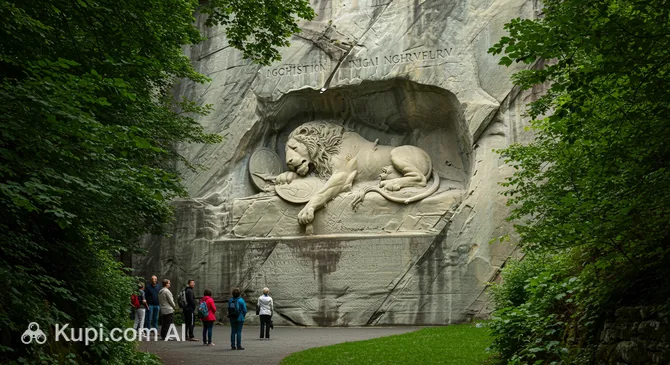
Lion Monument. Illustration.
Source: Kupi.com AI

Traveler photos:

The monument was created in 1821 based on a sketch by Danish sculptor Bertel Thorvaldsen. It is dedicated to the bravery and loyalty of the Swiss Guards who heroically died defending King Louis XVI of France during the storming of the Tuileries Palace in 1792. The Latin inscription "Helvetiorum Fidei ac Virtuti" translates to "To the loyalty and bravery of the Swiss," immortalizing their sacrifice. Visiting this memorial is not just about seeing a landmark, but an opportunity to touch a tragic and majestic page of European history.

Contacts

Since the Lion Monument is a public, open-air historical monument, it does not have its own administration or direct contact details. For additional information about visiting Lucerne and its attractions, you can always contact the city's tourist office.

How to contactContact
AddressDenkmalstrasse 4, 6002 Luzern, Switzerland
Phone number+41 41 227 17 17
Websitewww.loewendenkmal-luzern.ch

What to Do

Visiting the Lion Monument is, first and foremost, an opportunity to enjoy the contemplation of a unique work of art. The sculpture is carved directly into the sheer rock face of a former sandstone quarry, which in itself makes a strong impression. In front of the monument is a small oval pond that reflects the mournful image of the lion and creates an atmosphere of peace and tranquility. This place is perfect for taking beautiful and memorable photos against the backdrop of the world-famous landmark.

Many tourists linger here to not just look at the sculpture but to feel its deep symbolism and tragedy. It is a wonderful place for a quiet stroll, where you can relax on one of the benches in the shade of the trees and immerse yourself in the atmosphere of old Lucerne. The monument provides an opportunity to reflect on the history of Switzerland and the price of loyalty, making it not just a tourist attraction but a true place for reflection.

Besides viewing the monument itself, there is also plenty to do in the surrounding area. Nearby are numerous cafes where you can enjoy a cup of coffee and souvenir shops selling commemorative gifts. For those who want to learn more, there are information boards nearby providing additional details about the monument and its history. Thus, a visit to the "Dying Lion" easily fits into a city walk and leaves a lasting impression.

Getting There

The Lion Monument is conveniently located in the center of Lucerne, making it easily accessible for all travelers. Reaching this famous monument in Switzerland is quite simple, whether you prefer a leisurely stroll, public transport, or driving.

One of the most pleasant ways to visit the attraction is on foot. The monument is just a 10–15 minute walk from the main railway station and the key tourist routes of the Old Town. Such a walk will allow you not only to enjoy the views but also to better experience the atmosphere of this picturesque Swiss city.

For those who prefer comfort, the monument can be easily reached by public transport. The "Löwenplatz" bus stop is nearby and can be reached via several city routes, such as No. 1 or No. 19. If you are traveling by private car, there are paid parking lots in the vicinity where you can leave your vehicle during your visit.

Nearest city: Lucerne

History & Facts

Two outstanding masters are behind the creation of this world-famous monument: the idea and sketch belong to the famous Danish sculptor Bertel Thorvaldsen, while the Swiss sculptor Lukas Ahorn brought the design to life in stone. Work on carving the high relief directly into the rock began in 1819 and was completed by August 1821.

The Lion Monument has deep and poignant historical significance. It was erected to commemorate the bravery and loyalty of the Swiss Guards, who fell heroically on August 10, 1792. On that day, during the events of the French Revolution, they defended King Louis XVI of France and his family until the very end during the storming of the Tuileries Palace.

The memorial was officially inaugurated on August 10, 1821, exactly on the 29th anniversary of those events. The monument in Lucerne became the first in Europe where an animal was depicted as the central and only figure. The artistic execution was so impressive that Thorvaldsen himself, seeing it 20 years later, highly praised Ahorn's work. This fact emphasizes the uniqueness and cultural value of the "Dying Lion" as one of Switzerland's most important historical monuments.

Time Needed

When planning a visit to the Lion Monument, you should allow for 30 to 60 minutes. This time is usually quite enough to leisurely examine the sculpture carved into the rock, take commemorative photos, and feel the special, touching atmosphere of this world-famous memorial. During this time, you will also have time to read the information boards that tell the history of the monument's creation. Since the monument is a single composition located in a compact park, no long walks are required.

However, the length of your visit may vary depending on your interests. If you are short on time or visiting the "Dying Lion" as part of a tour group, 10–15 minutes might be enough for a quick look and a few photos. However, many travelers prefer to linger here longer to sit on a bench by the pond, reflect on the tragic history of the Swiss Guards, and simply relax in the quiet of this peaceful corner of Lucerne. A visit to this iconic site in Switzerland leaves a deep impression, so there's no need to rush.

Working Hours

One of the main advantages of the Lion Monument is its exceptional accessibility. Since the monument is part of a park area and carved into the rock outdoors, it is open for visits 24 hours a day, year-round. This allows travelers to view it at any convenient time, whether early in the morning to avoid the crowds or late in the evening when the lighting is turned on, creating a special atmosphere.

No tickets or advance booking are required to visit the "Dying Lion" — entry to the grounds is completely free for everyone. This makes the attraction an ideal spot for a spontaneous visit during a walk through Lucerne. Although there are no official opening hours, it is worth noting that for a deeper immersion in history and quiet contemplation, it is better to choose morning or evening hours.

Open 24 hours

Nearby

After you have absorbed the deep meaning and moving history of the Lion Monument, do not be in a hurry to leave the area. The surroundings of the monument in Lucerne offer many other interesting places that will help complete your impression of the city and its rich culture.

Exploring nearby attractions will allow you to create a more comprehensive itinerary and see how diverse this corner of Switzerland is. Just a few steps away, you'll find historical buildings, museums, and picturesque spots worthy of your attention. Below is a list of nearby sites that are easy to visit as part of a walking tour.

NameDistance
Bourbaki Panorama0.2 km
Church of St. Leodegar0.4 km
Musegg Wall0.6 km
Casino Lucerne0.6 km
Zytturm0.7 km
Jazzkantine zum Graben0.7 km
Chapel Bridge0.8 km

Have you reached the end of the page?

So the route has been studied inside and out