Support

Spreuer Bridge

About

The Spreuer Bridge (Spreuerbrücke) is a fascinating historical wooden covered bridge located in charming Lucerne, one of the most picturesque cities in Switzerland. Spanning the Reuss River, it is one of the oldest bridges in the city. Locals and historians also know it as the Mill Bridge or the Chaff Bridge. The Spreuerbrücke is not just an engineering structure, but an important landmark and a valuable historical monument that attracts visitors with its unique atmosphere.
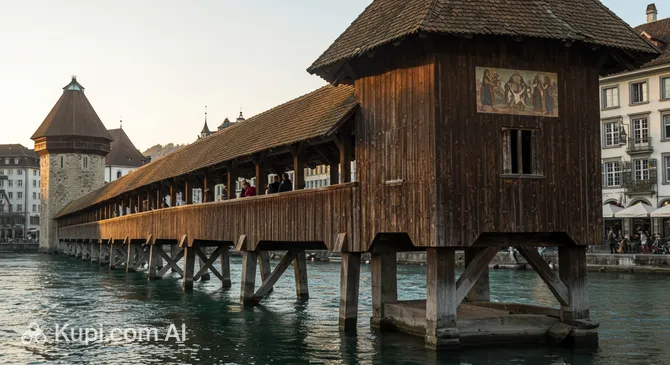
Spreuer Bridge. Illustration.
Source: Kupi.com AI

Traveler photos:

Although the Spreuer Bridge may be less known to the general public than its famous "neighbor," the Chapel Bridge, it holds no less historical and cultural significance. Originally, the bridge was part of Lucerne's outer city fortifications, reliably connecting the banks of the Reuss River and playing a vital role in the city's defense. Its construction and preserved elements tell fascinating stories of the past.

Like Lucerne's other historic bridges, the Spreuerbrücke is more than just a crossing. It is a true open-air museum that allows you to dive into the city's rich history and culture. A walk across the bridge offers a chance not only to enjoy views of the river and the city but also to touch centuries-old traditions and art reflected in its architecture and unique details.

Contacts

The Spreuer Bridge is a public city attraction and does not have a separate administration or direct contact details. For more information about the bridge, as well as other interesting places in Lucerne, it is recommended to contact the city's tourist information center. They will be able to provide you with up-to-date information and answer your questions.

How to contactContact
AddressSpreuerbrücke, 6004 Luzern, Switzerland
Phone number+41 41 227 17 17
Websitewww.luzern.com

What to Do

The main highlight of the Spreuer Bridge is its unique collection of paintings. While strolling across the covered bridge, you can closely examine the famous triangular wooden panels decorating its rafters. These impressive double-sided paintings were created by the artist Hans Heinrich Wägmann in the 17th century and depict scenes on the theme of the "Dance of Death." Each work is a separate story, turning the bridge into a kind of open-air art gallery where art and history intertwine at every step.

In addition to its artistic value, the Spreuer Bridge offers magnificent opportunities for photographers and anyone who appreciates beautiful views. The bridge provides picturesque panoramas of Lucerne and the Reuss River. You can take wonderful shots of the city's historic buildings, including other landmarks, enjoy the calm flow of the river, and simply admire the surrounding architecture. It is a great place to stop for a moment and soak in the atmosphere of an old Swiss city.

A walk across the Spreuer Bridge is not just a sightseeing tour, but a true immersion into the atmosphere of medieval Lucerne. Feel the connection between eras as you admire the bridge's ancient wooden construction and its unique artistic decoration. It is a wonderful opportunity to experience the spirit of Switzerland's history and enjoy a peaceful, contemplative stroll in one of the city's most charming corners, experiencing the historical heritage of Lucerne.

Getting There

The Spreuer Bridge is conveniently located in the heart of Lucerne, making it easily accessible for tourists. If you are arriving in the city by train, the bridge is just a 10-15 minute walk from Lucerne’s main railway station. This pleasant stroll takes you through the charming historic city center, allowing you to soak up the atmosphere on your way to the attraction.

For those who prefer public transport, Lucerne has an excellently developed bus network. Numerous city buses stop in the immediate vicinity of the Spreuer Bridge. The nearest stops are just a few minutes' walk away, so you can easily reach your destination from anywhere in the city.

If you are traveling by car, please note that the central part of Lucerne, where the bridge is located, is largely a pedestrian zone. Parking spaces near historical sites are limited. Therefore, it is recommended to leave your car in one of the city parking lots located a bit further away and continue on foot, enjoying the beauty of Lucerne.

Nearest city: Lucerne

History & Facts

The history of the Spreuer Bridge dates back to the 13th century when it was first constructed. However, it did not acquire its current appearance and significance immediately. In 1408, the bridge was extended to the left bank of the Reuss River, becoming an important part of Lucerne's outer defensive fortifications. There is also a version that the current structure was built in 1566 on the site of an earlier 13th-century bridge destroyed by a severe flood. In any case, over the centuries, the Spreuerbrücke, much like the famous Chapel Bridge, served not only a transport function but also an important defensive one, protecting the city.

An interesting fact is how the bridge got its name — the "Chaff Bridge" (Spreuerbrücke). According to ancient city rules, it was from this bridge that the residents of Lucerne were allowed to dump chaff — the waste remaining after threshing grain — into the Reuss River. This seemingly mundane detail adds another layer to our understanding of daily life in the medieval city and the role the bridge played in its economic activities.

One of the most remarkable features of the Spreuer Bridge is its unique artistic decoration. In the 17th century, the bridge was adorned with a series of double-sided triangular paintings on wood by the artist Caspar Meglinger (rather than Hans Heinrich Wägmann, as is sometimes mistakenly cited, though Wägmann also worked on paintings for Lucerne's bridges, specifically for the Chapel Bridge). These panels, depicting the famous "Dance of Death" cycle (Totentanz), have survived to this day and represent immense artistic and historical value. They are a striking example of medieval art and make a walk across the bridge a true immersion into the history and culture of Lucerne.

Time Needed

To simply walk across the Spreuer Bridge, enjoy its atmosphere, and take a few photos, about 30-40 minutes will be enough. This time is sufficient to leisurely cross the bridge, take a look at the famous triangular paintings, and admire the views of Lucerne opening up from the Reuss River.

If you plan to more thoughtfully examine the unique paintings of the "Dance of Death" cycle, study the historical panels in detail, or combine your visit to the Spreuer Bridge with a tour of other nearby attractions in Lucerne, it is worth setting aside about 1-1.5 hours. This time buffer will allow you to immerse yourself in the historical heritage of this amazing structure without rushing.

Working Hours

The Spreuer Bridge is open to visitors 24 hours a day, year-round, as it is an integral part of Lucerne's city infrastructure. Entrance to the bridge is free, and no advance booking or registration is required. You can walk across it at any time convenient for you.

To fully enjoy the views and examine the famous "Dance of Death" paintings in detail, it is recommended to visit the Spreuer Bridge during daylight hours. Especially picturesque photos and impressions can be captured at dawn or sunset, when the soft lighting creates a unique atmosphere and beautifully highlights the beauty of the historic architecture of this unique structure.

Open 24 hours

Nearby

The charm of Lucerne is not limited to the Spreuer Bridge alone. Exploring its surroundings will allow you to dive deeper into the atmosphere of this amazing Swiss city and discover even more interesting places. Often, it is the short walks to neighboring attractions that provide the most vivid impressions and help form a more complete picture of the place you are visiting.

Near the Spreuer Bridge, there are several noteworthy sites that can enrich your cultural program. From museums to other historical structures, everyone will find something to their taste. Below is a list of some of them, along with the distance, to make it easier for you to plan your route.

NameDistance
Gameorama Museum of Games0.1 km
Jesuit Church Lucerne0.3 km
Musegg Wall0.4 km
Zytturm0.4 km
Jazzkantine zum Graben0.4 km
Chapel Bridge0.4 km
Château Gütsch0.5 km

Have you reached the end of the page?

So the route has been studied inside and out