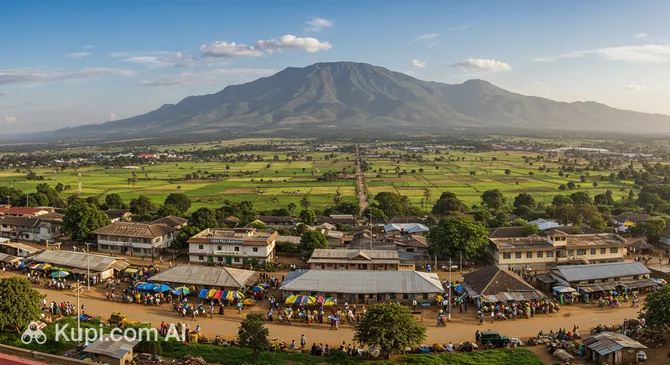
Morogoro is a cozy and important agricultural hub in Tanzania, nestled at the very foot of the majestic Uluguru Mountains. The city has a unique atmosphere of tranquility that sets it apart from the bustling coast. Here, the academic environment of Sokoine University meets the rhythm of a major trading hub, where aromatic cinnamon, vanilla, and fresh tropical fruits are processed.
Geographically, the city is located in the eastern part of the country at an altitude of about 500 meters above sea level, which provides it with a more pleasant climate compared to coastal areas. With a population of over 200,000 people, Morogoro is among the country's largest cities while remaining friendly and open to travelers seeking an authentic African provincial experience.
Morogoro. Illustration.
Source: Kupi.com AI
The main magnet for visitors is nature: routes to the misty forests of Uluguru and trips to major game reserves start here. You can immerse yourself in the region's rich historical heritage by exploring colonial traces from the German East Africa era, which are still visible in the architecture and layout of the central streets.
Visiting Morogoro is a wonderful opportunity to see the heart of Tanzania, away from standard tourist trails, enjoy the fresh mountain air, and feel the unhurried pace of life in a true regional center.
Weather Overview
The climate in Morogoro is distinctly tropical, however, the proximity of the Uluguru mountain range makes pleasant adjustments, making the air fresher and less humid than on the coast. Travelers should consider seasonality when planning a trip to fully enjoy the region's beauty.
The hottest time is traditionally the period from December to February, when daytime temperatures often exceed +30°C. The city is coolest in July: at this time, the air warms up on average to a comfortable +24–26°C during the day, while nights bring a pleasant freshness. If you are interested in detailed weather in Morogoro by month, remember the two rainy seasons.
Peak rainfall occurs in April, when the rains are most intense, transforming the surrounding mountains into emerald-green carpets. The winter months (June–August) are characterized by dry and clear weather, making this time ideal for trekking and safaris in nearby reserves.
Average monthly temperature
Average monthly precipitation
Interesting Facts
Get to know the fascinating details of life in this mountain region that make it truly special:
Locals affectionately call the city "Mji kasoro bahari", which in Swahili means "the city that lacks only the sea" — highlighting its beauty and coziness despite being 200 km from the coast.
The city was founded in the late 19th century as an important outpost of German East Africa, which determined its further development as a key transport hub.
Morogoro is the "spice capital" of the region: it is home to extensive plantations that supply cinnamon, vanilla, and cloves to world markets.
Very close to the city begins the territory of the enormous Selous Game Reserve, which covers an area larger than some European countries, at over 54,000 km².
The historic Central Railway Line passes through the city, having connected the Indian Ocean with the deep inland regions of Africa and Lake Tanganyika for decades.
How to Get There
The transport accessibility of Morogoro is due to its strategic position on the route from the country's largest metropolis into the heart of the continent. The city is an important link, so getting here is easy using one of the popular ways to travel around Tanzania.
Most travelers arrive in Morogoro from Dar es Salaam. The journey by car or bus takes between 3 to 5 hours, depending on traffic and mountain sections of the road. Those looking for more detailed information on routes and travel times can explore the section on how to get to Morogoro.
While the city has a small airfield, it mainly handles private and charter flights. For scheduled flights, it is more convenient to use Dar es Salaam International Airport and then transfer to ground transport.
The railway is a romantic and convenient way to travel. The Central Line offers regular service to the coast and western regions. The train journey from Dar es Salaam to Morogoro takes about 4–6 hours and allows you to enjoy the changing savannah landscapes from the carriage window.
Station
Passenger traffic
Distance
Dar es Salaam station (TAZARA)
4
175 km
Dodoma SGR Terminal
2
224 km
Main Attractions
While Morogoro itself isn't overloaded with classic urban monuments, its main treasures lie in harmony with the surrounding nature. The dominant feature is the Uluguru Mountains, whose green-covered slopes beckon trekking enthusiasts. A walk along the mountain trails allows you not only to enjoy views of the city but also to get acquainted with the unique flora and fauna of this ancient range.
One of the most picturesque spots in the vicinity is the Kinole Waterfall. The path to it leads through small villages and spice plantations, offering a chance to see how legendary Tanzanian cinnamon and cloves grow. For those seeking more active recreation, the Wami River offers opportunities for rafting, where adrenaline is combined with wildlife watching along the banks.
If you have time, Morogoro serves as an ideal base for visiting the Selous Game Reserve or the Udzungwa Mountains National Park. Here you can see the "Big Five" in their natural habitat or hike to waterfalls amidst pristine tropical forests. Within the city itself, it's worth checking out the local markets and strolling through the campus of Sokoine University, which is the scientific and cultural heart of the region.
Local Cuisine
A gastronomic journey in Morogoro is a celebration of freshness and natural flavors. Thanks to the fertile lands at the foot of the mountains, the city is supplied with the freshest fruits and vegetables. Local cuisine widely uses spices grown on nearby plantations, giving familiar dishes a special aroma of cinnamon and vanilla.
Be sure to try Ugali — the staple of the Tanzanian diet, made from maize flour, which is served here with stewed meat, greens, or fish. Rice dishes with vegetables and beans are also popular. If you're looking for a reliable spot with traditional cuisine, check out Mama Pierina restaurant, where you can enjoy authentic dishes in a peaceful setting away from the bustle of the central markets.
Among drinks, local tea and coffee are favorites, boasting a rich taste due to the proximity of the plantations. You can also try local beer and refreshing tropical fruit juices in the city. Street food, such as fried bananas and mishikaki skewers, is a great option for a quick snack while walking around town, allowing you to experience the true taste of local life.
Travel Tips
A trip to Morogoro promises to be rich and vibrant, and these practical tips will help you make it as comfortable and safe as possible.
Clothing and Gear: Choose light clothing made of natural fabrics, but be sure to bring comfortable closed shoes for mountain hikes. Evenings can be cool, so a light windbreaker won't go amiss.
Transport: To get around the city, use dala-dala or boda-boda. Always agree on the fare with the motorcycle taxi driver in advance to avoid misunderstandings.
Finances: The main currency is the Tanzanian shilling. Cards are rarely accepted, so always carry a sufficient supply of cash. ATMs are available in the center, but it's better to withdraw money in the morning.
Health and Safety: Drink only bottled water and use insect repellent. After dark, try not to walk alone on the outskirts and use taxi services.
Communication: The primary language is Swahili, but many people in the university and hotels speak English. Learn a couple of phrases: "Jambo" (hello) and "Asante" (thank you) — this always brings a smile to locals.
Local Etiquette: Tanzanians are very polite. Always start an interaction with a greeting. When visiting religious sites or villages, choose more modest clothing that covers shoulders and knees.
What to Avoid: Do not take photos of people without their explicit permission and avoid filming government or official buildings to prevent issues with authorities.
Connectivity: You can buy a SIM card from a local operator in the city center; this will provide you with stable mobile internet, as Wi-Fi in guesthouses can be intermittent.
By following these simple rules, you can fully focus on the beauty of nature and the hospitality of the people in this beautiful region!
Entertainment & Nightlife
Entertainment in Morogoro is primarily calm and contemplative, reflecting the city's agricultural and student spirit. Most daytime activity is centered around outdoor recreation. Tourists and locals alike prefer mountain hiking, picnics by waterfalls, or rafting on local rivers, making the city an excellent destination for those wanting a break from the hustle and bustle of megacities.
The nightlife here is not as developed as in coastal areas, but you can find several cozy bars and restaurants in the city center where young people and expats gather in the evenings. Music, local beer, and relaxed conversations form the basis of evening leisure. For brighter lights and noisy clubs, travelers usually head to Dar es Salaam, which is a few hours' drive away.
The city's cultural life often revolves around university events and festivals in the central squares. A stroll through the evening markets can also be a form of entertainment: it's the best time to observe local color, try street food, and feel the true spirit of the Tanzanian province. In terms of safety, Morogoro is considered a relatively quiet place, but using a taxi is always recommended for traveling late at night.
Parks & Museums
In Morogoro itself, there are few organized city parks and museums in the classic sense, as the urban environment is closely intertwined with the surrounding wilderness. The main "open-air museum" here is the Uluguru mountain range itself, where centuries-old traditions of local tribes and unique ecosystems are preserved in their original form.
The lack of large galleries is more than compensated for by natural recreational zones. Instead of museum halls, residents and visitors choose walks to waterfalls and hikes along ecological trails. This provides an opportunity to touch the living history of the region through its flora, fauna, and the daily life of agricultural communities that have cultivated the mountain slopes for many decades.
Nevertheless, for those interested in science and education, the Sokoine University of Agriculture campus serves as a cultural center. Its well-maintained grounds, featuring experimental gardens and academic buildings, are a pleasant place for walks where you can learn more about Tanzania's modern achievements in ecology and farming.
Getting Around
The public transport system in Morogoro is simple, efficient, and very affordable, making getting around the city easy even for a tourist. The core of the city fleet is dala-dala — minibuses that run on fixed routes and connect residential areas with the center and markets. This is the most budget-friendly way to travel, allowing for full immersion into local life.
For faster and more individual trips, residents prefer boda-boda (motorcycle taxis). They are maneuverable and can take you anywhere in the city, including remote foothills where buses don't go. However, you should always agree on the price beforehand and prioritize safety. Ordinary taxis are also widely available in the city and are more convenient for trips with luggage or in the evening.
Payment for all types of transport is made in cash. For those planning a trip outside the city, the key hub is the railway station and bus stations, from where buses depart to Dar es Salaam and Dodoma. Overall, Morogoro's transport network allows you to comfortably plan your day without fearing the serious traffic jams typical of large metropolises.
Accommodation
Accommodation in Morogoro is primarily geared toward travelers who value authenticity and home comfort. You won't find huge chain resorts here, but the city offers a decent selection of high-quality mid-range hotels and budget guesthouses, perfect for both short transits and longer stays to explore the surrounding mountains.
One well-known place to stay is the Mama Pierina Restaurant and Annex complex, famous for its hospitality and traditional atmosphere. Modern apartments like La Casa De Papel Apartment are also popular, offering comfort and independence at very affordable prices. For those planning hikes, it's more convenient to choose accommodation closer to the foot of the Uluguru Mountains to start routes with the first rays of the sun.
It is recommended to book accommodation in Morogoro in advance, especially if your visit coincides with major university events or holidays. Most hotels accept cash in local currency, though larger establishments are actively starting to implement card payments. Remember that staying here is a great way to support the local community and immerse yourself in the daily life of the Tanzanian region.
Nearby Cities
Thanks to its location in the center of the eastern part of the country, Morogoro is an excellent starting point for exploring nearby regions of Tanzania. The city's surroundings are rich in small settlements and natural areas, each with its own unique character.
For those who want to swap mountain landscapes for a capital rhythm or a beach holiday, the country's largest city, Dar es Salaam, is 200 kilometers away. Also of interest is a trip to Kilosa, an old town with a rich agricultural history, or to the rapidly developing Kibaha, located on the way to the coast. For shorter excursions, Ngerengere and Msoga are suitable, where you can see the traditional way of life in rural Tanzania.
City
Population
Distance
Ngerengere
11 780
53 km
Rudewa
8 747
61 km
Kilosa
91 889
74 km
Msoga
10 144
77 km
Kibaha
128 488
96 km
Exploring these places will help you form a more complete picture of life in the region and see a variety of landscapes — from dense forests and plantations to open savannahs. It is most convenient to reach neighboring cities by intercity buses or trains that run regularly through Morogoro.
Shopping & Souvenirs
Shopping in Morogoro is primarily about visiting colorful local markets, which are the heart of the city's trade. There are no massive glass shopping centers here, but there is an abundance of the region's true treasures: aromatic spices, fresh fruits, and the work of local artisans.
The central markets are considered the main place for shopping, where you should look for cinnamon, vanilla, and cloves — they are of the highest quality here and at very pleasant prices. Morogoro is also famous for its fabrics: in the markets, you can find vibrant kanga and kitenge with traditional patterns, which make for excellent and practical souvenirs.
For more familiar goods, you should head to the small shops located in the university district and on the central streets. Payment in most outlets is made in cash in Tanzanian shillings, so it's worth arranging currency exchange in advance. Don't forget to bargain in the markets — here, it's not just a way to save money, but part of the local culture of communication.