Support

Afyonkarahisar

About

Afyonkarahisar is a city that feels as if it were carved from the very history of Anatolia, nestled comfortably in the heart of Turkey. It lies at the intersection of ancient caravan routes, between picturesque mountains and ancient volcanic plateaus, which gives it a special, unique atmosphere.

Afyonkarahisar. Illustration.
Source: Kupi.com AI

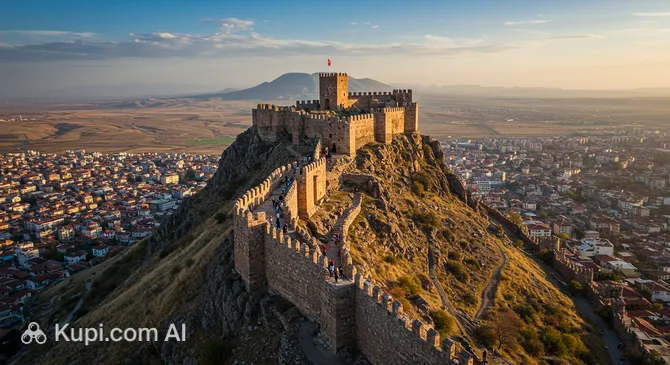
The city's main landmark, visible from almost any point, is the majestic Black Fortress (Karahisar). It crowns a high rocky hill, and from its summit, a breathtaking panorama opens up over narrow streets, ancient mosques, and scenic surroundings. It seems as if the city itself invites you on a fascinating journey through the centuries.

The population of Afyonkarahisar is about 300,000 people. The city is not only the administrative center of the province of the same name but also an important transport hub. It is famous for its sincere hospitality: here, every traveler will easily feel like a welcome guest. The atmosphere of Afyon is a wonderful combination of Eastern comfort, a leisurely pace of life, and a rich cultural program.

Afyonkarahisar is worth visiting for its unique historical monuments. Among them, the ancient mosques with skillful carved wooden columns and mysterious rock temples carved into tuff formations stand out. Nature lovers will also find many attractive places here: from the Akdağ Mountains and picturesque canyons to caves and national parks.

In addition, Afyonkarahisar is a true paradise for gourmets and lovers of authentic traditions. The local cuisine will delight you with a variety of flavors, the famous thermal springs offer health and relaxation, and vibrant festivals will leave unforgettable impressions. Discover this amazing city, where history comes to life at every step and the warmth of the locals warms the soul!

You can find more interesting facts on the history of Afyonkarahisar page.
Weather Overview

The weather in Afyonkarahisar is characterized by a pronounced continental climate. Summers here are warm and very dry, especially in July and August, when the average maximum air temperature reaches +29.5°C to +30.1°C, and precipitation is practically non-existent. Winters are cold: in January, the average temperature is around 0.7°C, with night frosts dropping on average to -3.6°C. In winter (for example, in January there are about 11 days with precipitation) and spring (up to 13 days in May), there is a higher number of days with precipitation, but the total monthly amount remains small, usually not exceeding 2 mm.

To plan your trip in the best way possible, learn more about the weather conditions by month on the Afyonkarahisar Climate page.

Average monthly temperature

Average monthly precipitation

Interesting Facts

In addition to its famous thermal springs and historical heritage, Afyonkarahisar hides many amazing details and little-known facts that make it truly unique.

Afyonkarahisar Castle. Illustration.
Source: Kupi.com AI

Traveler photos:

  • Afyonkarahisar is proud of its "Black Fortress," Afyonkarahisar Castle, which towers over a massive rock of volcanic tuff. This rock, formed millions of years ago by the eruption of an ancient volcano, is not only a symbol of the city but also a unique natural formation.

  • In the city, you can discover unique monuments carved entirely from volcanic tuff—a technique almost never found anywhere else in the world. For example, ancient prayer niches and water reservoirs at the top of the fortress still impress with their preservation and craftsmanship.

  • Afyonkarahisar has historically been an important center of Sufi culture. It is home to the famous Sultan Divani Mevlevihane Museum, a former monastery for dervishes of the Mevlevi order, where you can still learn about the traditions and witness the Sema ritual—the dance of the whirling dervishes.

  • The city has been known for its thermal springs since ancient times. The healing properties of the local mineral waters attract visitors from all over Turkey and abroad, while modern hotels and baths offer a variety of wellness programs.

  • Afyonkarahisar holds the unofficial title of the capital of sucuk—a traditional Turkish spicy sausage. An annual festival is dedicated to this gastronomic symbol, and there is even a Sucuk Museum in the city, telling the story of the history and production of this delicacy.

How to Get There

Afyonkarahisar is located at a strategically important intersection of transport routes in Western Anatolia, making it easily accessible for travelers. You can find all ways to get to the city by exploring our detailed guide, and below we look at the main arrival options through nearby air hubs.

Afyonkarahisar itself does not have an active civilian airport, so tourists usually fly into neighboring provinces. The closest is Süleyman Demirel Airport (IATA: ISE), located in the city of Isparta, approximately 101 km from the center of Afyonkarahisar. A trip from there by taxi or transfer will take approximately 1 hour 15 minutes. Another convenient option is Anadolu University Airport (IATA: AOE) in the city of Eskişehir (about 117 km), with the journey taking roughly 1 hour 30 minutes.

You can also use flights to Çardak Airport (IATA: DNZ), which is located in the city of Denizli. The distance to Afyonkarahisar is about 130 km, and the driving time is about 1 hour 45 minutes. This is a fairly popular route, as the airport serves a significant number of regional flights.

For convenience, here is summary information on the main airports in the vicinity:

AirportPassenger trafficDistance
Zafer Airport43 20053 km
Isparta Suleyman Demirel Airport76 401101 km
Anadolu University Airport110 000117 km
Cardak Airport434 859130 km
Yenisehir Airport194 910186 km

In addition to air travel, Afyonkarahisar is a major road and rail hub. Comfortable intercity buses regularly arrive here from almost all major cities in Turkey. The city's railway station also serves trains following key Anatolian routes, connecting the region with Izmir, Konya, and other centers, allowing for easy combinations of different modes of transport.

Main Attractions

Afyonkarahisar, a city with a rich history, offers tourists many interesting places to visit. Among them, several key attractions stand out that should not be missed.

One of the city's main landmarks is the majestic Afyonkarahisar Castle. This ancient fortress, perched on a rock of volcanic origin, dominates the city skyline. The climb to the top can be challenging, but the reward is breathtaking panoramic views of the city and the surrounding plains. The castle has a rich history dating back to Hittite times and has played an important role throughout the centuries.

Afyonkarahisar Castle. Illustration.
Source: Kupi.com AI

Traveler photos:

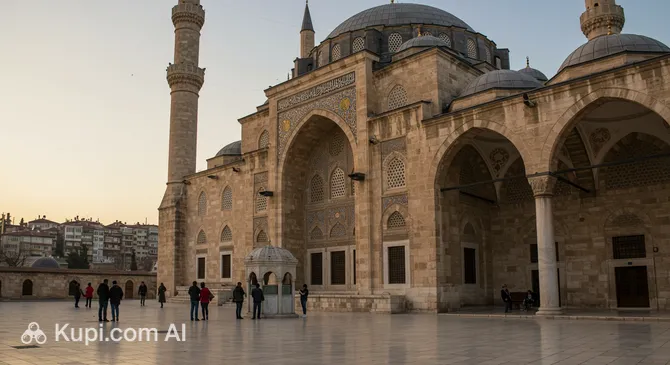
Equally significant is the Great Mosque of Afyonkarahisar (Ulu Cami). Built in the 13th century during the Seljuk period, it is an outstanding example of wooden architecture. Its 40 wooden columns with carved capitals and unique wooden ceiling are particularly impressive. The mosque is still active and attracts both worshippers and connoisseurs of ancient architecture.

Afyonkarahisar Grand Mosque. Illustration.
Source: Kupi.com AI

Traveler photos:

For those interested in Sufi culture, the Sultan Divani Mevlevihane Museum is a must-visit. This complex, once a lodge for dervishes of the Mevlevi order, functions today as a museum. Here you can learn about the history of the order, see everyday objects, musical instruments, and manuscripts related to the life and teachings of Mevlana. The atmosphere of this place allows you to touch the spiritual traditions of the region.

Sultan Divani Mevlevi Lodge Museum. Illustration.
Source: Kupi.com AI

Traveler photos:

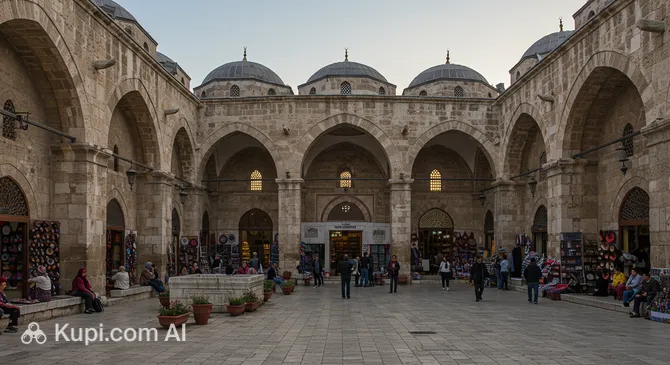
Another notable historical building is the Taş Medrese (Gedik Ahmet Pasha Medrese). This former Islamic educational institution, built in the 15th century, is a beautiful example of Ottoman architecture. The stone building with a courtyard and arcades is today often used for cultural events or as a space for craft workshops and shops where you can purchase local products.

Taş Medrese (Gedik Ahmet Pasha Madrasa). Illustration.
Source: Kupi.com AI

Traveler photos:

You can immerse yourself in the atmosphere of Eastern trade at the Taşhan Historical Bazaar. This ancient caravanserai, converted into a market, offers visitors a variety of goods: from local delicacies such as Turkish delight and sucuk to carpets, ceramics, and souvenirs. Walking through its aisles is a great opportunity to feel the local flavor and buy something to remember.

Historic Taşhan Bazaar. Illustration.
Source: Kupi.com AI

Traveler photos:

Local Cuisine

Afyonkarahisar is a true paradise for gourmets, with its culinary fame extending far beyond the borders of Turkey. The city is proud of its gastronomic traditions, offering travelers unique tastes and aromas that make it a mandatory stop for connoisseurs of authentic cuisine.

The main star of the local cuisine, without a doubt, is Afyon sucuk—a spicy beef sausage with fragrant spices, prepared here according to ancient recipes. This sucuk is considered the gold standard; it is served for breakfast, used as an appetizer, and even added to pastries. No less famous is the local pastirma—cured meat with a rich, deep flavor that pairs perfectly with traditional drinks.

For those with a sweet tooth, Afyonkarahisar offers delicious local halva and, of course, the famous Afyon lokum (Turkish delight). Here, it is prepared with the addition of rose water, various nuts, and, most notably, poppy seeds. The city is known nationwide for its poppy fields, so poppy seed products are a must-try to experience the true taste of the region.

The food culture in Afyonkarahisar is quite diverse. At busy farmers' markets, such as the Taşhan Historical Bazaar, you can purchase the freshest local products: cheeses, honey, nuts, homemade pastries, and, of course, that famous sucuk. In numerous street cafes and small snack bars, be sure to try "Afyon katmer"—a thin, crispy flatbread filled with poppy seeds and nuts. For a more thorough introduction to local cuisine, it is worth visiting one of the traditional restaurants. For example, at Afyon Gamze Sucuk Döner, you can taste the famous sucuk in various mouth-watering variations.

Afyon Gamze Sucuk Döner. Illustration.
Source: Kupi.com AI

Traveler photos:

Among the drinks, refreshing ayran (a savory yogurt drink) and strong Turkish tea are particularly popular. These drinks perfectly complement both hearty meat dishes and sweet desserts, completing your gastronomic journey through Afyonkarahisar.

A trip to Afyonkarahisar is a unique opportunity to immerse yourself in the world of authentic Turkish cuisine, where focus is placed on the quality of local products like sucuk and poppy. It is a chance to discover new flavors and enjoy the hospitality that makes the city's gastronomic scene truly attractive.

Travel Tips

Welcome to Afyonkarahisar! To ensure your journey to this historical city, known for its thermal springs and culinary traditions, is as comfortable as possible and leaves only pleasant impressions, we have prepared some practical tips for you.

  1. Clothing and seasonal items: The climate in Afyonkarahisar is continental: summers are hot and dry, while winters are cold and snowy. In summer (like now, in June), you will need light clothing, sunscreen, a hat, and definitely comfortable shoes for walking around the city and climbing to the fortress. In winter, you cannot do without a warm jacket, hat, gloves, and non-slip shoes. If you plan to visit mosques, such as Ulu Cami, women should bring a scarf to cover their heads, and clothing should cover shoulders and knees for both men and women. Don't forget a universal adapter for electrical appliances if yours differs from the European type F.

  2. Getting around the city: The central part of Afyonkarahisar is quite compact, and many attractions can be reached on foot. For longer trips, you can use local minibuses—dolmuses; they are an inexpensive and popular form of transport. Taxis are also available; it is recommended to either agree on a price in advance or ensure the driver has turned on the meter. Renting a car can be useful if you plan to explore the surrounding area, such as the Phrygian Valley, but for moving within the city itself, it is not a necessity.

  3. Financial matters: The national currency of Turkey is the Turkish Lira (TRY). You can exchange currency at banks or official exchange bureaus (döviz bürosu); the rates at airports and hotels are usually less favorable. Credit and debit cards (Visa, Mastercard) are accepted in many hotels, restaurants, and large stores. However, it is always useful to have some cash on hand for small purchases, markets, or paying for dolmus fares. ATMs (bankamatik) are widespread. Tips in restaurants are usually around 10% of the bill if service is not included. In taxis, it is customary to round up the fare.

  4. Health and safety: Pharmacies (eczane) are easy to find by the green cross; there are always duty pharmacies (nöbetçi eczane) open 24/7 (the list is usually posted on the doors of other pharmacies). In case of medical emergency, call 112. It is recommended to have travel insurance. Afyonkarahisar is considered a relatively safe city. Observe standard precautions: watch your belongings in crowded places and avoid poorly lit or deserted areas after dark. Drinking tap water is not recommended; it is better to buy bottled water.

  5. Communication: The official language is Turkish. In tourist areas (hotels, some restaurants), staff may speak English, but generally, the level of foreign language proficiency among the local population is low. Learn a few basic phrases in Turkish: "Merhaba" (Hello), "Teşekkür ederim" (Thank you), "Lütfen" (Please), "Evet" (Yes), "Hayır" (No), "Ne kadar?" (How much?). For convenience, you can purchase a local SIM card (e.g., Turkcell, Vodafone, Türk Telekom) at official stores (a passport is required). Wi-Fi is available in most hotels and many cafes.

  6. Local etiquette: Turks are a hospitable people. Greetings usually involve a handshake. It is customary to show respect to elders. Try to behave reservedly in public places. When visiting mosques or private homes, it is customary to remove your shoes. If you are invited to visit, a small souvenir or sweets would be appropriate. Patience and a smile will help establish contact even if there is a language barrier.

  7. What to avoid: Refrain from public criticism of the Turkish state, its symbols, or the founder of the Turkish Republic, Mustafa Kemal Atatürk—this can be perceived very negatively. Also, do not photograph people without their permission, especially women in traditional clothing and in religious sites.

  8. Special features of Afyonkarahisar: The city is famous for its thermal springs, healing muds, and culinary delights such as sucuk (spicy sausage), Turkish delight (lokum), and kaymak (thick clotted cream). Be sure to try these local delicacies and, if time permits, visit one of the thermal complexes for wellness and relaxation.

We hope these tips help you better prepare for your trip and get the most out of your stay in Afyonkarahisar. We wish you an unforgettable journey!

Entertainment & Nightlife

Afyonkarahisar, known for its thermal springs and historical heritage, also offers guests quieter but pleasant options for evening leisure. While the city is not famous for a vibrant metropolis-style nightlife, you can find cozy spots to relax after a busy day.

Main evening activity is concentrated in the central part of the city, especially on the streets where numerous cafes and restaurants are located. Here you can take a stroll, enjoying the evening atmosphere, and choose a place to your liking. Nightlife in Afyonkarahisar is more focused on socializing and spending quality time rather than loud parties until dawn.

Among the popular places for evening relaxation are bars and cafes offering both local and international drinks and snacks. One such establishment is Leman Kültür, known for its laid-back atmosphere and popularity among youth and visitors. Here you can meet friends, listen to music, and have a pleasant evening. Typically, such places operate until midnight or slightly later, especially on weekends. The dress code is generally casual.

Leman Kultur. Illustration.
Source: Kupi.com AI

Traveler photos:

For those who prefer a quieter evening, the city's numerous restaurants are an excellent choice. For example, Hakan Çıray Lokantası offers guests local cuisine in a cozy setting, perfect for dinner with company or a romantic evening. Some restaurants also offer live music in the evenings.

When planning an evening out, it is best to aim for after 8:00 PM or 9:00 PM when venues start to fill up. Prices in the bars and restaurants of Afyonkarahisar are generally moderate. For moving around the city at night, it is most convenient to use a taxi. It is recommended to order a taxi through your hotel or via well-known city services.

In terms of safety, the central districts of Afyonkarahisar are considered quite calm for evening walks. Nevertheless, as in any other city, you should observe standard precautions: avoid poorly lit and deserted areas and keep an eye on your belongings. You can call a taxi by phone or through apps if they are popular in the region.

During the day, Afyonkarahisar offers many other forms of entertainment. You can dive into history by visiting Afyonkarahisar Castle or the Sultan Divani Mevlevihane Museum. For family leisure, the Afyon Fairy Tale World Park is suitable, while shopping enthusiasts can stop by the Park Afyon Shopping Center or the colorful Taşhan Historical Bazaar.

Parks & Museums

Afyonkarahisar is a city where history comes alive at every step, and modern green zones offer pleasant relaxation. Here you will find well-maintained parks for walking as well as unique museums preserving the cultural heritage of the region.

For outdoor recreation and family fun, the Afyon Fairy Tale World Park is perfect. It is a popular spot among locals and tourists, where you can enjoy rides, stroll along picturesque paths, and simply have a good time. While there may not be extensive national parks within the city limits, its surroundings are rich in natural beauty that is worth exploring if you have the time.

Afyon Fairy Tale World Park. Illustration.
Source: Kupi.com AI

Traveler photos:

A key cultural site in the city is the Sultan Divani Mevlevihane Museum. This museum is located in the historical building of a former dervish lodge (mevlevihane) and offers a deep dive into Sufi culture and the history of the Mevlevi order. The exhibits include everyday items, manuscripts, musical instruments, and costumes that tell the story of the lives and philosophy of Rumi's followers. This place is a must-visit for those interested in the history and spiritual traditions of Turkey.

Sultan Divani Mevlevi Lodge Museum. Illustration.
Source: Kupi.com AI

Traveler photos:

The heart of historical Afyonkarahisar is undoubtedly the majestic Afyonkarahisar Castle, rising on a massive volcanic rock above the city. The climb to it can be a test, but the breathtaking panoramic views from the top compensate for all the effort. The city is also proud of significant architectural monuments such as the Great Mosque of Afyonkarahisar (Ulu Cami), known for its unique wooden columns and Seljuk architecture, and the historical Taş Medrese (Gedik Ahmet Pasha Medrese), once an important educational center. Near the museum is the Mevlevihane (Mevlevi Mosque), also connected to the dervish order, rounding out the picture of the city's spiritual life.

Afyonkarahisar Castle. Illustration.
Source: Kupi.com AI

Traveler photos:

To deeper experience the city's atmosphere, take a leisurely stroll through the narrow streets of the old town at the foot of the castle, where traditional houses have been preserved. For authentic souvenirs, local delicacies, and handmade items, be sure to visit the Taşhan Historical Bazaar—an Ottoman-era caravanserai where trade still thrives and you can feel the spirit of an ancient trading city.

Getting Around

Public transport in Afyonkarahisar is primarily represented by buses and shared taxis, known as "dolmuses." These are the most common and convenient ways for tourists and locals to move around the city. The bus network covers most areas of the city, offering regular routes. Dolmuses, in turn, often follow more flexible routes and can stop upon passenger request in designated areas.

The payment system in Afyonkarahisar, as in many Turkish cities, may involve the use of transport cards (such as "Kent Kart" or a similar local card) that can be topped up. In dolmuses, payment is usually made in cash directly to the driver upon boarding. It is recommended to have small bills for convenience. Fare prices are generally low but may vary slightly depending on the route and type of transport.

Transport cards can usually be purchased and topped up at special kiosks or machines located at or near central stops. Card validation occurs when entering the bus through a special reader. Buses and dolmuses run from early morning until late evening; however, the frequency of service may decrease in the evening hours and on weekends. Bus schedules can be checked at stops or on the websites of local transport companies, if available.

As an alternative to public transport, taxi services are always available in Afyonkarahisar. Taxi stands can be found in busy parts of the city, near hotels, and large shopping centers. You can also call a car by phone or through mobile apps if they are popular in the region. Bicycle rental or car sharing are less common, but for short trips around the city center, walking is also an excellent option, allowing you to get better acquainted with Afyonkarahisar.

Accommodation

Finding suitable accommodation in Afyonkarahisar is easy, as the city offers various options for tourists with any budget and preference. Here you can find everything from modest guesthouses and pensions to more comfortable hotels, including those specializing in the thermal treatments for which the region is famous.

In Afyonkarahisar, tourists can choose from a wide range of accommodation options: from budget guesthouses and rental apartments to mid-range hotels and more luxurious thermal resorts. The city's main focus is on hotels offering access to the famous thermal springs, making them particularly popular among guests visiting for wellness and relaxation.

Afyonkarahisar Castle. Illustration.
Source: Kupi.com AI

Traveler photos:

For those who want to be in the center of the action and closer to historical sites such as Afyonkarahisar Castle or the Great Mosque of Afyonkarahisar, hotels located in the central part of the city are suitable. Many thermal hotels and resorts are located at some distance from the historical center, offering a peaceful atmosphere and a full range of services for relaxation.

The price range varies from affordable options to premium-class offers, especially in large thermal complexes. Accommodation can be booked through popular online platforms or directly on the hotels' websites. It is recommended to book your stay in advance, especially if your trip falls during the peak tourist season or if you plan to visit the city during major events.

Nearby Cities

For those who want to explore the surrounding area, Afyonkarahisar serves as an excellent starting point for day trips to several interesting nearby locations:

Among them, it is worth noting Kütahya, a famous center for the production of exquisite ceramics and a city with rich Ottoman architecture. No less attractive is Uşak, famous for its carpet-weaving traditions and nearby ancient ruins. For lovers of ancient history, a trip to Yalvaç will reveal the impressive ruins of the ancient city of Pisidian Antioch.

CityPopulationDistance
Cobanlar14 50322 km
Suhut36 94725 km
Sinanpasa41 46826 km
Ihsaniye28 60332 km
Bolvadin43 39845 km

These nearby destinations allow for a more complete picture of the diverse culture, history, and landscapes of the region, complementing the experience of staying in Afyonkarahisar.

Shopping & Souvenirs

Afyonkarahisar offers tourists an interesting shopping experience that combines modern shopping centers with traditional bazaars and local products. The city is particularly famous for its gastronomic items such as sucuk (spicy sausage) and kaymak (thick clotted cream), as well as marble products and poppy-based goods (such as poppy paste).

The main shopping areas are concentrated in the center of Afyonkarahisar. Walking through the main streets, you will find many shops offering both local goods and well-known brands. Special attention should be paid to the streets adjacent to historical sites, where you can often find shops with authentic souvenirs and crafts.

For those who prefer modern shopping under one roof, there are shopping centers in Afyonkarahisar. One popular spot is the Park Afyon Shopping Center, which features a wide selection of clothing, electronics, and home goods stores, as well as a food court and entertainment areas.

Park Afyon Shopping Center. Illustration.
Source: Kupi.com AI

Traveler photos:

An integral part of shopping in Afyonkarahisar is visiting the local markets. Be sure to stop by the Taşhan Historical Bazaar. This colorful place allows you to immerse yourself in the atmosphere of an Eastern bazaar, find unique handmade souvenirs, spices, textiles, and, of course, taste local delicacies. Here you can find traditional items that reflect the culture and history of the region.

Historic Taşhan Bazaar. Illustration.
Source: Kupi.com AI

Traveler photos:

From Afyonkarahisar, it is worth bringing back gastronomic souvenirs: the famous Afyon sucuk, delicate kaymak (best bought in thermal packaging if transportation allows), and Turkish delight. Also popular are items made from local marble, olive oil soap, and traditional Turkish souvenirs—ceramics, textiles, handmade carpets, and jewelry. Keep an eye out for poppy products, such as poppy paste or pastries.

Most shops in Afyonkarahisar operate from 9:00-10:00 AM until 7:00-8:00 PM; shopping centers are usually open later, until about 10:00 PM. Markets may have their own schedules, often starting work early in the morning. Turkish Lira is accepted for payment, and in many shops and shopping centers, you can pay by bank card. In markets and small shops, cash is preferred.

For international tourists, Turkey has a Tax Free refund system for purchases made in stores with the corresponding designation. This is usually possible when purchasing goods over a certain amount. Clarify the conditions and arrange the necessary documents right in the store when making a purchase, so you can later receive a tax refund at the airport when leaving the country.

Reached the end of the page?

That means the route is fully explored