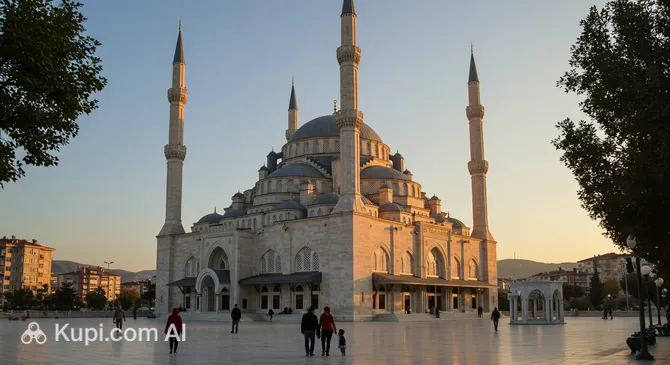
In the heart of the historical center that graces ancient Kahramanmaraş stands the majestic Grand Mosque (Ulu Camii). This outstanding architectural monument was built during the Dulkadirogulları Beylik period and is today considered one of the most important spiritual and cultural symbols that Turkey is proud of.
Grand Mosque of Kahramanmaraş. Illustration.
Source: Kupi.com AI
Traveler photos:
The building is a classic example of the early Anatolian style. Its austere rectangular facade is made of hewn stone, and its walls, one and a half meters thick, hold the centuries-old history of the region. Inside, visitors are greeted by a spacious prayer hall where a massive wooden ceiling is supported by 12 majestic columns connected by elegant arches. Particular attention is drawn to the mihrab, decorated with intricate plaster carvings featuring traditional oriental motifs.
One of the mosque's most recognizable features is its unique octagonal minaret, which crowns a square base. The combination of rugged stonework, warm wood, and fine artistic craftsmanship makes this place a must-visit for anyone who appreciates authentic antiquity and the harmony of architectural forms.
Contacts
To verify current information before your visit, it is recommended to check the official resources of the regional tourism service.
The main reason to come here is the opportunity to experience the ancient craftsmanship of past builders. Be sure to notice the main entrance portal with its complex muqarnas (stalactite) composition and study the carvings on the narthex ceiling in detail—it is considered one of the finest examples of wooden architecture in the region.
An atmosphere of serenity reigns inside the mosque, perfect for contemplation. Take a look at the 18 arches that create a rhythmic pattern throughout the interior, and appreciate the delicate work of the masters who created the lotus and palmette ornaments on the mihrab. This is an excellent spot for architectural photography enthusiasts: the play of light and shadow on the ancient stones and massive columns allows for unique shots.
After touring the building, we recommend walking to the "kiosk-style" (köşk) minaret and then continuing your acquaintance with the local flavor. Just a few steps from the mosque is the famous Kapalıçarşı covered bazaar, where you can buy traditional handcrafted goods, and the ancient Taş Medrese, which harmoniously complements the architectural ensemble of the central square.
Getting There
The attraction is located in the very heart of the city at: Atatürk Blv. No:73. Thanks to its central location in the Dulkadiroğlu district, it is easily accessible by foot from most points in the historical quarter. If you are near the city castle or the Kapalıçarşı covered bazaar, the walk to the mosque will only take a few minutes.
For those coming from Kahramanmaraş Airport (KMX), it is most convenient to use a taxi or local buses. The distance is about 10–15 kilometers, and the trip usually takes 20 to 30 minutes depending on traffic. Along the city's main artery, Atatürk Boulevard, dolmuşes (shared taxis) run regularly and can take you almost to the entrance.
Travelers using a private or rental car should follow signs for the city center or use navigation. There are parking zones in the vicinity of the mosque, though keep in mind that traffic in the historical part of the city can be quite heavy during peak hours.
Nearest city: Kahramanmaras
History & Facts
The history of this majestic structure is inextricably linked with the reign of the Dulkadirogulları dynasty. According to surviving records, the construction of the mosque began at the initiative of Suleiman Bey in the mid-15th century, roughly between 1442 and 1454. The architectural appearance of the building became a striking reflection of the transition from Seljuk traditions to the unique style of the Anatolian Beyliks.
Half a century later, in 1501, the founder's son, Alaüddevle Bozkurt Bey, initiated a large-scale reconstruction. It was during this period that the mosque acquired the features we see today. A commemorative inscription above the main portal (taç-kapı) still serves as a reminder of these important works, establishing the mosque's status as the region's primary spiritual center.
With the arrival of Ottoman rule in 1515, the site's importance did not fade. Imperial archives contain records of regular restorations and the appointment of master craftsmen to maintain the building's integrity. Despite numerous updates during the Tanzimat era and the Republican period, the mosque has remarkably preserved its original rectangular plan and the unique atmosphere of early Turkish architecture.
Time Needed
For a leisurely inspection of the architectural details and the interior of the mosque, 45–60 minutes is usually sufficient. This time is enough to study the carved portal, examine the ancient columns, and take memorable photos of the facade and minaret.
If you plan to combine your visit with a walk through the neighboring covered market or a visit to the fortress, you should allow about 2-3 hours for exploring this area. The compact arrangement of key sites makes the historical center an ideal place for a short but fulfilling excursion.
Working Hours
Currently, access to the building may be limited. Visitors are advised to verify the attraction's current status directly on-site or on the official tourism portal of Kahramanmaraş Province.
As the mosque is an active religious site, tourists should take prayer times into account. Traditionally, entry for sightseeing is open between services; it is important to maintain silence and follow the appropriate dress code.
Nearby
Its location in the historical core of the city allows tourists to create a rich itinerary without spending much time traveling. Exploring the surroundings of the mosque is a great way to dive deeper into the atmosphere of the ancient city and see monuments from different eras, from the Roman period to the Ottoman golden age.