Support

Mountain Gate

About

Like a vast portal to the past, the Mountain Gate (Dağ Kapı) welcomes travelers who decide to visit ancient Diyarbakir. It is not just an entrance to the old city, but a key element of the legendary city walls, which, in terms of length and grandeur, are second only to the Great Wall of China. Built from dark, rugged basalt, the gate is a symbol of the power and impregnability of the region's ancient capital.
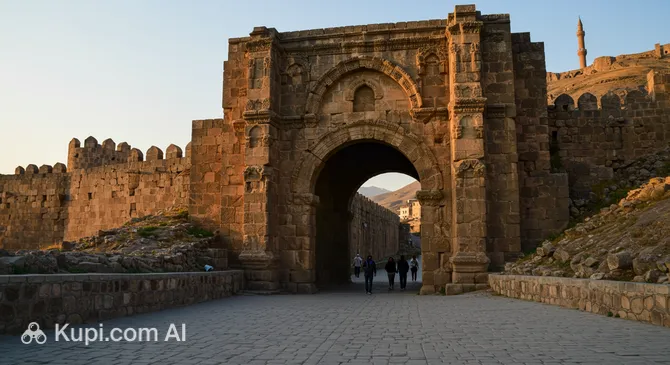
Mountain Gate
Mountain Gate. Иллюстрация. Источник: Kupi.com AI

Today, this landmark, carefully preserved by Turkey, is recognized as a UNESCO World Heritage Site. The grand defensive structure made of hewn stone gives the city its unique, recognizable look. For centuries, the Mountain Gate controlled the flow of caravans and travelers, as the city was a vital hub on the famous Great Silk Road.

Visitors come here to touch the rough walls that have witnessed the rise and fall of empires. The gate's architecture is striking in its simplicity and functionality, serving as a reminder of the times when life bustled behind these walls in one of the East's most protected cities. It is an essential stop for everyone who values authentic history and the monumental grandeur of the past.

Contacts

For your convenience, we have prepared accurate information regarding the location of this historical site. No prior booking is required to visit the monument, as it is part of the city's open architectural ensemble.

How to contactContact
AddressCami Nebi, Gazi Cd. No:2, 21300 Sur/Diyarbakır, Türkiye

What to Do

The main reason to visit the Mountain Gate is the opportunity to experience its unique 4th-century architecture. Be sure to climb the accessible sections of the fortress wall to appreciate its scale: from a bird's-eye view, the outlines of the fortifications resemble the shape of a flounder fish. This is the perfect spot for panoramic photos where the ancient black basalt contrasts beautifully with the sky.

After visiting the gate, take a stroll through the historic Sur district. Here you will find old caravanserais, which today have been transformed into living museums of crafts. In the local shops, you can watch artisans at work and purchase unique traditional carpets, fine silver items, or embroidered kilims. This is the best way to take home a piece of the ancient trade route's atmosphere.

Getting There

Finding the Mountain Gate (also known as Dağ Kapı) is easy, as it is located in the heart of the historic Sur district. If you are already in the city center, a pleasant walk following the signs to the city walls is the best way to soak in the local atmosphere.

For those who prefer comfort or are traveling from more distant areas, a taxi or public transport (buses and minibuses) that regularly run to the central part of the city is a great option. The city has a well-developed transport network connecting the main tourist hubs.

Convenient options are also available for travelers arriving at Diyarbakır International Airport: from the terminal, you can quickly reach the historic center by municipal bus or by taking a taxi right at the exit. The journey takes very little time, offering views of both the modern and ancient quarters of the city.

Ближайший город: Diyarbakir

History & Facts

The history of this site is rooted in deep antiquity, when the city was known as Amida. It is believed that the construction of the massive black basalt fortifications, of which the Mountain Gate is a part, began around 349 AD by order of the Roman Emperor Constantius II. This stone not only gave the walls a somber and majestic appearance but also provided them with incredible durability for millennia.

In the 6th century, the gate and the fortress were refined under the Byzantine Emperor Justinian I, who strengthened the fortifications. Later, after the Arab conquest in 640 AD, the city received the name Diyarbekir and eventually became part of the Ottoman Empire under the legendary Sultan Suleiman the Magnificent. Each era left its mark on these stones, turning the gate into a silent witness to the change of civilizations.

Interestingly, the city center itself emerged on the Amida Mound as early as the 6th millennium BC. Throughout the centuries, the Mountain Gate served not only as an entrance to the fortress but also as an important checkpoint on the Great Silk Road, emphasizing the city's status as a major economic and cultural center of the region.

Time Needed

To leisurely explore the Mountain Gate itself and take beautiful photos against the backdrop of the ancient basalt walls, 1–2 hours will be quite enough. This is sufficient time to feel the scale of the structure and appreciate the skill of the ancient architects.

However, if you plan to continue your walk through the historic Sur district, visit the authentic caravanserais, and explore other sections of the city wall, we recommend dedicating a full day. The old city hides many treasures that should not be rushed.

Working Hours

The Mountain Gate is part of the city fortifications and is available for external viewing 24/7. This allows tourists to admire the monumental masonry both in bright daylight and under the evening illumination, when the basalt looks particularly mysterious.

As the rules for accessing certain interior rooms or observation decks may vary, we recommend checking for the latest information on the city's official tourism website or with local guides before your visit.

Nearby

Exploring the Mountain Gate is just the beginning of your immersion into the region's rich history. A stroll through the surrounding area will allow you to see how different eras and cultures are closely intertwined here, creating the unique atmosphere of an ancient city.

NameDistance
Diyarbakır City Walls0 km
Hurrem Sultan Mansion0.3 km
Hasan Pasha Caravanserai0.4 km
Diyarbakir Fortress0.4 km
Cahit Sıtkı Tarancı Museum0.4 km
Ahmet Arif Literature Museum0.4 km
Diyarbakır Old City (Suriçi)0.4 km

Reached the end of the page?

That means the route is fully explored