Support

Yakupağa Külliyesi

About

Located in the picturesque city of Kastamonu, this historical ensemble is one of the most striking examples of medieval architecture's grandeur. The Yakupağa Complex (Yakupağa Külliyesi) is a traditional 14th-century Islamic külliye built during the prosperity of the Candarid Beylik. For travelers journeying through a country like Turkey, this site offers a chance to touch the origins of Ottoman architecture and see authentic structures that have preserved their appearance through the centuries.
\n
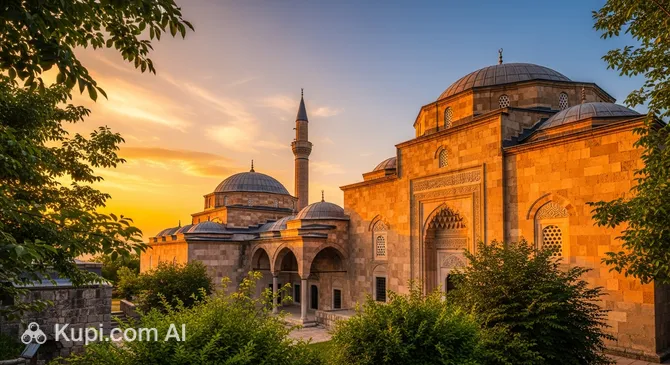
Yakupaga Complex
Yakupaga Complex. Иллюстрация. Источник: Kupi.com AI
\n

The ensemble includes a magnificent mosque and a madrasa building, which were once the center of religious and intellectual life in the region. The architecture of the Yakupağa Complex is characterized by strict harmony and masterful use of stone, typical of the Anatolian principalities period. An elegant minaret and the domed halls of the mosque create a recognizable silhouette that blends harmoniously into the panorama of the old city.

\n

Today, this site is classified as a tourist_attraction and is highly valued by visitors for its peaceful atmosphere and excellent preservation. It is not just an open-air museum, but a living monument to history, where every stone tells the story of a time when Kastamonu was the capital of a powerful beylik and an important cultural hub on the region's map.

Contacts

To help you plan your route to one of the most important historical sites in Kastamonu, use the current address information provided below. As this is a functioning historical and religious site, contact details mainly consist of its physical location.

How to contactContact
AddressHepkebirler, Kefeli Sk. No:3, 37100 Kastamonu Merkez/Kastamonu, Турция
Websitekastamonu.ktb.gov.tr

What to Do

A visit to the Yakupağa Complex offers guests a tranquil journey into the past. Begin by exploring the inner courtyard, where you can examine the stonework and architectural details of the madrasa in depth. Inside the mosque, pay attention to the ancient ornaments and frescoes, which create a special prayerful atmosphere and showcase the skill of decorators from past eras.

Photography enthusiasts will find many interesting angles here: the combination of ancient stone with the play of light and shadow in the madrasa's arches allows for deep and atmospheric shots. Many visitors recommend coming during the morning hours, when the soft light highlights the texture of the walls, and the absence of large tour groups allows you to enjoy the silence of this historical site.

Besides touring the buildings, it's worth taking time to relax in the complex's shaded courtyard, imagining how scholarly debates and student classes took place here hundreds of years ago. A walk through the Yakupağa Complex can logically conclude with an exploration of the neighboring narrow streets of the old city, where every house complements the overall picture of the region's cultural heritage.

Getting There

Reaching the Yakupağa Complex is easy, as it is located in the central part of the old city. If you are already strolling through the historical quarters, it is best to reach it on foot, heading toward the Hepkebirler district. For precise navigation, you can use the coordinates 41.377002, 33.771925, which will lead you directly to the ancient walls.

For those arriving in the city by intercity bus, the journey from the central bus station takes about 10–15 minutes by taxi. You can also use local minibuses (dolmuş), which run regularly between the bus station and the center. If you are arriving from Kastamonu Airport (KCM), a taxi ride to the complex will take about 20–30 minutes, depending on traffic.

There are parking spaces in the immediate vicinity of the site, which is convenient for tourists in rental cars. However, it's worth remembering that the streets of old Kastamonu are quite narrow, so a walking tour will allow you to better see the surrounding architecture and soak in the atmosphere of the ancient beylik capital.

Ближайший город: Kastamonu

History & Facts

The history of the Yakupağa Complex is inextricably linked with the era of the Candarid (Isfendiyarid) Beylik, when the city became an important political and cultural center of Anatolia in the 14th century. It was during this period that Kastamonu experienced a construction boom, becoming a magnet for the best scholars, theologians, and architects of the time. The complex was built to serve the needs of education and faith, emphasizing the city's status as the capital of the principality.

The name of the ensemble refers to Yakupağa, a prominent representative of the Çandaroğulları dynasty who actively promoted the region's development. Creating such multifunctional centers (külliye) was a tradition of the time, uniting spiritual life and scientific research under one roof. This allowed for the continuity of knowledge and strengthened social ties within the community.

Notably, the architectural style of the complex reflects a unique synthesis of traditions that predated Ottoman rule. Back then, the region was famous for its crafts, especially copper and wood working, which was reflected in the decoration of monumental buildings. The Yakupağa Complex still serves as a living witness to that golden age when Kastamonu was a key link on the trade and cultural routes of Asia Minor.

Time Needed

To leisurely explore the Yakupağa Complex, feel its atmosphere, and take memorable photos, most travelers will need 1 to 2 hours. This is quite enough time to go inside the mosque, study the architectural features of the madrasa, and relax for a bit in the inner courtyard.

If you are passionate about architectural history and plan to study the stonework or decorative elements in detail, set aside a little more time. Touring the complex is easy to combine with visits to other attractions in the old center, as they are all compactly located.

Working Hours

Currently, the official opening hours of the Yakupağa Complex are not governed by a strict schedule, as the site is part of a living historical neighborhood. Generally, access to the territory is open during daylight hours, and the mosque is available for viewing in between prayers.

To check for the latest information on any temporary restrictions or special events, we recommend visiting the official website of the Kastamonu Directorate of Culture and Tourism before your visit.

Nearby

A walk through the area around the Yakupağa Complex allows you to see many other monuments that form the unified historical fabric of the city. Most iconic sites are within walking distance, making this area ideal for long walking tours.

Exploring the neighboring streets will open doors to ancient mansions, mosques, and tombs, each holding its own unique legend. Below is a list of the most interesting sites located in the immediate vicinity:

NameDistance
House of Bediüzzaman Said Nursi0.2 km
Cem Sultan Bedesteni Restaurant0.2 km
Kastamonu Castle0.3 km
Nasrullah Mosque0.3 km
Kastamonu Republic Square0.4 km
Humpback Bridge0.4 km
Kastamonu Museum0.5 km

Reached the end of the page?

That means the route is fully explored