Support

Bimarhane Medrese

About

Located in the picturesque city of Amasya, Bimarhane Madrasa is a unique monument of medieval architecture and science. Built in the early 14th century, this building served as both a hospital and a medical school for a long time, becoming one of the most important centers of knowledge in Turkey during the era of Seljuk influence.

Today, this historical complex functions as the Museum of the History of Medicine and Surgery. It is dedicated not only to the architectural heritage but also to the work of the famous physician Sabuncuoğlu Şerefeddin, whose treatment methods and surgical instruments were centuries ahead of their time. Visitors are greeted by a majestic portal with exquisite stone carvings, opening the way into the world of ancient healing science.
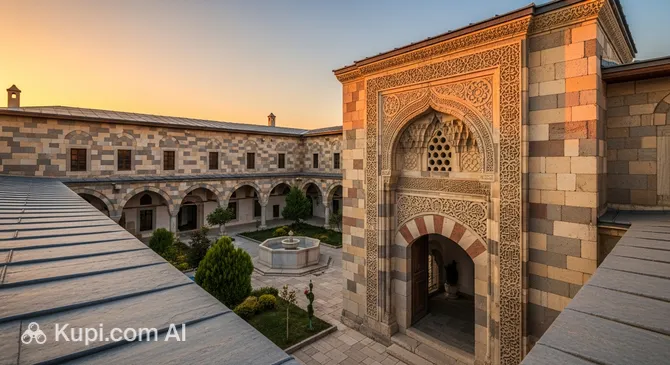
Bimarhane Madrasah
Bimarhane Madrasah. Иллюстрация. Источник: Kupi.com AI

The site's special value lies in the fact that students were trained here through practical experience: from performing complex surgeries to studying pharmacology. Bimarhane is considered one of the first "clinical" hospitals in Anatolia, where theoretical knowledge went hand-in-hand with real patient care.

Contacts

To clarify details before your visit, you can use the official address of the complex. The madrasa is located in the very heart of the city, making it easily accessible for tourists on foot.

How to contactContact
AddressGümüşlü, Atatürk Cd., 05200 Amasya Merkez/Amasya, Турция

What to Do

Within the walls of Bimarhane, you can take a true journey into the past of medicine. The main focus here should be on the exhibition of medical instruments, many of which were invented or improved by Sabuncuoğlu Şerefeddin. Looking at the detailed illustrations of medieval surgeries, one can be amazed at how advanced surgery was hundreds of years ago.

Be sure to pay attention to the architectural elements of the complex. Take a stroll through the inner courtyard and explore the classrooms and rooms that once served as operating theaters. Carved stone decorations and the authentic Seljuk-era layout create a unique atmosphere of serene scientific rigor.

Also of interest are the museum sections dedicated to methods of treating mental disorders, where music therapy and water treatments were used. This place is ideal for those who want to take unique photographs against the backdrop of ancient walls and learn how great scientists of the past laid the foundations of modern science.

Getting There

Getting to this unique historical monument is easy, as it is located in the heart of the city on Atatürk Cd. If you are already in the center of Amasya, the walk from iconic sites like the Pontic Kings Rock Tombs or the Yeşilırmak embankment will take only 10–15 minutes.

For those arriving from other regions, the nearest air hub is Merzifon Airport, located about 40 kilometers away. From there, as well as from the city's central bus station, you can take a taxi or local buses. The city layout is quite compact, so many tourists prefer to get around on foot, enjoying the views of the old quarters.

If you are traveling by private car, parking areas are provided near the madrasa. For more accurate navigation, it is convenient to use modern map services, using the address in the Gümüşlü district.

Ближайший город: Amasya

History & Facts

The history of this place dates back to the early 14th century. The Bimarhane Madrasa was built in 1308–1309, when the region was under the influence of Seljuk traditions and Mongol rulers from the Hulaguid dynasty. From its very foundation, it was intended as an advanced scientific institution where medical education was inextricably linked with clinical practice.

The institution gained special fame thanks to the outstanding physician Sabuncuoğlu Şerefeddin. It was here that he honed his skills and created surgical works that were centuries ahead of their time. Until the end of the 19th century, the madrasa remained a vital educational center, training dozens of generations of doctors who combined Eastern traditions with practical observations.

An interesting chapter in its history was the 16th century when the complex began to specialize in the treatment of mental illnesses. At that time, it was a rare institution where the mentally ill were treated with compassion and innovative therapy methods were used. Thanks to Bimarhane, Amasya secured its status as one of the main centers of science and medicine in medieval Anatolia.

Time Needed

To leisurely explore the museum's exhibition and appreciate the architectural details of the building, a typical visitor will need 1 to 1.5 hours. This is quite enough time to get acquainted with the information boards, study ancient instruments, and take memorable photos in the inner courtyard.

If you have a deep interest in the history of medicine or plan to study the illustrations from Sabuncuoğlu Şerefeddin's works in detail, your visit may take a bit longer. In any case, a visit fits perfectly into a walking route through the city's historical center.

Working Hours

The museum is open to visitors daily, making it easy to include in your travel schedule. On weekdays, the complex is open from 08:00 to 18:00. On Saturday, the opening hours are slightly extended until 18:30, and on Sunday, the museum closes at 18:00.

Since the schedule may change depending on the season or holidays, it is recommended to check for up-to-date information on the official website or with local guides just before your visit.

DayWorking hours
понедельник08:00–18:00
вторник08:00–18:00
среда08:00–18:00
четверг08:00–18:00
пятница08:00–18:00
суббота08:00–18:30
воскресенье08:00–18:00

Nearby

Exploring the surroundings of this area will allow you to dive deeper into the atmosphere of ancient Amasya. Both ancient monuments and cozy spots for relaxation are concentrated near the madrasa.

NameDistance
Sabuncuoğlu Şerefeddin Museum of Medicine and History0 km
Amasya Clock Tower0.2 km
Atatürk Monument0.2 km
Pirler Park0.3 km
Rock Tombs of the Pontic Kings0.4 km
Amasya Riverside Houses0.5 km
Museum of the Ottoman Princes0.5 km

Reached the end of the page?

That means the route is fully explored