Support

Rustem Pasa Mosque

About

In the heart of the historic quarter of Tekirdağ stands the magnificent Rustem Pasha Mosque—a striking example of classical Ottoman architecture. This structure, built in the 16th century, is one of the key cultural landmarks of Turkey, attracting travelers with its history and graceful forms.
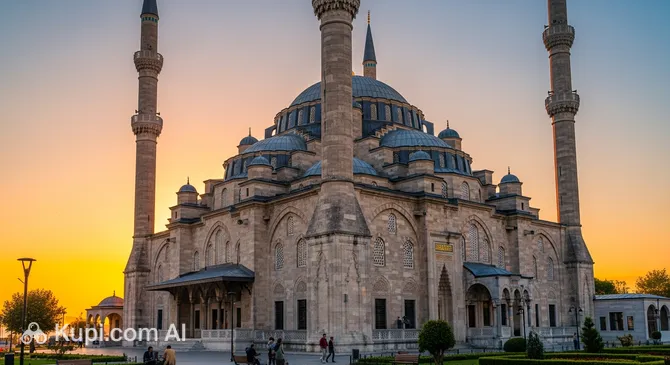
Rustem Pasha Mosque
Rustem Pasha Mosque. Иллюстрация. Источник: Kupi.com AI

The mosque was commissioned by the Grand Vizier Rustem Pasha, the influential son-in-law of Sultan Suleiman the Magnificent. The building was designed by the legendary master Mimar Sinan, whose works are recognized as the pinnacle of architecture from that era. The mosque is part of an extensive complex that includes a madrasa, a library, and baths, all of which preserve the spirit of the imperial past.

The main feature of this site lies in a surprising contrast: behind a strict and concise external facade hides a luxurious interior. The Rustem Pasha Mosque is considered a must-visit for anyone interested in the history of Islamic art and the great heritage of the Ottoman Empire.

Contacts

For those planning a visit to this architectural masterpiece, information regarding its exact location will be useful. The Rustem Pasha Mosque is situated in the heart of the historic district, making it a convenient stop on any tourist route.

How to contactContact
AddressErtuğrul, Mimar Sinan Cd. No:5, 59100 Tekirdağ Merkez/Tekirdağ, Турция

What to Do

Inside the mosque, a breathtaking sight awaits visitors: a massive central dome, pierced by 24 windows, fills the space with soft light. It is worth noting how four massive octagonal columns and semi-domes create a sense of incredible volume and structural stability.

The unique Iznik tiles decorating the mosque walls are particularly admirable. Blue ceramic panels with delicate tulip-shaped patterns are considered some of the finest examples of Ottoman decorative art. This collection is so extensive that it covers the interior surfaces of the temple right up to the base of the dome, creating a unique color ensemble.

Don't miss the opportunity to take a close look at the marble mihrab and carved minbar, which are benchmarks of the skill of ancient stonemasons. After exploring the interior, be sure to step out into the courtyard to admire the graceful ablution fountain and walk under the vaults of the double portico, enjoying the peace and tranquility of this place.

Getting There

The landmark is located in the city's historic center at Mimar Sinan Cd. No:5. Thanks to its central position, the mosque is within walking distance of most key points in the old town, and its tall minaret serves as an excellent landmark for travelers.

If you are coming from outlying districts or the station, taking a taxi is the most convenient option. Additionally, numerous local public transport routes pass through the city center. Coordinates for navigation systems: 40.978008° N and 27.517022° E. A walk to the mosque will also allow you to enjoy the atmosphere of Tekirdağ's ancient streets.

Ближайший город: Tekirdag

History & Facts

The history of this majestic structure began in 1561, when the foundation of the mosque was laid by order of Grand Vizier Rustem Pasha, who served under Sultan Suleiman the Magnificent. The project was completed in 1563. Notably, the architect was the famous Mimar Sinan, who had recently finished work on the legendary Suleymaniye Mosque, which explains certain stylistic similarities between the two buildings.

Over its centuries of existence, the mosque has endured many trials. In 1666, the building was seriously damaged by a large-scale fire, and in 1776, the structure was damaged by a powerful earthquake. Nevertheless, each time the temple was restored in an effort to preserve its original beauty and grandeur.

In the mid-20th century, specifically the 1960s, a global restoration of the minaret, outer courtyard, and walls was carried out. An interesting feature of Sinan's work here is the architectural technique of "hidden luxury": the intentionally simple and austere facade serves only as a frame for the incredibly rich and detailed interior decoration, which is revealed only once you step inside.

Time Needed

To fully appreciate the architectural genius of Mimar Sinan and examine the details of the famous Iznik tiles, visitors are recommended to set aside 1 to 2 hours for their visit. This is ample time for a leisurely exploration of the interior and a walk through the courtyard.

If you plan to also visit the madrasa and other parts of the historical complex, allow a bit more time in your schedule. A relaxed pace will let you feel the peaceful atmosphere of this ancient site and take high-quality photographs without rushing.

Working Hours

Since the Rustem Pasha Mosque is an active spiritual center, it is open to visitors daily. However, tourists should take prayer times into account: during namaz, entry for sightseeing may be restricted. It is recommended to plan your visit between the calls to prayer.

Official opening hours may vary depending on the season, so it is advisable to check for information on official tourism websites or consult the city information center before visiting. Typically, the mosque doors are open from early morning until sunset.

Nearby

Exploring the surroundings of the Rustem Pasha Mosque will allow you to dive deeper into the cultural context of the region. The area around this monument is literally saturated with historical sites, ancient fountains, and cozy parks that perfectly complement your city walk.

Most points of interest are within a short walking distance, allowing you to create a rich itinerary without extra travel. Below are the nearest attractions:

NameDistance
Namık Kemal House Museum0.1 km
Mangal Doner0.2 km
Tekirdag Museum of Archaeology and Ethnography0.4 km
Tekirdag Park Amusement Park0.5 km
Peace and Freedom Park0.5 km
Rákóczi Museum0.7 km
Tekira Shopping Mall1.1 km

Reached the end of the page?

That means the route is fully explored