Support

Wheal Martyn Clay Works

About

In the heart of Cornwall, near the town of St Austell, lies a unique open-air museum dedicated to the history of Great Britain's "white gold." This 26-acre site is a beautifully preserved former china clay (kaolin) mining and processing works, now designated as a Site of Special Scientific Interest.
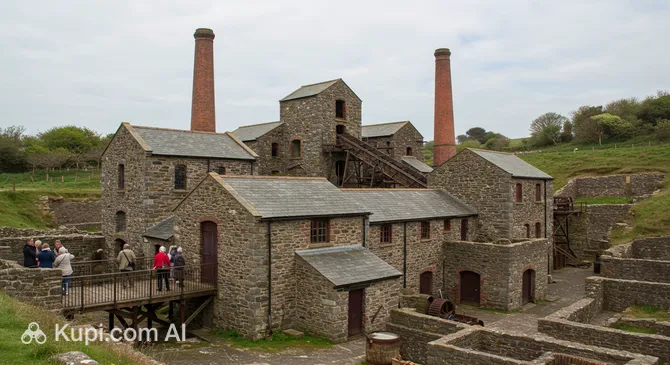
Wheal Martyn Clay Works
Wheal Martyn Clay Works. Иллюстрация. Источник: Kupi.com AI

Here, you can see the world's only Victorian clay works maintained in working condition and open to the public. Visitors are surrounded by historic industrial buildings nestled in greenery and the famous "Cornish Alps"—huge conical spoil tips that have become symbols of the region's industrial past.

Wheal Martyn is more than just a museum; it's an interactive space bringing together collections of rare machinery, archival photographs, and miners' personal belongings. It tells the fascinating story of how local clay revolutionized porcelain and paper production, forever changing the country's economic landscape.

Contacts

For any questions regarding visits, tour bookings, or hosting events, you can reach out to the staff using the contact details below.
How to contactContact
AddressCarthew, Saint Austell PL26 8XG, UK
Phone+44 1726 850362
Websitewww.wheal-martyn.com

What to Do

Visitors are invited to embark on a fascinating interactive journey through the entire production chain: from raw material extraction in the pit to final drying. You can see massive water wheels in action, historic settling pits, and huge coal-fired pan-kilns where the clay achieved its famous whiteness. A viewing platform at the end of the route offers breathtaking views of a modern working quarry, allowing for a comparison between past and present technologies.

For those with a creative spark, workshops are available to learn traditional pottery techniques. Children will enjoy the woodland trails and a peek into the "crib hut"—the shelter where workers once rested and had lunch. A walk along the Centaur river valley provides a pleasant encounter with local flora and fauna living in harmony with industrial monuments.

The museum galleries display rare artifacts, from early mining tools to the vehicles used to transport clay to the ports. Don't forget to check out temporary exhibitions like "50 Years of Wheal Martyn," which often feature unique archival materials from the local community's history.

Getting There

The easiest way to reach this unique site in Carthew is by car from St Austell via the A391. The drive takes just 5–10 minutes, and convenient free parking is provided on-site.

If you prefer public transport, use the First Kernow or Go Cornwall Bus services heading toward Carthew. After getting off at the nearest stop, it’s about a 1–2 km walk along a scenic route. You can also take a 10-minute taxi ride from St Austell railway station.

For outdoor enthusiasts, there are walking and cycling trails through the valley offering spectacular views of Cornwall's "white pyramids." This is a great way to combine sightseeing with a walk in the fresh air.

Ближайший город: Saint Austell

History & Facts

The origins of this industrial giant date back to 1790 when Richard Martin purchased the Carthew estate. His son, Elias, founded a clay works here in the 1820s, which by the mid-19th century had become one of Cornwall's most successful enterprises. Interestingly, the word "Wheal" in the local dialect traditionally means "mine" or "workings."

The discovery of china clay in Great Britain is linked to William Cookworthy, who in 1748 found a way to use this "white gold" to create hard-paste porcelain. Over time, clay from the St Austell area became indispensable not only for ceramics but also for manufacturing paper, textiles, and even medicine. The scale of the operations was immense: for every ton of clay extracted, up to 10 tons of waste were produced, eventually forming the famous conical "sky tips."

The site opened as a museum in 1975 thanks to the efforts of its first director, John Stengelhofen. Today, the complex is a Scheduled Monument of national importance. The museum not only honors the memory of the workers' hard labor (including the women who cleaned blocks of clay by hand) but also plays an active role in the local community, preserving the region's unique landscape.

Time Needed

To fully explore the exhibits, historic buildings, and nature trails, an average visitor will need 3 to 4 hours. This allows enough time to see the working machinery, browse the galleries, and head up to the lookout point without rushing.

For families with children or those planning to join a pottery workshop, it's best to set aside at least half a day. Walking across the 26-acre site and relaxing in the local cafe will also take extra time.

Working Hours

The museum is open to visitors daily throughout the week, making it easy to include in your travel itinerary. The standard opening hours are as follows:

  • Monday: 10:00 – 17:00
  • Tuesday: 10:00 – 17:00
  • Wednesday: 10:00 – 17:00
  • Thursday: 10:00 – 17:00
  • Friday: 10:00 – 17:00
  • Saturday: 10:00 – 17:00
  • Sunday: 10:00 – 17:00

Please note that opening hours may vary slightly depending on the season, so it is recommended to check the official website before your visit.

10:00 – 17:00

Nearby

Exploring the area around St Austell allows for a deeper dive into the region's industrial and natural history. Many iconic sites are just a short drive from the museum.

NameDistance
Salty Bay Pizza Kitchen1.8 km
The Western Inn3.1 km
The Cornwall Hotel & Spa4.1 km
Cornwall FootballGolf Park4.3 km
Pinetum Gardens4.8 km
Charlestown Harbour5 km
Edie's5 km

Reached the end of the page?

That means the route is fully explored