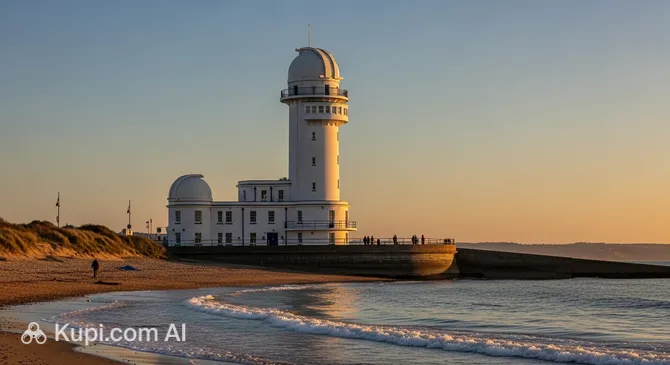
On the picturesque coastline where the waters of the bay meet urban architecture stands the Swansea Observatory. This unique structure in the city of Swansea is a harmonious blend of science and art. The famous Ecliptic Tower has become a true symbol of the Maritime Quarter, attracting travelers from all over Great Britain with its unusual shape and astronomical theme.
Swansea Observatory. Illustration.
Source: Kupi.com AI
Traveler photos:
Although the site is located in a coastal zone, its significance goes far beyond a typical beach holiday. It is an important cultural landmark that inspires visitors with themes of space and seafaring. The building fits perfectly into the landscape of the historical port, recalling the times when sailors navigated by the stars, and offering modern tourists breathtaking panoramic views of Swansea Bay.
The observatory is part of a large-scale entertainment complex where the spirit of the old port exists alongside interactive attractions. The popularity of this site is confirmed by high guest ratings, praising its originality and atmosphere. It is more than just a building; it is a scientific and artistic beacon, drawing in those who appreciate aesthetics and knowledge of the Universe.
Contacts
For those planning a visit to this unique landmark, knowing the exact location will be helpful. The Swansea Observatory is situated in the heart of the revitalized Maritime Quarter, making it easily accessible for all visitors to the city. Below are the key contact details for navigation.
A visit here promises to be a real adventure for those who enjoy solving puzzles. You can start by exploring the architecture of the Ecliptic Tower, which is a work of art in itself. For active travelers, there are interactive quests inspired by science and the sea. Completing tasks related to the "Gateway to Gower" project turns an ordinary walk into an exciting exploration.
Photography enthusiasts should have their cameras ready: the views of the harbor and the sea horizon here are simply magnificent. Be sure to find the "Acoustic Mirror West", created by artist Rob Olins. This art installation allows you to experience unusual sound effects, literally "gathering" the sounds of the sea and the city into one point. It is an ideal spot for creating unique content and observing the rhythm of port life.
After immersing yourself in the world of astronomy and sound installations, it is pleasant to simply stroll along the waterfront. The sea breeze and the atmosphere of the historic quarter promote total relaxation. This place is excellent for a family outing, where everyone will find something to enjoy: from hunting for hidden symbols on the walls of buildings to watching sunsets over the bay.
Getting There
Reaching this scientific and cultural hub is easy, as it is located in the popular Maritime Quarter district. If you are arriving by train, Swansea Railway Station is just a 10–15 minute leisurely walk away. The route takes you through picturesque pedestrian areas, allowing you to start exploring the city on your way to the bay.
For those who prefer public transport, buses (particularly those operated by First Cymru) run regularly towards the port and the city center. Drivers should follow routes along the A4118, which leads directly to the waterfront. There are paid parking zones available for visitors in the Maritime Quarter area.
Travelers arriving from Cardiff Airport (CWL) will need about an hour to reach the city by train or bus. The final leg of the journey from the center to the observatory can be easily covered by taxi or a pleasant 20-minute walk along the Swansea Bay coastline.
Nearest city: Swansea
History & Facts
The history of the site where the modern tower stands today is inextricably linked to the development of the seaport. It is believed that the city's name itself originated from the Old Norse "Sweyn’s Ey" (Sweyn's Island), referencing the Viking era and their trading posts. As early as the 12th century, a fortress was established here, and the port began playing a key role in the export of coal and wool.
In the 18th and 19th centuries, the region experienced an incredible boom, earning the nickname "Copperopolis". Swansea became the world center of the copper smelting industry. It was here in 1807 that the world's first passenger railway (Mumbles Railway) was launched, transporting people along the coast of the bay. The memory of this industrial grandeur still lives on in the architecture of the old docks.
The Swansea Observatory in its current form is a symbol of the city's transformation. The Maritime Quarter has evolved from an industrial giant into a cultural hub. The architectural concept of the Ecliptic Tower was designed to bridge the rich maritime heritage with scientific progress, becoming a new visual landmark of the waterfront during its era of revival.
Time Needed
A detailed tour of the observatory itself and the surrounding Maritime Quarter typically takes between 1 and 2 hours. This is sufficient time to study the tower's architectural features, participate in available interactive tasks, and enjoy the panoramic views of the bay.
If you plan to combine your visit with a walk along the promenade or a visit to one of the cozy nearby cafes, we recommend setting aside half a day. The surroundings are perfect for a slow-paced break, especially in good weather, when the sea breeze makes a stroll along the water exceptionally pleasant.
Working Hours
The Swansea Observatory operates on a specific schedule focused on weekends and the beginning of the week. You can visit the site on Monday, Saturday, and Sunday from 09:00 to 17:00. Please note that the facility is typically closed to visitors from Tuesday to Friday inclusive.
Since the schedule may change depending on the season or special events, it is highly recommended to check for the latest information on the official website or at the Maritime Quarter information center before your trip.
Day
Working hours
Monday
09:00–17:00
Tuesday
Закрыто
Wednesday
Закрыто
Thursday
Закрыто
Friday
Закрыто
Saturday
09:00–17:00
Sunday
09:00–17:00
Nearby
The Maritime Quarter and its surrounding areas offer plenty of interesting sites to visit immediately after exploring the observatory. A stroll along the coast will allow you to see both historical ruins and modern leisure centers, creating a complete picture of life in this port city.