Support

Death Valley

About

Death Valley is not just a name, but a whole universe of striking contrasts, harsh, primal beauty, and unique natural phenomena. It is a place where nature demonstrates its power and majesty, leaving an indelible impression on everyone who dares to step onto its sun-scorched earth. Located in the Mojave Desert in eastern California, USA, Death Valley is one of the hottest, driest, and lowest points on the planet. Its climate is extreme: in summer, air temperatures often exceed +50°C, and rainfall is minimal.
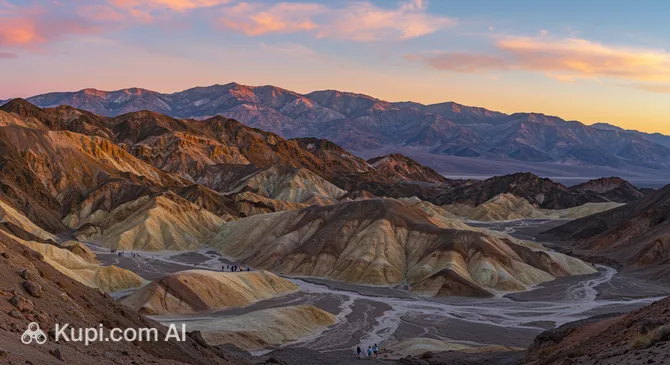
Death Valley. Illustration.
Source: Kupi.com AI

Despite the harsh conditions, Death Valley possesses a magnetic allure. Here, you will find alien landscapes that cannot be seen anywhere else. One of its hallmarks is Zabriskie Point — a hilly area with bizarre erosional forms, painted in incredible hues at sunrise and sunset. Equally impressive is Badwater Basin — a vast salt flat that is the lowest point in North America (86 meters below sea level). For breathtaking panoramic views, it's worth climbing to the Dante's View observation deck, which overlooks the entire valley.

Visiting Death Valley is a true adventure, a chance to see unique geological formations, a blooming desert (after rare rains), and an incredibly starry sky. This is a journey for those seeking extraordinary experiences and ready to encounter wild, untamed nature in all its splendor.

You can find more interesting facts on the Death Valley history page.

Weather Overview

The weather in Death Valley is characterized by extreme temperatures and extremely low precipitation. Summer here is incredibly hot and dry, with average temperatures in July reaching 35.0°C, and maximums can exceed 41.0°C. Rainfall in the summer months is practically non-existent. Winters are relatively mild, with average temperatures in January around 9.5°C, though nights can be chilly, with minimums around 4.4°C. A small amount of precipitation (about 1 mm) is possible in the winter months.

In general, expect a very hot and arid summer and a mild winter with minimal rainfall. Spring and autumn are transitional seasons with gradual temperature changes and also very low precipitation levels. To learn more, visit the Death Valley Climate page.

Average monthly temperature

Average monthly precipitation

Interesting Facts

Death Valley is not just one of the hottest places on the planet, but a real treasure trove of amazing secrets and natural phenomena. Behind its harsh facade lie many stories capable of capturing the imagination of any traveler. Here are just a few lesser-known facts:

  • It was here, at Furnace Creek Ranch, on July 10, 1913, that the highest air temperature on Earth was recorded, reaching +56.7 °C. This world heat record still stands today and makes Death Valley synonymous with extreme conditions.

  • Badwater Basin, located in Death Valley, is the lowest point on the entire North American continent — its depth is 86 meters below sea level. The vast salt fields here create landscapes that are truly alien and mesmerizing in their beauty.

  • The mysterious "sailing stones" of the Racetrack Playa dry lake are one of the park's most intriguing phenomena. These boulders, some weighing hundreds of kilograms, move across the clay surface on their own, leaving long tracks behind them. Scientists discovered that this happens due to a unique combination of a thin layer of ice, meltwater, and strong wind.

  • Despite its telling name and reputation as one of the most arid places, Death Valley surprises with its biodiversity. It is home to over 1,000 species of plants, including endemic species adapted to the harsh conditions, as well as various animals such as the desert bighorn sheep, coyote, and kit fox.

How to Get There

When planning a trip to this amazing corner of the USA, you should consider its distance from major metropolitan areas. Since there are no passenger airports within the national park itself, tourists will need to plan a combined route. You can find out more details about how to get to Death Valley to choose the most suitable option for you.

The most convenient and popular transit hub is McCarran International Airport (IATA: LAS). There is no airport in the town of Death Valley itself, but you can fly into this major air hub in Las Vegas, which is located approximately 167 km from the park. This is the region's primary international airport with a huge passenger flow. Travel time by rental car from here is about 2–2.5 hours, making it an excellent starting point.

If you are coming from central California, you can use the services offered by Fresno Yosemite International Airport (IATA: FAT). It is located in the city of Fresno, at a distance of about 250 km from Death Valley. The car trip will take approximately 3.5–4 hours. Another alternative is the regional Meadows Field Airport (IATA: BFL) in Bakersfield (about 227 km from the park), from where the drive will take about 3 hours.

For clarity, here is a summary of the main airports:

AirportPassenger trafficDistance
Eastern Sierra Regional Airport20 000158 km
McCarran International Airport57.6 mln168 km
Mammoth Lakes Airport35 000208 km
Meadows Field Airport390 000227 km
Fresno Yosemite International Airport2.7 mln251 km

As for rail service, there are no direct trains to Death Valley, and the nearest stations are significantly far away and not convenient for tourists. The only reliable way to reach the park and move around its vast territory is by car. We strongly recommend renting a car at your arrival airport, ensuring beforehand that the air conditioning is working and that you have a supply of water, as there is no public transportation within the park.

Main Attractions

Death Valley, despite its grim name, amazes visitors with unique alien landscapes and natural wonders. It is a place of extreme temperatures and surprising beauty, where every location tells its own geological story. Here are several key attractions that are definitely worth a visit.

One of the most photographed and recognizable spots is Zabriskie Point. This place is famous for its incredible erosional landscapes, painted in various shades of yellow, brown, and gold. Zabriskie Point looks especially impressive at sunrise or sunset, when the low sun emphasizes the bizarre relief and creates a dramatic play of shadows, attracting photographers from all over the world.

An equally iconic location is Badwater Basin — the lowest point in North America, situated 86 meters below sea level. Here, vast salt flats stretch out before you, creating an almost surreal, snow-white landscape. A walk along the specially designated wooden boardwalks allows you to feel the scale of this unique geological formation and see the famous sign marking sea level high up on the cliff.

For breathtaking panoramic views of the entire valley, including Badwater Basin and the majestic Panamint Range, a trip up to Dante's View is a must. From an altitude of over 1,600 meters, a truly stunning picture of this harsh yet incredibly beautiful land unfolds. It is the perfect place to appreciate the immensity and geological diversity of Death Valley.

Fans of classic desert landscapes should definitely visit the Mesquite Flat Sand Dunes. This is one of the most accessible spots in Death Valley to see picturesque sand dunes, some of which reach heights of up to 30 meters. They are particularly photogenic at sunrise and sunset, when long shadows accentuate their graceful curves and create a magical atmosphere.

Local Cuisine

The gastronomic experience in Death Valley is inseparable from its unique and rugged landscape. Here you won't find fine-dining restaurants with Michelin stars, but you can enjoy hearty American cuisine in a truly unforgettable setting. Dining in Death Valley is primarily an opportunity to recharge after exploring this amazing national park.

The foundation of the menu in local establishments consists of classic American dishes. Travelers should try the hearty burgers prepared on the grill, juicy steaks, and various sandwiches that are perfect for a roadside lunch. You can often find dishes with elements of Southwestern cuisine, such as chili or hearty meat stews, adding a touch of spice to the meal. Special attention is paid to portions — they are typically generous to feed tired adventurers.

In the extreme heat of Death Valley, drinks are of paramount importance. Of course, water is the most vital, and supplies should be constantly replenished. Among non-alcoholic options, iced tea, lemonades, and various sodas are popular. As for alcohol, bars and restaurants offer a good selection of American beer, including craft varieties from California, as well as classic cocktails. Occasionally, you can find drinks using desert plants, such as refreshing lemonade or cocktails based on prickly pear cactus juice, which adds local color.

The food culture in Death Valley is centered around several main locations. The primary dining spots are restaurants, cafes, and Wild West-style saloons located at hotels and visitor centers, such as Furnace Creek or Stovepipe Wells. Here you can have a full lunch or dinner in an air-conditioned room or grab a quick snack. Some general stores offer picnic supplies, allowing you to enjoy a meal against the backdrop of Martian landscapes. The atmosphere in these establishments is usually casual and friendly, conducive to exchanging impressions with other travelers from around the world.

Travel Tips

Welcome to Death Valley, one of the most extreme and mesmerizing places on the planet! To ensure your journey through this unique national park in the USA is safe and unforgettable, we have prepared some practical tips to help you prepare for this amazing but harsh land.

  1. Clothing and Essentials: In Death Valley, you can expect a predominantly hot and dry climate, especially in summer. Bring lightweight, light-colored clothing made from natural breathable fabrics. A wide-brimmed hat, sunglasses, and high-SPF sunscreen are essential. Evenings and nights, especially in winter months, can be cool, so a light jacket or fleece is useful. Sturdy, comfortable shoes are your best friend for walks in canyons and salt flats. Don't forget an adapter for American outlets (Type A and B) if your devices have different plugs.
  2. Transport: There is no public transportation in Death Valley. Renting a car is a necessity. Ensure the vehicle is in good technical condition, with air conditioning and a full-size spare tire. Before entering the park, be sure to fill up with a full tank of gas and bring a spare canister, as gas stations within the park are rare and significantly more expensive. Some remote roads may require a high-clearance or 4WD vehicle.
  3. Finances: The official currency is the US Dollar (USD). Credit and debit cards are accepted at visitor centers, hotels, and gas stations within the park. However, it is recommended to carry some cash, especially for small expenses or in case of technical failures. ATMs are very rare. Factor into your budget the park entrance fee, costs for gas, water, food, and potential accommodation. Tipping in restaurants and for guide services is standard practice in the USA (usually 15-20%).
  4. Health and Safety: This is a critically important point for Death Valley. Drink plenty of water — at least 4 liters per person per day, and more in the heat. Avoid physical exertion during the hottest time of day (10 AM to 4 PM). Inform someone of your plans if heading out on long hiking trails. Mobile service and GPS are absent or very unstable in most of the park. Pharmacies and full-scale medical facilities are a significant distance outside the park, so carry a basic first-aid kit. Beware of wildlife (rattlesnakes, scorpions) and do not leave food unattended.
  5. Communication: The primary language is English. Park staff and services speak English. Wi-Fi is available in some lodges (e.g., in the Furnace Creek area) but may be paid and slow. Do not rely on constant internet access. Download offline maps of the park and region to your smartphone in advance. The National Park Service (NPS) app can be useful. It is better to purchase a SIM card with a US number in a major city before entering the park.
  6. Local Etiquette and Park Rules: The main rule is “Leave No Trace”. Take all your trash with you, do not pick plants, do not disturb animals, and do not take rocks or other natural objects as souvenirs. Stay only on designated trails and roads. Respect the work of park rangers and follow their instructions.
  7. What to Avoid: Under no circumstances should you underestimate the extreme temperatures and aridity of Death Valley. Do not go hiking alone without proper preparation and water supplies. Do not drive off designated roads unless you have a suitable vehicle and off-road driving experience. Do not rely on mobile service as your only means of communication in an emergency.
  8. Additional Tip: The best time to visit Death Valley is from late autumn to early spring (October–April), when temperatures are more comfortable. Always check road conditions on the official park website before your trip, especially after rains, as flash floods are possible. And don't miss the chance to admire the incredibly starry sky — with no light pollution, it's stunning here!

By following these simple recommendations, you will be able to fully enjoy the incredible landscapes, unique geology, and rugged beauty of Death Valley. We wish you an amazing and safe adventure in one of the most unusual corners of the Earth!

Entertainment & Nightlife

Death Valley offers a truly unique experience for evening and nighttime entertainment, far removed from noisy city clubs and bars. Here, nightlife is primarily about the incredible starry sky, the deafening silence of the desert, and the opportunity to enjoy total tranquility. Instead of neon lights, there are myriads of stars, and instead of city bustle, there is the peaceful atmosphere of one of the darkest places in the USA, perfect for astronomical observations.

The main points for evening leisure are concentrated in the areas of the few hotels and lodges, such as Furnace Creek or Stovepipe Wells. Here you will find restaurants and bars where you can dine and spend time after a busy day of exploring Death Valley. The atmosphere in such establishments is usually very relaxed and friendly, with tourists gathering to share their impressions of what they've seen. These might include Wild West-style saloons at hotels or restaurants serving American cuisine. The dress code is generally casual, and operating hours are usually limited, not catering to late-night revelry. Specific establishments and their current schedules are best checked on-site or on the official Death Valley National Park website.

When planning an evening in Death Valley, keep in mind that entertainment options are limited and mostly concentrated in a few key points of the park. Nighttime travel is done exclusively by car; roads are not lit, so be extremely careful and observe speed limits. There is no public transport here, and taxi services are not common in the traditional sense. From a safety perspective, watch out for wildlife on the roads (such as coyotes) and always carry water, even for short night excursions. Naturally, there are no specialized nightlife districts or busy streets with bars here.

During the day, Death Valley offers completely different entertainment, entirely focused on its unique nature. This includes exploring its famous geological formations: the views from Zabriskie Point and Dante's View, walking on the Badwater Basin salt flat (the lowest point in North America), or touring the Mesquite Flat Dunes. Visitors can go hiking (recommended only during the cooler months and with great caution), engage in photography, or visit the park's visitor centers to learn more about its ecosystem, geology, and history. You won't find traditional city entertainment like large museums, theaters, or amusement parks here — the main attraction is the harsh and majestic nature itself.

Nighttime in Death Valley isn't about dancing until dawn and noisy parties; it's about contemplation, deep silence, and the incredible beauty of the night sky. It's a rare chance to see the Milky Way in all its glory and gain unforgettable impressions from connecting with primal, almost alien nature.

Parks & Museums

Death Valley, contrary to its harsh name, offers visitors not only extreme landscapes but also unique opportunities for nature exploration and historical immersion. While there are no traditional city parks with manicured lawns, the entire valley constitutes the massive Death Valley National Park, full of amazing natural zones and interesting cultural sites.

The heart of any Death Valley exploration is undoubtedly the national park itself. Within its vast expanses, several key zones stand out as must-visits. Zabriskie Point is famous for its surreal, almost Martian-like landscapes formed by erosion; this spot is especially impressive at sunrise or sunset. Equally iconic is Badwater Basin — the lowest point in North America (86 meters below sea level), where you can walk across extensive salt flats. For lovers of classic desert views, the Mesquite Flat Sand Dunes are perfect, offering photogenic vistas and the chance to feel like you're in a true desert.

To learn about the region's history and nature, several key places are worth visiting. The Furnace Creek Visitor Center is the park's main information hub. Here, you can not only get maps and route advice but also explore exhibits dedicated to the geology, flora, fauna, and human history of Death Valley's development. Nearby, on the grounds of The Ranch at Furnace Creek, is the Borax Museum. This small but informative museum tells the story of borax mining — the "white gold" of Death Valley — and displays vintage mining equipment and artifacts.

Death Valley's historical heritage is closely linked to the mining era. One of the most significant monuments of that time is the ruins of Harmony Borax Works. It was from here that the famous "twenty-mule teams" hauled borax across the desert. Visiting this site allows you to touch the hard work and daily life of the pioneers.

For an authentic experience, besides the popular viewpoints, try exploring one of the less crowded canyons (always taking precautions and carrying sufficient water). At night, Death Valley transforms into one of the best places for stargazing due to the lack of light pollution — a sight that will be remembered for a long time.

Getting Around

When planning a trip to Death Valley, it is important to understand that this is a vast national park, not a city with a developed public transportation system. There are no subways, trams, trolleybuses, or regular city bus routes that tourists are accustomed to in metropolitan areas. Moving through this unique territory has its own specific features.

The primary and essentially only way to explore the vast spaces of Death Valley is by personal or rental car. Public transport in its classic sense (scheduled buses, metro, trams) is non-existent here. Consequently, there are no familiar fare payment systems such as transit cards, passes, or mobile apps for purchasing city transport tickets.

For a comfortable and safe journey through Death Valley, it is strongly recommended to rent a car, preferably with good air conditioning, especially if your trip is planned for the hot months. Before heading deep into the park, make sure you have a full tank of fuel, as gas stations are rare. Always carry an adequate supply of drinking water, as the climate here is extremely dry and hot.

If driving yourself is not in your plans, an alternative could be organized tours. Many companies offer excursions from Las Vegas and other nearby locations, including transportation to the key attractions of Death Valley. It is important to note that taxis or popular ride-sharing services are not a practical or accessible way to get around inside the park itself due to its vast territory and limited network coverage. Cycling is possible during the cooler months on designated roads but requires excellent physical preparation, careful route planning, and consideration of the harsh natural conditions.

Instead of buying public transport tickets, a park entrance fee is paid when entering Death Valley National Park. This fee is usually valid for one vehicle and all its passengers for several days. It is recommended to check the official U.S. National Park Service website for current costs and payment methods before your trip. Some lodges and hotels within the park may offer limited shuttle services for their guests, but this is not part of a general public transport system.

Accommodation

When planning a trip to Death Valley, it is important to arrange accommodation in advance, as the options here are unique and limited in number, especially during peak season. Housing choices range from historic hotels and ranches inside the park to motels in nearby towns and campgrounds for nature lovers.

Inside Death Valley National Park itself, the main lodging options are concentrated in several key points. The most popular areas are Furnace Creek, Stovepipe Wells, and Panamint Springs. Furnace Creek offers the most developed infrastructure, including several accommodation options ranging from comfortable rooms to simpler ones. For example, well-known complexes like The Inn at Death Valley and The Ranch at Death Valley are located here, offering different levels of service. Stovepipe Wells also has its own hotel and serves as a good base for exploring the northern part of the valley. Panamint Springs offers a more secluded and basic lodging option. It is important to note that while famous lodging sites are mentioned in this overview, we do not provide direct links to them as they were not provided in the current list of attractions for detailed analysis. Nevertheless, the specified areas are the main locations for finding housing in the park.

Outside the park, more options can be found in Nevada towns such as Beatty or Pahrump, or in California towns like Lone Pine. While staying here might be more budget-friendly, consider the time it will take to drive to Death Valley's main attractions.

The price range for accommodation in Death Valley can be quite wide: from moderate in motels outside the park to high in popular hotels inside the park. It is highly recommended to book accommodation well in advance, especially if your trip falls in spring or autumn — the most popular seasons. In summer, despite the extreme heat, some tourists still visit the valley, but the choice of open options may be smaller. Reservations can be conveniently made through official hotel websites, online booking systems, or travel agencies.

Nearby Cities

For those who want to explore the surrounding area, Death Valley serves as an excellent starting point for day trips to several interesting nearby locations:

Among them, the world-famous Las Vegas stands out, beckoning with casino lights and grand shows, along with the adjacent Paradise, where much of the famous Strip is located. For a quieter getaway, you might consider Henderson, which offers parks and opportunities for active recreation. More detailed information about nearby cities is presented in the table below:

CityPopulationDistance
Beatty1 00045 km
Lathrop Wells49 km
Pahrump42 47192 km
Yucca Flat099 km
Indian Springs1 500113 km

These nearby destinations allow you to get a sense of the region's diverse culture and landscapes.

Shopping & Souvenirs

Shopping in Death Valley is, first and foremost, an opportunity to purchase memorable souvenirs and items related to the unique nature and history of this national park. You won't find large shopping malls or designer boutiques here like in major USA cities. Instead, shops offer goods that reflect the spirit of the desert, as well as practical items for travelers.

There are no traditional shopping streets in Death Valley. The main shopping points are concentrated in several key locations within the park. The largest selection is usually found in stores at visitor centers and lodges, such as Furnace Creek, Stovepipe Wells, and to a lesser extent, Panamint Springs. It is here that travelers can find souvenirs and some essential goods.

Large shopping centers in their classic sense are absent in Death Valley. Shopping here is more local and specialized, catering to the needs of tourists and park visitors.

You won't find organized food or flea markets within Death Valley. All trade is concentrated in permanent stores at tourist sites.

From Death Valley, it's worth bringing back souvenirs that will remind you of this harsh but beautiful land. Popular items include: T-shirts, caps, and mugs with park symbols; books about the geology, flora, fauna, and history of Death Valley; postcards and posters with breathtaking views. Sometimes you can find crafts related to the culture of the region's Native Americans. Also, look for small themed items, such as mineral samples (purchase only in official stores to ensure ethical sourcing) or themed sweets, like prickly pear candies.

Store hours in Death Valley usually coincide with the operating hours of the visitor centers and hotels where they are located. They may change depending on the season: in summer, during periods of extreme heat, hours may be reduced. Most stores accept major credit and debit cards (Visa, MasterCard, American Express). Cash is also accepted, but carrying a card is often more convenient.

In the USA, a Tax Free system for goods similar to the European one is generally not common for foreign tourists at the individual state level for regular purchases. Sales tax is added to the price of goods, and the amount varies. This tax is usually not refundable for tourists upon leaving the country.

Reached the end of the page?

That means the route is fully explored