Support

Fort Irwin

About

Fort Irwin is a unique and significant location situated in the heart of the High Mojave Desert in California. Known primarily as the home of the National Training Center, this installation is more than just a military facility; it is a self-contained community surrounded by the stark, rugged beauty of the desert landscape. With a population of approximately 9,100 residents, it serves as a vital hub in San Bernardino County, offering a glimpse into a specialized lifestyle amidst the arid terrain.

Located in the southwestern region of the United States, roughly 37 miles northeast of Barstow, Fort Irwin experiences a classic desert climate characterized by hot summers and cool winters. The relative isolation of the area contributes to its pristine night skies and dramatic geological formations, making it a place of distinct atmospheric character distinct from the coastal cities of the state.
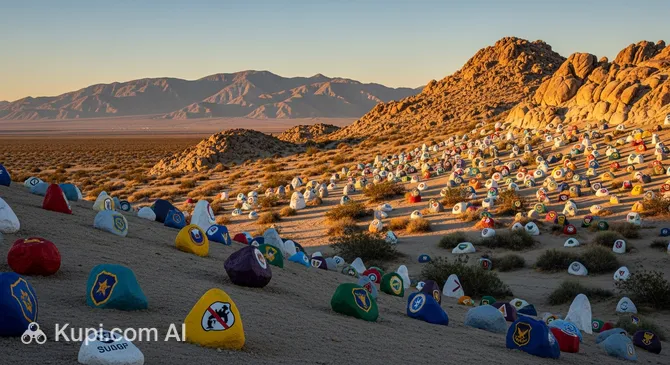
Fort Irwin. Source: Kupi.Binoculars

The area has a fascinating background that predates its current function. Visitors interested in the history of Fort Irwin will find that its heritage stretches back to Native American trade routes and later served as a crucial anti-aircraft range during the mid-20th century. Today, the location is steeped in tradition, blending its operational purpose with the daily lives of the families who reside there.

While access to the base is generally restricted to authorized personnel and their guests, the surrounding region offers intriguing sights. One of the most notable features nearby is the "Painted Rocks" area, where military units have traditionally painted their insignias on desert boulders, creating a colorful and unique historical record. Additionally, the base is located near the NASA Goldstone Deep Space Communications Complex, adding a layer of scientific wonder to the rugged environment.

Whether you are visiting family stationed here or are simply fascinated by the vast expanses of the Mojave, Fort Irwin represents a resilient community thriving in one of the country's most challenging yet captivating environments. The sweeping desert vistas and the unique local culture make it a memorable destination for those who make the journey.

Weather Overview

Fort Irwin experiences a distinct high desert climate characterized by intense sunshine and significant seasonal temperature variations. The atmosphere is generally arid, offering clear skies for the majority of the year. For those planning a visit or deployment, checking the detailed weather in Fort Irwin is recommended to prepare for the specific conditions of each season.

Summers in the region are typically hot and dry. During the peak months of July and August, average temperatures range from 30.6°C to 32.0°C, with daytime highs frequently reaching up to 39.3°C. June is also quite warm, averaging around 28.1°C. This period sees virtually no rainfall, maintaining the stark, dusty beauty of the Mojave landscape.

Winters bring a sharp contrast, with cooler days and chilly nights. In December and January, the average temperature hovers around 9°C, while minimums can drop to approximately 3.7°C. Spring and autumn offer milder transitions; for instance, April sees pleasant averages of 18.8°C, and October cools down to about 20.2°C.

Precipitation is incredibly scarce throughout the year. Even during the slightly wetter months like March, rainfall rarely exceeds 1mm, and most months record 0mm of precipitation. Expect scorching, dry summers and cool, arid winters with minimal rainfall year-round.

Interesting Facts

Beyond its reputation as a major training center, Fort Irwin holds several fascinating secrets and historical curiosities hidden within the High Mojave. Here are a few unique facts that reveal the depth and scale of this desert community.

  • A State-Sized Facility: The installation covers a staggering area of over 1,000 square miles. To put its vastness into perspective, the territory is roughly equivalent in size to the entire state of Rhode Island.

  • The Camel Corps Connection: Long before modern vehicles traversed these sands, the area played a role in a unique 19th-century experiment. The historic Old Spanish Trail runs through the region, and it was once used by the U.S. Camel Corps, a short-lived military project that imported camels to transport supplies across the arid Southwest.

  • A Natural Runway: The site is home to Bicycle Lake, a massive dry lake bed that serves as a fully functional airfield. The surface is so naturally hard and smooth that it allows aircraft to land directly on the desert floor without the need for paved tarmac.

  • Hollywood-Style Sets: The landscape is dotted with highly realistic simulated villages known as "mock cities." These intricate structures are built to mimic real-world urban environments, complete with buildings and streets, making parts of the desert look like a high-budget movie set.

How to Get There

Reaching this unique desert community requires some planning, as the installation is located in a remote area of the High Mojave Desert. There are no direct commercial flights or trains into the base itself, so most visitors arrive by driving from nearby regional hubs. For a complete guide on the best routes and transportation options, you can read more about how to get to Fort Irwin.

The city of Fort Irwin does not have its own commercial airport. Travelers typically fly into major airports in the surrounding region and rent a car for the final leg of the journey. One of the most common entry points is Ontario International Airport (IATA: ONT), located in the city of Los Angeles (Ontario). It is situated approximately 158 km from Fort Irwin, and the drive usually takes about 2 hours via the I-15 North. This airport is a convenient option for those coming from the California coast.

Another significant option is McCarran International Airport (IATA: LAS), located in Las Vegas (Paradise). This major international hub is about 166 km away. The drive from Las Vegas to Fort Irwin takes roughly 2 to 2.5 hours, offering a scenic route through the desert. For those looking for a slightly closer but smaller alternative, Palm Springs International Airport (IATA: PSP) is about 160 km away, though the drive time is similar due to road conditions.

For clarity, here is a summary of the main airports:

Airport Name City Passenger Traffic Km from City
McCarran International Airport Las Vegas Very High 166.2
Ontario International Airport Los Angeles High 158.1
Hollywood Burbank Airport Burbank High 193.4
Palm Springs International Airport Palm Springs Medium 160.0
Mojave Air and Space Port Mojave Small 135.6

Fort Irwin does not have a railway station, and direct train access is not available. The closest Amtrak station is located in the city of Barstow, approximately 37 miles (60 km) southwest of the base. Travelers can take a train to Barstow and then proceed by taxi or rental car, which takes about 45 minutes to an hour. It is advisable to arrange ground transport in advance, as options in the desert can be limited compared to major metropolitan areas.

Main Attractions

Fort Irwin offers a distinct set of landmarks that reflect its dual identity as a premier military training facility and a community nestled in the High Mojave Desert. While access to the installation is restricted to authorized personnel and visitors with a valid sponsor, those who enter or pass by its gates can explore sites rich in history, military tradition, and scientific achievement.

The Painted Rocks constitute the most famous and accessible landmark associated with the base. Located just outside the main security gate along Fort Irwin Road, this collection of large granite boulders has been transformed into a colorful open-air gallery. For decades, military units completing their rotations at the National Training Center have painted their insignias and mottos on these rocks as a rite of passage. The site serves as a vibrant historical record of the thousands of soldiers who have trained here, offering a unique photo opportunity against the stark desert backdrop without requiring base access.

Goldstone Deep Space Communications Complex is a world-renowned scientific facility located on the installation's land, roughly 35 miles north of Barstow. Operated by NASA's Jet Propulsion Laboratory, this complex is one of only three such sites in the world (the others are in Spain and Australia) providing vital communications for interplanetary spacecraft. Its massive radio antennas, which rise dramatically from the desert floor, track missions ranging from Mars rovers to the Voyager probes at the edge of the solar system. While public tours of the antennas are currently limited and require advance arrangement, the facility remains a source of immense pride and curiosity for the local community.

General Robert W. Cone Heritage Center serves as the primary museum for the installation. Located on the base, this facility preserves the extensive history of the National Training Center and the 11th Armored Cavalry Regiment, known as the "Blackhorse Regiment." Visitors can explore exhibits detailing the area's evolution from a remote anti-aircraft range to a sophisticated training hub. The center features historical artifacts, uniforms, and displays that honor the soldiers who have served in the region, making it an essential stop for anyone interested in military history.

U.S. Army National Training Center (NTC) itself is often considered a living attraction for those fascinated by modern military operations. The training area, known as "The Box," covers an area roughly the size of Rhode Island and features elaborate "mock cities." These simulated urban environments, complete with buildings, streets, and infrastructure, are designed to replicate real-world conflict zones. While civilians cannot tour "The Box" freely, the sheer scale and realism of these facilities are a defining characteristic of Fort Irwin, often discussed by residents and personnel as a marvel of military engineering.

Local Cuisine

The culinary scene in Fort Irwin is defined by its unique status as a remote military community in the High Mojave Desert. Rather than fine dining, the area specializes in hearty, reliable American comfort food designed to satisfy appetites after a long day in the arid climate. The food culture here is deeply communal, with dining venues serving as the primary social hubs where residents, soldiers, and visiting families gather to connect and unwind.

When it comes to main dishes, the local favorites are undeniably classic and substantial. Gourmet burgers and buffalo wings are staples found at the popular Samuel Adams Brewhouse, often enjoyed while watching sports or relaxing with friends. For those seeking a break from traditional pub fare, the community surprises visitors with authentic Hawaiian rice bowls and savory musubi from L&L Hawaiian Barbecue, offering a flavorful tropical contrast to the desert environment. Pizza also plays a central role in the local diet, particularly at Pizza Hut, where it is the go-to meal for family nights and weekend gatherings.

The beverage culture focuses on refreshment and relaxation. A cold pint of Samuel Adams lager is the signature drink at the base's main social venue, which provides a welcoming atmosphere for the community. Non-alcoholic options are also widely available, with diners typically enjoying iced teas and sodas to stay hydrated in the dry heat.

Dining in Fort Irwin is centered around the Epicenter, which serves as the beating heart of the town's social life by combining dining with entertainment options like bowling. For those exploring the wider High Desert region, the historic Slash X Ranch Cafe is a notable destination located south of Barstow. A favorite among the off-road community, this rustic, Old West-style ranch is famous for its rugged charm and is often cited by locals as the place to find the "coldest beer in the desert" after a day on the trails.

Travel Tips

Visiting Fort Irwin offers a unique glimpse into life at a premier military installation set against the stunning backdrop of the High Mojave Desert. To make your trip smooth and enjoyable, it is essential to prepare for both the remote desert environment and the specific regulations of a strictly managed army base.

  1. Clothing and Gear: The desert climate is extreme and changeable. In summer, lightweight, breathable fabrics and a wide-brimmed hat are essential to protect against the intense sun. In winter, temperatures drop significantly, so bring warm layers and a heavy jacket. Always carry sunglasses and sunscreen. If you plan to explore the surrounding desert terrain or visit the Painted Rocks, wear sturdy, closed-toe shoes to protect your feet from cactus spines and local wildlife.

  2. Transportation: A personal vehicle is practically mandatory, as there is no public transportation within the base or connecting it to nearby cities. When driving on the installation, adhere strictly to speed limits; they are enforced rigorously by Military Police. Be aware that using a mobile phone while driving is prohibited unless you have a hands-free device. If you are renting a car, ensure you have all rental agreement documents handy for gate checks.

  3. Finances: The local currency is the US Dollar (USD). Credit and debit cards are widely accepted at the Post Exchange (PX), commissary, gas stations, and dining facilities. However, it is wise to carry a small amount of cash for smaller vendors or incidental tips. ATMs are available at the main commercial centers on base like the Epicenter and the PX complex.

  4. Health and Safety: Hydration is your top priority in the high desert; the air is incredibly dry, so carry water bottles everywhere, even in winter. Be mindful of desert wildlife such as rattlesnakes, scorpions, and coyotes, especially at dawn and dusk. For medical needs, the Weed Army Community Hospital is located on base, but for non-beneficiaries, emergency care is available while routine services might require a trip to Barstow.

  5. Communication: English is the primary language spoken. Cell phone coverage can be spotty in the deep desert stretches leading up to the base (Fort Irwin Road), but major carriers generally have good signal within the cantonment area. Wi-Fi is available in lodging facilities, the library, and some public areas like the Starbucks at the food court.

  6. Local Etiquette: Respect military customs. If you are outdoors or driving when "Reveille" (morning) or "Retreat" (evening) plays over the loudspeakers, it is customary to stop. Drivers should pull over safely and sit quietly, while pedestrians should stop, face the flag (or the direction of the music), and stand at attention until the music ends. This is a sign of respect deeply valued by the community.

  7. What to Avoid: Do not enter restricted areas. The training area known as "The Box" is strictly off-limits to unauthorized civilians due to live-fire exercises and unexploded ordnance. Additionally, avoid taking photographs of the main entry gates, security checkpoints, or any access control procedures, as this is a security violation.

  8. Base Access Tip: If you do not possess a Department of Defense ID card, you must stop at the Visitor Control Center (VCC) located at the main gate. You will need a valid government-issued photo ID (such as a REAL ID-compliant driver's license or passport), proof of vehicle registration, and insurance. Allow extra time for this process, especially during morning rush hours.

By keeping these practical tips in mind, you can navigate the unique logistics of Fort Irwin with ease. Whether you are there to support a service member or to witness the rugged beauty of the Mojave, respectful preparation ensures a memorable and hassle-free visit.

Entertainment & Nightlife

Entertainment in Fort Irwin is distinct from the nightlife of major cities, shaped largely by its unique environment and the needs of the military community. Rather than bustling nightclubs, the focus here is on camaraderie, relaxation, and active leisure. The Directorate of Family and Morale, Welfare and Recreation (MWR) plays a central role in curating activities, ensuring that soldiers and families have access to diverse ways to unwind within the safety of the installation.

The heartbeat of indoor recreation is The Epicenter. While it houses dining options, its primary draw is its entertainment facilities. The complex features the Strike Zone Bowling Center, a modern alley that hosts cosmic bowling nights and leagues, making it a favorite spot for friendly competition. Additionally, the venue offers an array of arcade games, providing a fun, family-friendly atmosphere where residents gather to socialize and play.

For a dedicated recreational experience tailored to service members, the Warrior Zone stands out as a high-tech haven. This facility is designed specifically for gaming and relaxation, boasting top-tier gaming stations equipped with the latest consoles, from Xbox to PlayStation. Beyond video games, visitors can enjoy billiards on well-maintained pool tables, play poker, or relax in theater-style seating to watch movies and major sporting events on large screens.

Movie enthusiasts can catch the latest Hollywood releases at the Post Theater. This facility offers a classic cinema experience right on base, screening first-run films at affordable prices. It serves as a quiet escape for couples and families looking to enjoy a traditional night out with popcorn and a show, without the need to drive to Barstow.

Given the stunning desert surroundings, Outdoor Recreation (ODR) is a vital resource for adventure seekers. This center goes beyond simple hiking advice; it offers an extensive equipment rental service. You can rent everything from camping gear and mountain bikes to recreational vehicles (RVs) and ATVs. ODR also frequently organizes guided trips and adventure programs, allowing residents to explore the High Mojave landscape safely and actively.

For those who prefer athletic entertainment, the base is equipped with excellent sports facilities. Several fitness centers, such as the Memorial Fitness Center and Box Fitness Gyms, offer more than just weights; they provide basketball courts, racquetball, and functional fitness areas. In the warmer months, the community swimming pools become popular hubs for cooling off and enjoying aquatic activities.

Parks & Museums

While Fort Irwin is primarily a military installation, its unique location in the High Mojave Desert offers a distinct blend of organized community green spaces and vast, rugged natural beauty. The cultural landscape here is deeply intertwined with military history, offering visitors and residents a chance to explore the heritage of the U.S. Army alongside the geological wonders of the surrounding desert.

Tiefort View Park stands out as one of the central recreational hubs within the community. Unlike typical city parks, this space is designed to provide a lush, green oasis amidst the arid environment. It features well-maintained playgrounds, picnic areas, and open fields where families gather for community events and outdoor relaxation. For tourists visiting friends or family on base, it offers a pleasant spot to experience the tight-knit community atmosphere and enjoy the stark contrast between the manicured lawns and the distant desert mountains.

The Mojave Desert itself serves as the ultimate natural park surrounding the installation. While much of the immediate land is restricted for training, the accessible areas offer a raw and unfiltered experience of nature. The terrain is dotted with creosote bushes, Joshua trees, and unique rock formations. Hiking and photography enthusiasts are drawn to the dramatic vistas, particularly at sunrise and sunset when the desert light paints the landscape in vibrant hues of orange and purple. It is a place of solitude and silence, offering a profound connection to the natural world.

General Robert W. Cone Heritage Center is the cultural crown jewel of Fort Irwin. This museum is dedicated to preserving the history of the National Training Center and the 11th Armored Cavalry Regiment. Inside, visitors can explore a comprehensive collection of military vehicles, historical artifacts, and uniforms that trace the evolution of desert warfare training. The exhibits provide a deep dive into the daily lives of soldiers and the strategic importance of the base, making it an educational experience that honors the legacy of those who have served in the High Desert.

Goldstone Deep Space Communications Complex, located on the installation's perimeter, acts as a gateway to the cosmos. While public access to the interior facilities can be limited and requires prior arrangement, the site itself is a monument to human scientific achievement. The massive radio antennas, visible against the skyline, are part of NASA's Deep Space Network. For science enthusiasts, seeing these engineering marvels in person is a reminder of Fort Irwin's role in space exploration history, bridging the gap between military precision and scientific discovery.

The Painted Rocks remain one of the most significant historical landmarks in the area. Located near the main gate, this open-air gallery features hundreds of boulders painted with the insignias of military units that have trained here over the decades. It is more than just a collection of graffiti; it is a living history book carved in stone, representing the camaraderie and passage of thousands of troops. Visitors can walk among the rocks to read the mottos and dates, gaining a tangible sense of the installation's enduring mission.

Old Spanish Trail offers a connection to the 19th-century history of the American West. Portions of this historic trade route, which once connected Santa Fe to Los Angeles, pass through the region. Although it is not a built structure, the trail is a significant cultural corridor. History buffs can appreciate the rugged journey undertaken by early explorers and merchants, imagining the caravans that once traversed the same dusty paths that modern tanks now use.

For a truly authentic experience, take the time to enjoy the night sky. Fort Irwin's remote location, far from the light pollution of major cities, makes it one of the best places in Southern California for stargazing. On a clear night, the Milky Way is often visible to the naked eye, transforming the dark desert sky into a dazzling natural planetarium that rivals any museum exhibit.

Getting Around

Getting around Fort Irwin differs significantly from navigating a typical city due to its nature as a secure military installation and its remote location in the High Mojave Desert. For the vast majority of residents and visitors, a personal vehicle is the most practical and efficient mode of transportation. The base is expansive, and while the main cantonment area containing housing, the commissary, and the Post Exchange (PX) is relatively centralized, the distances between facilities can still be substantial, especially during the heat of the summer.

Public transportation within the base and connecting to the outside world is provided by the Victor Valley Transit Authority (VVTA). The VVTA operates Route 118, a commuter bus service that connects Fort Irwin with the city of Barstow. This route is a vital lifeline for those without personal cars, offering a scheduled connection to the Barstow City Hall and other transfer points where travelers can access regional transit options, including Greyhound buses and Amtrak trains.

Travelers accustomed to using rideshare apps like Uber or Lyft should be aware of strict access protocols. Because Fort Irwin is a controlled-access facility, rideshare drivers cannot enter the base unless they possess a valid Department of Defense ID card or are sponsored by someone on the installation. Consequently, these services are generally not a reliable option for getting onto or around the base. Local taxi companies based in Barstow may have drivers with the necessary clearance, but it is highly recommended to book these services in advance.

For those who prefer active transportation, cycling is a popular way to navigate the community areas. The base features bike-friendly roads, but safety regulations are strictly enforced; all cyclists must wear helmets, and reflective vests are often required during hours of low visibility. Walking is feasible within the central commercial district, but pedestrians should remain mindful of the intense desert sun and carry water even for short walks.

If you are driving on the installation, strict adherence to traffic laws is mandatory. Speed limits are generally lower than off-base, often set at 25 mph (approx. 40 km/h) in main areas and 10 mph (approx. 16 km/h) in parking lots and when passing troops. Drivers must come to a complete halt at stop signs. Additionally, using a mobile phone while operating a vehicle is prohibited unless a hands-free device is used, and violators are subject to fines by the Military Police.

Accommodation

Finding accommodation in Fort Irwin requires a clear understanding of its nature as an active military installation located in a remote section of the High Mojave Desert. The range of lodging options is somewhat distinct from a typical tourist destination. Generally, visitors have two main choices: staying on the base itself, which offers convenience but requires specific access privileges, or finding a hotel in the nearby city of Barstow, which provides a wider variety of standard commercial lodging.

For those with base access, the most convenient area to stay is within the cantonment area of the installation. This keeps you close to the commissary, the Post Exchange (PX), and family housing. However, availability here can be tight, especially during major training rotations when visiting personnel fill the rooms. For travelers without military ID or sponsorship, or when on-base housing is full, the city of Barstow serves as the primary accommodation hub. Located about 37 miles southwest, Barstow offers numerous budget motels and mid-range chain hotels along Historic Route 66 and the I-15 corridor.

On the installation, the primary lodging provider is IHG Army Hotels. These facilities function much like standard hotels but are tailored to the needs of soldiers and their families, offering amenities such as free breakfast and pet-friendly rooms. Another popular option for those with recreational vehicles is the Fort Irwin RV Park. This facility offers full hookups and is a favorite for retirees and families who prefer a self-sufficient stay amidst the desert landscape.

When planning your stay, the most critical tip is to verify your eligibility and base access status before booking. Staying on the installation is generally restricted to military personnel, their dependents, and sponsored guests. If you are a civilian tourist without a sponsor, you will likely need to book accommodation in Barstow and commute to the base for your visit. Additionally, due to the cyclical nature of training exercises (rotations), lodging can book up months in advance, so early reservations are highly recommended.

In terms of pricing, accommodation in the region typically falls into the budget to mid-range categories. On-base lodging usually offers competitive, fixed government rates, while hotels in Barstow fluctuate based on the season and demand. Booking for off-base hotels can be done easily through standard online travel platforms, whereas reservations for on-base facilities should be made directly through the official army lodging websites or by phone to ensure you meet the necessary criteria.

Nearby Cities

For those looking to explore the surroundings, Fort Irwin serves as an excellent base for day trips to several interesting nearby locations. While the immediate vicinity is dominated by the vast Mojave Desert, a short drive south brings travelers to the vibrant communities of the Victor Valley, each offering its own unique slice of high desert culture.

Victorville is the commercial hub of the region and a must-visit for history buffs. Located along the historic Route 66, it features the California Route 66 Museum, which celebrates the legacy of the "Mother Road." The city also offers the Mojave Narrows Regional Park, a surprising patch of lush greenery and lakes perfect for fishing and picnicking in the desert. It serves as the primary city for shopping and dining for those stationed at or visiting the fort.

Just east of Victorville lies Apple Valley, known for its clean air and starry skies. This town has a rich history connected to Hollywood's "singing cowboys," Roy Rogers and Dale Evans, who made their home here. Visitors can explore the unique rock formations at Horsemen’s Center Park or enjoy the quiet, residential charm that contrasts with the bustle of larger cities.

Another notable destination is Hesperia, which appeals to outdoor enthusiasts. The city is home to Hesperia Lake Park, a popular spot for camping and trout fishing. Its location on the edge of the desert provides easy access to off-roading trails and hiking paths, making it a great spot for those who want to experience the rugged beauty of the landscape with the comforts of a town nearby.

City Population Distance (km)
Victorville 389,060 98
Hesperia 99,287 110
Apple Valley 75,311 96
Pahrump 42,471 123
Adelanto 37,229 100

These nearby destinations offer a glimpse into the diverse culture and landscapes of the region, ranging from historic Americana to outdoor adventures.

Shopping & Souvenirs

Shopping in Fort Irwin is primarily functional and designed to support the daily lives of the soldiers, families, and personnel stationed at the National Training Center. Unlike a typical tourist destination with sprawling retail districts, the commercial scene here is concentrated and efficient. Visitors will not find luxury boutiques or large department stores; instead, the focus is on providing essential goods, electronics, clothing, and military-specific items within a convenient distance of the residential areas.

The main shopping activity is clustered around the central cantonment area, often referred to as the "Town Center." This walkable district serves as the community's commercial heart, housing the primary retail facilities, dining options, and service centers. For visitors, this is the go-to location for picking up supplies or browsing for local memorabilia, though it is important to note that access to certain stores may be restricted to holders of a valid military ID or their accompanied guests.

The Main Post Exchange (PX) acts as the city's equivalent of a shopping mall. Operated by the Army & Air Force Exchange Service (AAFES), this large facility offers a department store-style experience. Shoppers can find a wide range of products, including brand-name clothing, footwear, electronics, cosmetics, and home goods. The complex also typically includes a food court and smaller specialty vendor stalls, making it a one-stop shop for most general needs.

For groceries and fresh produce, the Commissary is the primary market on the installation. It functions like a modern supermarket, offering a full selection of food items, from fresh meats and bakery goods to international ingredients. While its primary mission is to serve the troops with affordable groceries, it is an interesting spot to see the community in action. Occasionally, the base may host small community bazaars or craft fairs where local spouses and artisans sell handmade goods, though these are event-dependent.

When looking for souvenirs, the best items to bring back are those that reflect the unique military heritage of the National Training Center. Military memorabilia is highly popular, including unit patches, challenge coins, and apparel branded with the NTC or "The Box" logos. These items can often be found at the PX or at specific specialty shops on the installation. They serve as meaningful keepsakes that honor the distinct culture of the High Mojave Desert training ground.

Standard opening hours for the major retail facilities like the PX are generally from 09:00 to 20:00 on weekdays, with slightly reduced hours on weekends and holidays. Smaller convenience stores or "Express" locations may have extended hours to accommodate the schedules of service members. Payment is straightforward, with US Dollars (USD) being the standard currency. Credit and debit cards are universally accepted, and ATMs are available within the main shopping complex.

A significant advantage of shopping on a military installation is the tax-free status for authorized patrons. Goods purchased at the Post Exchange are exempt from state and local sales taxes, which can result in noticeable savings, particularly on larger items like electronics. However, this benefit is strictly limited to authorized personnel, so visitors should check with their military sponsor regarding purchasing regulations.

Reached the end of the page?

That means the route is fully explored