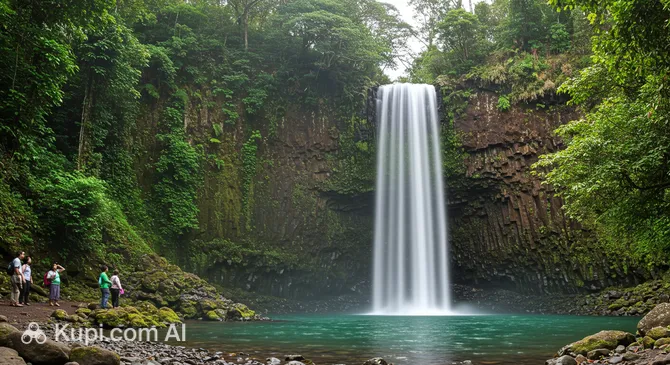
In the heart of the tropical paradise of the Hawaiian Islands lies one of the most recognizable natural wonders of the USA. This place attracts travelers with its pristine beauty and amazing optical phenomena. Rainbow Falls. Illustration.
Source: Kupi.com AI
Traveler photos:
Rainbow Falls (or Waianuenue) is a majestic cascade about 24 meters high, located within the city limits of Hilo.
The main feature of this natural landmark is embedded in its name: during sunny morning hours, the mist rising from the falling stream refracts light, creating a bright and distinct rainbow. The water plunges into a turquoise lagoon right in front of the entrance to a huge lava cave, which gives the landscape a mystical and mysterious look.
The waterfall is part of Wailuku River State Park and is fed by the waters of the Wailuku River—one of the largest rivers on the island by volume. Due to its easy accessibility and well-maintained observation decks, it is considered a must-see for anyone wanting to witness the power of Hawaiian nature in all its glory.
Contacts
When planning a visit to this natural landmark, it is helpful to check the official information beforehand. Although the waterfall is located within a state park and does not have a dedicated office building on-site, the key details will help you find your way. We have gathered the current contact information to make your trip to one of the island's most beautiful spots as comfortable as possible.
The main reason to visit Hilo is the chance to catch the magic of the morning rainbow. To see this natural phenomenon in its full glory, it's best to arrive at the observation deck around 10:00 AM on a sunny day. The upper platform offers a panoramic view, which is considered one of the best spots on the island for landscape photography.
For those who enjoy light walks, the park features short hiking trails. Walking a little deeper into the forest, you will find yourself among giant banyan trees with their whimsical aerial roots. This is a great opportunity to feel the scale of tropical nature and enjoy the cool shade of centuries-old canopies.
The natural cave behind the wall of water is of particular interest. While entering is usually prohibited for safety reasons, the sight of the black maw of the lava grotto against the backdrop of sparkling streams is impressive even from a distance. Depending on the season, the character of the waterfall changes: after heavy rains, it turns into a raging, roaring torrent, demonstrating the full power of the elements.
Getting There
Getting to the waterfall from downtown Hilo is extremely easy: the drive takes only about 5–10 minutes. You should follow Waianuenue Avenue heading west. The road is fully paved and well-signposted, so finding the site is easy even without a navigator.
For those flying into Hilo International Airport (ITO), the trip will take approximately 15 minutes. You can use taxi services or rent a car right at the terminal. Public transportation in this area is limited, so a car remains the most convenient way to get around. A walk from the waterfront takes about 40–50 minutes, but keep in mind that the road is uphill the entire way.
Convenient parking is available right at the park entrance. Please note that for non-state residents, parking and admission may be subject to a fee (usually around $5 per vehicle). This is a small price to pay for maintaining the cleanliness and safety of the infrastructure in this amazing place.
Nearest city: Hilo
History & Facts
The history of this picturesque spot is closely intertwined with the rich cultural heritage of the Hawaiian Islands and the USA. For native Hawaiians, the Wailuku River has always held sacred significance. According to ancient myths, Hina—the moon goddess and mother of the legendary demigod Maui—lived in the cave behind the falls. Legends say that it was here that Maui performed one of his feats, saving his mother from the giant lizard Mo’o Kuna.
With the development of tourism in the 20th century, the waterfall became one of the most visited natural locations on the Big Island. Its inclusion in Wailuku River State Park helped preserve the region's unique tropical ecosystem and made it safe for the general public to access. Today, it is not just a beautiful view, but a living monument to the islands' volcanic past.
Interestingly, the waterfall's geological structure is unique: it was formed at the junction of two different lava flows that are thousands of years old. Over time, the powerful water eroded the softer rock beneath the basalt layer, creating the amphitheater and the massive cave. This is a clear example of how the forces of water and stone have shaped Hawaii's unique landscape over centuries.
Time Needed
Usually, 1 to 1.5 hours is enough to see the waterfall and the surrounding area. This time is quite sufficient to leisurely enjoy the views from several observation decks, take memorable photos, and take a short walk along the forest trail to the top of the cascade.
If you plan to have a picnic in the park or decide to combine your visit with other interesting spots along the Wailuku River, your visit may extend to 2–3 hours. The location is perfect for a short but impressive stop during a larger trip around the Big Island.
Working Hours
Access to Rainbow Falls as a natural feature in the state park is open daily and around the clock. However, for the most comfortable and safe viewing, it is recommended to plan your visit during daylight hours—from 7:00 AM to 6:00 PM. It is during the day that you can fully appreciate the brightness of the tropical greenery and, if you're lucky, see the famous rainbow.
Keep in mind that in cases of extreme weather or heavy downpours, which are not uncommon for this part of the island, access to the observation decks may be restricted for safety. Before your trip, it's always useful to check the official website of the state department of land and natural resources to ensure there are no temporary closures.
Nearby
Exploring the area around the Wailuku River can significantly enrich your trip. Many interesting locations are situated near the waterfall: from historical memorials to cozy city spots and famous banyan groves.
Strolling through the nearby streets will allow you to better feel the atmosphere of old Hilo and see unique sites related to the history of the islands' development and local culture.