Support

Kapolei

About

Kapolei is a dynamically developing and charming city located on the sunny southwestern coast of the island of Oahu in the USA. Often referred to as Honolulu's "Second City," it represents a unique blend of modern urban infrastructure and a relaxed tropical resort atmosphere. With a population of approximately 23,248, Kapolei remains a cozy and welcoming place where you can escape the hustle and bustle of major metropolises while enjoying a high level of comfort.

Geographically, the city is situated on the leeward side of the island, which ensures a magnificent climate with plenty of sunny days and minimal rainfall. Although it is a modern hub today, Kapolei's history is inextricably linked to the era of sugar plantations and the rich cultural heritage of native Hawaiians, giving walks around the area a special meaning.
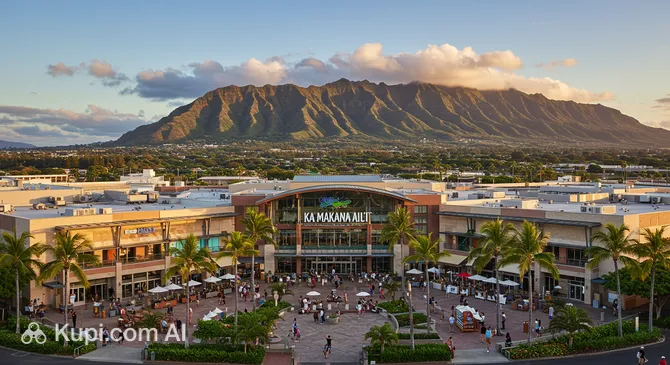
Kapolei. Illustration.
Source: Kupi.com AI

One of the main features attracting tourists here is the close proximity to the famous Ko Olina resort area. Its picturesque man-made lagoons, protected from ocean waves, have become a hallmark of the region and an ideal spot for a family beach vacation. Additionally, the city serves as an excellent base for active entertainment enthusiasts, offering access to water parks, world-class golf courses, and marinas for boat trips.

If you are planning a trip to Hawaii and looking for a place where natural beauty combines with convenience and tranquility, Kapolei is an excellent choice. This city is ready to provide you with unforgettable impressions, whether it's a lazy day on the beach or an exciting exploration of Oahu's sights.
Weather Overview

Kapolei is famous for its magnificent tropical climate, characteristic of the dry leeward side of the island of Oahu. It is almost always sunny here, and seasonal temperature fluctuations are minimal, making the city a wonderful destination for a holiday at any time of the year. Expect warm, comfortable days year-round with occasional refreshing rains that quickly give way to bright sunshine.

The winter period, from January to March, features mild weather: the average temperature is about 22.0°C — 22.7°C, and daytime highs reach 24.3°C. During this time, the number of rainy days varies from 7 to 11 per month, but rainfall is usually insignificant. To choose the perfect time for your visit and find the current forecast, we recommend checking the detailed weather in Kapolei before planning your trip.

Summer and early autumn bring a slight warming. From June to October, the average temperature rises to 25.4°C — 25.9°C, while in September the thermometer can reach 27.8°C. This is the driest period of the year: the number of days with precipitation drops to 5–6 per month, providing excellent conditions for long days on the beach and water activities.

Average monthly temperature

Average monthly precipitation

Interesting Facts

Beyond its main attractions, Kapolei holds many fascinating secrets. This city, designed as an ideal place to live and vacation, hides interesting details known only to a few travelers.
  • A Planned City. Unlike many other Hawaiian towns that grew spontaneously, Kapolei was carefully designed as Oahu's "Second City." The master development plan provided for an autonomous center that would relieve Honolulu, resulting in surprisingly wide streets and well-thought-out infrastructure uncommon for older island towns.

  • An Engineering Marvel of Lagoons. The resort's famous beaches, such as Ko Olina Lagoon 4, are actually man-made. Engineers designed them to ensure constant natural circulation of ocean water while completely protecting the shore from strong waves, creating the effect of a giant open-air pool.

  • A Royal Retreat. Near the modern buildings lies the historical area of Lanikuhonua, whose name translates to "where the heavens meet the earth." In ancient times, this picturesque stretch of coast served as a private residence for Hawaiian chiefs (Ali'i), who came here for rest and purification in the sacred waters.

  • Railway Heritage. Kapolei is one of the few places on the island where the memory of the sugar plantation era remains alive. The Hawaiian Railway Society is based here, and on weekends, they run a historic train along the only surviving tracks. The route passes through former sugarcane fields, telling the industrial history of the region.

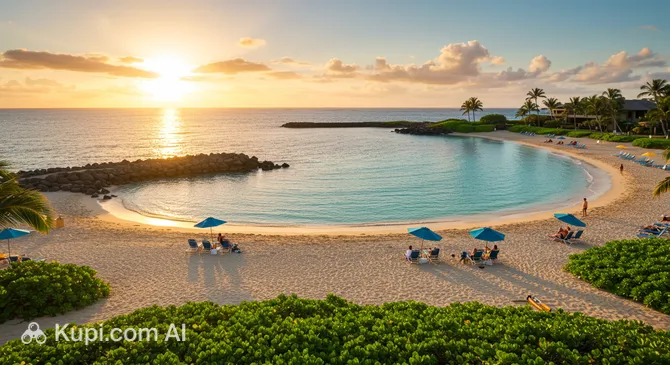
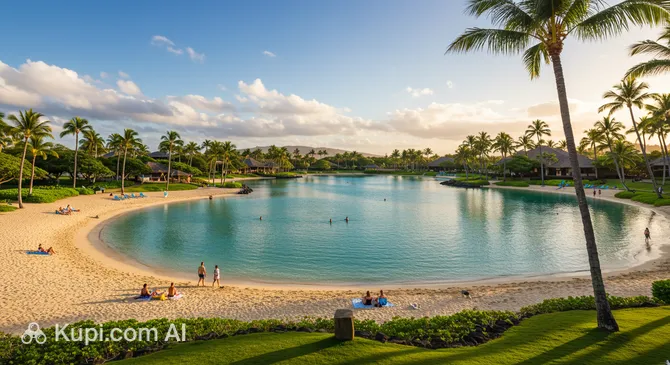
Ko Olina Lagoon 4. Illustration.
Source: Kupi.com AI

Traveler photos:

How to Get There

Getting to this sunny corner of Oahu is quite simple, as it is located just a few dozen kilometers from the archipelago's main transportation hub. Most tourists arrive by air. You can learn more about how to get to Kapolei and plan your route by checking the information below.

The main air gateway for travelers is Honolulu International Airport (IATA: HNL). In fact, it is not located in Kapolei itself, but in the neighboring city of Honolulu. It is the largest airport in the state, receiving flights from all over the world. The distance to Kapolei is only about 16 km. The trip by taxi or rental car via the H-1 highway usually takes about 45 minutes, depending on traffic density.

Other nearby airports, such as Lihue Airport (IATA: LIH) or Molokai Airport (IATA: MKK), are located on neighboring islands (Kauai and Molokai, respectively). There is no direct land connection to them. If you arrive at one of these islands, you will need to transfer to a domestic flight to Honolulu to reach Kapolei.

For clarity, here is summary information on the main airports in the region:

AirportPassenger trafficDistance
Honolulu International Airport21.9 mln16 km
Molokai Airport290 588104 km
Lanai Airport81 477132 km
Lihue Airport3.6 mln148 km
Kapalua Airport110 000152 km

Since there is no intercity rail service on the islands, the main way to get to Kapolei from Honolulu Airport remains road transport. Tourists often rent a car directly at the airport terminal, which provides freedom of movement around the island. Taxi, ridesharing (Uber, Lyft), and shuttle services are also available to take you directly to your hotel doors. For budget-conscious travelers, there is a public bus system called TheBus, connecting the airport with various areas of the island.

Main Attractions

Kapolei, often called the "Second City" of Oahu, offers tourists a variety of entertainment for every taste — from serene relaxation on perfect beaches to exciting adventures and cultural shows. Here, modern resorts harmoniously blend with the natural beauty of the Hawaiian Islands, creating the perfect conditions for an unforgettable vacation.

One of the main jewels of the city is the Ko Olina resort area. It features four man-made lagoons with crystal-clear water and white sand, such as Ko Olina Lagoon 4. This is an ideal place for families with children, as breakwaters protect the lagoons from ocean waves, making swimming safe and comfortable. Stroll along the scenic paths, relax in the shade of palm trees at Ko Olina Beach Park, or simply enjoy the sun and tranquility of this paradise.

Ko Olina Beach Park. Illustration.
Source: Kupi.com AI

Traveler photos:

For those seeking bright emotions and water fun, the Wet 'n' Wild Hawaii water park is a must-see. Spanning over 10 hectares, it features dozens of attractions: from extreme slides for adrenaline junkies to calm pools and a lazy river for relaxed recreation. It's a wonderful place to spend a fun day with the whole family.

To dive deeper into Polynesian culture, visit one of the famous Hawaiian shows — a luau. For instance, Paradise Cove Luau offers guests not only a traditional dinner with exotic dishes but also a colorful performance with songs, fire dances, and ancient rituals on the ocean shore. This is a unique opportunity to touch the history and traditions of Hawaii in an incredibly atmospheric setting.

If you want to complement your beach holiday with active adventures, head to Coral Crater Adventure Park. Ziplines, ATV racing, a climbing wall, and many other challenges await you here, providing a boost of energy and unforgettable impressions. The park is located in a unique spot — inside an ancient volcanic crater, which adds a special flair to the adventures.

Local Cuisine

The culinary scene in Kapolei is a vibrant reflection of Hawaii's multicultural heritage, where Polynesian traditions are harmoniously intertwined with Asian and American culinary trends. Here, on the sunny coast, you will find everything: from fine dining restaurants at Ko Olina resorts to casual eateries and food trucks offering authentic local flavors.

Start your exploration of local food with Hawaii's main hit — poke. This dish of cubed fresh raw fish (usually tuna), marinated in soy sauce with sesame oil, onions, and seaweed, is prepared brilliantly here. Another must-try item is Kalua pork. The meat is slow-cooked in an underground "imu" oven, gaining incredible tenderness and a smoky aroma. It is often served with rice or as part of a traditional lunch plate.

Since the city is located by the ocean, seafood takes center stage on the menu. Lovers of crab, shrimp, and lobster should stop by Da Crawfish & Crabshack. This establishment is famous for its generous portions and casual atmosphere, where food is often served directly on a paper-covered table in the best Cajun and local traditions.

Food culture in Kapolei is very diverse. Locals enjoy having breakfast and lunch in cozy cafes like Kalapawai Cafe & Deli. This is a great place to try sandwiches with fresh ingredients or just have a cup of coffee in a relaxed setting. Speaking of desserts: on a hot day, there is nothing better than halo-halo — a popular treat of Filipino origin consisting of a mixture of shaved ice, condensed milk, fruit, jelly, and ice cream.

As for drinks, a morning in Hawaii is unimaginable without a cup of fragrant Kona coffee, grown on the neighboring Big Island. Among alcoholic drinks, the famous Mai Tai cocktail based on rum and tropical juices remains the king of parties. Craft beer from Hawaiian breweries is also gaining popularity in local bars and restaurants, providing perfect refreshment after a day at the beach.

Travel Tips

A trip to sunny Kapolei promises to be unforgettable, but a little preparation will make it as comfortable and carefree as possible. We have compiled a list of important practical recommendations to help you avoid common mistakes, save time, and enjoy your holiday in true "aloha" style.

  1. Clothing and Sun Protection. The climate here is hot and dry year-round, so the basis of your wardrobe will be shorts, T-shirts, and light dresses made of natural fabrics. Be sure to bring comfortable walking shoes and special coral shoes for entering the water at rocky beaches. It is critically important to use reef-safe sunscreen — Hawaii prohibits sunscreens with chemicals that harm corals.

  2. Transport Freedom. While Kapolei has TheBus and the Skyline rail line, renting a car is highly recommended for fully exploring Oahu. Distances between attractions can be large. Uber and Lyft work great, but it can be expensive for daily trips.

  3. Finances and Tipping. The official currency is the US dollar. Bank cards are accepted almost everywhere, from restaurants to food trucks, but having some cash ($20–$50) is useful for tips and markets. In the USA, tipping culture is mandatory: it is customary to leave 18–20% of the check amount in cafes and restaurants, and it's also common to thank valets and housekeepers with a dollar or two.

  4. Health and Safety. Kapolei is a safe area, but the main rule for tourists in Hawaii is: never leave valuables in the car, even in the trunk, to avoid thefts at beach parking lots. Pharmacies (like Longs Drugs) are easy to find in shopping centers, where you can also buy basic medications. Always follow warning signs on beaches regarding currents.

  5. Communication and Language. The primary language is English. It would be great if you learn a few words in Hawaiian: "Aloha" (hello/goodbye/love) and "Mahalo" (thank you) — locals really appreciate it. Wi-Fi is available in almost all hotels and cafes. For mobile internet, it's best to buy a prepaid SIM card (T-Mobile or AT&T) at a local supermarket.

  6. Local Etiquette. Life here flows at a relaxed pace. On the roads, it's customary to be polite and let other cars through (a "shaka" hand sign as a thank you is encouraged). If you are invited to a private home or enter some apartments, be sure to remove your shoes at the door — this is an important part of the local culture.

  7. What to Avoid. It is strictly forbidden to touch sea turtles and monk seals, which often rest on the beaches. This is a violation of federal law and carries a heavy fine. Maintain a distance of at least 3–5 meters and do not feed wild birds or animals.

  8. Traffic Hack. Kapolei is a "bedroom community" for many who work in Honolulu. Avoid getting on the H-1 highway toward the city in the morning (6:00 AM to 9:00 AM) and returning in the evening (3:30 PM to 6:30 PM). Plan your trips against the main flow of traffic to avoid losing precious vacation time in jams.

Kapolei is a place where modern comfort meets ancient traditions of hospitality. By following these simple tips and showing respect for local nature and culture, you can fully relax and take home only the warmest memories of your Hawaiian adventure.

Entertainment & Nightlife

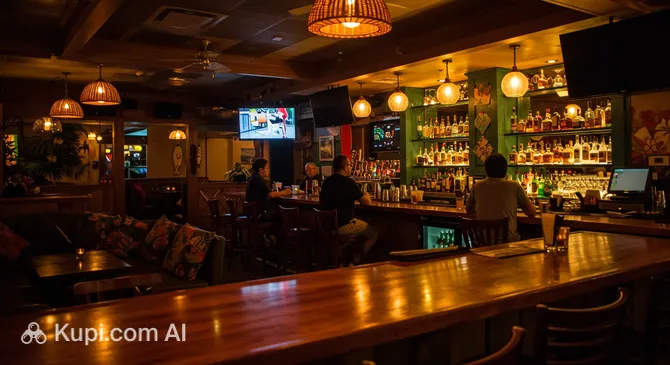
Nightlife in Kapolei is significantly different from the noisy and never-sleeping Waikiki. Here, you won't find massive nightclubs with booming music until dawn. Instead, evening leisure is infused with a relaxed "aloha" atmosphere, offering tourists cozy bars, fine dining with sunset views, and live Hawaiian music. The main activity is concentrated in two areas: the Ko Olina resort district and the modern Ka Makana Aliʻi shopping and entertainment complex.

For those looking for a classic bar atmosphere, Longboards is an excellent choice. This spot is perfect for a casual evening with friends: you can order craft beer or tropical cocktails and enjoy typical American snacks. The atmosphere here is laid-back and friendly, making it popular among both tourists and locals.

Longboards. Illustration.
Source: Kupi.com AI

Traveler photos:

If you want to add some Latin American rhythms and flavors to your evening, head to Mexico Cantina. This bar and restaurant is famous for its extensive selection of tequila and margaritas. It often gets lively in the evenings with music, while the stylish interior and open terrace create a great mood for long conversations. For lovers of fine dining and an elegant setting, an evening at Roy's Ko Olina — a restaurant by the famous chef where dinner smoothly transitions into wine and signature cocktail tastings — is an ideal option.

Dress Code and Price Tips: Most establishments in Kapolei adopt a "resort casual" style. For men, shorts and a polo shirt or a Hawaiian shirt are suitable; for women, a light dress or sundress. Strict evening dress codes are rare. Prices for cocktails and alcohol correspond to the overall high level of Hawaii (averaging $12–$18 per drink), but many bars have "Happy Hours" in the early evening when you can save significantly.

In terms of safety, Kapolei and especially the Ko Olina area are considered very peaceful places for night walks. The streets are well-lit, and the crowd consists mainly of family tourists and respectable locals. However, if you plan to consume alcohol, it is strongly recommended not to drive. The police strictly monitor order. The best way to get to your hotel at night is to use the Uber or Lyft apps, which operate here 24/7 and provide cars quickly.

During the day, the city offers just as many interesting activities: from shopping in major malls to visiting museums and relaxing on the beach. However, it is in the evening that it reveals a new, more romantic and peaceful side, allowing you to end a busy day with a glass of Mai Tai to the sounds of a ukulele.

Parks & Museums

Kapolei offers its guests a harmonious combination of well-maintained modern green areas and unique sites that preserve the memory of the island's past. Although the city is primarily known as a resort, one can find picturesque parks for quiet relaxation and cultural venues that allow for a deeper understanding of Hawaii's heritage.

The main attraction for nature and ocean lovers is Ko Olina Beach Park. This is not just a beach, but a vast, well-kept area with grassy lawns, ideal for picnics and watching the sunset. The park borders the famous man-made lagoons, connected by a scenic walking path several kilometers long. It is an ideal spot for morning jogs or leisurely evening strolls to the sound of the surf.

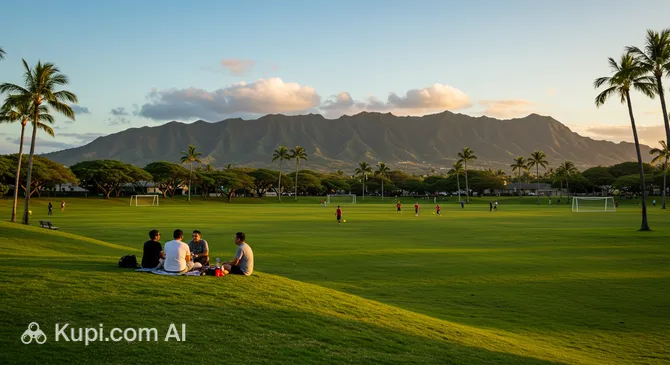
In the heart of the city lies Kapolei Regional Park. This spacious green space serves as a center for community life: local festivals, sports events, and fairs are often held here. For tourists, the park is interesting as a place where you can feel the true rhythm of islanders' lives, watch a football game, or simply relax in the shade of trees after shopping. The park is also equipped with a skate zone and walking paths.

Kapolei Regional Park. Illustration.
Source: Kupi.com AI

Traveler photos:

As for museums, Kapolei offers an unconventional approach to exploring history. One of the key historical attractions is the base of the Hawaiian Railway Society. This is an open-air museum dedicated to the sugar plantation era. Here you can see restored vintage locomotives and even ride a historic train on the only operational railroad on Oahu while listening to a guide's stories about the region's industrial past.

The Aulani Resort & Spa serves as a unique kind of art gallery. Although it is a hotel, it houses one of the most significant collections of contemporary Hawaiian art in the world. Works by local masters — wood carvings, traditional "kapa" mats, and paintings telling the islands' legends — are displayed in its lobby and throughout the grounds. This is an accessible way to experience the visual culture of Polynesia in an exquisite setting.

Insider Tip: If you are interested in ancient history, look for Puʻu o Kapolei hill, located in the park of the same name. In ancient times, this place was sacred and used by Hawaiians as a solar calendar to track the seasons. The climb to the top won't take long but will reward you with a panoramic view of the city and the ocean, which is especially beautiful in the rays of the setting sun.

Getting Around

The transportation system in Kapolei continues to develop actively, combining familiar bus routes with modern rail solutions. The highlight of recent years has been the launch of the Skyline light rail system. The terminal station of the first phase of this elevated railway is located in East Kapolei. A ride on the rail system allows you to get to neighboring areas and the Aloha Stadium quickly and comfortably, enjoying panoramic views of the island and avoiding heavy highway traffic. The cars are equipped with air conditioning and luggage space, which is especially convenient for travelers.

The main means of transportation around the city and its surroundings remains TheBus municipal service. This is a reliable and extensive network connecting residential areas, shopping centers, and the Ko Olina resort zone. Buses run regularly, but tourists should keep in mind that long-distance trips can take a lot of time due to frequent stops. For easy navigation and real-time schedule tracking, it is recommended to install the official DaBus app on your smartphone or use Google Maps.

To pay for bus and rail fare, a single HOLO contactless smart card is used. This is the most beneficial option for tourists thanks to the fare capping system: after you spend a certain amount in a day (equivalent to a day pass), further trips become free. You can purchase and top up a HOLO card at popular convenience stores like ABC Stores, 7-Eleven, or Foodland. Buses still accept cash, but drivers do not provide change, and paper transfer tickets are no longer issued — a card is required for free transfers between routes.

As an alternative to public transport, taxi and ridesharing services like Uber and Lyft are widespread in Kapolei. A car is easily hailed through the app, and wait times are usually minimal. However, given the city's spacious layout and wide streets, many travelers prefer renting a car. This provides maximum freedom of movement, allowing you to explore the hidden beaches and attractions of the west coast at your own pace. Bicycle infrastructure is also present but is more often used for recreational rides than as a primary mode of transport.

Accommodation

Accommodation options in Kapolei can be clearly divided into two main categories depending on location and the traveler's budget. The city offers everything from world-class luxury resorts on the beachfront to more practical and affordable hotels in the city center, catering to independent travelers and business people. There are almost no budget hostels here, but the vacation rental segment of apartments and villas is widely represented.

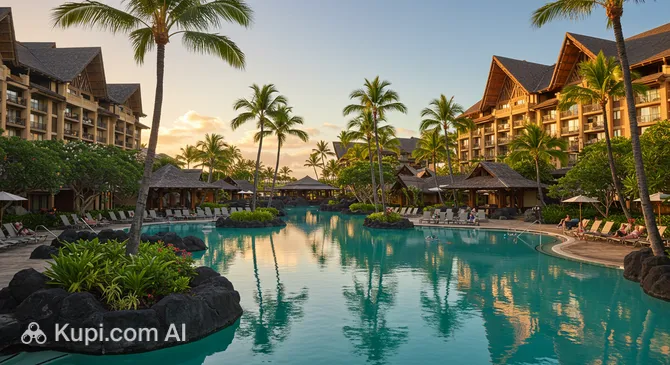
The most prestigious and sought-after area to stay is Ko Olina. This is a gated resort area located along picturesque lagoons. It is here that the most famous complexes offering a full range of services are located. For example, the famous Aulani Resort & Spa, created by Disney, is perfect for family holidays, immersing guests in the atmosphere of Hawaiian legends and impeccable service.

Aulani Resort & Spa. Illustration.
Source: Kupi.com AI

Traveler photos:

If you prefer more privacy and home comfort but don't want to sacrifice luxury, look into the Beach Villas at Ko Olina. This accommodation option consists of high-end condominiums with full kitchens and spacious living rooms, making them an excellent choice for long stays or large groups.

The second popular area is Kapolei City Center. Hotels here are located further from the beach (requiring a car or shuttle), but accommodation prices are significantly lower than on the coast. These are modern mid-range chain hotels that are convenient for their proximity to shopping centers, supermarkets, and the highway exit. This option is suitable for active tourists who plan to travel a lot around Oahu and use the hotel mainly for sleeping.

Booking Tips and Prices: Kapolei, and especially the Ko Olina area, belongs to the upper-middle and luxury price segments. During peak seasons (winter holidays and summer), room rates increase significantly, and the best options are sold out six months in advance. We recommend booking accommodation early through major online platforms or official hotel websites to catch special offers. It is also worth noting that an obligatory "resort fee" for using the infrastructure is added to many resort hotel rates and is paid on-site.

Nearby Cities

For those who want to explore the surrounding areas, Kapolei serves as an excellent starting point for day trips to several interesting nearby locations:

Just a 10-minute drive away is Waipahu — a former center of the sugar industry. This place is a must-visit for history buffs for Hawaii's Plantation Village, an open-air museum where you can learn about the lives of immigrants who shaped the modern culture of the islands. Additionally, the town is famous for its authentic restaurants and markets.

A little further is Pearl City, which attracts travelers not only with great shopping opportunities but also with natural beauty. The popular Waimano Loop hiking trail, leading to scenic waterfalls and jungle pools, starts here. The city also offers beautiful views of the famous Pearl Harbor.

Fans of quiet relaxation and golf will enjoy Ewa Gentry. This modern and well-kept neighborhood is famous for its green parks and proximity to prestigious golf courses, offering a relaxed atmosphere just a few kilometers from the resort hustle.

CityPopulationDistance
Makakilo20 8621 km
Ewa Gentry28 1256 km
Ocean Pointe16 6766 km
Ewa Beach14 6148 km
Nanakuli12 5879 km

These nearby destinations allow you to get a sense of the diverse culture and landscapes of the region.

Shopping & Souvenirs

Shopping in Kapolei is a blend of modern comfort and a relaxed island atmosphere. Unlike busy and crowded Waikiki, the shopping process here moves at a calmer pace, without the tourist crowds. Being the commercial hub of West Oahu, the city offers an excellent selection: from major department stores and famous brand boutiques to cozy local shops with unique Hawaiian goods. You can find everything needed for your vacation as well as memorable gifts.

The city's main retail activity is concentrated along the primary transport artery — Kapolei Parkway. It is along this wide street that key shopping complexes and entertainment centers are located. It is most convenient to move between them in a rental car, as distances can be significant for walking, but for those staying in the center, many shops are within walking distance.

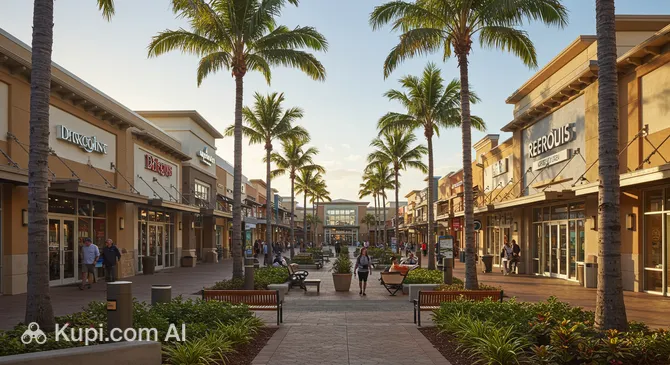
Among the shopping centers, Kapolei Commons deserves special attention. This is a spacious open-air mall where it's pleasant not just to shop, but also to just walk around. Popular American retailers (such as Target and Ross), clothing stores, cosmetics, and home goods are represented here. Additionally, the complex features many restaurants and a modern movie theater, making it a great place for evening family leisure.

Kapolei Commons. Illustration.
Source: Kupi.com AI

Traveler photos:

For daily errands and grocery shopping, tourists often choose the Kapolei Shopping Center. This is one of the area's oldest retail hubs, housing a large supermarket, pharmacies, banks, and a post office. While there are fewer clothing boutiques here, you can find everything needed for a beach picnic or for preparing dinner yourself in an apartment.

While Kapolei lacks traditional eastern bazaars, the Farmers Market culture is popular here. These are usually held once a week in the parking lots of large schools or shopping centers. It's the best place to buy the freshest tropical fruits — papaya, mango, pineapple — as well as to try homemade pastries and purchase handmade items from local artisans.

As souvenirs from Kapolei, it's worth bringing home culinary symbols of Hawaii: chocolate-covered macadamia nuts, fragrant Kona coffee, and fruit jams. Traditional Hawaiian shirts and dresses with bright prints, jewelry made of shells or koa wood, and natural cosmetics based on coconut oil and local flowers are also popular.

Most shops in the shopping centers are open from 10:00 AM to 9:00 PM, though supermarkets may open earlier and close later. Hours are often reduced on Sundays. Credit cards (Visa, MasterCard, American Express) and US dollars are accepted everywhere. Contactless payment via smartphones is also widespread.

Tourists should remember that in the US, prices on tags are listed without tax. In the state of Hawaii, a General Excise Tax (GET) applies, which will be added to the total at the register (about 4.7% on Oahu). The Tax Free refund system for foreign tourists, common in Europe, is not practiced here, so you won't be able to get a tax refund when leaving the country.

Reached the end of the page?

That means the route is fully explored