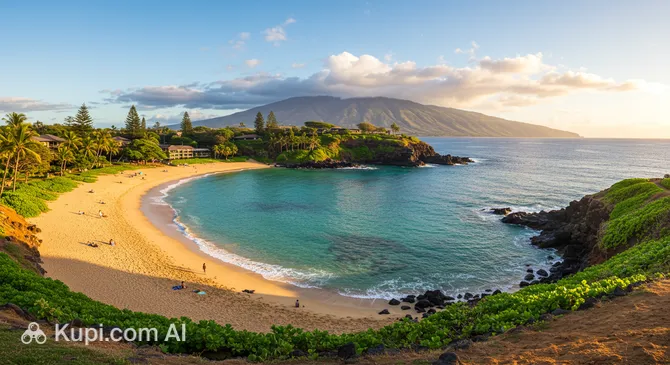
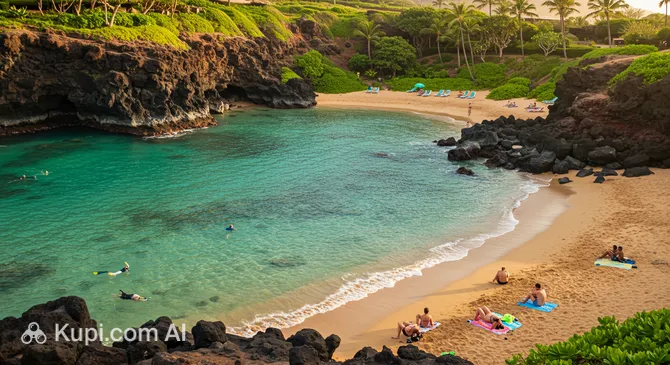
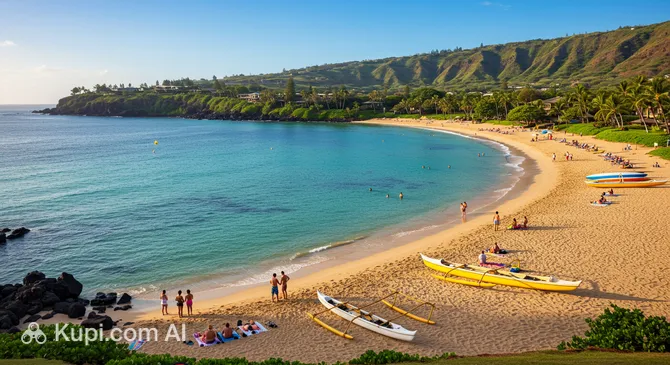
Kapalua is a breathtaking resort community located on the rugged northwest coast of Maui in the United States. Renowned for its elegant atmosphere and stunning natural landscapes, this destination sits at the foot of the verdant West Maui Mountains, offering travelers a perfect blend of luxury and island serenity. The area is characterized by its dramatic shoreline, bays protected by lava rock promontories, and a climate that keeps the surroundings lush and green year-round.
Kapalua. Illustration.
Source: Kupi.com AI
While today it is a haven for relaxation, the history of Kapalua is deeply connected to the island's agricultural past, evolving from a historic pineapple plantation into a world-class retreat. This heritage is still visible in the majestic Cook pines that line the roads and the careful preservation of the land's natural contours.
Visitors are spoiled for choice with outdoor activities and scenic beauty. The area is home to Kapalua Bay, often cited as one of the best beaches in the world for its golden sands and excellent snorkeling opportunities. Golfers can test their skills on championship greens like the Plantation Course, a regular stop on the PGA Tour. For those who prefer a leisurely pace, the Kapalua Coastal Trail provides miles of walking paths with spectacular ocean views.
Whether you are looking to unwind in a luxury resort or explore the vibrant marine life, Kapalua invites you to experience the true spirit of aloha in a magnificent setting.
Weather Overview
Kapalua offers a delightful tropical climate that makes it a fantastic destination for travelers at any time of year. The region enjoys remarkably consistent warmth, ensuring a comfortable environment for golfing, beachgoing, and exploring the outdoors regardless of the season. Average temperatures generally fluctuate gently, ranging from around 22°C in the cooler months to approximately 26°C during the warmest period.
For those planning a trip, understanding the weather in Kapalua can help with packing the right attire. The summer months, particularly from June through September, are typically the warmest and driest, with average daily highs reaching up to 27.5°C and very few rainy days. In contrast, the winter and early spring season, spanning from January to March, sees slightly cooler daily averages near 22°C and a higher frequency of wet days, though the overall precipitation volume remains low.
Expect warm, sunny conditions year-round with occasional light showers primarily occurring during the winter and spring months.
Average monthly temperature
Average monthly precipitation
Interesting Facts
Beyond its manicured fairways and pristine beaches, Kapalua holds fascinating secrets rooted in its geological and agricultural past. Here are some intriguing details that reveal the deeper character of this coastal retreat.
The name Kapalua beautifully translates from Hawaiian as "arms embracing the sea." This poetic description refers to the lava peninsulas formed by the West Maui volcano that jut out into the ocean, naturally protecting the shoreline and creating calm, crescent-shaped coves like Kapalua Bay Beach.
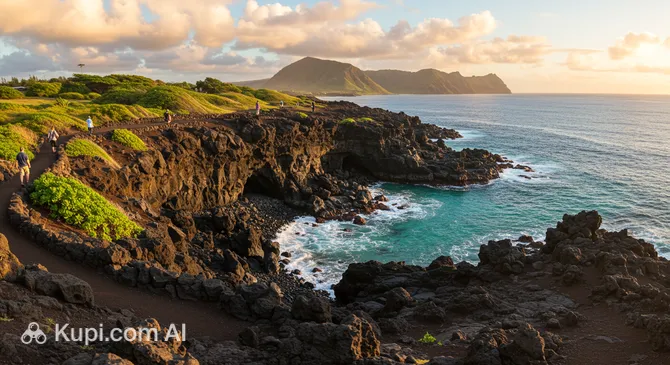
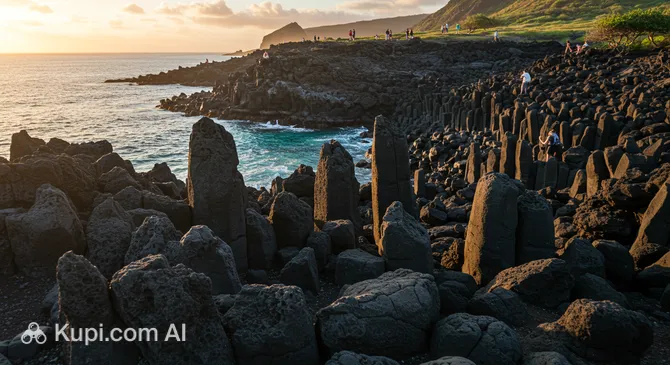
At Makaluapuna Point, visitors can witness a rare geological phenomenon known as the "Dragon's Teeth." These jagged, upright lava rock formations were created when fierce trade winds pushed back against molten lava flowing into the ocean, causing it to harden in sharp, vertical ridges that resemble the jaw of a mythical beast.
The majestic Cook pine trees that line the roads and golf courses are a living legacy of the area's history as a pineapple plantation. These trees were originally planted not just for aesthetics, but to act as windbreaks and to capture moisture from the mountain fog, dripping it down to naturally irrigate the thirsty crops below.
The Plantation Course at Kapalua is unique among professional golf venues for its dramatic elevation changes. Built on the slopes of the West Maui Mountains, the course plays significantly downhill, allowing golfers to hit some of the longest drives of their lives, aided by gravity and the prevailing trade winds.
Makaluapuna Point. Illustration.
Source: Kupi.com AI
Traveler photos:
How to Get There
Reaching this coastal paradise is a seamless part of the island experience, with options ranging from convenient commuter flights to major international arrivals. Whether you are coming from a neighboring island or crossing the Pacific, you can find more about how to get to Kapalua and choose the route that best suits your travel plans.
For those traveling between islands, the local Kapalua Airport (IATA: JHM) is the most direct option. Located within Kapalua itself, this small regional airport (West Maui Airport) primarily serves commercial propeller planes and commuter flights. Because it is situated just 4.2 km from the main resort areas, the transfer is incredibly quick; a taxi ride typically takes only about 5 to 10 minutes depending on your specific hotel location.
Most visitors, however, arrive via Kahului Airport (IATA: OGG), which is located in the city of Kahului, approximately 27 km from Kapalua. As the primary aviation hub for Maui, it handles the vast majority of transpacific and inter-island traffic. From Kahului, the drive to Kapalua is scenic and takes roughly 60 minutes by taxi or rental car, offering beautiful views of the coastline along the way.
Travelers may also connect through Honolulu International Airport (IATA: HNL) in Honolulu, which is about 136 km away on the island of Oahu. While you cannot drive from there, it serves as the major international gateway to the archipelago, connecting to Maui via frequent short flights.
For clarity, here is a summary of the main airports:
There are no railway stations in Kapalua or on the island of Maui, as the region does not have a public train network. Visitors typically rely on rental cars, airport shuttles, or taxis to navigate between the airport and their accommodation. Renting a car is often recommended for those wishing to explore the island's diverse landscapes at their own pace.
Main Attractions
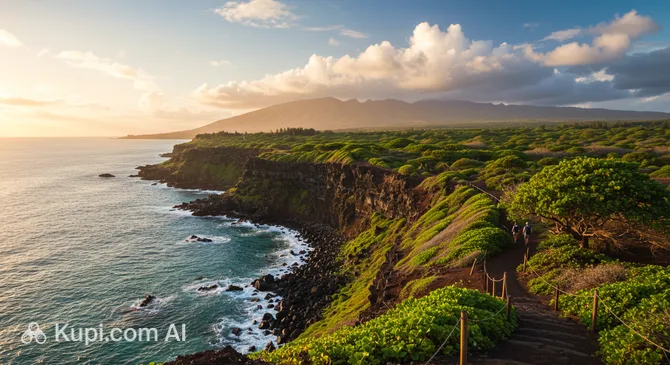
One of the most scenic ways to appreciate the region's beauty is by walking the Kapalua Coastal Trail. This gentle hiking path stretches along the oceanfront, connecting bays, beaches, and luxury resorts while offering uninterrupted views of the neighboring islands of Molokai and Lanai. It is particularly popular at sunset and provides excellent vantage points for spotting humpback whales during the winter migration season.
Kapalua Coastal Trail. Illustration.
Source: Kupi.com AI
Traveler photos:
For those seeking a mix of relaxation and recreation, D.T. Fleming Beach Park is a favorite destination located just north of the main resort area. This spacious, white-sand beach is backed by ironwood trees that provide welcome shade, making it ideal for picnics and family gatherings. The beach is renowned for its consistent waves, which attract boogie boarders and body surfers, and it is staffed with lifeguards for added safety.
D.T. Fleming Beach Park. Illustration.
Source: Kupi.com AI
Traveler photos:
A hidden gem within the Honolua-Mokuleia Marine Life Conservation District is Slaughterhouse Beach, also known as Mokuleia Bay. Despite its intimidating name—a relic of the area's ranching history—this secluded cove offers a stunning natural setting framed by steep cliffs. In the summer, the calm waters are perfect for snorkeling, while winter swells transform the bay into a dynamic spot for experienced surfers.
Slaughterhouse Beach. Illustration.
Source: Kupi.com AI
Traveler photos:
Visitors looking for an adrenaline rush can explore the area from above with Kapalua Ziplines. This adventure takes you high into the West Maui Mountains, soaring over deep gulches and lush valleys. It is an exciting way to learn about the island's flora and fauna while enjoying panoramic views of the coastline and the vast Pacific Ocean beyond.
Local Cuisine
The culinary landscape of Kapalua is defined by a strong commitment to the "farm-to-table" philosophy, taking full advantage of the island's rich volcanic soil and the surrounding ocean. Visitors can expect a sophisticated dining scene where Hawaii Regional Cuisine takes center stage, expertly blending fresh local ingredients with diverse flavors from across the Pacific Rim.
Seafood is the undisputed star of the menu here. Freshly caught fish such as Mahi-Mahi, Opakapaka (pink snapper), and Ahi tuna are daily staples, often prepared simply to highlight their natural freshness or crusted with macadamia nuts for a local twist. A must-try dish is poke, a savory salad of cubed raw fish—typically tuna—marinated in soy sauce, sesame oil, and sea salt, often mixed with seaweed (limu) and sweet onions. For a taste of the land, look for dishes featuring famous Maui onions and sweet Kula strawberries.
When it comes to beverages, the classic Mai Tai is the signature drink of choice. This rum-based cocktail, usually garnished with a wedge of fresh pineapple and a cherry, is the perfect accompaniment to a golden sunset. For non-alcoholic refreshment, fresh tropical juices made from guava, passion fruit (lilikoi), and pineapple are widely available. Coffee enthusiasts should also sample locally grown Maui coffee, which rivals the famous Kona blends in smoothness and rich flavor.
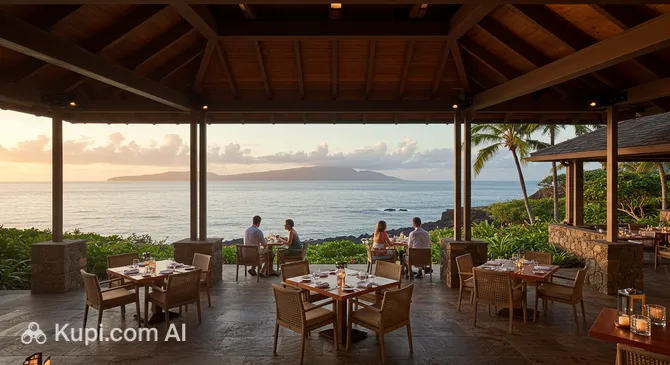
Dining in this area is as much about the atmosphere as it is about the food. The region is renowned for its open-air restaurants that offer spectacular views of the coastline, making sunset dinners a cherished ritual for travelers. A prime example of this experience is Merriman's Kapalua, located directly on the point overlooking the bay. This establishment is celebrated for its dedication to sourcing the vast majority of its ingredients locally, offering an authentic taste of the island in a breathtaking setting.
Merriman's Kapalua. Illustration.
Source: Kupi.com AI
Traveler photos:
Most dining venues are concentrated within the resort properties and the main village area, ranging from high-end fine dining establishments to casual poolside grills. While traditional street food stalls are less common in this manicured resort community compared to larger towns, the emphasis on high-quality ingredients and oceanfront ambiance ensures that every meal is a memorable event.
Travel Tips
Welcome to Kapalua! To ensure your time in this island paradise is as relaxing as the gentle trade winds, we have compiled a set of practical tips. These suggestions will help you navigate the local lifestyle, respect the environment, and make the most of your luxurious Hawaiian getaway.
Clothing and Gear: Pack lightweight, breathable fabrics like cotton and linen to stay cool in the tropical heat. While swimsuits and flip-flops (locally called "slippers") are perfect for the beach, most upscale restaurants in Kapalua require "resort casual" attire in the evenings—collared shirts for men and sundresses for women. Crucially, bring or buy only reef-safe mineral sunscreen (made with zinc oxide or titanium dioxide), as chemical sunscreens are banned in Maui County to protect the coral reefs.
Transportation: While the Kapalua Resort area offers a convenient complimentary shuttle service that runs between hotels, golf courses, and beaches within the resort, renting a car is highly recommended if you plan to explore the rest of Maui. Public transport (the Maui Bus) is available but can be slow and infrequent for tourists. Ride-sharing apps operate here, but availability can be limited early in the morning or late at night.
Finances: The currency is the United States Dollar (USD). Credit and debit cards are widely accepted almost everywhere, from hotel boutiques to food trucks. ATMs are easily found within the resort and at nearby shopping centers. Kapalua is a luxury destination, so budget for higher prices on dining and activities. Tipping is customary and expected in the US; plan to tip 15-20% for restaurant service, taxi rides, and spa treatments.
Health and Safety: The sun in Hawaii is stronger than it feels due to the breeze; apply sunscreen frequently. When swimming, always observe ocean conditions and heed warning flags; the currents at Mokuleia Bay (Slaughterhouse Beach) can be strong in winter. For minor health needs, there are markets in nearby Napili, but the main hospital and extensive medical services are located in Wailuku and Kahului, about an hour away.
Communication: English is the primary language, but you will often hear Hawaiian words mixed into conversation. It is helpful to know "Aloha" (hello/goodbye/love) and "Mahalo" (thank you). Cell phone coverage is generally excellent in Kapalua, though it may be spotty on remote hiking trails or the road to Hana. Wi-Fi is standard in all resorts and most cafes.
Local Etiquette: The "Aloha Spirit" is real—be patient, smile, and drive courteously. Locals often let others merge in traffic, and honking is considered rude unless it is an emergency. If you are invited into a local home or staying in a vacation rental with such a rule, always remove your shoes before entering. Respect the land (aina) by never leaving trash behind.
What to Avoid: Never touch or disturb marine life. Hawaiian green sea turtles (honu) and monk seals often rest on the beaches. They are protected by state and federal laws, and you must maintain a respectful distance (at least 10 feet for turtles, 50 feet for seals). Harassing them carries calm but hefty fines and is deeply offensive to locals.
Grocery Tip: If you are staying in a villa or condo with a kitchen, consider stopping at a large grocery store in Kahului near the airport before driving out to Kapalua. While there are excellent markets in the Kapalua and Napili area (like the Honolua Store), stocking up on staples in town can offer a wider selection and better prices for longer stays.
By keeping these simple tips in mind, you will be well-prepared to embrace the laid-back rhythm of Maui. Enjoy the stunning sunsets, the warm hospitality, and the unforgettable beauty that makes Kapalua such a special destination.
Entertainment & Nightlife
Entertainment in Kapalua is defined by the rhythm of the ocean and the elegance of island living. Unlike the bustling nightlife districts found in larger cities, evenings here are sophisticated and low-key, centered around sunset celebrations, fine dining, and cultural performances. The "nightlife" vibe is one of relaxation, where the primary activities involve sipping a craft cocktail by a fire pit, listening to live acoustic music, or enjoying a moonlit stroll along the coast.
The social scene is concentrated primarily within the luxury resort grounds and the clubhouses of the golf courses. A standout venue for an unforgettable evening is Merriman's Kapalua, located on a stunning point overlooking the bay. It is widely considered the premier spot for sunset drinks, where the transition from day to night is celebrated with live music and an energetic, upscale crowd. Another cultural gem can be found at the Napili Kai Beach Resort, which hosts the renowned Slack Key Show (Masters of Hawaiian Music). This weekly concert series offers a captivating and authentic dive into Hawaii's musical heritage, far removed from typical tourist luaus.
The Plantation Course at Kapalua. Illustration.
Source: Kupi.com AI
Traveler photos:
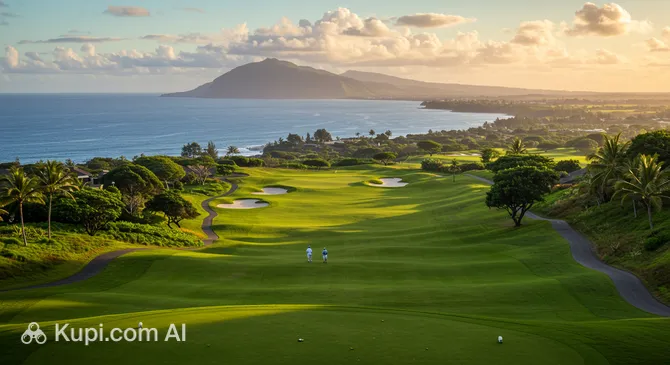
For those seeking a refined atmosphere with panoramic views, the restaurant at The Plantation Course at Kapalua provides an exceptional setting. Even if you are not a golfer, the clubhouse is open to the public and serves as a fantastic vantage point to watch the evening colors wash over the fairways and the ocean channel beyond. The venue typically features local musicians and offers a polished yet welcoming environment for a nightcap.
When planning your evening, keep in mind that Kapalua is an "early to bed, early to rise" community. Most bars and restaurants close by 9:00 PM or 10:00 PM. The dress code is generally "resort casual"—collared shirts for men and sundresses for women are appropriate for dinner, while swimwear is reserved for the beach. Prices for food and drinks are on the higher end, reflecting the exclusivity of the area, so it is wise to budget accordingly. Reservations are essential for any venue with a view, often required weeks in advance.
Safety is excellent throughout the resort area, making it perfectly suitable for night walks. The streets are well-maintained and secure. If you plan to indulge in cocktails, do not drive. The Kapalua Resort operates a shuttle service that connects the various hotels, villas, and restaurants within the community, offering a safe and convenient way to get around. Taxis and ride-sharing apps are also available, though wait times can be longer late at night.
Regarding daytime entertainment, travelers should note that Kapalua is a nature-focused destination. You will not find amusement parks, movie theaters, or large museums within the resort boundaries. The "amusement" here is the great outdoors—snorkeling, golfing, and hiking—while those seeking history museums or indoor attractions will need to travel to nearby towns like Lahaina or Wailuku.
Parks & Museums
In Kapalua, the concept of a "park" is elevated to pristine coastal sanctuaries where the land meets the ocean in dramatic fashion. Rather than traditional urban green spaces or large indoor museums, this resort community showcases its heritage through living landscapes, geological wonders, and intimate art galleries that capture the spirit of the islands.
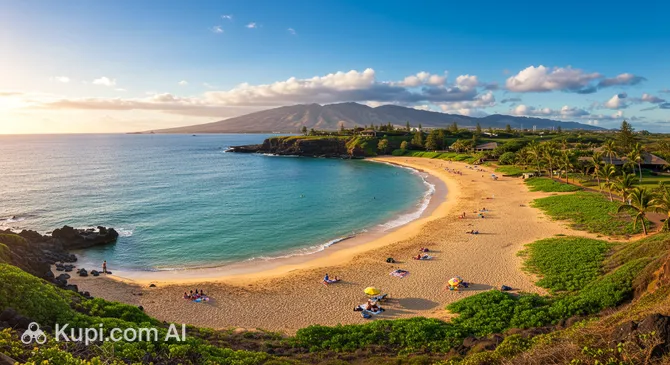
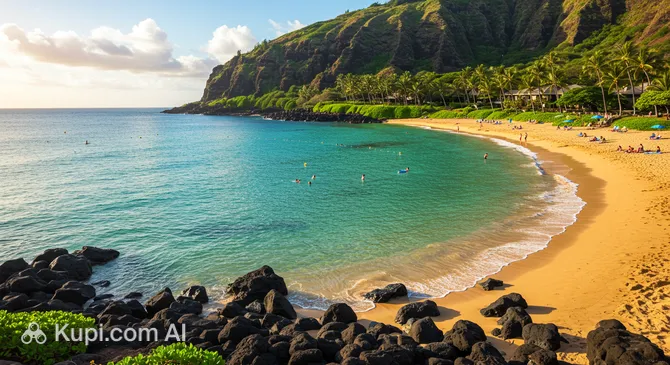
One of the most celebrated natural areas is Kapalua Bay Beach. Often ranked among the best beaches in the world, this sheltered cove functions as a natural aquatic park. Its calm, clear waters are protected by two lava reefs, making it a safe haven for swimming and snorkeling amidst vibrant coral gardens. The grassy knoll above the sand provides a perfect setting for picnics, offering a front-row seat to spectacular sunsets and the silhouette of Molokai in the distance.
Kapalua Bay Beach. Illustration.
Source: Kupi.com AI
Traveler photos:
Just a short walk south lies Napili Bay, another jewel in the region's crown. This crescent-shaped beach is beloved for its golden sands and excellent swimming conditions. It has a more classic, laid-back beach park atmosphere, where visitors can float in the turquoise water or relax under the shade of palm trees. The bay is also a popular spot for sighting Hawaiian green sea turtles, which often feed on the algae growing on the rocky outcroppings near the shore.
Napili Bay. Illustration.
Source: Kupi.com AI
Traveler photos:
While the area lacks expansive historical museums, the local culture is vividly preserved through its art scene. Kapalua is home to several fine art galleries, such as the renowned Village Galleries, which exhibit works by Maui's premier artists. These venues often function as cultural hubs, displaying plein air paintings, handcrafted ceramics, and sculptures that depict the island's flora, fauna, and history. Additionally, many of the luxury resorts serve as informal galleries, hosting cultural practitioners who teach hula, lei making, and ukulele, keeping the traditions of Hawaii alive for guests.
For a walk through geological history, the Dragon's Teeth Trail offers a fascinating outdoor experience. This short, easy hike leads visitors to Makaluapuna Point, a site of immense geological significance. Here, the wind and sea have sculpted the lava flow into jagged, vertical spires that resemble the teeth of a dragon. It is a stark and beautiful reminder of the island's volcanic origins, contrasting sharply with the lush greenery of the nearby golf courses.
Dragon's Teeth Trail. Illustration.
Source: Kupi.com AI
Traveler photos:
Another nod to the area's past can be found at the historic Honolua Store. Originally built to serve the workers of the pineapple plantation that once dominated the landscape, this building remains a charming landmark. While it now functions as a gourmet market and deli, its architecture and presence serve as a tangible link to Kapalua's agricultural heritage.
For a truly unique experience, look for the Kapalua Labyrinth located near the edge of the Dragon's Teeth formation. This circular rock arrangement is a quiet place for meditation and reflection, offering a moment of Zen with the sound of crashing waves as your soundtrack—a hidden gem often missed by casual passersby.
Getting Around
The public transport infrastructure in Kapalua is modest and designed primarily to serve the needs of a relaxed resort community rather than a bustling metropolis. There is no metro, tram, or train system in this region. Instead, visitors rely on a combination of county-operated buses and private shuttle services to navigate the local area and connect with neighboring towns on the island.
The main public option is the Maui Bus system, which provides reliable, albeit infrequent, service across the island. The "West Maui Islander" route typically services the Kapalua area, connecting it with key destinations such as Napili, Kaanapali, and the historic town of Lahaina. These buses are recognizable by their distinct island-themed designs and offer a budget-friendly way to travel along the coast for those who prefer not to drive.
A distinct feature of this specific destination is the Kapalua Resort Shuttle. This is a complimentary, on-demand service available exclusively to guests staying at select hotels, villas, and homes within the Kapalua Resort. It operates within the resort boundaries, transporting visitors between their accommodations, golf courses, tennis gardens, restaurants, and beaches. It is an excellent resource for evening dining or getting to the beach without worrying about parking.
Regarding payment, the public Maui Bus system is cash-based for single rides. The fare is approximately $2.00 per boarding, and drivers do not carry change, so it is essential to have the exact amount in bills or coins ready when you enter. For those planning multiple trips in a single day, a daily pass can be purchased directly from the driver for around $4.00, offering unlimited rides for that day. There are no complex magnetic travel cards or tap-to-pay gantries here.
For tourists, the most practical advice is to plan your schedule loosely if relying on the public bus. Service is generally hourly, and "island time" can sometimes affect punctuality. Bus stops are marked with signs, but they often lack detailed shelters or digital displays, so having a printed schedule or checking route times online in advance is highly recommended. The resort shuttle, conversely, requires a phone call to dispatch and usually arrives within 10 to 15 minutes.
While public transport exists, rental cars remain the most popular choice for visitors who wish to explore the island's diverse landscapes beyond the resort. Taxis and ride-sharing apps are also available alternatives, though availability can be limited during early morning or late-night hours. For short distances along the shoreline, walking the scenic coastal trails is often the most enjoyable way to get around.
Accommodation
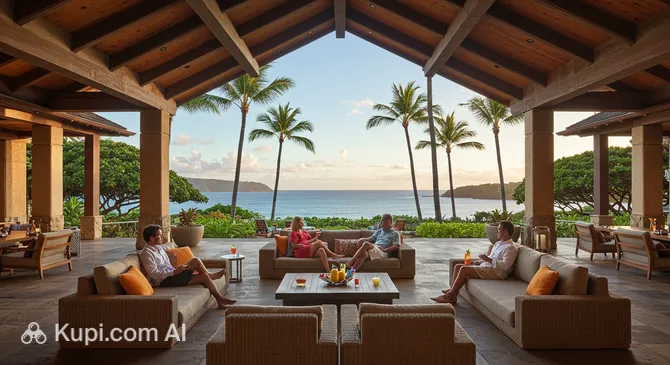
Accommodation in Kapalua is synonymous with exclusivity and relaxation. This resort community is not a destination for budget travelers or backpackers; you will not find hostels or roadside motels here. Instead, the area is defined by its collection of world-class luxury resorts, upscale condominium rentals, and private villas that offer a home-away-from-home experience with premium amenities.
Most visitors choose to stay within the Kapalua Resort proper or in the immediately adjacent Napili area. Staying here places you within walking distance of pristine bays, championship golf courses, and the scenic coastal trail. The accommodation landscape is dominated by properties that emphasize ocean views and spacious living arrangements, making them ideal for families and couples seeking a quiet retreat.
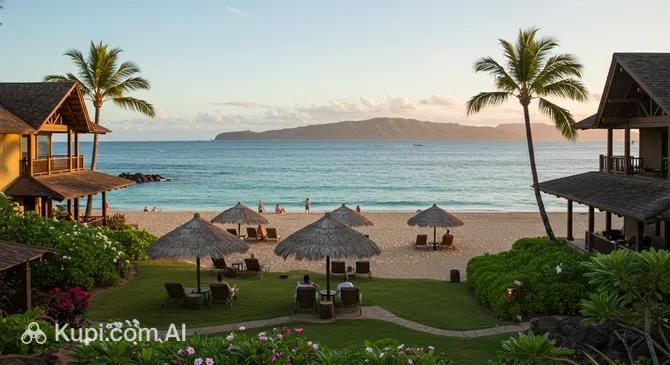
Among the notable places to stay is the Kapalua Bay Resort. Situated in a prime location, this property allows guests to immerse themselves in the resort lifestyle, offering easy access to the golden sands and calm waters that make this region famous.
Kapalua Bay Resort. Illustration.
Source: Kupi.com AI
Traveler photos:
Another highly regarded option, particularly for those who appreciate a classic island atmosphere, is the Napili Kai Beach Resort. Located just south of Kapalua Bay, this low-rise establishment is celebrated for its traditional Hawaiian hospitality and its lack of resort fees, offering a laid-back yet comfortable setting directly on the oceanfront.
Napili Kai Beach Resort. Illustration.
Source: Kupi.com AI
Traveler photos:
Given the high demand and the luxurious nature of the area, prices generally range from expensive to very expensive. To secure the best rates and your preferred ocean view, it is strongly recommended to book well in advance, especially if you are traveling during the peak winter whale-watching season or the summer holidays. Reservations can typically be made through major online booking platforms or directly with the properties.
Nearby Cities
For those looking to explore the surroundings, Kapalua serves as an excellent base for day trips to several interesting nearby locations. While the immediate resort area is a haven of tranquility, a short drive reveals the diverse character of Maui, from historic towns to vibrant surf communities.
Wailuku, the county seat of Maui, offers a fascinating contrast to the manicured luxury of the coast. Located at the mouth of the lush Iao Valley, this historic town features charming wooden storefronts, local boutiques, and a rich heritage. Visitors can explore the Bailey House Museum to learn about Hawaiian history or take a quick drive into the Iao Valley State Monument to view the iconic Iao Needle, a natural rock pinnacle covered in emerald vegetation.
On the island's north shore, the town of Paia provides a bohemian and energetic atmosphere. Known as the windsurfing capital of the world, Paia is filled with colorful art galleries, surf shops, and health-conscious cafes. It serves as the unofficial starting point for the famous Road to Hana and offers a laid-back vibe that attracts artists and surfers alike. A visit here is often combined with watching the waves at nearby Ho'okipa Beach Park.
For travelers interested in exploring major urban centers across the channel, the following cities are located on the neighboring island of Oahu. Reaching them typically requires a short inter-island flight:
These nearby destinations offer a glimpse into the diverse culture and landscapes of the region, ranging from quaint island towns to bustling metropolitan hubs.
Shopping & Souvenirs
Shopping:
Shopping in Kapalua reflects the area's relaxed and upscale atmosphere. Rather than large sprawling malls or crowded commercial districts, visitors will find a curated selection of boutiques, pro shops, and specialty stores. The retail experience here is focused on quality and exclusivity, offering everything from high-end resort wear and designer jewelry to unique local art and premium sporting goods.
The primary shopping destinations are located within the major resort properties and clubhouses. The boutiques scattered throughout the grounds of the Kapalua Bay Resort and neighboring hotels offer a convenient way to browse for swimwear, casual island fashion, and luxury gifts without ever leaving the property. Additionally, the area is home to some of the finest golf pro shops in the country. The shop at The Plantation Course at Kapalua is particularly renowned, offering a wide array of branded apparel and equipment that serves as a perfect memento for golf enthusiasts.
Kapalua does not have traditional large shopping malls. For a more extensive retail experience involving international brands and department stores, travelers typically head south to the Whalers Village in Kaanapali or further into Kahului. However, for daily necessities and a touch of history, the Honolua Store is the heart of the community. Established during the plantation era, this landmark functions as a general store, deli, and gift shop all in one, providing a charming alternative to modern supermarkets.
When it comes to souvenirs, items bearing the iconic Kapalua butterfly logo are among the most popular purchases. Visitors also frequently buy locally grown Maui coffee, macadamia nuts, and tropical fruit jams. For those interested in culture, the local art scene is vibrant; galleries in the area display exquisite paintings and handcrafted items that capture the beauty of the island, making for timeless keepsakes.
Most stores in the area operate daily, typically opening around 9:00 AM and closing by 6:00 PM or 7:00 PM, though shops within the resorts may stay open later in the evening. Major credit cards and debit cards are universally accepted, and digital payments are becoming increasingly common. Cash is useful for smaller tips or minor purchases at local convenience stands.
Travelers should be aware that the United States does not offer a Value Added Tax (VAT) refund system for international tourists. Hawaii applies a General Excise Tax (GET) to all goods and services, which is usually added at the register. The rate in Maui County is approximately 4% to 4.7%, and this tax is non-refundable upon departure.