Support

Japanese Tea Garden

About

The Japanese Tea Garden, located in the famous Golden Gate Park in San Francisco, is a haven of tranquility and traditional Japanese aesthetics in the heart of the USA. This garden is the oldest public Japanese garden in the country, with its history dating back to the 1894 California Midwinter International Exposition. Spanning approximately 5 hectares (about 12 acres), it is a unique masterpiece of landscape art that attracts tourists from all over the world.
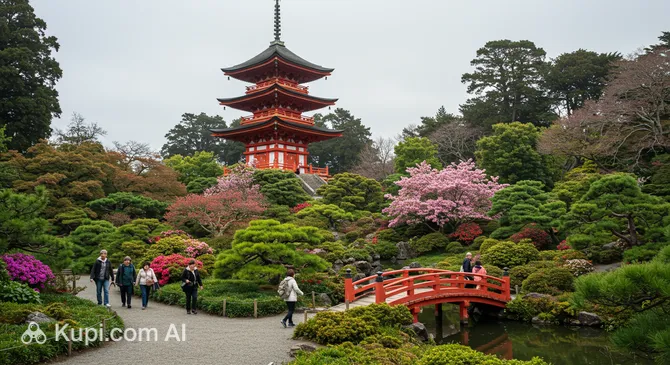
Japanese Tea Garden. Illustration.
Source: Kupi.com AI

Traveler photos:

Walking along the winding paths, visitors can enjoy all the classic elements of a Japanese garden. There is a picturesque arched Drum Bridge, several pagodas, and serene ponds filled with koi fish. The atmosphere is enhanced by stone lanterns, a Zen rock garden, and carefully selected authentic Japanese plants, such as maples and cherry blossoms that bloom in the spring.

One of the garden's hallmarks is its decorative wooden gates, which have become a symbol of the site. The Japanese Tea Garden is not just a park, but a true work of art, where every element, from stone to tree, has its own meaning and contributes to a harmonious space for contemplation and relaxation. It is rightfully considered one of the city's most popular and charming attractions.

Contacts

To get the most up-to-date information on opening hours, ticket prices, and special events, it is recommended to contact the Japanese Tea Garden administration directly. Below are the main contact details for planning your visit to this picturesque corner of San Francisco.

How to contactContact
Address75 Hagiwara Tea Garden Dr, San Francisco, CA 94118, USA
Phone number+1 415-661-1316
Websitegggp.org

What to Do

A visit to the Japanese Tea Garden is an opportunity to immerse yourself in an atmosphere of peace and harmony, created for relaxation and contemplation. Guests can stroll leisurely along winding paths, admiring the picturesque landscapes, the flowering cherries specially brought from Japan, and the koi fish splashing in the ponds. The entire setting, from the stone lanterns to the arched bridges, promotes relaxation and the enjoyment of beauty.

Among the key features of the garden is the Zen garden—a modern interpretation of "kare-sansui," or dry landscape garden. Here, you can see a symbolic miniature mountain with a stone waterfall and an island in the middle of a pebble river. Attention is also drawn to the large bronze Buddha, cast in Japan in 1790, and the impressive five-story pagoda. Many structures, including the famous Drum Bridge (Taiko Bashi), have been preserved since the garden's founding and are its signature landmarks.

The highlight for many visitors is the chance to participate in a tea ceremony. In the special tea house, which is the oldest in the US, you can not only observe the ritual but also taste traditional Japanese tea and sweets while enjoying the peaceful atmosphere. This is a unique experience that allows for a deeper understanding of Japanese culture and traditions of hospitality.

Getting There

Getting to the Japanese Tea Garden is quite simple as it is located in the popular Golden Gate Park. For tourists who prefer public transport, this is one of the most convenient options. Several Muni routes serve the area: for example, bus #44 stops right at the garden, while routes #5, 7, and the N-Judah light rail have stops within walking distance. There is also a free shuttle running through the park that stops at the Music Concourse, just a few steps from the garden entrance.

If you plan to arrive by car, keep in mind that finding street parking in Golden Gate Park can be challenging, especially on weekends. A convenient solution is the underground Music Concourse Garage, located right beneath the plaza between the garden and the de Young Museum. Entrances are on Martin Luther King Jr. Drive and Fulton Street. While street parking is free, spaces are limited, making the paid garage a more reliable alternative.

For those who value comfort and don't want to worry about parking, taxis or rideshare services like Uber and Lyft are excellent choices. The trip from downtown San Francisco to the garden takes very little time, and drivers can drop you off right near the entrance. This is especially convenient if you have a tight schedule or are traveling with children.

Nearest city: San Francisco

History & Facts

The history of the Japanese Tea Garden is inextricably linked to the 1894 California Midwinter International Exposition. It was originally created as a temporary exhibit called the "Japanese Village" and occupied just one acre. However, the display proved so popular that after the fair ended, landscape designer and Japanese immigrant Makoto Hagiwara proposed turning it into a permanent park. Upon receiving approval, he dedicated his life to developing the garden, investing his own resources and talent into its creation.

Thanks to the efforts of Makoto Hagiwara and his family, the garden significantly expanded and transformed. He personally oversaw the import of thousands of plants from Japan, including the famous flowering cherries, as well as birds and koi fish for the ponds. For decades, the Hagiwara family lived on the grounds and meticulously cared for the landscape, ensuring its growth and prosperity. Their dedication helped create the lush, peaceful environment that visitors continue to enjoy today.

Over the years, the garden has continued to evolve and flourish. In 1949, it was enriched with a significant artifact—a large bronze Buddha cast in Japan in 1790. In 1952, the site officially reclaimed its historical name, the "Japanese Tea Garden." A year later, in 1953, landscape designer Nagao Sakurai created a "kare-sansui" (dry landscape) Zen garden here. To this day, the garden remains a living project that is constantly being refined while preserving its rich historical heritage.

Time Needed

To fully experience the Japanese Tea Garden in San Francisco, most visitors will need 1 to 2 hours. This is enough time to leisurely stroll along the winding paths, enjoy the sight of well-tended plants, admire the koi ponds, see the pagoda, and take photos at the famous Drum Bridge. This pace allows you to fully feel the calm and harmonious atmosphere of the garden without rushing.

The duration of your visit may increase if you decide to take advantage of the additional features the garden offers. For example, visiting the authentic tea house to try traditional Japanese tea and sweets will add at least 30–45 minutes to your stay. Photography enthusiasts wishing to capture every picturesque corner, or those who want to sit in silence by the Zen garden, can easily spend more than two hours here.

If you are short on time, 30–45 minutes might be enough for a quick tour of the main highlights. While this will give you a general impression, it is recommended to set aside at least an hour and a half to truly immerse yourself in the unique aesthetics of the place.

Working Hours

The Japanese Tea Garden is open to visitors year-round, including holidays, though operating hours vary by season. During the summer period, from March 1 to October 31, the garden is open from 9:00 AM to 5:45 PM. In the winter season, from November 1 to the end of February, hours are shorter—from 9:00 AM to 4:45 PM. It is important to note that the last entry is permitted 30 minutes before the official closing time.

Tickets can be purchased both in advance online and directly at the garden entrance. Pre-booking is not mandatory but can be convenient, especially during peak seasons like spring and autumn when the garden is most popular. It is also worth knowing that there are specific hours for free admission: every Monday, Wednesday, and Friday from 9:00 AM to 10:00 AM, entry to the garden is free. To get the most accurate and up-to-date information on opening hours and ticket prices, it is recommended to check the official website, as all visiting matters are managed by the Golden Gate Park administration.

9:00 – 17:30

Nearby

Visiting the Japanese Tea Garden is just one part of the great adventure that awaits you in San Francisco. The garden is a crown jewel of the famous Golden Gate Park, which itself offers a vast area to explore, filled with museums, lakes, and botanical collections. Exploring the surroundings will allow you to dive deeper into the unique atmosphere of the city and make your journey even more fulfilling.

Just a few steps from the garden are other iconic spots that perfectly complement your visit. You can easily combine the contemplation of Japanese landscapes with the study of world art, science, and nature. Below is a list of nearby attractions along with their distance from the Japanese Tea Garden.

NameDistance
de Young Museum0.2 km
San Francisco Botanical Garden0.3 km
California Academy of Sciences0.4 km
Legion of Honor3.1 km
Marshall's Beach3.6 km
The Fillmore3.6 km
Sutro Baths4 km

Have you reached the end of the page?

So the route has been studied inside and out