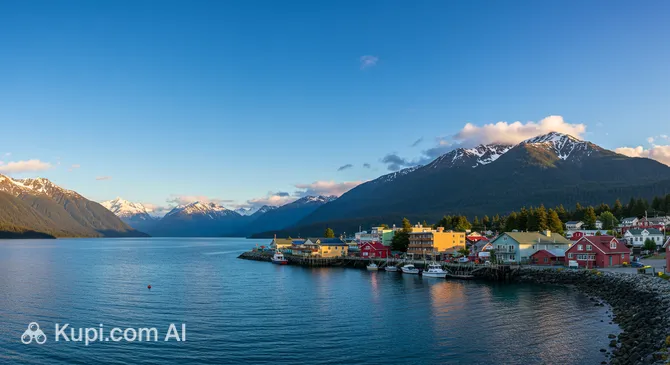
Seward is a true northern gem, nestled on the southern coast of Alaska on the picturesque Kenai Peninsula, part of the USA. This city, where mighty mountains meet the cold waters of the Pacific Ocean, is literally immersed in mesmerizing landscapes: on one side are majestic glaciers and dense coniferous forests, and on the other, the endless expanse of Resurrection Bay.
The population of Seward is about 2,700 people, which gives the city a special atmosphere of coziness and intimacy. Even in summer, the morning air here is fresh and clear, and the fog creeping over the water adds a fairy-tale quality to the scenery. Seward is an important port and regional tourism hub, attracting travelers with its unique charm.
Seward. Illustration.
Source: Kupi.com AI
The main reason to visit Seward is its role as the gateway to the famous Kenai Fjords National Park, where nature lovers and adventurers from all over the world gather every year. Here, you can embark on an unforgettable fjord cruise to watch whales, sea lions, and otters, go kayaking among icebergs, or simply enjoy strolls along the waterfront, breathing in the crystal-clear air and admiring breathtaking views.
Seward is a city where everyone will find their own adventure, whether it's extreme tours, leisurely walks, discovering Alaskan cuisine, or learning about local traditions. It is a place that leaves you wanting to return again and again to discover something new in this amazing corner of nature every time.
The weather in Seward is characterized by cool summers and cold, rather wet winters. In the warmest months, July and August, the average air temperature is about +10.3°C to +10.6°C. In winter, especially in January and February, the average temperature drops to -5.5°C, with minimum values reaching -7.6°C. Precipitation falls fairly evenly throughout the year, although the amount increases slightly in autumn and early winter; for example, in December, about 11 mm of precipitation falls, and the number of wet days can reach 24. Overall, expect a cool summer with frequent rains and cold, snowy winters. For more detailed information on weather conditions, we recommend visiting the Seward Climate page.
Average monthly temperature
Average monthly precipitation
Interesting Facts
Beyond its famous fjords and glaciers, Seward holds many surprising stories and features that make it a truly unique place on the map of Alaska. Surrounded by majestic nature, the city preserves facts that can surprise even the most seasoned traveler.
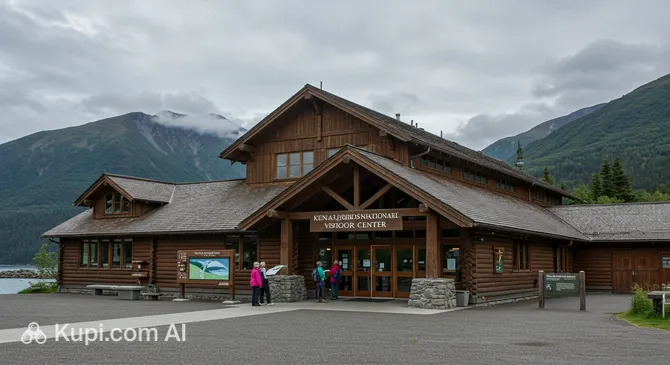
Kenai Fjords National Park Visitor Center. Illustration.
Source: Kupi.com AI
Traveler photos:
The city owes its name to William Seward, the U.S. Secretary of State who played a key role in the purchase of Alaska from the Russian Empire in 1867. This deal, known as the "Alaska Purchase," opened a new chapter in the region's history, and Seward became one of the symbols of this event.
One of the main natural gems of the area is Exit Glacier—the only glacier within Kenai Fjords National Park that can be reached relatively easily on foot. Visitors can see the glacier slowly retreating, leaving behind a unique landscape, and learn more about this process at the nearby visitor center.
Every July 4th, Seward becomes the arena for one of the oldest and most extreme mountain races in the world—the Mount Marathon Race. Participants tackle a steep and challenging route up Mount Marathon, climbing to an elevation of over 900 meters before racing back down to the city. This event attracts thousands of spectators and athletes from around the world.
Seward's picturesque surroundings have frequently served as filming locations for wildlife documentaries. These places are a true paradise for observing whales, sea lions, sea otters, bald eagles, and many species of seabirds. Part of this amazing marine world and efforts to conserve it can be seen at the Alaska SeaLife Center.
How to Get There
When planning a trip to this picturesque corner of Alaska, it is important to think through the logistics in advance, as the city is located far from major international hubs. You can explore all the ways to get to the city in more detail on a special page, and below we will look at the main options.
There is no major civilian airport in the city of Seward that accepts regular mainline flights. Most tourists arrive in the region via Ted Stevens Anchorage International Airport (IATA: ANC). It is located in Anchorage, about 123 km from Seward. This is the state's largest aviation hub, receiving many flights from various US cities and the world. The journey from the airport to Seward by rental car or bus takes about 3 hours and 25 minutes, and this route follows one of the most beautiful highways in the world—the Seward Highway.
As an alternative for domestic flights, you can consider Kenai Municipal Airport (IATA: ENA). It is located in the city of Kenai, about 112 km from Seward. This is a regional airport that serves fewer passengers but is convenient for traveling within the peninsula. A trip from here to Seward by taxi or transfer will take approximately 3 hours and 10 minutes. Also operating in the region is Homer Airport (IATA: HOM) in the city of Homer (about 125 km), which is suitable for those planning a large trip across the entire Kenai Peninsula.
For clarity, here is summary information on the main airports in the region:
The railway connection is a point of local pride and one of the most popular tourist attractions. Seward is the southern terminus of the famous Alaska Railroad. The Coastal Classic train runs regularly between Anchorage and Seward during the summer season (usually from May to September). The trip takes about 4 hours and is considered one of the most scenic train routes in the world: the train winds between mountains and glaciers, passing through places inaccessible to cars.
If you prefer ground transportation, you can reach Seward via the Seward Highway. This highway has the status of an "All-American Road" thanks to its stunning views of Turnagain Arm and the Chugach Mountains. In the summertime, comfortable tourist buses and shuttles, such as the Park Connection, also run between Anchorage and Seward, conveniently timed with the schedules of cruise ships and marine excursions.
Main Attractions
Despite its modest size, Seward offers a concentration of experiences that would be the envy of many large tourist centers. This city is not just a point on the map, but a true portal to the world of Alaska's wilderness, where every site deserves special attention. Here are the main places that define the region's fame.
The undisputed center of attraction for travelers is the Kenai Fjords National Park Visitor Center. It is the perfect starting point for exploring one of the most picturesque protected areas in the USA. Here, you can not only get maps and advice from rangers but also learn the history of glacier formation by watching an educational film. The park itself is a realm of ice and ocean, where mountains literally rise out of the water and fjords hide a rich diversity of wildlife.
Kenai Fjords National Park Visitor Center. Illustration.
Source: Kupi.com AI
Traveler photos:
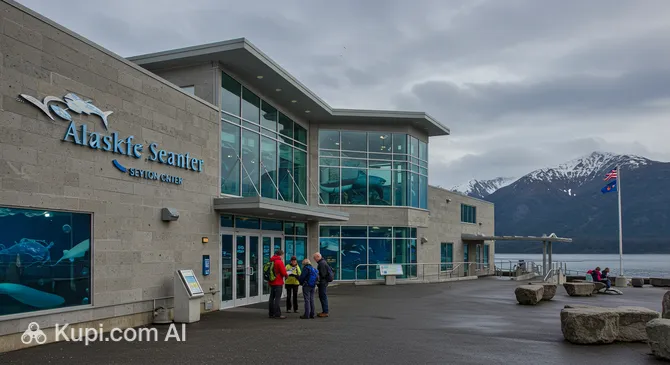
Another landmark of the city is the Alaska SeaLife Center. This unique institution combines a world-class public aquarium with an active research institute. Visitors can observe sea lions, seals, and puffins in conditions as close to natural as possible. A special feature of the center is its work in rescuing and rehabilitating injured animals, so every visit here is a contribution to preserving the fragile ecosystem of the North.
Alaska SeaLife Center. Illustration.
Source: Kupi.com AI
Traveler photos:
One cannot visit Seward without seeing Exit Glacier. This is one of the most accessible glaciers in Alaska, which you can approach almost directly along well-maintained trails in just 15-20 minutes from the parking lot. A walk to the glacier clearly demonstrates the power of nature and its changeability: markers with years are placed along the path, showing where the edge of the ice was in the past, which leaves a strong impression.
For those who want to see the beauty of Alaska from the water, Resurrection Bay is a must-see. This place is famous for its calm waters and incredible landscapes. Numerous cruises in the bay offer a chance to see humpback whales, orcas, and sea otters in their natural habitat, while rocky shores covered in spruce forests provide an unforgettable backdrop for photographs.
Local Cuisine
Seward's gastronomic scene is a true hymn to the bounty of Alaska's cold waters. The city's main culinary attraction is undoubtedly its fresh seafood. When you come here, you simply must try wild Alaskan salmon: it is served as tender grilled steaks, baked on cedar planks, or smoked according to old recipes. No less popular is Pacific halibut—the "king" of local waters, whose firm white meat is perfectly showcased in the classic fish and chips or in rich chowders that warm you up perfectly after sea excursions.
Local cuisine is not limited to fish alone. Menus often feature wild game dishes, such as reindeer sausages or burgers, which have a rich flavor. A special place in the hearts of locals is held by desserts made with northern berries. Be sure to order a homemade pie with blueberries, huckleberries, or cloudberries gathered in the surrounding forests. In summer, ice cream made from local cream with the addition of wild berries or even pine nuts becomes a real hit—a treat that is impossible to find in other states.
Dining culture in Seward is democratic and devoid of pretense. The epicenter of flavors is the harbor area and the waterfront, where the smells of food mingle with the salty sea breeze. Street food flourishes here: you can grab famous Alaskan salmon hot dogs or fish tacos on the go. If you are looking for a place for a cozy dinner with a modern approach to local products, it's worth visiting The Cookery. This establishment is known for its love of experimentation and an excellent oyster bar, serving mollusks from Alaska's cleanest bays.
Among drinks, special attention should be paid to craft beer. Alaska is famous for its microbreweries, and in Seward's bars, you can find unique varieties of ale and stout brewed with the addition of spruce tips or local herbs. Warming berry-infused spirits are also popular. For those who prefer non-alcoholic drinks, the city offers excellent locally roasted coffee—coffee culture is very developed here—and hot berry teas, which are perfectly suited to the region's cool climate.
Travel Tips
Seward is a city with a rugged northern character and incredible natural beauty, so proper preparation for the trip plays a key role here. This list of practical recommendations will help you feel confident among the glaciers and fjords, enjoying your trip without unnecessary worries.
Clothing and Gear. The main rule of Alaska is layering. Even in summer, the weather can change from sunny to rainy in minutes. Be sure to bring a waterproof windbreaker with a hood, a fleece jacket, and thermal underwear. Comfortable trekking boots are a must-have for walks to the glaciers, and binoculars will be your best friend when watching whales and seals.
Transport. During the summer season, a convenient free shuttle runs around the city, connecting the port, the station, and the downtown area, so a car rental for getting around within the city is not necessary. However, services like Uber or Lyft work inconsistently here or are absent altogether. If you plan a trip to a trailhead early in the morning or late at night, arrange it with local taxi services in advance.
Finances. The official currency is the US dollar. Bank cards are accepted almost everywhere, from restaurants to souvenir shops, but having some cash (1-5 dollar bills) is useful for tipping shuttle drivers or guides. Keep in mind that prices for food and services here are higher than the national average, and tips of 15–20% in restaurants are considered a mandatory etiquette norm.
Health and Safety. Seward is safe in terms of street crime, but the main threat is wildlife. Moose and bears can walk right onto the city streets—never approach them for photos. Pharmacies are available (for example, in the Safeway supermarket), but they are not open 24/7, so it's better to bring a basic set of medicines with you.
Communication. The primary language is English; local residents are very friendly and eager to help tourists. Wi-Fi is available in most hotels and cafes, but mobile signals can drop in the mountains or during fjord cruises. We recommend downloading offline maps of the region and necessary travel apps in advance.
Local Etiquette. A very democratic and relaxed style of communication and dress is common here—practicality is valued over fashion. When meeting on trails, it is customary to greet other hikers. The main rule of behavior is absolute respect for nature: do not leave trash, do not go off trails, and do not feed animals—this can be dangerous and is punishable by fines.
What to Avoid. Do not underestimate the cold water of the bay—even if the weather feels warm, the water is icy, and swimming without a special wetsuit is life-threatening. Also, avoid loud talking and noise while observing wildlife, so as not to scare the animals or disturb other tourists.
Daylight Hours. In the summer, Seward experiences "midnight sun," and the sun can shine for almost 20 hours a day. This gives you plenty of time for walks but can disrupt your sleep schedule. Be sure to bring a high-quality sleep mask, as blackout curtains are not available in all accommodations.
Seward is a place where nature dictates its own rules, but by following them, you will get an unforgettable experience of meeting the real Alaska. Prepare for changeable weather, tune in to the spirit of adventure, and this cozy port city will reveal its most amazing secrets to you!
Entertainment & Nightlife
Nightlife in Seward has its own unique flavor, which differs greatly from noisy metropolises. Here, you won't find huge nightclubs with laser shows or strict face control. Evening entertainment in this city is primarily about a cozy atmosphere, live folk or rock music, the clinking of glasses filled with craft beer, and heartfelt conversations with local fishermen and travelers from all over the world. A feature of the summer season is the famous "midnight sun," when the sun almost never sets, creating an amazing feeling of an endless evening.
The evening centers of gravity are two main areas: Historic Downtown along 4th Avenue and the Small Boat Harbor area. The downtown area is home to the city's oldest bars, where walls are adorned with historical photos and trophies, while the harbor offers restaurants with panoramic views of the bay, perfect for watching the sunset. The dress code here is as casual as it gets: jeans, fleece jackets, and comfortable shoes are the most popular choices. The crowd is very diverse and friendly, making it easy to make new acquaintances.
If you are looking for a place for an exquisite dinner that smoothly transitions into an evening of relaxation with a glass of wine, be sure to check out The Cookery. This establishment is famous for its modern approach to Alaskan cuisine and an excellent drink list. Here, you can try the freshest oysters or halibut in a relaxed yet stylish setting. It is a great choice to start the evening before heading out to explore the city's livelier bars.
For those who prefer daytime cultural entertainment, Seward offers several iconic spots. Families and nature lovers should visit the Alaska SeaLife Center—it is both an aquarium and a research center where you can observe marine inhabitants. For planning hikes and learning about the history of glaciers, the Kenai Fjords National Park Visitor Center, located in the harbor area, is ideal. These locations usually close by evening, freeing up time for dinner and relaxation.
Practical tips for evening strolls:
Opening hours: Most bars are open until 2:00 or 3:00 AM, but restaurant kitchens often close as early as 9:00–10:00 PM. Plan your dinner in advance.
Safety: Seward is a very safe city in terms of crime. However, the main danger at night is wildlife. Bears and moose can enter city limits, especially at dusk. Be vigilant and avoid walking alone in unlit outskirts.
Transport: The free city shuttles do not run at night. It is best to save the numbers of local taxi services in advance, as hailing a car on the street can be problematic.
Prices: Be prepared for the fact that alcohol and food prices in Alaska are higher than the average in the USA. A pint of beer can cost between 7 and 10 dollars.
Parks & Museums
Seward harmoniously combines wild, pristine nature and a rich cultural heritage, offering tourists not only breathtaking landscapes but also a deep dive into the history of Alaska. Urban spaces here are organized so that guests can enjoy the fresh ocean air without losing touch with comfort and educational entertainment.
The main natural feature of the region is undoubtedly the national park, and it's best to start your introduction to it through the Kenai Fjords National Park Visitor Center. While technically an information hub, it is located in the picturesque harbor and serves as the gateway to the world of glaciers. Here, you can stroll through the landscaped grounds, listen to ranger talks, and plan routes to Exit Glacier. This place is perfect for a first encounter with the region's ecosystem before heading out into the wilderness.
Kenai Fjords National Park Visitor Center. Illustration.
Source: Kupi.com AI
Traveler photos:
For leisurely strolls within the city, Waterfront Park is magnificent. This green zone stretches along the shore of Resurrection Bay, offering paved paths for walking and cycling. Tourists love this spot for the chance to see sea otters and seals right from the shore, as well as for the picnic areas equipped with views of the snow-capped mountains. Another natural corner is Two Lakes Park, located at the foot of Mount Marathon. This is a quiet oasis with dense forest, waterfalls, and easy trekking trails that lead around the lakes, creating a sense of total seclusion.
Among the city's cultural institutions, the Alaska SeaLife Center holds a central place. This is not just a museum or an aquarium, but an active research institute dedicated to the rehabilitation of marine animals. Visitors can see unique exhibits dedicated to the inhabitants of cold waters: from giant octopuses to playful puffins. A special feature of the center is the ability to observe the process of treatment and care for rescued animals through special viewing windows.
Alaska SeaLife Center. Illustration.
Source: Kupi.com AI
Traveler photos:
History buffs should stop by the Seward Community Library & Museum. The building itself is an architectural landmark thanks to its vibrant modern design with mosaic elements. Inside, it houses exhibits telling the story of the 1964 earthquake, the history of the Iditarod sled dog race, and indigenous cultures. Also worth noting is the historic downtown, which is effectively an open-air museum thanks to its numerous murals. These wall paintings depict key moments of Seward's past and give the streets a special character.
For those looking for authentic experiences, we suggest finding "Mile 0" of the historic Iditarod Trail on the oceanfront. This is an iconic spot from which the path of gold prospectors and mail dog teams into the interior of Alaska began. A photo at the commemorative sign against the backdrop of the bay will be a great souvenir, reminding you of the spirit of adventure that permeates this city.
Getting Around
The transport system in Seward is surprisingly simple and convenient for travelers, due to the city's compact size. There is no complex subway, tram lines, or confusing trolleybus network. The mainstay of public transport is the Free Seward City Shuttle, which operates during the high tourist season (usually from mid-May to mid-September). These buses run on a circular route, connecting all key points of interest: the cruise terminal, the train station, the small boat harbor, and the historic downtown.
The main advantage of the local shuttle for tourists is the lack of need to buy passes, validate cards, or figure out tariff zones. Travel is absolutely free for everyone. Buses run at intervals of approximately 15–30 minutes from early morning until evening (usually from 8:00 AM to 7:00 PM or 8:00 PM). It's an ideal way to get from your hotel to the main attractions without extra cost. Boarding takes place at designated stops located at major tourist sites.
It is important to note that the free city shuttle does not go to one of the main natural attractions—Exit Glacier. For this, there are private commercial carriers offering specialized transfers (Exit Glacier Shuttle). The round-trip fare is around 15–20 dollars. It is highly recommended to book tickets for these shuttles in advance online or buy them at kiosks in the harbor area, as seats sell out quickly during the peak season. Payment on these shuttles is usually possible with both cash and bank cards.
Taxi services in Seward are represented by several local companies. It's worth being prepared for the fact that familiar ridesharing apps or taxi aggregators may work inconsistently here or find no available cars at all due to the small number of drivers. Therefore, it is most reliable to write down the phone numbers of dispatchers, such as "Seward Taxi," or simply look for local taxi services, whose stands can be found at the port and the station. It is better to arrange a ride in advance, especially if you plan to depart early in the morning or at night.
As an active alternative, many tourists choose to rent bicycles. Seward is equipped with a picturesque paved path running along the Resurrection Bay waterfront, making a bike ride not just a way to get around, but a pleasure in itself. Rental points are located mainly in the boat harbor area. Car rental offices also operate in the city, which is the best solution for those who want to independently explore the surroundings of the peninsula without being tied to shuttle schedules.
Accommodation
Seward offers travelers a variety of accommodation options that generally reflect the rugged but hospitable spirit of Alaska. You won't find huge high-rise chain resorts here; instead, the housing stock consists of cozy mid-range hotels, classic roadside motels, family-run bed and breakfasts (B&Bs), and atmospheric wooden cabins tucked away in the forest. For budget travelers, the selection is somewhat limited to campgrounds and a few hostels, while those who value comfort can count on high-quality lodges with picturesque views.
When choosing a place to stay, you should consider the logistics of your trip. The Small Boat Harbor area is the most popular. It is a strategically convenient location: the train station, meeting points for marine excursions, and many restaurants are within walking distance, which is ideal for tourists without a car. Another popular area is Historic Downtown. The atmosphere here is quieter and more relaxed, perfect for walking to shops and attractions like the Alaska SeaLife Center. For those seeking complete unity with nature, it's worth looking at accommodation options on the outskirts, for example, along the road to Exit Glacier or in the secluded Lowell Point area.
Alaska SeaLife Center. Illustration.
Source: Kupi.com AI
Traveler photos:
Booking Tip: The tourist season in Seward is very short and intense (from May to September), and the number of good rooms is limited. It is strongly recommended to book accommodation in advance, ideally 4–6 months before your trip. The best options in terms of price and quality are often sold out as early as winter. Trying to find a place to stay "on the spot" in the middle of July can result in serious difficulties or exorbitant costs.
The price range for housing in Seward can be described as high, which is typical for all of Alaska during the summer period. Be prepared for the fact that prices even for modest rooms may be higher than average for the continental US. Booking is available through major international online aggregators, but many small private lodges and cottages prefer to work through direct inquiries on their websites. When planning your budget, also take into account local taxes, which are added to the cost of the stay.
Nearby Cities
For those who want to explore the surrounding area, Seward serves as an excellent starting point for day trips to several interesting nearby locations:
Anchorage is Alaska's largest city, located north of Seward. The drive here along the scenic highway is an adventure in itself. In the city, it's worth visiting the massive Anchorage Museum, the Alaska Native Heritage Center, and enjoying a variety of restaurants and shops that can't be found in smaller settlements.
Kenai is a historic city located at the mouth of the famous Kenai River, world-renowned for its fishing. It's a great place to see an old Russian Orthodox church, walk along the beach with views of volcanoes across Cook Inlet, and try to catch a salmon.
Wasilla is a city often called the capital of sled dog racing. The headquarters of the famous Iditarod Trail Sled Dog Race is located here. Visitors can learn the history of these competitions at the local museum and get acquainted with the life of mushers.
These nearby destinations provide an insight into the diverse culture and landscapes of the region, making your trip to Alaska even more rewarding.
Shopping & Souvenirs
Shopping in Seward is not a chase for global brands or high fashion, but rather an exciting hunt for unique Alaskan treasures. The city offers an authentic shopping experience where every item has its own story. Here, you will find many small, cozy boutiques, family-run stores, and art galleries offering goods that cannot be bought anywhere else in the world. The range varies from practical outdoor gear to exquisite works of art by indigenous peoples.
The main commercial life is concentrated in two key areas. The first is the Small Boat Harbor. This is the liveliest place during the tourist season, where souvenir shops, clothing stores, and stalls with local delicacies line the waterfront. Strolling here, you can combine shopping with watching the fishing boats. The second area is Historic Downtown, especially along 4th Avenue. Here, the atmosphere is more relaxed and bohemian: historic buildings are decorated with murals, and inside you'll find bookstores, coffee shops selling local products, and galleries of local artists.
In Seward, you won't find the usual huge shopping centers or malls. The format of commerce here is intimate and individual. Local residents typically do large grocery and essential goods shopping at the Safeway supermarket chain, which is the largest store in town, but for tourists, the interest lies in the small specialized boutiques scattered throughout the city.
Market culture in the city is represented by seasonal fairs and farmers' stalls that become active in the summer. Often, right in the port, you can meet fishermen selling their fresh catch or local craftsmen displaying their work on small, improvised stalls during city festivals. This is a great opportunity to talk directly with the creators of the goods.
Alaska SeaLife Center. Illustration.
Source: Kupi.com AI
Traveler photos:
The selection of souvenirs in Seward is vast and colorful. Here's what's worth bringing home:
Ulu Knives — traditional knives of Alaska's indigenous peoples with a semi-circular blade, perfect for the kitchen.
Jade products — the official gemstone of the state.
Qiviut — incredibly soft and warm muskox wool; scarves and hats made from it are expensive but last forever.
Smoked salmon and canned fish — a gastronomic symbol of the region.
Aquarium souvenirs — an excellent selection of themed gifts can be found in the shop at the Alaska SeaLife Center, where proceeds from purchases go toward supporting animal rescue programs.
Shops in Seward operate according to seasonality. In the summer, when cruise ships arrive in town, most souvenir shops in the harbor are open from early morning until late evening (often until 8:00–9:00 PM), seven days a week. In the winter, many tourist spots close or significantly reduce their hours. Bank cards (Visa, Mastercard) are accepted everywhere, but having a small amount of US dollar cash is useful for small purchases or tips.
Regarding taxes, it's important to know the nuances. There is no state-level sales tax in Alaska, which makes it attractive for shopping. However, municipalities have the right to set their own fees. Seward has a city sales tax (usually 4%, can rise to 7% in the summer), which is automatically added to the receipt total. There is no Tax Free return system (like VAT refund in Europe) for foreign tourists in the USA.