Support

Historic St Augustine

About

A journey into the harsh reality of the late 19th century begins here, within the walls of a unique architectural monument. The St. Augustine History Museum, known to many as the "Old Jail," is more than just an exhibition; it is a true time machine. Built in 1891, the building served as the county jail for over six decades, standing as a silent witness to many dark chapters in the history of St. Augustine.
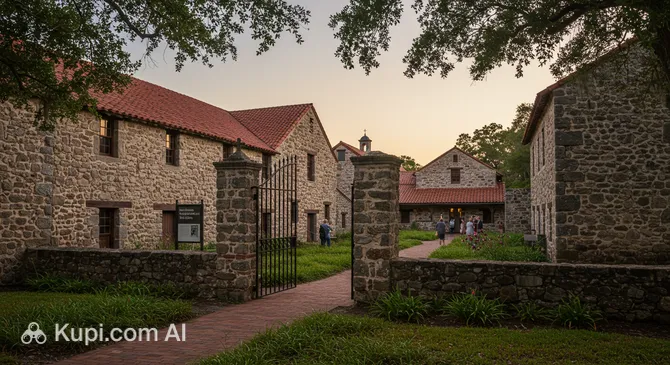
Historic St. Augustine Museum. Source: Kupi.com AI

This massive structure, built in the Romanesque architectural style, looks more like a Victorian mansion than a place of incarceration from the outside. However, behind the elegant facade lie tiny cells without amenities and a regime of strict discipline. Today, this site in the USA is officially recognized as a National Historic Landmark and is considered one of the few prisons in the country that has preserved its original appearance and the oppressive atmosphere of the past.

Visitors are drawn here by the rare opportunity to see from the inside how justice was administered over a century ago. The jail was designed to eliminate any possibility of escape, and throughout its history, it fully lived up to the engineers' expectations, becoming a symbol of the unyielding law of Florida.

Contacts

To confirm details before your visit, you can use the museum's official resources. The Old Jail is a popular tourist attraction, and all the necessary navigation information is provided below.

Website trolleytours.com/st-augustine/old-jail
Address 167 San Marco Ave, St. Augustine, FL 32084, USA
Google Maps Open map

What to Do

The highlight of any visit is the interactive tour led by guides in prison uniforms. They masterfully portray guards or prisoners of the era, telling chilling stories of real criminals, their living conditions, and the rules that governed life behind these walls. You can personally step inside the men's and women's cells to experience the cramped and austere nature of 19th-century prison life.

Special attention should be paid to the gallows in the courtyard, where eight people were executed during the jail's years of operation. The solitary confinement cell and the maximum-security area, known as "death row," are also open to visitors. These sites allow you to grasp the full weight of punishment in an era when prisoner comfort was the last concern of the authorities.

Providing a stark contrast to the cell blocks are the living quarters of Sheriff Joseph Perry. Here, you can see how his family lived: a cozy kitchen and living rooms situated under the same roof as the prisoners' cells. The museum also displays an impressive collection of antique weapons, including clubs and pistols used to maintain order. The entire tour takes about an hour and leaves a deep impression thanks to the meticulously recreated atmosphere.

Getting There

Reaching the historic jail building is straightforward, as it is located at 167 San Marco Ave, in the northern part of the tourist district. If you are staying in the center of St. Augustine, a walk to the museum is a pleasant addition to any itinerary, offering views of many historic buildings along the way.

For those who prefer public transport, the famous Trolley Tours are an excellent option, as they stop right at the entrance. If you are traveling from other parts of the USA, the nearest major airport is in Jacksonville, from where the museum is approximately a one-hour drive by taxi or rental car.

Parking spaces are available near the site, making it convenient for those arriving by car. Thanks to its location across from the Fountain of Youth Archaeological Park, a visit to the jail is easy to combine with other key city landmarks.

History & Facts

The history of this site is inextricably linked with the name of millionaire Henry Flagler. In the late 19th century, he was actively developing St. Augustine as an elite resort and building the Ponce de Leon Hotel. Wanting to ensure the view from his luxury hotel was not spoiled by a grim prison building, Flagler donated funds to construct a new penitentiary further from the city center. Thus, in 1891, this jail was built in a Romanesque Revival style that was quite unusual for such institutions.

The building was designed by the Pittsburgh Steel Company, which specialized in creating high-strength metal structures. Thanks to their craftsmanship, not a single successful escape was recorded during the jail's 62 years of operation. The thick walls and heavy bars transformed the facility into a true fortress from which there was no way out for criminals.

Conditions here were truly harsh: prisoners suffered from hunger, disease, and grueling labor in the fields. Meanwhile, Sheriff Joseph Perry lived right inside the jail building with his family. The contrast between the sheriff's cozy living rooms, filled with the aroma of home-cooked meals, and the foul-smelling cells where inmates slept on bare bunks, continues to strike visitors today.

The facility closed its doors as a correctional institution in 1953. Since then, it has been carefully restored and listed on the U.S. National Register of Historic Places, preserving the atmosphere of turn-of-the-century justice in its original form.

Time Needed

To fully immerse yourself in the atmosphere of the Old Jail and carefully examine all the exhibits, most tourists need between 1 and 1.5 hours. This time includes the main guided tour and a self-guided exploration of the surrounding grounds.

If you plan to study the collection of antique weapons in the sheriff's quarters in detail or take many atmospheric photos in the cells and by the gallows, we recommend allowing about 2 hours for your visit. The tour proceeds at a comfortable pace, allowing you to experience the grim charm of this historic site.

Working Hours

The museum is open to visitors daily, making it easy to plan a visit for any day of the week. The facility's operating hours are from 9:00 AM to 4:30 PM. It is recommended to arrive early to catch the last full guided tour before the complex closes.

Nearby

The museum's location in the northern part of the historic center allows tourists to create a full-day itinerary. Just a few steps away are the sites where the history of the first European settlements in America began.

A stroll through the surrounding area offers access to picturesque parks, historic monuments, and interactive exhibitions that will round out your understanding of the region's rich past.

Name Distance (km)
Ponce de Leon's Fountain of Youth Archaeological Park 0.4
Fountain of Youth Ticket Office 0.4
Castillo de San Marcos National Monument 1.3
Historic Downtown St. Augustine 1.8
Saint Augustine Distillery 2.1
St. Augustine Lighthouse & Maritime Museum 3.9
St. Augustine Aquarium 7.6
GLOBAL BITES | Food Truck Park 9.3
Adventure Landing St. Augustine 9.8
Custom Aquarium 12.5

Reached the end of the page?

That means the route is fully explored