Support

Historic Downtown St. Augustine

About

The Historic District of St. Augustine is a unique location rightfully considered the oldest continuously inhabited European settlement in the modern-day USA. Imagine a living open-air museum where every stone and narrow street is steeped in the spirit of the colonial era. Here, in the heart of the city of St. Augustine, distinctive Spanish architecture, cozy courtyards, and grand historic buildings sit side by side.
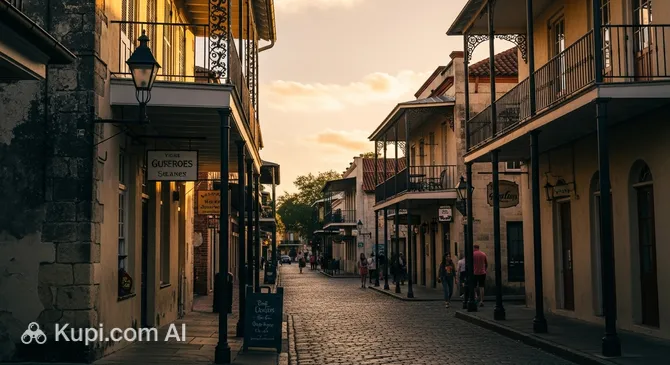
Historic Downtown St. Augustine. Source: Kupi.com AI

Strolling through the district, travelers can see authentic 17th- and 18th-century buildings that have preserved their original appearance. Key landmarks, such as the Ximenes-Fatio House Museum or the majestic Cathedral Basilica of St. Augustine, create a unique time-travel atmosphere. This is not just a tourist zone, but the cultural heart of the region, drawing thousands of people with its architectural elegance and panoramic views of the bay.

The main value of this district lies in its authenticity. Unlike many modern reconstructions, this historic center has preserved the layout and buildings that date back to the very first colonists. It is an ideal place for those who want to touch the history of the New World and enjoy the charm of an old coastal town.

Contacts

For those planning a visit, it's important to know the exact location of the old town's central part. Main information points and ticket offices for many museums are concentrated along the main pedestrian street, where you can always pick up a map of the area or get more information.

Address 170 St George St, St. Augustine, FL 32084, USA
Google Rating 4.8 out of 5 (based on 591 reviews)
Status Open to the public

What to Do

The first thing to do is take a walk down St. George Street. This is the city's main pedestrian artery, where cozy shops, art galleries, and authentic restaurants are tucked away behind every facade. It is best to start your route at the Old City Gates, located near the legendary Castillo de San Marcos, and head deeper into the district, enjoying the car-free environment.

Museum enthusiasts should definitely visit the St. Augustine Pirate & Treasure Museum or stop by Florida's oldest stone house, which features a complex with gardens and galleries. Of particular interest is the Spanish Quarter — an open-air colonial museum where reenactors in period costumes demonstrate the skills of blacksmiths and carpenters, recreating the daily life of early settlers.

Within walking distance of the center, you'll find iconic spots like the St. Augustine Lighthouse & Maritime Museum and the oldest wooden schoolhouse in the country. If you want to see more attractions in one go, take a sightseeing trolley — it’s an excellent way to tour the district and hear fascinating stories from the guides. After a busy day in the historic center, you can reach beautiful beaches in just a few minutes to relax by the ocean.

Getting There

Getting to the historic center is quite simple, as it serves as the city's main tourist hub. The primary landmark for starting your route is the address 170 St George St or the nearby Castillo de San Marcos. Most tourists prefer to use a private car or taxi from other parts of the city or from their hotels.

It is important to remember that the heart of the district — St. George Street — is entirely pedestrian. If you arrive by car, it is best to leave it in one of the paid parking lots on the edge of the old town and continue on foot. The entire district is designed to be as pedestrian-friendly as possible, making it easy to move between attractions, cafes, and shops.

History & Facts

The history of this place began in 1565, when Spanish colonizers founded a settlement that became the first permanent European outpost in what would become the United States. This makes the Historic District of St. Augustine one of the oldest continuously inhabited settlements in America. Interestingly, the city's lighthouse stands on the site of a Spanish watchtower originally erected in the mid-16th century.

The district's most significant monument is Castillo de San Marcos, built in 1672. This massive stone fort was never captured by an enemy and still serves as a reminder of the city's strategic role during colonial times. The fort's walls are constructed from a unique material called coquina (a compressed shell limestone), which effectively absorbed the impact of cannonballs.

Another curious fact is linked to the "Fountain of Youth" Archaeological Park. While it is believed to be the site of the original 1565 Spanish colony, archaeological finds reveal an even older history: the area contains indigenous dwellings of the Timucua people dating back more than 3,000 years. Thus, the historic center brings together the heritage of both native peoples and European explorers.

Time Needed

For a quick introduction to the Historic District of St. Augustine and a stroll along its main streets, you will need about 2–3 hours. This is enough time to soak in the city's atmosphere, browse a few souvenir shops on St. George Street, and take photos of the historic facades.

However, if you plan to explore the interior of the fort in detail, visit several museums, and enjoy lunch at one of the historic cafes, it is better to set aside a full day (6–8 hours). Since sightseeing trolley tickets are often valid for three days, you can conveniently spread your exploration of all the interesting sites over several visits.

Working Hours

As the Historic District of St. Augustine is an open urban area, you can stroll through its streets at any time of day. However, keep in mind that most museums, exhibitions, and historic buildings operate on their own individual schedules, typically opening daily, including weekends.

To plan your visit to specific sites, such as the Pirate Museum or the "Fountain of Youth," it is recommended to check information on their official websites in advance, as operating hours may vary depending on the season or special events.

Nearby

Exploring the surroundings of the historic center will help you dive deeper into the atmosphere of America's oldest city. Many iconic sites are within walking distance, allowing you to create a packed itinerary for a full day.

Attraction Name Distance (km)
Castillo de San Marcos National Monument 0.6
Saint Augustine Distillery 0.7
Ponce de Leon's Fountain of Youth Archaeological Park 1.6
Old Jail Museum 1.8
St. Augustine Lighthouse & Maritime Museum 2.5
St. Augustine Aquarium 8.5

Reached the end of the page?

That means the route is fully explored