Support

Saint John

About

St. John is the embodiment of a Caribbean paradise dream, where pristine nature dominates civilization. This cozy town, located on the island of the same name, is part of the U.S. Virgin Islands. Unlike its busier neighbors, St. John offers a unique atmosphere of privacy and tranquility, as there are no massive resort complexes, airports, or the typical urban bustle here.

The geography of the place is truly unique: most of the territory is occupied by dense tropical forests that gently slope down to turquoise lagoons and beaches with powdery white sand. The population of the town and island is only about 4,170 people, creating the feeling of a close-knit, friendly, and welcoming community. St. John serves as the administrative center and the "heart" of the island, where ferries arrive and the main life of the local residents is concentrated.
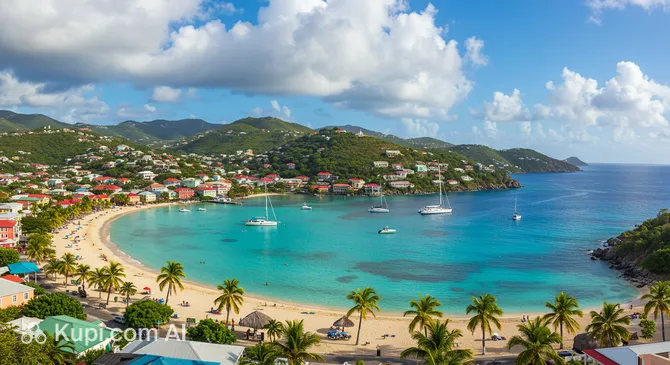
Saint John. Illustration.
Source: Kupi.com AI

The main draw for travelers is the incredible landscape. More than two-thirds of the island is dedicated to a national park, where you can endlessly explore hiking trails and enjoy panoramic views from mountain peaks. However, while strolling through these picturesque spots, you will inevitably encounter echoes of the past. The fascinating history of St. John can be traced in the ruins of old sugar plantations, which blend harmoniously into the surrounding tropical landscape and have become an important part of the island's cultural code.

St. John is an ideal destination for fans of snorkeling, diving, and active outdoor adventures. If you are looking for a place where you can slow down the pace of life, forget about stress, and feel a true connection with nature, this town will be your best discovery in the Caribbean.

Weather Overview

The climate of St. John can be described as an eternal summer, making the island attractive to visit at any time of year. Tropical weather prevails here with surprisingly stable temperatures that rarely drop below comfortable levels. To know what to expect from the elements before your trip, check out the detailed information about the climate of St. John to properly plan your wardrobe and activities.

Temperature patterns on the island change very little. The "coolest" month is considered to be February, with an average temperature of about +24.8°C, while by August and September, the air warms up to +27.5°C. Maximum values in the summer often exceed +28°C, providing ideal conditions for beach holidays and swimming in the warm sea.

Precipitation is distributed unevenly: the driest month is April, with only about 8 rainy days recorded. At the same time, in September, the number of days with precipitation increases to 21, although the rains are often short-lived. Expect consistently warm weather throughout the year with temperatures ranging from +24°C to +28°C and occasional tropical showers, which increase in frequency by autumn.

Interesting Facts

St. John holds many amazing stories that make it a truly unique corner of the Caribbean, beyond its postcard views and white beaches. The island lives by its own rules, protecting its nature and historical heritage from the onslaught of modern civilization.
  • Volcanic Origin. The entire island is essentially the peak of an ancient underwater volcano. The highest point, Camelberg Peak, rises 364 meters above sea level, forming a complex and picturesque landscape with steep slopes and cozy bays that delights photographers.

  • Protected Zone. St. John proudly holds the title of the most environmentally friendly island in the region. More than 60% of its territory is occupied by the protected Virgin Islands National Park, which has allowed the preservation of pristine tropical forests and a unique ecosystem untouched by mass development.

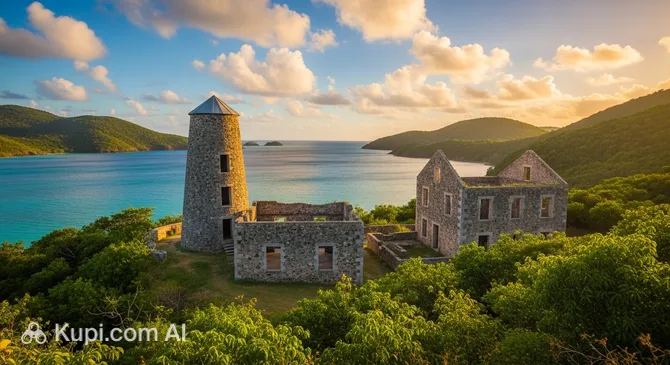
  • Traces of the Danish Crown. The island's history is inextricably linked with 18th-century Danish settlers. Ruins of old estates and windmills can still be found deep in the forests. The most striking example of architecture from that era is the Annaberg Sugar Plantation, where the walls of the factory and residential buildings are preserved.

  • Life Without Brands. On St. John, you won't encounter the usual large hotel chains or famous fast-food restaurants. Local laws and culture are aimed at supporting small businesses, so unique family establishments and craft workshops, where items are created from coral and wood, flourish here.

Annaberg Sugar Plantation. Illustration.
Source: Kupi.com AI

Traveler photos:

How to Get There

A journey to this secluded island is a small adventure in itself, as it does not have its own airport. Tourists face a combined route, usually including a flight to a neighboring island and a ferry crossing. You can find all the details and nuances of the logistics by following the link: more on how to get to St. John. The main transit hubs for most travelers are the neighboring islands of the U.S. or British Virgin Islands.

Since the town of St. John itself does not have an airport, the vast majority of tourists fly into Cyril E. King Airport (STT). It is located in Charlotte Amalie on the neighboring island of St. Thomas, about 26 km from St. John. This is a major international hub receiving flights from all over the world. Travel time from the airport to St. John (including a taxi ride to the ferry dock and the crossing itself) takes about 60 minutes. This is the most convenient and common way to reach the island.

An alternative option is Terrance B. Lettsome International Airport (EIS), located in Tortola (British Virgin Islands), 23 km from St. John. This route may be convenient for those traveling through several islands of the archipelago; however, it requires crossing the border and going through customs. The journey will take approximately 55 minutes. You could also consider flying into Henry E. Rohlsen Airport (STX) on the island of St. Croix (about 71 km away), but the transfer from there will take more than 2 hours and will require a seaplane flight or a long ferry crossing.

For convenience, here is summary information on the region's main airports:

AirportPassenger trafficDistance
Terrance B. Lettsome International Airport300 00023 km
Cyril E. King Airport1.6 mln26 km
Virgin Gorda Airport25 00034 km
Benjamin Rivera Noriega Airport45 00061 km
Henry E. Rohlsen Airport530 00071 km

There is no railway service on the island of St. John, nor anywhere else in the U.S. Virgin Islands. The terrain and the small size of the islands make railway construction impractical. The main ground transportation here consists of cars and safari taxis, and communication with the outside world is maintained exclusively by sea and air.

Thus, the final stage of your journey will always be by water. After arriving at one of the nearest airports, you need to reach a ferry terminal (for example, in Red Hook or Charlotte Amalie on St. Thomas) and catch a ferry that will take you directly to Cruz Bay harbor on St. John. Regular ferry service makes this journey simple and scenic.

Main Attractions

St. John is a true haven for nature lovers and those seeking a peaceful getaway, where most of the attractions are created by nature itself. The island offers a unique blend of historical sites and incredible landscapes, making it an ideal place for exploration.

The pride and most extensive attraction of the island is undoubtedly the Virgin Islands National Park. It covers more than half of St. John's territory and includes dense tropical forests, hills with panoramic views, and some of the most beautiful beaches in the Caribbean, such as Trunk Bay and Maho Bay. The park is crisscrossed by numerous hiking trails leading to secluded coves and historical ruins, while its underwater portion with coral reefs attracts snorkelers and divers from all over the world.

Virgin Islands National Park. Illustration.
Source: Kupi.com AI

Traveler photos:

To touch the history of the island, it is worth visiting the ruins of the Annaberg Sugar Plantation. This is one of the most significant historical sites on St. John, where you can see the remains of a windmill, a sugar cane processing plant, and other 18th-century structures. A walk through the plantation grounds not only introduces you to the colonial past of the U.S. Virgin Islands but also offers magnificent views of the turquoise waters of the strait.

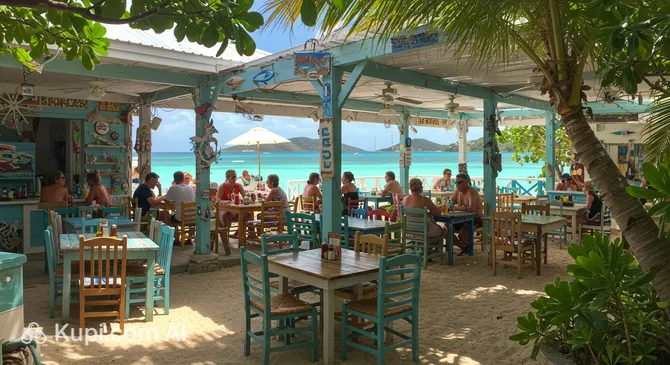
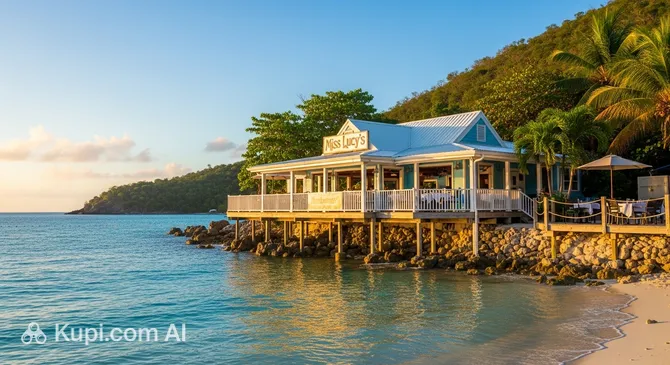
After a full day of exploration, you can relax in one of the island's iconic establishments. For example, the Skinny Legs bar and grill in Coral Bay is a legendary spot with a laid-back atmosphere, famous for its excellent burgers and friendly environment. Another popular spot is Miss Lucy’s restaurant, located right on the seaside. Here, you can sample Caribbean cuisine while enjoying the sound of the waves and the local flavor.

Local Cuisine

St. John’s cuisine is a vibrant and distinctive mix where African roots are intertwined with Caribbean traditions and European influence. The main advantage of local gastronomy is the freshness of the products: many ingredients, especially seafood, reach the kitchen literally within hours of being caught. There is no cult of high molecular gastronomy here, but there is a cult of flavor, spices, and hearty, straightforward dishes prepared with soul.

Seafood is the cornerstone of the menu for many travelers. Be sure to try the signature fish soup, which is prepared here with coconut milk, fresh seafood, and a special blend of spices. A perfect accompaniment to it is the "johnny-cake"—a traditional airy fried bread served hot. Fans of the exotic will appreciate Caribbean-style stewed goat or fried red snapper. Rice and peas, generously seasoned with local herbs, are almost always offered as a side dish.

As for drinks, fresh juices and thick smoothies made from mango, guava, and papaya—available at cafes and small street stalls—are a savior from the tropical heat during the day. In the evening, rum becomes the king of the table. The island's famous rum punch is prepared according to old recipes, and tasting this drink is considered an essential part of the cultural experience.

Skinny Legs. Illustration.
Source: Kupi.com AI

Traveler photos:

The food culture on the island is very democratic. Locals and tourists alike enjoy eating at farmers' markets, which sell homemade sauces and tropical fruits, as well as in colorful local spots. If you want to dive into the atmosphere of true island relaxation, visit the legendary Skinny Legs bar and grill. This place is famous not only for its food but also for its unique spirit of freedom. For a more romantic dinner right by the water, choose Miss Lucy’s restaurant, where you can sample the best of Caribbean home cooking.

Several times a year, St. John hosts culinary festivals that turn into true celebrations of street food. This is an excellent opportunity to see how local delicacies are prepared, chat with residents, and immerse yourself in the gastronomic life of the U.S. Virgin Islands.

Travel Tips

St. John is a place where nature dictates the rules, and preparing for a trip here requires knowing a few local nuances. To ensure your vacation on this island paradise in the U.S. Virgin Islands is as comfortable and worry-free as possible, we have gathered the most important recommendations for travelers.

  1. Clothing and Equipment. The island embraces a relaxed "Island Casual" style: shorts, T-shirts, and light dresses made of natural fabrics are appropriate everywhere. However, leave swimsuits and trunks exclusively for the beach—walking around town in them is considered poor form. Since the island's terrain is mountainous, you will definitely need comfortable shoes (trekking sandals or sneakers) for walking in the national park. It is also critically important to use sunscreen labeled "Reef Safe", as products containing oxybenzone are banned here to preserve the ecosystem.

  2. Transport Nuances. If you rent a car, remember the main rule: traffic here is left-hand, even though the cars typically have the steering wheel on the left (American standard). This requires extra concentration on the steep switchbacks. It is recommended to rent a four-wheel-drive jeep. For those who don't drive: safari taxis operate at fixed rates per person, not per vehicle, and accept payment primarily in cash.

  3. Finance and Budget. The official currency is the U.S. Dollar (USD). While credit cards are accepted in most restaurants and shops in Cruz Bay, cash (especially small bills) is necessary for paying for taxis, market purchases, and tips. ATMs are available in Cruz Bay, but they are difficult to find in remote areas. Keep in mind that prices on the island are 20–30% higher than on the mainland due to the cost of importing goods. Tips are expected to be around 15–20%.

  4. Health and Safety. St. John is safe, but no one is immune to mosquitoes and sand flies (no-see-ums), especially at sunset, so repellent is mandatory. Pharmacies (such as Chelsea Drug Store) operate on a standard schedule; there are no 24-hour pharmacies. Primary medical care is provided at the Myrah Keating Smith Community Health Center. Drinking tap water is not recommended; it is better to buy bottled water.

  5. Communication and Connectivity. The official language is English, but locals speak it with a colorful Caribbean accent. Most American mobile carriers operate here without roaming, but the signal can drop in the mountains and on remote beaches. We recommend downloading offline maps (such as Google Maps or Maps.me) in advance so you don't get lost on forest roads without internet.

  6. Local Etiquette. Politeness opens any door here. Start any conversation—whether with a shopkeeper, a taxi driver, or a passerby—with the phrase "Good morning", "Good afternoon", or "Good night". A simple "Hi" is often not enough, and getting straight to the point can be perceived as rude. Also, respect "island time": service can be slow, so relax and do not rush the staff.

  7. What to Avoid. It is strictly forbidden to step on coral or touch marine life while snorkeling—this not only harms the fragile environment but can also be dangerous (burns, cuts). Also, avoid loud behavior and noise in residential areas during the evening, as locals value peace and quiet.

  8. Resource Conservation. Fresh water on the island is a scarce resource, mostly collected from rainwater into cisterns. Locals will be very grateful for your economical use of water in the shower and when washing up. This is a sign of respect for the island way of life.

St. John is a place that teaches you to slow down and enjoy the moment. By following these simple tips, you will quickly feel at home in this friendly community and can safely explore all the island's hidden treasures, from mountain peaks to the depths of coral reefs.

Entertainment & Nightlife

Nightlife in St. John is fundamentally different from the boisterous parties of Ibiza or Miami. You won't find multi-story nightclubs with lasers and strict face-control here. Instead, the island offers a relaxed atmosphere that locals call "limin'" — the art of hanging out and relaxing. Evening entertainment here is infused with Caribbean flavor: open-air bars, live reggae or country music, and long conversations to the sound of the surf.

The epicenter of evening activity is the Cruz Bay area. This is where most of the establishments are concentrated along the narrow streets and the waterfront. Life starts buzzing during "happy hour" (usually from 4:00 PM to 6:00 PM), when tourists and locals gather to watch the sunset with a signature "Painkiller" cocktail in hand. The dress code is virtually non-existent: "island style" means shorts, T-shirts, and sandals, even in the most popular spots.

If you are looking for a more authentic and slightly eccentric atmosphere, head to the other side of the island to Coral Bay. This area is considered quieter, but it's home to iconic spots with a distinct character. Be sure to stop by the Skinny Legs bar and grill. This is a legendary place where there are no blenders (meaning no complicated frozen cocktails), but there is great music, tasty food, and the spirit of old St. John. It’s the perfect spot to feel like part of the local community.

For a romantic evening or a more tranquil experience, consider Miss Lucy’s restaurant. Located in a secluded spot right by the water, it is famous for its Full Moon Parties, featuring jazz or local music while guests enjoy dinner under the moonlight. This is a unique experience that combines gastronomy with the island's cultural traditions.

Miss Lucy's. Illustration.
Source: Kupi.com AI

Traveler photos:

Practical Tips and Safety:

  • Transport: This is the most important nuance of St. John's nightlife. Taxis do not cruise around 24/7 looking for passengers like in big cities. If you plan to stay out late, be sure to arrange a return time with a driver in advance or have local taxi service numbers on hand. The island's roads are winding, steep, and often unlit, so rental cars should be used with caution, and driving under the influence must be strictly avoided.
  • Safety: St. John is considered one of the safest islands in the Caribbean. You can walk around the center of Cruz Bay in the evening with peace of mind. However, as with anywhere else, do not leave your belongings unattended or wander into unlit, deserted alleys alone.
  • Prices: Be prepared for the fact that food and drink prices can be above average, as almost all products are imported. Many bars accept cards, but cash (US dollars) is always welcome and can speed up service.

As for daytime cultural entertainment, St. John is not rich in classical theaters or large museums. Nature itself serves as the "stage," and historical ruins under the open sky serve as the "museums." Nevertheless, the St. John School of the Arts in Cruz Bay occasionally hosts concerts, theatrical performances, and exhibitions that can diversify your leisure time.

Parks & Museums

St. John is a unique place where nature itself acts as the primary guardian of heritage, and the boundaries between museum exhibits and wild jungle are practically non-existent. You won't find massive museum complexes here, but you can stroll through "living" open-air galleries where the history of the colonial era is intertwined with tropical landscapes.

The undisputed dominant feature of the island is the Virgin Islands National Park, which covers more than half of the land territory and a significant part of the coastal waters. This is not just a park but a vast biodiversity reserve with dozens of hiking routes. One of the most famous trails is the Reef Bay Trail, which leads travelers through dense forests to ancient petroglyphs and the ruins of old sugar mills, combining active recreation with a deep dive into history.

Virgin Islands National Park. Illustration.
Source: Kupi.com AI

Traveler photos:

The underwater parks also deserve special attention. For example, in Trunk Bay, a unique underwater snorkeling trail has been established. It is a kind of museum of marine life: following a route marked by special underwater signs, you will learn about various types of coral and fish inhabiting these waters. This is an ideal place for those who want to study nature without leaving the warm Caribbean Sea.

The role of the island's main historical museum is played by the Annaberg Sugar Plantation. This site consists of the stabilized ruins of an 18th-century factory where sugar, molasses, and rum were produced. A walk through the grounds allows you to see the scale of colonial production firsthand: the walls of the windmill, syrup boiling pots, and the remains of living quarters have been preserved here. Information boards tell detailed stories about life at that time and the hard labor upon which the island's economy was built.

Annaberg Sugar Plantation. Illustration.
Source: Kupi.com AI

Traveler photos:

For a more intimate introduction to the culture, visit the Elaine Ione Sprauve Library and Museum, located in the restored Enighed Estate manor house near Cruz Bay. This small museum houses old photographs, household items, ceramics, and pre-Columbian artifacts found on the island. It’s a quiet place to escape the heat and learn more about the families who have lived here for generations.

Art lovers should check out local art galleries, such as Bajo El Sol in Cruz Bay. This cultural space combines a gallery, bookstore, and cafe, offering works by local painters, sculptors, and writers. It frequently hosts exhibitions, poetry evenings, and film screenings that reflect modern Caribbean identity.

Insider Tip: Be sure to find time for a hike to the petroglyphs at the end of the Reef Bay Trail. These mysterious symbols carved into the rocks by a freshwater pool are attributed to the Taino people and are a sacred site, reminding us of the island's indigenous inhabitants long before the arrival of Europeans. It is best to go there with a park ranger to hear the legend-filled history of this place.

Getting Around

The public transport system in St. John has its own unique features dictated by the terrain and the small size of the island. You won't find a metro, trams, or typical city buses with frequent schedules here. The main modes of travel for tourists are open-air safari taxis, rental cars, and, to a lesser extent, municipal buses.

The only budget form of public transport is the VITRAN bus network. The blue buses run along the main road (Centerline Road), connecting the ferry dock in Cruz Bay with Coral Bay and Salt Pond Bay. The fare is very affordable—about 1 dollar—but the schedule is followed only loosely. Buses run infrequently, often with intervals of an hour or more, so this option is only suitable for those who are in no rush and want to save money.

The most popular transport among tourists is the safari taxi. These are modified trucks with an open back, a canopy, and benches, allowing you to enjoy the views during the ride. These vehicles work like shuttles: they wait for passengers at the ferry terminal and depart once the cabin is full. This is the primary way to reach the famous beaches of the north coast.

The payment system in taxis is fixed and depends on the destination zone, not a meter. Official rates are established for trips between specific points (for example, from town to Trunk Bay beach). Payment is accepted only in cash, so be sure to stock up on small bills before your trip. It is customary to pay for each passenger separately in a taxi, and an additional fee may be charged for luggage.

Many travelers prefer complete freedom and choose to rent a car. Several rental agencies operate in town, offering mostly four-wheel-drive jeeps, which are necessary for navigating the steep hills. It is important to remember a key feature: traffic here is left-hand, although most cars have the steering wheel on the left (American standard). This requires increased attention from the driver, especially on narrow mountain switchbacks.

Since there is no airport in the town, passenger ferries are an essential part of the transport scheme. They run regularly between Cruz Bay harbor and the neighboring island of St. Thomas. Tickets are purchased at the terminal ticket offices before boarding. Ferries run strictly on schedule and serve as the main "gateway" to the town for all arriving tourists.

Accommodation

Where to stay:

Accommodation on the island of St. John is significantly different from what other popular Caribbean destinations offer. Here, you won't find endless rows of high-rise all-inclusive hotels or noisy resort complexes blocking the horizon. The island's housing stock is harmoniously integrated into the natural landscape, supporting an atmosphere of privacy and sustainability. The primary focus is on private villas, cozy apartments, small boutique hotels, and eco-camps.

Several main types of accommodation are available for travelers. The most popular option is renting villas and cottages. They are scattered across the island, from hilltops with panoramic ocean views to cabins hidden in the jungle. For budget-conscious tourists, there are unique tent camps and eco-cottages that allow you to live as close to nature as possible. Classic hotels are few and far between and usually fall into the "luxury" or "premium" category, offering a high level of service and privacy.

When choosing a place to stay, you should focus on two main areas:

Cruz Bay is the western part of the island and the main transport hub. Staying here puts you within walking distance of shops, restaurants, and the ferry dock. This is an ideal choice for those who do not plan to rent a car or want to be in the center of evening life. From here, it’s easy to catch a taxi to the best beaches on the north coast.

Virgin Islands National Park. Illustration.
Source: Kupi.com AI

Traveler photos:

Coral Bay is the quieter and more authentic eastern part of the island. Travelers choose this area if they are seeking complete peace and a relaxed atmosphere. The area is known for its informal community and proximity to interesting locations. For example, by renting accommodation in this part, you will be near the famous Skinny Legs restaurant, which is an unofficial center of attraction for locals and expats. Also, in this area, right by the water, you can find cozy guesthouses near Miss Lucy’s restaurant, where live music plays in the evenings.

Accommodations bordering protected lands are particularly popular. Since the Virgin Islands National Park covers a vast part of the territory, many villas boast direct access to hiking trails or views of untouched forests and bays. Staying in such places offers the unique opportunity to wake up to the sound of tropical birds.

Booking Tips:

  • Plan ahead. St. John is a small island with a limited number of places to stay. The best villas and cottages are booked 6–12 months in advance, especially for the high season (December to April).
  • Consider transport. If you choose accommodation away from Cruz Bay (for example, in the mountains or in Coral Bay), renting a four-wheel-drive vehicle becomes almost mandatory.
  • Minimum stay. Many private villas set a minimum stay of 5 to 7 nights, especially during peak dates.

The price range on the island is above the Caribbean average. "Budget" housing here is a relative concept, most often referring to campsites or modest studios without sea views. The mid-to-high price segment is widely represented. It is best to book through specialized rental platforms or directly through the websites of local management companies, which often offer better terms and concierge services.

Nearby Cities

For those who want to explore the surrounding area, St. John serves as an excellent starting point for day trips to several interesting nearby locations:

Just a short ferry ride away is Charlotte Amalie, located on the neighboring island of St. Thomas. This is the bustling capital of the territory, offering a completely different rhythm of life compared to quiet St. John. People come here for the best duty-free shopping in the Caribbean, walks through historic Danish streets, and visits to famous jewelry stores. It is an ideal option for those who want to dive into urban bustle for a day and enjoy architectural monuments.

If you are up for a slightly longer journey, it is worth visiting St. Croix, the largest island in the archipelago. It is known for its rich cultural heritage and two charming towns, Christiansted and Frederiksted, where colonial architecture is beautifully preserved. St. Croix offers a unique combination of history, gastronomy, and diverse landscapes, from tropical forests to desert-like scenery in the east.

CityPopulationDistance
North Sound13 km
Tortola12 00015 km
Road Town12 60315 km
Charlotte Amalie18 50021 km
Virgin Gorda4 00039 km

These nearby destinations provide a glimpse into the diverse culture and landscapes of the region.

Shopping & Souvenirs

Shopping in the town of St. John is a world apart from what major metropolises or even the neighboring island of St. Thomas offer. You won't find huge shopping malls, retail giants, or noisy outlets here. Instead, the town charms tourists with cozy boutiques, art galleries, and craft shops where each item carries the warmth of the maker's hands. It is an ideal place for those seeking unique items inspired by Caribbean nature and culture.

The center of the island's commercial life is the Cruz Bay area. This is where most shops are concentrated within a labyrinth of narrow streets. The main attraction is the Mongoose Junction complex. This is not just a shopping district, but an architectural masterpiece made of local stone and mahogany, nestled in tropical greenery. Here you will find the best art galleries, clothing stores, and jewelry salons. Another popular spot is Wharfside Village, located right by the ferry dock. Bright Caribbean houses and proximity to the sea make shopping here particularly pleasant.

There are no large shopping centers in the traditional sense on the island. Their role is played by open-air commercial complexes like the aforementioned Mongoose Junction and The Marketplace. The latter is geared more toward practical needs: it houses a supermarket, a pharmacy, and home goods stores, which can be useful for tourists renting villas.

While there are no large markets on St. John, local artisans can often be found in the park near the ferry terminal. They sell handmade jewelry, woven baskets, and paintings. This is a great opportunity to chat with residents and purchase authentic items without intermediaries.

When choosing souvenirs, look for the famous St. John Hook Bracelet. This piece of jewelry has become an unofficial symbol of the island: the way you wear it (with the hook toward your heart or away from it) symbolizes your romantic status. Also popular are jewelry featuring the petroglyphs found in the island's forests, local ceramics, paintings by Caribbean artists, and, of course, locally produced spices and sauces. Don't forget the rum—the U.S. Virgin Islands offer an excellent selection of Caribbean spirits.

Most shops open around 10:00 AM and stay open until 6:00 PM or 8:00 PM, especially during the high season. On Sundays, some shops may be closed or operate on a reduced schedule. U.S. Dollars and major credit cards are widely accepted; however, it is better to have cash for purchases from street vendors.

A major advantage of shopping here is the Duty Free zone. There is no sales tax, which makes purchasing jewelry, watches, perfume, and alcohol particularly advantageous. For U.S. tourists, there are increased customs limits for goods purchased in this territory, which is a pleasant bonus to the vacation.

Reached the end of the page?

That means the route is fully explored