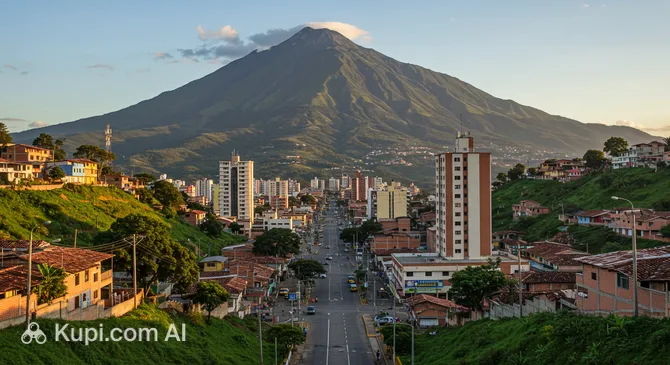
Baruta is a dynamic and primarily residential municipality in the state of Miranda, serving as an important part of the Caracas metropolitan area. Located on the picturesque hills of Venezuela at an altitude of approximately 1,002 meters above sea level, it offers residents and visitors a slightly cooler climate compared to the low-lying areas of the capital. With a population of over 240,000, this district serves as a key residential enclave where the daily life of Venezuelans thrives.
Baruta. Illustration.
Source: Kupi.com AI
The rich history of this settlement is inextricably linked with the development of the capital region. Although Baruta is not a typical tourist center with an abundance of historical monuments, it possesses a unique urban atmosphere. Here, modern buildings stand alongside traditional Venezuelan neighborhoods, and the hilly terrain creates an unusual city geometry characteristic of this region.
For a traveler, visiting this place is an excellent opportunity to see the real Venezuela beyond the standard tourist routes. Here you can feel the rhythm of life of the local population, peek into local markets, and enjoy views of the mountains surrounding the Caracas valley. We invite you to get to know this hospitable corner, which serves as an ideal starting point for exploring the central part of the country.
Weather Overview
The city of Baruta is located in a tropical climate zone, characterized by high humidity and stable warm temperatures throughout the year. Thanks to its location in the hills, average daytime temperatures usually range between 24–30°C, making the weather more comfortable than on the coast. At night, the air can cool down to a pleasant 19–21°C.
There are two distinct seasons in the region. The period from May to November is considered the rainy season: heavy but usually short-lived downpours often occur during this time. The wettest months are September and October, when rainfall can reach 200 mm. In contrast, dry weather sets in from December to April, which is ideal for walking. Detailed weather in the city is available in our expanded section.
When planning your trip, expect a warm summer with occasional rain during the season and dry sunny days during the winter months. Due to the hilly terrain, localized flooding can occur in low-lying areas during heavy rain, so it is worth checking the forecast in advance if you plan to travel. Overall, the mild climate of Baruta is considered one of the most pleasant in the capital region.
Average monthly temperature
Average monthly precipitation
Interesting Facts
The municipality of Baruta covers an area of approximately 86 square kilometers and is one of the most densely populated and significant districts in the state of Miranda.
The city is located at an altitude of 1,002 meters above sea level, which makes its climate more comfortable and mild compared to the country's coastal regions.
In Baruta, the time zone is UTC-4, and the distance to the heart of the capital is minimal, allowing residents to be fully integrated into all capital processes.
Despite the dense development, the municipality's terrain remains extremely hilly, which dictates a unique architecture where buildings literally "climb" the slopes.
How to Get There
The transport accessibility of Baruta is due to its strategic position within the metropolitan area. The main flow of travelers arrives here via Caracas. The journey from the center of the capital by car usually takes from 20 to 40 minutes; however, during rush hours, travel time can increase to two hours due to heavy congestion. When planning a trip, it is important to take into account the high volume of traffic on main highways in the morning and evening.
The main aviation hub for the region is Simón Bolívar International Airport (IATA: CCS), located in Maiquetía, about 25–30 kilometers from the city. From the terminals, it is most convenient to reach Baruta by taxi or official transfer buses. The route passes through mountain tunnels and takes about an hour in normal traffic.
Railway communication is not developed in this specific area, so the main modes of transport remain buses, shared taxis ("por puestos"), and private vehicles. If you are looking for more detailed information on routes and logistics, we recommend exploring the section on how to get to the city.
Station
Passenger traffic
Distance
Libertador Simón Bolívar Terminal
6
8 km
Las Adjuntas
7
16 km
Main Attractions
The city of Baruta is primarily a residential and administrative center, so you won't find traditional world-class tourist attractions here. The main interest for guests is the urban environment itself and the opportunity to observe the authentic Venezuelan lifestyle. While strolling through the district, it's worth paying attention to the central plazas, which serve as the main gathering points for local residents.
One of the characteristic features of the municipality is its hilly terrain. Thanks to the elevation changes, many spots offer panoramic views of the surroundings and the peaks of the Avila mountain range. While there are no specially equipped observation decks, many residential quarters in the upper part of the city allow for excellent photographs of the capital's valley in the rays of the setting sun.
Those interested in modern infrastructure will find the local shopping areas and markets intriguing. These are places where life pulses: here you can see how fresh fruit is traded and feel the flavor of local "comedores" (eateries). The absence of large tourist crowds allows guests to feel like part of the local community and enjoy the unhurried rhythm of the suburbs.
Local Cuisine
The gastronomy of Baruta is a bright kaleidoscope of classic Venezuelan flavors. The main dish, without which a local breakfast or dinner is unimaginable, is arepas. These round cornmeal cakes are prepared here with a wide variety of fillings: from classic cheese and ham to the famous "reina pepiada" with chicken and avocado. You can try them at specialized "areperas" or at small street stalls.
You should definitely order pabellón criollo — a traditional hearty dish consisting of fluffy rice, black beans, juicy shredded beef, and fried sweet plantain slices. This combination of ingredients is considered a culinary symbol of the country. For drinks, locals prefer refreshing chicha — a thick sweet rice or corn-based drink — as well as freshly squeezed tropical fruit juices like guava and papaya.
The dining culture in the city is closely linked to local markets and small family-run eateries (comedores). Here, food is prepared home-style, portions are usually large, and prices remain affordable. Don't forget to try the local coffee — Venezuela is famous for its coffee traditions, and in Baruta, you will easily find a cozy spot to enjoy a cup of aromatic "guayoyo" or a strong espresso.
Travel Tips
A trip to Baruta will be comfortable and safe if you familiarize yourself with the features of local life in advance. These tips will help you better navigate this dynamic Venezuelan district.
Clothing and essentials: Choose light and breathable cotton clothing, as the climate is warm year-round. However, given the altitude of 1,002 meters, evenings can be cool, so a light windbreaker will come in handy. Be sure to bring comfortable shoes with good soles — the city's hilly terrain involves constant ascents and descents.
Transport: For getting around, it is best to use official taxis or verified apps. Avoid traveling in overcrowded minibuses during rush hours. Car rental is possible, but be prepared for chaotic traffic and difficult parking on narrow streets.
Finances: Local currency is in circulation, but cards are not accepted everywhere. Always have cash in small bills for fares and market purchases. International cards may work inconsistently, so check the status with your bank before the trip.
Safety: Move around primarily during daylight hours and avoid walking alone in densely populated outskirts. In traffic jams, keep windows closed and do not display valuables.
Communication: The primary language is Spanish. English is not widely spoken, so learn basic phrases: "Hola" (hello), "Gracias" (thank you), "¿Cuánto cuesta?" (how much does it cost?). For staying connected, it is better to buy a local SIM card at an official store.
Local etiquette: Venezuelans are very social and friendly people. When entering an establishment, it is customary to greet everyone present. Be polite and patient; friendliness is highly valued here.
What to avoid: Do not engage in discussions on political topics and do not photograph government buildings or people in uniform without permission. This will help you avoid unnecessary attention.
Useful tip: Always have a supply of bottled drinking water and check with your accommodation regarding the water and electricity schedules, as there are occasional outages in the region.
Following these simple rules will allow you to enjoy the flavor of Baruta and make your trip truly pleasant and memorable!
Entertainment & Nightlife
The entertainment scene in Baruta is predominantly quiet and local. Since it is a residential suburb, the main evening activities are concentrated around small, cozy cafes and family restaurants where locals gather for leisurely conversations. The atmosphere here is friendly and homey, lacking the pretentiousness of large tourist zones.
For those looking for vibrant nightclubs, noisy salsa bars, or concert halls, the main destination remains the center of Caracas, located just a few kilometers away. Residents of the municipality prefer to head to the capital for cultural events and active nightlife, returning to the quiet of their district to rest. In Baruta itself, evenings are most often spent with friends on terraces or during social gatherings at shopping malls.
On weekends, popular forms of recreation include nature picnics and walks in the surrounding hills. Local youth often gather in open areas to enjoy the cool evening air and socialize. If you plan to spend an evening here, the best choice would be one of the local establishments with traditional cuisine, where you can listen to background music and observe the daily life of the townspeople.
Parks & Museums
Due to its predominantly residential development, Baruta does not have large museum complexes. Cultural life here is more focused on local initiatives and small galleries. Nevertheless, the city itself is interesting for its urban structure, where each block can be viewed as a kind of open-air museum reflecting the stages of development of 20th and 21st-century Venezuelan architecture.
The park areas within the municipality are local in nature. These are small plazas and green islands amidst dense development, where local residents rest in the shade of trees. Landscaping here is limited by the terrain, but the hilly slopes themselves serve as natural recreational zones. Many residents use nature trails on the high ground for morning walks and outdoor sports.
To visit large-scale national parks and classic art galleries, guests usually head to neighboring Caracas. The proximity to the capital makes it easy to combine staying in quiet Baruta with cultural leisure in the country's largest museums, located just a few minutes' drive away.
Getting Around
The transport system in Baruta is mainly represented by ground public transport. The primary role is played by buses and shared taxis, known as "por puestos." They connect the municipality with various districts of Caracas and internal neighborhoods. It is important to remember that during the morning (07:00–09:00) and evening (17:00–19:00) hours, transport can be very overcrowded, and travel time can significantly increase due to traffic jams.
There is no metro in the city itself, which makes traveling long distances less comfortable than in the center of the capital. Most local residents and tourists prefer to use taxis or mobile apps (such as Uber or InDriver), which are relatively inexpensive in Venezuela. This is the fastest and safest way to reach your destination, especially in the evening.
For movement within residential quarters, walking can be difficult due to the steep hilly terrain and the lack of wide sidewalks in some areas. When planning your movements, always allow extra time for possible traffic congestion and take the landscape features into account. Payment on buses is usually made in cash to the driver, so it is worth stocking up on small denominations of local currency in advance.
Accommodation
Choosing accommodation in Baruta has its own specificities: there are virtually no large luxury hotel chains here. The primary lodging options consist of private apartments and guesthouses, which are often rented out through short-term rental platforms. This is an excellent choice for those who want to live in a typical Venezuelan neighborhood and feel like a local.
The most convenient areas for tourists are considered to be those near major transport interchanges and shopping zones. Staying here allows for quick access to the capital's center while maintaining the tranquility of a residential suburb. The cost of accommodation in Baruta is usually lower than in the central districts of Caracas, making the city attractive for budget travelers and expats.
When choosing accommodation, it is worth paying attention to safety issues and the availability of basic infrastructure (backup water and electricity systems), which is relevant for many regions of the country. We recommend booking apartments in advance and carefully reading reviews from previous guests to ensure the most comfortable stay possible in the state of Miranda.
Nearby Cities
Baruta serves as a convenient starting point for exploring the capital region and the central part of the state of Miranda. Thanks to its location, the city allows you to quickly switch from a quiet residential atmosphere to the dynamics of a metropolis or the flavor of neighboring towns, each with its own character.
Just 8 kilometers away is Caracas — the nation's capital, home to major museums, theaters, and historical monuments, such as the Simón Bolívar house-museum. Very close by is the Las Mercedes district, known for its shopping centers, restaurants, and active business life. For those who want to see the administrative center of Miranda state, it is worth heading to Los Teques, which is about 20 kilometers away.
Traveling around the surrounding area will help you better understand the diversity of Venezuelan life: from the bustling avenues of the capital to the more traditional settlements on the hills. We recommend setting aside time to visit neighboring districts to fully appreciate the hospitality of this region.
Shopping & Souvenirs
Shopping in Baruta is primarily focused on the needs of local residents, making it an excellent place to find authentic goods. Instead of boutiques with global brands, traditional markets and small shopping rows prevail here. You can purchase fresh farm products, spices, and everyday necessities at very reasonable prices.
The main points of attraction for shoppers are the municipality's local markets. These are lively, bustling places where you can not only make purchases but also observe the local flavor. For more extensive shopping, residents and visitors often head to neighboring districts such as Las Mercedes, where large modern shopping centers with a wide selection of clothing and electronics are concentrated.
As souvenirs from this region, it is worth bringing back Venezuelan coffee or the famous local rum, which can be found in grocery shops. Please note that most stores operate from morning until early evening, and it is better to have cash with you, as cards are not accepted at all small retail outlets. The process of buying at a local market is always a small adventure and an opportunity to chat with friendly vendors.