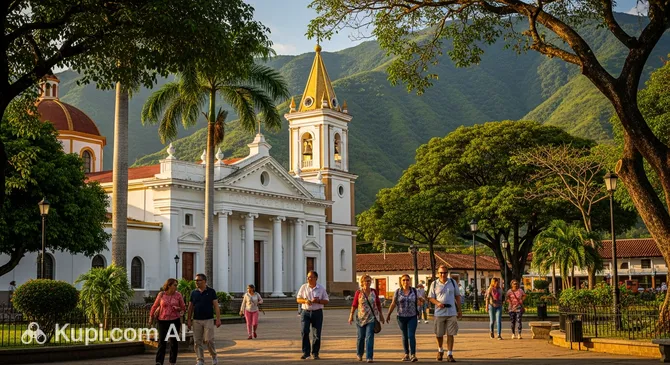
Guarenas is a dynamic industrial and residential hub located in the state of Miranda in northern Venezuela. Founded in 1621 on the site of an ancient indigenous settlement, the city has evolved over time into one of the capital's key suburbs while maintaining its unique character. Situated at an altitude of 374 meters above sea level, it offers travelers an authentic glimpse into everyday Venezuelan life, far from traditional tourist trails.
Guarenas. Illustration.
Source: Kupi.com AI
The city's geographic location on the banks of the Guarenas River has largely shaped its development. Today, it is a major urban center with a population of over 200,000, playing an important role in the region's economy. The history of the city's founding is closely tied to its colonial past, and while modern buildings now dominate the skyline, the spirit of ancestral heritage can still be felt in the layout of the central districts.
For tourists, Guarenas is primarily interesting as a starting point for exploring the state of Miranda and as an opportunity to see the real, unvarnished life of the country. The city is famous for its textile industry, and local markets and small production workshops allow visitors to get acquainted with traditional crafts. We invite you to visit this bustling city to feel the rhythm of modern Venezuela and enjoy the hospitality of its residents.
Weather Overview
The climate in Guarenas is typical for Venezuela's tropical latitudes and is characterized by consistently high temperatures throughout the year. Due to its location in a valley and moderate elevation above sea level, high humidity persists, and average air temperatures usually range from +23°C to +25°C. Detailed forecasts and the current climate in the city can be tracked on specialized pages.
Precipitation is unevenly distributed: the wet season begins in June and lasts until November, peaking in October when rainfall can be quite significant. March is traditionally considered the driest month. Daytime highs often reach +30°C, especially in September, so travelers should be prepared for the hot and humid conditions typical of the Miranda region.
An important feature is the high density of urban development and the activity of industrial enterprises, which can create a "heat island" effect, making the air in the city center hotter than in the surrounding areas. Nevertheless, the proximity of the Guarenas River brings some cool relief in the evening hours. We recommend planning active walks for the morning when the heat has not yet reached its peak.
Average monthly temperature
Average monthly precipitation
Interesting Facts
The city of Guarenas holds many interesting details that help to better understand its history and regional significance:
Ancient Roots: The city was officially founded in 1621, but an indigenous settlement existed on this site long before the arrival of Spanish colonizers.
Demographic Weight: Guarenas ranks 28th in population size in all of Venezuela and is the 5th largest city in the state of Miranda.
Textile Heart: The city's economy is inextricably linked to the textile industry, which provides jobs for thousands of local residents.
Mountainous Terrain: The city is nestled in a river valley at an altitude of 374 meters above sea level, creating a specific microclimate in this part of the country.
Rapid Growth: According to various estimates, the city's population has nearly doubled in recent decades, transforming it from a small town into a massive urban sprawl.
How to Get There
The accessibility of Guarenas is due to its proximity to the country's capital. The city is located just 30–40 kilometers from Caracas, making it an important transport hub for the Miranda region. You can learn more about logistics and routes on the page detailing how to get to Guarenas from different parts of the country.
The primary mode of travel is by car via the expressway. The journey from Caracas usually takes 40 minutes to an hour; however, travelers should account for heavy traffic. During peak hours, the travel time can increase to two hours due to dense traffic flow. Public buses and private shuttle taxis regularly run between the cities, departing from major terminals in the capital.
If you plan to arrive by air, the nearest hub is Simón Bolívar International Airport (IATA: CCS) in Maiquetía. There are currently no direct railway lines to the city, as the infrastructure is oriented toward road transport. For long-distance travel across the country, interstate buses are used, though the city itself often serves as a transit point.
There is no railway service in this area, so when planning your trip, you should rely entirely on the bus network or a car rental.
Station
Passenger traffic
Distance
Libertador Simón Bolívar Terminal
6
35 km
Las Adjuntas
7
44 km
Main Attractions
Guarenas is not a classic tourist center filled with historical monuments, but it possesses its own unique urban energy. City life is centered around its squares and markets, which are the main gathering points for both locals and the occasional visitor. Here, you can witness how the modern working class of the Miranda region lives.
One of the city's key features is its textile factories, which define the industrial character of the area. While large-scale factory tours are rare, a walk through the industrial zones provides an idea of the scale of the local industry. In the city center, Plaza Bolívar is a must-see—the traditional heart of any Venezuelan town, where you can relax in the shade of trees and watch the slow pace of life go by.
Since there are few specialized attractions within the city itself, it is often used as a convenient base or a transit point. Most significant cultural sites and world-class museums are located in neighboring Caracas, which can be reached quickly. Nevertheless, Guarenas remains an interesting destination for those seeking to immerse themselves in a real Venezuelan environment without the tourist polish.
Local Cuisine
The gastronomy of Guarenas is a vibrant reflection of traditional Venezuelan cuisine, with its rich flavors and use of local ingredients. The main staple on any table here is arepas—corn cakes that are filled with a variety of ingredients, from cheese and black beans to shredded meat. You should also definitely try pabellón criollo—the national dish consisting of rice, beef, beans, and fried plantains.
The food culture in the city is closely linked to the work rhythm of local enterprises, so street food and small snack bars near the markets flourish here. For breakfast, locals often buy empanadas—crispy corn dough pastries that are especially delicious with spicy sauces. It is common to wash down the meal with freshly squeezed tropical fruit juices or strong, aromatic coffee grown in the region.
The restaurant scene is mainly represented by cozy family-run establishments serving home-cooked meals. You won't find fine dining here, but you will experience the authentic taste of Miranda. The local gastronomy focuses on heartiness and affordability, and for more sophisticated culinary experiments, residents usually prefer to visit restaurants in the capital.
Travel Tips
A trip to Guarenas will allow you to see Venezuela from an unusual perspective, and these practical tips will help make your stay here comfortable and safe.
Clothing and Essentials: The city has a tropical climate, so choose light cotton clothing. Be sure to bring comfortable walking shoes and sunglasses. Electrical outlets are typically American types (A and B), so you may need an adapter.
Transport: The main mode of transport is buses and shuttles. For trips to Caracas, allow extra time for traffic. Use only official taxis, especially in the evening.
Finances: The official currency is the Venezuelan bolivar, but US dollars are widely used for transactions. Keep a supply of cash in small denominations, as international cards may not work everywhere.
Health and Safety: Follow standard precautions: do not openly display expensive jewelry or electronics. Avoid walking in outlying neighborhoods (barrios) and industrial zones after sunset.
Communication: The primary language is Spanish. English is not widely spoken, so it is helpful to know basic phrases or have an offline translator. A local SIM card can be purchased at mobile stores in the center.
Local Etiquette: Residents of Guarenas are friendly and appreciate polite behavior. Saying "Buenos días" or "Buenas tardes" is a must when entering a shop or cafe.
What to Avoid: Do not photograph government buildings or queues at stores, as this may attract unnecessary attention. Also, avoid drinking tap water—buy bottled instead.
Extra Tip: Stock up on basic hygiene products and drinking water in advance, as the selection in small shops may be limited.
Be open to new experiences, and Guarenas will reveal its interesting sides to you!
Entertainment & Nightlife
Entertainment in Guarenas is predominantly local and laid-back. Since the city is primarily a residential and industrial hub, you won't find many loud nightclubs or massive concert halls here. The evening life of local residents usually revolves around cozy gatherings at home or visiting small family cafes where popular Latin American music is played.
For those seeking a more active nightlife, bars, and cinemas, the best option is to head to neighboring Caracas. The trip to the capital takes about 40 minutes, and that is where the region's main entertainment venues are concentrated. In Guarenas itself, sports grounds near the central squares are popular, where young people gather in the evenings for basketball or soccer games.
During the day, entertainment is limited to walks by the river or visiting local markets, which turn into lively trading areas on weekends. Families with children often spend time in small public squares, enjoying street food. If you decide to spend an evening in the city, choose venues in the central part and use official taxis for safe transportation.
Parks & Museums
Natural areas and cultural spaces in Guarenas are modestly represented, as the city primarily developed as an industrial hub. There are no major museums of national significance here; however, history buffs can find interesting facts in local archives or simply by walking through the old quarters that remember colonial times. The city's cultural life most often manifests in local festivals and celebrations in the central squares.
The city's greenery is concentrated mainly in small squares and park areas along the Guarenas River. The river is a natural recreational zone, although dense development and industry have left their mark on the ecology. Nevertheless, the riverbanks remain a popular spot for strolls by locals seeking cool relief on hot days.
For those accustomed to large botanical gardens or major art galleries, we recommend day trips to Caracas. The capital offers magnificent parks at the foot of Mount Ávila and numerous museums that easily complement your visit to Guarenas. In the city itself, it's worth enjoying the intimate atmosphere of local squares, where life flows at a steady and simple pace.
Getting Around
The public transport system in Guarenas is mainly represented by an extensive network of buses and shuttle taxis, known as carritos. This is the primary way to get around for thousands of people commuting daily to the center or neighboring districts. Moving within the city is fairly convenient, but you should be prepared for the fact that during peak hours, transport can be very overcrowded due to the massive flow of textile workers.
One of the characteristic features of local transport is the absence of a metro or tram lines, which is typical for major suburbs in this part of the country. However, bus connections with the capital are well-established: routes to Caracas run regularly from early morning until late evening. Fares are usually paid in cash to the driver, so travelers should always carry small bills in the local currency.
An alternative to buses are taxis, which can be found at designated stands near markets and squares. Taxi prices are not always fixed, so it is better to agree on the fare in advance. Overall, the Guarenas transport system is functional and allows you to easily reach any point in the city if you are prepared to deal with the peculiarities of local traffic and occasional jams at the city exits.
Accommodation
The choice of accommodation in Guarenas is quite specific and geared more toward business trips and long-term stays than classic tourism. There are virtually no luxury five-star hotels or large international hotel chains here. The main lodging options consist of small private hotels, guest houses, and apartments offered by locals for short-term rent.
Most available housing options are located in central districts, which is convenient for those passing through or visiting for business related to the local industry. Prices for accommodation in the city are significantly lower than in Caracas, making it a budget-friendly alternative for travelers willing to accept simple comfort levels.
When planning a visit, it is recommended to book accommodation in advance, as the choice of high-quality options is limited. Use popular online services, but be prepared for the fact that not all properties may be listed on global booking systems. For maximum convenience and safety, it is best to choose verified apartments with good reviews from previous guests.
Nearby Cities
Guarenas serves as an excellent starting point for exploring the surroundings of the state of Miranda, offering travelers the chance to visit several interesting places within a short drive. Thanks to the developed road network, traveling to neighboring cities won't take long and will allow you to see the diversity of the region.
Just a few kilometers away is the twin city of Guatire, which has practically merged with Guarenas into a single urban mass. Also worth visiting is the small town of Araira, known for its agricultural traditions and picturesque rural landscapes. For those interested in the history of the capital's suburbs, Petare, where a bustling commercial life thrives, is an interesting destination.
Exploring the nearby territories will allow you to better understand the contrasts of Venezuela—from industrial giants to quiet provincial settlements. Don't miss the chance to visit neighboring areas to collect a full range of impressions about life in the state of Miranda.
Shopping & Souvenirs
Shopping in Guarenas primarily involves visiting lively markets and small shops in the city center. You won't find giant fashion malls with global brands here, but there is an abundance of everyday goods and locally made products. Special attention should be paid to the products of textile factories: high-quality fabrics and knitwear can be an excellent practical purchase at very favorable prices.
The main commercial activities are concentrated on the streets adjacent to the central squares. Here you can find everything from fresh tropical fruits to household items. Local markets are the best place to feel the local flavor, chat with vendors, and buy authentic Venezuelan products. As souvenirs, tourists often bring back local coffee or handmade crafts, which can sometimes be found in small shops.
Shops typically follow a standard schedule, closing for a lunch break. Payment is most often made in cash in the local currency, though larger shops may accept cards. For large-scale shopping and brand-name items, Guarenas residents usually head to the shopping centers of Caracas, but to buy something unique and local, it's worth taking a closer look at the assortment of the local markets.