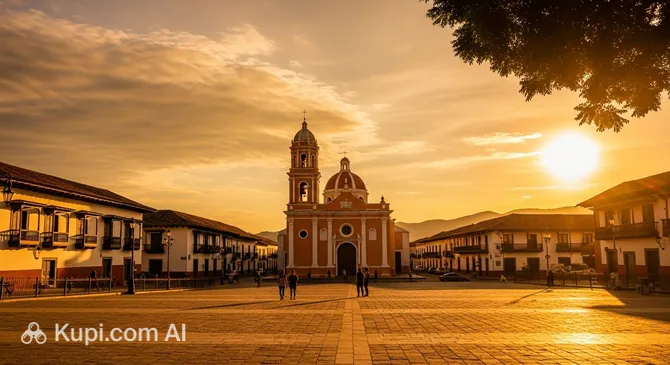
Santa Teresa del Tuy is a bustling city in Miranda State, located in the picturesque valleys of the Tuy River. As the capital of the Independencia Municipality, the city serves as an important residential and agricultural hub of Venezuela. While it largely functions as a "bedroom community" for nearby Caracas, Santa Teresa del Tuy possesses a unique character of its own, deeply rooted in the traditions of cultivating fertile lands.
The city was founded in the second half of the 18th century, and its spiritual heritage is inextricably linked with Saint Teresa of Avila. If you are interested in the history of the founding of this region, it is worth noting how agricultural settlements gradually transformed into a modern, densely populated center with a population of over 500,000 people.
Santa Teresa del Tuy. Illustration.
Source: Kupi.com AI
The atmosphere here is steeped in the daily lives of hardworking people and the traditions of the Venezuelan province. Surrounded by cocoa and sugarcane plantations, the city attracts those who want to see the authentic, non-touristy life of the Miranda region, get acquainted with the local lifestyle, and feel the rhythm of life in the Tuy valleys. A visit to Santa Teresa del Tuy is an excellent opportunity to get off the beaten path and peer into the heart of the country's agricultural region.
Weather Overview
Santa Teresa del Tuy is dominated by a tropical climate characteristic of the inland valleys of Miranda State. Consistently warm weather with temperatures in the range of 25–30°C persists throughout the year. It can be quite hot during the day, while evenings bring a pleasant coolness, especially in the winter months (December–January), when the average temperature drops to 23–24°C.
The region has two clearly defined seasons: dry and wet. The rainy season usually lasts from May to November, peaking in August and October. During this time, intense but short-lived showers are possible, which refresh the air but increase overall humidity. If you want to find a detailed up-to-date forecast, check out the section describing the weather in Santa Teresa del Tuy by month.
This climate is ideal for agriculture, but travelers should take into account high humidity and solar activity. Dense urban development can trap heat, so it is better to choose morning or pre-sunset hours for walks when the heat is not as noticeable.
Average monthly temperature
Average monthly precipitation
Interesting Facts
Santa Teresa del Tuy holds many interesting pages of the past and noteworthy facts:
The city was officially founded in 1761, and ten years later, it received the status of an ecclesiastical parish in honor of Saint Teresa of Avila.
At the end of the 18th century, according to the records of Bishop Mariano Martí, only 854 people lived in the settlement—today, the city's population is counted in the hundreds of thousands.
The city's economic prosperity was historically built on the export of cocoa, coffee, and sugarcane, which are still cultivated in the surrounding valleys.
Santa Teresa del Tuy holds an honorable 17th place in terms of population among all cities in Venezuela and is the second largest in Miranda State.
The city is considered an important transport and residential hub connecting the agricultural areas of the Tuy valley with the capital region.
How to Get There
Santa Teresa del Tuy is located approximately 30–40 kilometers south of the country's capital, making it an important transportation hub in the Tuy valley. There is no direct air service or passenger rail lines directly to the city, so the main way to get here is by road. The journey from Caracas by bus or private car usually takes 1 to 2 hours, depending on traffic, which can be significant during peak hours.
The nearest major international airport is located in the suburbs of Caracas—this is Maiquetía Airport (CCS), situated more than 50 kilometers from the city. Travelers arriving by air must first reach the capital and then transfer to local transport heading towards Miranda State. You can also check detailed information about the current city climate to plan your trip as comfortably as possible.
Within the Miranda region, communication between cities such as Los Teques or Charallave is carried out via regular minibus and taxi services. If you are planning a trip, it is recommended to check current routes at bus stations, as this is the most reliable way to move around. More detailed advice on route planning can be found in the how to get to Santa Teresa del Tuy section.
Station
Passenger traffic
Distance
Libertador Simón Bolívar Terminal
6
31 km
Las Adjuntas
7
38 km
Main Attractions
In Santa Teresa del Tuy, you won't find the usual abundance of museums or large tourist complexes, as the city is primarily a residential and agricultural center. However, this is precisely what makes it interesting for those seeking authenticity. The central point of attraction is the main city square and the Church of Santa Teresa de Jesús. This building is not only an architectural landmark but also the spiritual heart of the city, where the local flavor is most vividly felt.
The city's cultural life is mainly centered around religious events. The most significant holiday of the year is October 15th—the feast day of the city's patron saint, Saint Teresa of Avila. During this period, the streets are transformed, and locals organize solemn processions and various events. This is the best time to see the city at its most festive and grand.
For the inquisitive traveler, the local agricultural estates in the surrounding areas can also be an attraction. Cocoa, coffee, and sugarcane plantations surround the city, serving as a reminder of its historical role as an important export hub for the region. A walk on the outskirts will allow you to appreciate the natural wealth of the fertile Tuy valleys and see how the crops that made Venezuela famous worldwide are grown.
Local Cuisine
The culinary traditions of Santa Teresa del Tuy are closely linked to the agricultural wealth of Miranda State. Corn-based dishes play a central role in the local diet. You should definitely try freshly prepared arepas—corn cakes with various fillings, which are made here with special skill. Also, local cafes often serve pabellón criollo—a traditional Venezuelan dish of rice, black beans, and shredded beef.
Since the city is surrounded by plantations, the coffee and cocoa here are of exceptional quality. A cup of freshly brewed coffee from local beans is the perfect start to the day. For dessert, sweets based on sugarcane are popular, such as conservas de coco or homemade pastries, recipes for which are passed down from generation to generation.
The city's gastronomic scene is mainly represented by cozy local restaurants and lively street markets. It is at the markets that you can find the freshest produce straight from the farms and taste authentic home-cooked food. There are no pretentious establishments here, but sincere hospitality and the rich flavors of traditional Venezuelan cuisine are guaranteed to every guest.
Travel Tips
Preparing for a trip to Santa Teresa del Tuy will help make your journey comfortable and safe. These practical tips are based on the characteristics of life in the Venezuelan region of Miranda.
Clothing and Essentials: Choose lightweight clothing made from natural fabrics, as it is hot in the Tuy valley all year round. Be sure to bring sunglasses, a hat, and comfortable shoes for walking on busy streets. During the rainy season (May–November), don't forget an umbrella or a light raincoat.
Transport: The main mode of transport is buses. Be prepared for them to be overcrowded. If you plan a trip to Caracas, try to leave early to avoid hours of traffic jams on the highway.
Finances: Always carry a sufficient supply of cash (bolivars). There are few ATMs in the city, and international cards may work intermittently. Tipping is appreciated but remains at your discretion.
Health and Safety: Try to move around the city during daylight hours and avoid remote areas with chaotic development. Valuables, jewelry, and large sums of money are best left in a safe place.
Communication: The primary language is Spanish. English is not widely spoken here, so it is useful to learn basic phrases or have an offline translator with you. Locals are friendly and will willingly help if you approach them politely.
Local Etiquette: When entering a shop or cafe, it is customary to say hello ("Buenos días" or "Buenas tardes"). Venezuelans are open people who value simple human interaction.
What to Avoid: You should not photograph government facilities or people without their consent. Also, refrain from discussing political topics to avoid misunderstandings.
Connectivity: It is better to purchase a SIM card in advance in Caracas, as the choice of sales points in the city itself may be limited. Free Wi-Fi in public places is rare.
Following these simple rules will allow you to dive deeper into the local culture and enjoy your stay in this energetic corner of Venezuela.
Entertainment & Nightlife
Entertainment in Santa Teresa del Tuy is predominantly local and family-oriented. There are no loud nightclubs or major concert halls, so locals often head to neighboring Caracas or Los Teques for active nightlife. Nevertheless, the city does not fall silent in the evenings: central streets and small squares become meeting places where local eateries and cafes operate.
Daytime leisure in the city is often linked to visiting street markets, which are a vibrant spectacle featuring local products, handicrafts, and lively social interaction. This is an excellent opportunity to feel the city's energy and observe the daily life of Venezuelans. Small family celebrations and community events, often accompanied by traditional music, are also popular.
For those seeking more organized recreation, the best option is to visit the city during religious festivities. On these days, the atmosphere becomes truly celebratory, with fairs and cultural performances being organized. At other times, the city offers a quiet pace of life suitable for a thoughtful introduction to the culture of Miranda State.
Parks & Museums
Santa Teresa del Tuy is a densely developed city where classic parks or museums in the traditional sense are not very common. The main "green lungs" of the region are the fertile valleys surrounding the city. Residents and visitors often head out of town to enjoy views of the agricultural landscapes and hills, which are especially picturesque during the rainy season.
Within the city itself, small squares like the main Plaza Bolívar fulfill the role of public spaces. Here you can relax in the shade of trees and watch the slow flow of city life. The absence of large museums is compensated for by a living culture: the history of the city and the Miranda region is best learned through interaction with locals and by visiting historical plantations in the vicinity.
For those seeking a more extensive cultural program, it is recommended to visit neighboring administrative centers where there are more opportunities to visit galleries and parks. However, it is in Santa Teresa del Tuy that you can truly feel the spirit of the authentic Venezuelan heartland, where nature and human labor on the land remain the main values.
Getting Around
The transport system of Santa Teresa del Tuy is primarily represented by buses and minibuses, which locals call "camionetas." This is the most accessible and popular way to travel both within the city and between the settlements of the Tuy valley. The main routes connect the city with neighboring administrative centers and the country's capital, Caracas.
The central part of the city can be explored on foot, as most important infrastructure objects are located quite compactly. For trips over longer distances or to remote residential areas, you can use the services of taxis or private carriers. It is worth considering that during morning and evening hours, transport can be very crowded due to the large flow of people working in the capital.
Fares on public transport are usually paid in cash to the driver or conductor. It is recommended to find out the cost of the trip in advance, as fixed rates may change. Despite the absence of a metro or trams, the extensive network of bus routes allows you to reach almost any point in the region, although it is worth planning trips with extra time for potential traffic jams at the city exits.
Accommodation
The hotel infrastructure in Santa Teresa del Tuy is quite modestly developed, as the city is primarily oriented toward permanent residents rather than mass tourism. There are virtually no classic hotel chains here, so travelers most often choose short-term rental options for apartments or private houses. This can be a convenient solution for those planning a long stay or looking for budget accommodation near Caracas.
The most convenient area to stay is the central part of the city, where the main commerce and transport links are concentrated. Nevertheless, many tourists prefer to stay in Caracas or larger neighboring cities, visiting Santa Teresa del Tuy for a day trip. If you still decide to stay in the city, it is better to book accommodation in advance through specialized online services, focusing on reviews from previous guests.
The price range for housing here is significantly lower than in the capital, making the city attractive for expats and budget-conscious travelers. When choosing a place to stay, you should pay attention to the availability of basic amenities and transport accessibility to minimize travel time through the Tuy valleys.
Nearby Cities
Due to its location in the Tuy valley, the city of Santa Teresa del Tuy can serve as a starting point for exploring other interesting corners of Miranda State and the Venezuelan capital region. Exploring the surroundings will allow you to better understand the diversity of life in this part of the country, where industrial landscapes give way to fertile valleys.
Just a few kilometers away is the city of Santa Lucía, known for its colonial traditions. You can also reach Ocumare del Tuy or the major transport hub Charallave in 20–30 minutes. For those who miss the big city, Cúa and, of course, the majestic Guarenas are available, each possessing its own unique atmosphere and history.
Most of these cities are easily reachable by local buses that regularly run between the settlements of the valley. Short trips to the surrounding areas will help you discover new facets of Venezuelan hospitality and see how people live outside the major metropolises.
Shopping & Souvenirs
Shopping in Santa Teresa del Tuy is primarily about exploring local markets and small shops. You won't find giant shopping malls with global brands here, but you will be able to find high-quality food and everyday goods. The center of commercial activity is the streets around the main square, where many shops are concentrated, selling everything from clothing to household items.
The region's main pride is its agricultural products. Be sure to check out the food markets to buy high-quality local cocoa and coffee. These products make the best souvenirs, reminding you of your trip to Miranda State. You can also find traditional Venezuelan sweets and pastries here, prepared according to local recipes.
Shops usually open from early morning until evening, with many closing for a traditional lunch break. It is best to have cash Venezuelan bolivars for payments, as bank cards are not accepted everywhere. Simple and down-to-earth shopping in Santa Teresa del Tuy will allow you to feel like part of local life and purchase truly unique regional products.