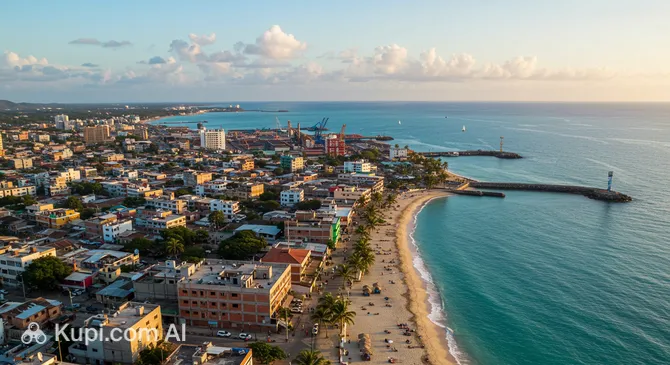
Catia La Mar is a lively coastal city and a vital transportation hub located on the Caribbean coast of Venezuela. As the most populous area in the state of La Guaira, the city blends the atmosphere of a port settlement with that of a residential suburb, serving as a gateway to the country for millions of travelers due to its exceptional proximity to the main international airport.
The city's character is shaped by its geography: it stretches across a flat coastal plain where the sea breeze meets the urban bustle. According to historical records, the settlement has deep roots dating back to the colonial era and is named after a legendary indigenous chief. Today, it is home to over 85,000 people whose lives are closely tied to the sea, trade, and aviation.
Catia La Mar. Illustration.
Source: Kupi.com AI
Although Catia La Mar is often perceived as a transit point, the city possesses its own unique charm. Tourists are drawn to local beaches like Playa Grande or Puerto Viejo, the La Zorra fish port, where you can experience the authentic flavor of fishing life, and the prestigious Naval Academy. Visiting this city is an excellent opportunity to see everyday life in coastal Venezuela before heading inland or to the white sands of remote islands.
Weather Overview
Catia La Mar is dominated by a typical tropical coastal climate, characterized by high temperatures and significant humidity throughout the year. Average thermometer readings range between 25–32°C, making the city an ideal destination for lovers of eternal summer. The proximity to the Caribbean Sea brings a pleasant breeze that somewhat tempers the midday heat.
When planning a trip, it is worth considering the seasonality of precipitation. The period from May to November is considered the rainy season, when intense but usually short-lived downpours are possible. The wettest months are September and October. If you prefer drier weather, the best time to visit is from December to April. Before you set off, we recommend checking the current city climate to choose your wardrobe correctly.
Thanks to the consistently warm weather, the swimming season here never ends. The water temperature rarely drops below 26°C. However, due to high solar activity at any time of year, tourists are strongly advised to use protective products and avoid prolonged exposure to direct sunlight during midday hours.
Average monthly temperature
Average monthly precipitation
Interesting Facts
The city was named in honor of the indigenous chief Catia, who became famous in the 16th century for his resistance against the Spanish conquistadors and was an ally of the legendary ruler Guaicaipuro.
Founded in 1558 by the navigator Francisco Fajardo under the name "La Villa de Catia," the city is one of the oldest European settlements in this region of Venezuela.
Catia La Mar holds first place in population among all eleven parishes of the Vargas municipality, serving as its main demographic center.
The city is located just a 10-minute drive from Simón Bolívar International Airport, making it the most convenient place for a short stay during long layovers.
The Naval Academy of Venezuela is based in the city and is considered one of the country's most prestigious higher education institutions in the maritime field.
How to Get There
The transport accessibility of Catia La Mar is among the highest in the country, as the city essentially borders the main air gateway of Venezuela. Travelers most often arrive here via air, using the city as a base before heading to the capital or coastal resorts.
The main hub is Simón Bolívar International Airport (IATA: CCS), located in neighboring Maiquetía. You can reach the center of Catia La Mar from the terminal in just 10–15 minutes by taxi or official shuttle buses. Despite the proximity, it is worth considering potential traffic congestion on the coastal highway, which can double travel time during peak hours.
For those planning to get to Catia La Mar from Caracas, the most convenient way is by bus or car along the Caracas-La Guaira expressway. The 30-kilometer distance is covered in about 40–60 minutes; however, due to the complex terrain and heavy traffic at the exits from the capital, it is recommended to allow extra time. Regular bus services depart from the La Guaira and Caracas terminals throughout the day.
Railway service in this region is currently not developed for passenger transport, so the main emphasis is on road transport. There is also the possibility of arriving by sea through the neighboring port of La Guaira, which receives cruise ships and cargo liners, after which you can reach Catia La Mar by taxi in a matter of minutes.
Station
Passenger traffic
Distance
Las Adjuntas
7
20 km
Libertador Simón Bolívar Terminal
6
22 km
Main Attractions
The city of Catia La Mar is not a classic tourist center filled with monuments, but its value lies in its authenticity and coastal location. The main draw for locals and visitors alike is its beaches. Among the most popular are Playa Grande and Costa Dorada—great spots to enjoy the Caribbean Sea, try freshly caught fish from seaside kiosks, and watch planes coming in for a landing.
Of particular note is the La Zorra Fish Port (Puerto de la Zorra). This is the heart of the city's maritime life, where fishermen bring in their fresh catch every morning. It is interesting for tourists to visit to see traditional Venezuelan boats, haggle at the makeshift market, and feel the true spirit of a port city, unembellished for mass tourism.
For those interested in architecture and state institutions, a significant site is the Naval Academy of Venezuela. Its impressive buildings and well-maintained grounds emphasize the city's strategic importance as a maritime outpost. While access to the interior may be limited, the building is an important landmark and an architectural focal point of the district.
In the central neighborhoods of the city, such as Atlántida or Páez, you can stroll through local squares and markets. This is the best way to get to know the everyday urban life of Venezuela, where life teems around shops and small cafes, creating a unique social portrait of a modern coastal city.
Local Cuisine
The gastronomy of Catia La Mar is inextricably linked to the Caribbean Sea. Seafood takes center stage on local tables and in restaurant menus. The cuisine here is simple but incredibly delicious, based on the use of the freshest ingredients delivered to the port every morning. If you want to taste the real Venezuela, start with the local beach restaurants.
Among the signature dishes, you must try Pescado Frito—whole fried fish (usually red snapper or sea bass) served with tostones (fried green plantain slices) and a fresh salad. Seafood soups, such as Hervido de Pescado, are also popular and considered by locals to be the best way to restore strength. In restaurants like El Caney del Chivo, you will find exquisite shrimp and squid dishes in tropical sauces.
Don't forget to try traditional Venezuelan arepas, which are often stuffed with fish or seafood here, distinguishing the local style from that of the capital. For drinks, opt for refreshing natural juices made from exotic fruits (papaya, passion fruit, guava) or local beer. For those who prefer something stronger, Venezuelan rum is an excellent choice, considered one of the best in the world and often serving as the base for cocktails in coastal bars.
Travel Tips
Traveling to Catia La Mar will be a pleasant experience if you consider the specifics of this dynamic coastal region in advance. These tips will help you feel confident and avoid unnecessary worries.
Clothing and Essentials: Choose lightweight clothing made of natural fabrics—cotton or linen. The climate here is hot and humid year-round. Be sure to bring sunscreen, sunglasses, and a hat. For evening walks by the sea, a light windbreaker might be useful.
Transport: It is most convenient to move around the city by taxi, ordered through a hotel or official services. If you plan a trip to Caracas, leave early to avoid getting stuck in hours-long traffic jams on the highway.
Finances: The main currency is the Venezuelan bolívar, but US dollars are accepted everywhere. It is recommended to carry small cash bills, as change is often a problem and international cards do not work everywhere.
Health and Safety: Drink only bottled water. In the evening, avoid walking in sparsely populated and poorly lit areas, such as La Lucha. Keep valuables in the hotel safe.
Communication: The main language is Spanish. English is understood by airport staff and major hotel employees, but knowing basic phrases ("Hola," "Gracias," "¿Cuánto cuesta?") will significantly facilitate your communication.
Local Etiquette: Venezuelans are open and friendly people. Greeting upon entering a shop or cafe is considered a social norm. A smile and a calm tone will help solve any issue.
What to Avoid: Do not take photos of military installations, government buildings, or police officers—this can cause unnecessary suspicion and questions.
Additional Tip: Try fresh fish directly at the La Zorra port in the morning—it is the most authentic gastronomic experience you can have in the city.
By following these simple rules, you can fully enjoy the hospitality and flavor of this unique Venezuelan port.
Entertainment & Nightlife
The entertainment scene in Catia La Mar is predominantly local and relaxed. You won't find massive world-class nightclubs here, but the city offers pleasant recreation by the water. The center of evening activity is the restaurants and bars along the coast, such as Rompeolas or El Meson del Faro, where live Latin American music often plays, creating a true tropical holiday atmosphere.
Locals prefer to spend their evenings in cozy coffee shops or on outdoor terraces, discussing the news over a cup of strong Venezuelan coffee or a cold drink. Sports bars broadcasting baseball games—Venezuela's national passion—are also popular. If you are looking for vibrant nightlife with dancing until dawn, it is best to head to neighboring La Guaira or the capital, Caracas, which are a 30 to 60-minute journey away.
Daytime entertainment in Catia La Mar focuses on beach recreation and water activities. Beach clubs offer umbrellas, sun loungers, and service, allowing you to spend the whole day by the sea. For families with children or fans of quiet walks, the city squares in residential areas serve as meeting spots where you can observe local life and try street treats.
Parks & Museums
Although Catia La Mar is not a museum hub, the main parks here are the public beach areas. Playa La Zorra and Playa Candilejas serve as the primary recreation spots for citizens and tourists. These are not just coastlines, but true open-air social hubs where you can watch beach volleyball games or simply enjoy the sunset among the palm trees.
For those seeking cultural sites, the grounds of the Naval Academy are of interest; its architecture and monuments make it resemble an open-air museum. Here you can see memorials dedicated to the country's maritime history and great admirals. Although it is an educational institution, its appearance and historical significance make it an important landmark in the city.
If you wish to visit classic museums or expansive green parks, the best solution is a trip to neighboring Caracas. There you will find the National Pantheon, the Museum of Fine Arts, and the vast El Ávila National Park. Nevertheless, a walk along the embankments of Catia La Mar will give you a unique understanding of how coastal nature is integrated into the daily life of a Venezuelan port city.
Getting Around
The public transport system in Catia La Mar consists mainly of buses and the minibuses characteristic of Latin America, which locals call "camionetas." They run along the main coastal highways, connecting the city with the airport, Maiquetía, and La Guaira. It is worth remembering that these buses do not have a fixed schedule—they depart as they fill up.
For trips to the capital, Caracas, there are regular routes departing from major stops in the Atlántida and Páez districts. This is a budget-friendly and fairly quick way to travel; however, during peak hours (mornings toward the capital and evenings back), the buses can be very overcrowded. Fares are usually paid in cash to the driver or conductor upon boarding.
Taxis serve as an alternative to public transport. This is the safest and most comfortable way to travel, especially for tourists with luggage. Motorcycle taxis are also popular in the city for short trips, but they require caution. Cycling infrastructure is poorly developed, but a bike ride along the coastline in the beach areas can be pleasant, even though specialized paths are very scarce.
Accommodation
The choice of accommodation in Catia La Mar is primarily geared toward transit travelers and those looking for a budget coastal holiday. Mid-range hotels, small guesthouses, and rental apartments predominate here. This is a convenient option for those who need to stay overnight near the airport before an early flight or after a late arrival.
The most popular area for staying is Playa Grande and the adjacent neighborhoods of Atlántida. The most modern residential complexes and hotels are concentrated here, offering access to beaches and the city's main restaurants. Prices in this area may be slightly higher than the city average, but this is compensated for by comfort and proximity to the sea.
When planning a trip, especially during national holidays or carnivals, it is recommended to book accommodation in advance through international services or directly. The price range is quite broad: from very affordable rooms in the private sector to comfortable apartments with ocean views. It is worth noting that there are virtually no luxury five-star resorts in the city itself; for those, it is better to look in the neighboring resort areas of La Guaira state.
Nearby Cities
Thanks to its location in the center of the coastal metropolitan area, Catia La Mar is an excellent starting point for exploring the northern region of Venezuela. Just a few kilometers away are cities that each possess their own unique character and attractions.
Just a 10-minute drive away is Maiquetía, which is closely linked to Catia La Mar by transport and trade routes. A little further is La Guaira—the country's main seaport. It is worth taking a stroll through its historical center with its colonial architecture and visiting the old forts that once protected the coast from pirates. For those craving cultural life, museums, and shopping, a trip to Caracas, located just 20 kilometers away, is a must, where the dynamics of a metropolis contrast with the mountain landscapes of Ávila Park.
Short trips to neighboring towns like Caraballeda or the upscale Las Mercedes district in the capital will allow you to fully experience the diversity of life on the Venezuelan coast—from fishing villages to modern business centers.
Shopping & Souvenirs
Shopping in Catia La Mar is primarily about experiencing local flavor and everyday goods. There are no giant shopping malls with global brands here, but the city offers many authentic markets and small shops. The main commercial activity is concentrated in the Páez and Atlántida districts, where the central streets are lined with shops offering clothing, shoes, and household goods.
For gastronomic shopping, head to the market at the port of La Zorra. Here, you can not only buy the freshest seafood but also find local spices, sauces, and traditional Venezuelan products. This place is ideal for seeing the city's life from the inside and purchasing something truly local.
As souvenirs from Catia La Mar, people most often bring back handmade shell crafts, beachwear, and accessories. Be sure to look for local alcohol—the famous Venezuelan rum, which can be found in specialized stores. Shops usually operate from 9:00 AM to 6:00 PM or 7:00 PM, and payment is most often made in cash, although larger outlets accept local bank cards.