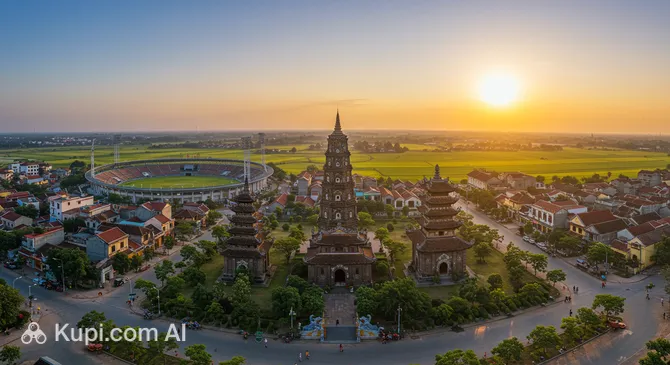
Nam Dinh is a colorful city in the Red River Delta in northern Vietnam, serving as the administrative center of the province of the same name. Located about 90 kilometers from Hanoi, it retains the atmosphere of an authentic Vietnamese province where tradition intertwines with the everyday industrial rhythm. With a population of about 352,000, the city is not a typical tourist magnet, which makes it particularly attractive to those seeking authenticity away from the beaten path.
Nam Dinh. Illustration.
Source: Kupi.com AI
This place possesses a deep historical heritage, being the birthplace of the Tran Dynasty, which ruled the country in the 13th century. Nam Dinh and its surroundings are home to a vast number of cultural sites: from ancient temples and pagodas to majestic Catholic cathedrals remaining from the era of French influence. The region is also known as an important agricultural and industrial hub, famous for its textile production and salt fields.
Visiting Nam Dinh is an opportunity to see the real Vietnam with its bustling markets, peaceful canals, and hospitable locals. We recommend stopping by to touch the origins of Vietnamese statehood and enjoy the architectural diversity rarely found on such a scale in other provincial cities of the north.
Weather Overview
The weather in Nam Dinh is determined by its geographical position in the Red River Delta and is characterized by a tropical monsoon climate. There are clearly defined hot and humid summers, as well as cool and dry winters. To better plan your visit, we recommend checking the current weather forecast in Nam Dinh in advance.
The summer period, lasting from May to August, brings heat to the city with temperatures reaching 32–35°C and heavy rainfall, often in the form of short but powerful downpours. Winter, on the other hand, is quite mild: the average temperature in January is about 18°C, though it can drop to 14°C on certain days. Expect warm transition seasons with moderate humidity, which are considered the most comfortable for walking and sightseeing.
The best time to visit the city is the period from September to April. During this time, the weather is pleasant and not too hot, and the likelihood of prolonged rains is minimal. It is worth considering that high humidity persists year-round due to the proximity to the sea and the abundance of canals, which makes the summer heat feel more intense.
Average monthly temperature
Average monthly precipitation
Interesting Facts
Nam Dinh is considered one of the likely locations where the legendary Vietnamese dish Pho soup originated.
The city is the ancestral home of the Tran Dynasty and the national hero Tran Hung Dao, who successfully repelled Mongolian invasions three times in the 13th century.
Pho Minh Pagoda, located on the outskirts of the city, houses one of the oldest wooden structures in Vietnam, which has survived through the centuries.
Nam Dinh province has more than 100 craft villages specializing in bronze casting, wood carving, and silk production.
The Phu Nhai Basilica in Nam Dinh is recognized as one of the largest churches in Southeast Asia, showcasing a stunning blend of Gothic style and Vietnamese decor.
How to Get There
Nam Dinh is an important transport hub in the Red River Delta, ensuring good accessibility for travelers. The city is conveniently connected to the capital and neighboring provinces by a network of railways and roads. If you are planning your trip in advance, it is useful to study all the details of how to get to Nam Dinh to choose the most comfortable option.
The city does not have its own airport. The nearest international air hub is Noi Bai in Hanoi, located about 120 kilometers away. From there, you can reach Nam Dinh by taxi, private transfer, or bus. The travel time by car is usually about 2–3 hours, depending on traffic conditions.
Railway transport is one of the most reliable and popular ways to reach the city. Nam Dinh station serves trains running along the main "North-South" route. A train ride from Hanoi takes about 1.5–2 hours, offering passengers picturesque views of rice paddies and the rural landscapes of northern Vietnam.
Station
Passenger traffic
Distance
Nam Định railway station
7
2 km
Phủ Lý railway station
6
28 km
Ninh Bình railway station
6
29 km
Hải Dương railway station
5
59 km
Văn Điển railway station
6
65 km
Giáp Bát Station
6
69 km
Main Attractions
The main attractions of Nam Dinh are concentrated around its rich historical and religious past. One of the city's most recognizable landmarks is the Nam Dinh Flag Tower. This majestic monument serves as a symbol of the city and a reminder of its strategic importance throughout different eras.
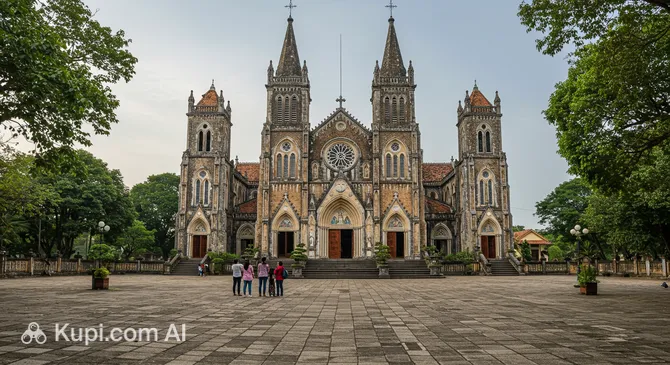
Special attention should be paid to the region's Christian heritage, represented by impressive religious architecture. The massive Phu Nhai Basilica is striking in its scale and Gothic elegance, being one of the largest Catholic cathedrals in all of Vietnam.
Phu Nhai Basilica. Illustration.
Source: Kupi.com AI
Traveler photos:
In addition to urban sites, tourists should visit the Tran Temple complex, dedicated to the kings of the namesake dynasty, and the ancient Pho Minh Pagoda with its unique wooden architecture. These shrines attract pilgrims and history buffs from all over the country, especially during annual festivals when ancient rituals and traditions come to life.
Local Cuisine
Nam Dinh's gastronomic scene is a feast for lovers of authentic Vietnamese food. The city takes pride in its status as the birthplace of the famous Pho soup, which is prepared here with special attention to the clarity of the broth and the quality of the beef. Be sure to try local versions of rice noodles and fresh seafood delivered straight from the province's coast.
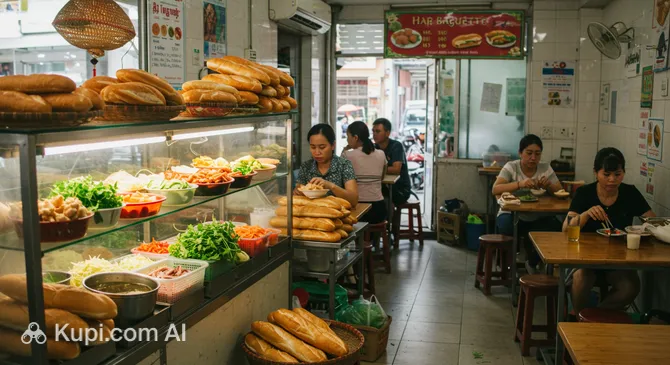
In addition to traditional soups, hearty snacks are popular in Nam Dinh. It's worth stopping by Ha Bo Baguette, which serves excellent banh mi sandwiches with pâté that have become a true local legend. For those who prefer a quick international-style snack, the Nam Dinh Fast Food Restaurant is also available.
Ha Bo Baguette. Illustration.
Source: Kupi.com AI
Traveler photos:
The food culture here is closely tied to the street: the best flavor discoveries await you at markets and small family-run cafes. For drinks, you must try the strong Vietnamese coffee with condensed milk or local green tea. As a gastronomic souvenir from the region, people often bring back the famous rice wine and high-quality sea salt.
Travel Tips
Nam Dinh is a city that rewards the attentive traveler with its sincerity and rich history. To ensure your trip goes smoothly and leaves only pleasant impressions, please review our practical recommendations.
Clothing and Dress Code: Bring light clothing made of natural fabrics, but remember to dress modestly when visiting temples and cathedrals (shoulders and knees should be covered). For the winter months (December–February), a light jacket or sweater will come in handy.
Getting Around the City: The best way to travel is by taxi via apps (such as Grab) or traditional motorbike taxis. If you decide to rent a bike, be extremely careful: traffic in the center can be chaotic.
Finances: Cash is king in Nam Dinh. Cards are only accepted in large hotels, so always carry a sufficient supply of Vietnamese Dong (VND). ATMs are concentrated in the center and near the railway station.
Health: Always drink only bottled water. Due to high humidity, we recommend using repellents, especially if you plan to walk near canals or in rural areas.
Communication: English is not widely spoken. Download an offline translator and learn a couple of basic phrases: "Xin chào" (hello) and "Cảm ơn" (thank you).
Local Etiquette: It is customary to remove your shoes when entering private homes and some temples. In communication, Vietnamese people value politeness and restraint; try not to raise your voice.
What to Avoid: It is not recommended to walk alone in poorly lit industrial areas near the river late at night. Also, avoid discussing political topics.
When to Visit: Try to be in the city during the Tran Temple Festival (usually 15 days after the Lunar New Year) to see Nam Dinh in all its cultural glory.
May your introduction to Nam Dinh be a bright discovery full of authentic flavors and amazing architectural finds!
Entertainment & Nightlife
Nightlife in Nam Dinh is quiet and provincial, far from the noisy parties of major metropolises. Most activity after sunset is concentrated in the central squares and evening markets, where locals gather to socialize and share meals. If you are looking for classic nightclubs, it's worth noting that travelers usually head to nearby Hanoi for those.
The best way to spend an evening in the city is in one of the cozy tea houses or small cafes. For instance, you can stop by Ha Bo Baguette for a snack in a pleasant setting. For those who prefer a more familiar dining format, the Nam Dinh Fast Food Restaurant is open and often serves as a gathering point for young people in the evenings.
Daytime entertainment mainly involves visiting park areas near temple complexes and exploring architectural monuments, such as the Tran Quoc Tuan Monument or the Nam Dinh Flag Tower. For those who prefer active outdoor recreation, a trip to Xuan Thuy National Park, located on the province's coast, offers a great opportunity for birdwatching rare species.
Parks & Museums
The green zones and cultural venues of Nam Dinh are closely linked to its centuries-old history. The main place for walks is the park area of the Tran Temple complex, where you can feel the breath of the past among ancient altars and century-old trees. The majestic Tran Quoc Tuan Monument, dedicated to the great commander and national hero, is also located here.
The city's architectural ensembles often serve as "open-air museums." For example, the area surrounding the Phu Nhai Basilica is a wonderful zone for studying European influence on Vietnamese architecture. History enthusiasts will also find much of interest in the exhibits at the Pho Minh Pagoda, which houses relics from the Tran Dynasty era.
For those seeking true wilderness, Xuan Thuy National Park is located about 160 km from Hanoi (within Nam Dinh province). This unique ecosystem was Vietnam's first site designated under the Ramsar Convention. The park is famous for its mangrove forests and serves as an important wintering ground for dozens of species of migratory birds.
Getting Around
Nam Dinh's transport system is oriented toward practicality and reflects the slow pace of life in the Vietnamese provinces. The main means of transport for locals are motorbikes and bicycles. For tourists, the most convenient way to get around the city is by taxi or its motorbike version — the xe om, which allows for quick maneuvering through traffic.
Public buses mainly run between cities in the province and connect Nam Dinh with Hanoi and neighboring centers like Thai Binh. There is no metro or tram system in the city, so for short distances in the central part, many prefer to get around on foot, although one should be careful due to the heavy and sometimes chaotic traffic.
Renting a motorbike is a popular alternative for independent travelers, allowing for the exploration of remote pagodas and cathedrals. However, this requires driving skills suitable for Vietnamese road conditions. Taxi fares are usually metered, while the cost of a motorbike taxi ride should be negotiated in advance. Overall, the city's transport accessibility makes it easy to reach any important point.
Accommodation
Accommodation options in Nam Dinh mainly consist of budget guesthouses and small mid-range hotels. The city does not cater to the luxury segment, so it is difficult to find large international chains here; however, local hospitality and affordable prices more than make up for it.
The most convenient area for tourists is the city center and the neighborhoods adjacent to the railway station. This provides easy access to main attractions, such as the Nam Dinh Flag Tower, and allows for quick trips to local markets. Hotels near temple complexes are also popular and are often chosen by pilgrims.
Prices for a standard double room typically range from 20 to 50 USD per night. To ensure a good choice of accommodation, especially during major festivals (such as after Tet — the Vietnamese New Year), it is recommended to book rooms in advance through popular online services.
Nearby Cities
Nam Dinh serves as an excellent starting point for exploring northern Vietnam, offering travelers easy access to neighboring provinces. Just 18 kilometers away is the city of Thai Binh, known for its agricultural traditions and picturesque temples, making it an ideal choice for a short morning trip.
For those who want to see the famous "Ha Long Bay on land" landscapes, head to Ninh Binh, located 35 kilometers away. This destination is rightfully considered one of the most beautiful in the country thanks to its karst cliffs and river boat tours. Phu Ly and Hung Yen are also interesting for a day visit and can be easily reached by bus or taxi in about an hour.
We recommend not limiting yourself only to city attractions and taking the time to explore the surroundings. Trips to neighboring cities will allow you to deeper experience the flavor of the Red River Delta and see the diversity of this region's cultural landscape.
Shopping & Souvenirs
Shopping in Nam Dinh is primarily about discovering traditional crafts and local flavor. There are no massive shopping and entertainment centers in the city, but their absence is more than compensated for by the markets of the old quarter and specialized craft villages. The province is famous for lacquerware, wood carving, and high-quality silk from Co Chat village.
The main shopping destinations in the city center are the traditional markets, where you can find everything from everyday goods to authentic souvenirs. While walking through the historical streets past landmarks like the Nam Dinh Flag Tower, you will definitely come across small shops selling textiles and handmade items.
As a souvenir from Nam Dinh, it is worth bringing back bronze items produced in the famous Tong Xa village or exquisite lacquer boxes. Shops usually operate from early morning until 8:00–9:00 PM. Most retail outlets only accept cash (Vietnamese Dong), so we recommend taking care of currency exchange or withdrawing funds from ATMs in the city center in advance.