Support

Arc de Triomf

About

The Arc de Triomf (L'Arc de Triomf) is one of the most recognizable and photographed symbols of Barcelona. This majestic red-brick structure was built as the grand entrance to the 1888 Universal Exposition, which was a landmark event for the city. Located on the wide Passeig de Lluís Companys boulevard, the arch still serves today as a symbolic gateway to Ciutadella Park, impressing with its beauty and scale.
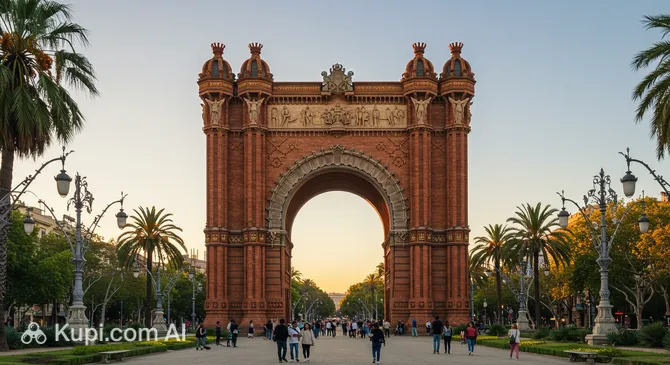
Arc de Triomf. Illustration.
Source: Kupi.com AI

Traveller photos:

Unlike many of the world's triumphal arches erected to commemorate military victories, the monument in Barcelona is purely civil in nature. It celebrates cultural, scientific, and economic progress. Architect Josep Vilaseca i Casanovas executed the project in the then-popular Neo-Moorish style (Neo-Mudéjar), which gave the arch a unique and memorable appearance. The use of red brick, majolica, and carved stone distinguishes it favorably from traditional stone structures.

The arch's rich sculptural decoration is filled with symbolism. The main frieze, titled "Barcelona Welcomes the Nations," depicts the city hospitably greeting guests from all over the world. On the opposite side is the composition "Recompense," symbolizing awards given to the exhibition participants. The side reliefs represent allegories of industry, agriculture, commerce, and art—the fields that led Spain and Catalonia to prosperity at the end of the 19th century.

Contacts

Since the Arc de Triomf is a public architectural monument located outdoors, it does not have a dedicated contact center or an information hotline. It is located at Passeig de Lluís Companys, s/n. The most convenient way to reach the attraction is by public transport: the namesake Arc de Triomf metro station (Line L1) is nearby, as well as a railway station.

How to contactContact
AddressPasseig de Lluís Companys, Ciutat Vella, 08003 Barcelona, Spain
Websitewww.barcelonaturisme.com

What to Do

Visiting the Arc de Triomf is not just a chance to see a famous monument from afar, but also an opportunity to examine it in detail. Take your time and walk around the arch from all sides to appreciate its monumentality and unique Neo-Mudéjar decor. Up close, you can admire the unique brickwork, stone carvings, and ceramic elements. Pay special attention to the sculptural compositions: the main frieze shows Barcelona welcoming the nations, while the reliefs on the sides depict allegories of agriculture, industry, commerce, and art.

The arch is not only a historical monument but also a hub of city life. The wide Passeig de Lluís Companys boulevard where it is located is a popular walking spot leading directly to the famous Ciutadella Park. It is always lively here: you can meet street musicians, dancers, and artists entertaining the public with their performances. It is also a favorite spot for skaters and people creating giant soap bubbles that children delight in chasing. A stroll along the boulevard is a great opportunity to take beautiful photos and enjoy the city's atmosphere.

The area around the Arc de Triomf is a perfect starting point for further exploration of Barcelona. After passing through the arch, you can continue your walk through the picturesque alleys of Ciutadella Park or turn toward one of the city's oldest and trendiest districts—El Born, with its narrow streets, designer shops, and cozy cafes. Additionally, various city events, festivals, and fairs are often held in the vicinity, especially during major holidays like La Mercè.

Getting There

Thanks to its central location and the well-developed transport infrastructure of Barcelona, getting to the Arc de Triomf is effortless. The fastest and most convenient way is to use the metro. Right by the landmark is the namesake station Arc de Triomf, served by the red line L1. This makes it easy to reach from almost anywhere in the city. Additionally, there are several bus stops nearby (Arc de Triomf and Passeig de Lluís Companys) served by routes 19, 39, 41, 51, 55, and others.

If you prefer to travel with more comfort, you can always use a taxi or rent a car. However, don't overlook walking, as it allows you to better experience the city's atmosphere. The Arc de Triomf is within walking distance of many central locations. For example, a pleasant stroll from the famous Plaça de Catalunya will take no more than 15–20 minutes and is a great opportunity to enjoy the views of the bustling streets.

Nearest city: Barcelona

History & Facts

The history of the Arc de Triomf is inextricably linked to one of the key events in Barcelona's life—the 1888 Universal Exposition. Its construction was timed precisely for this massive event, which was intended to showcase the city's economic and cultural progress to the world. The arch served as the grand entrance for millions of guests from 27 countries who arrived for the exhibition. The project was designed by the famous Catalan architect Josep Vilaseca i Casanovas, who was teaching at the local School of Architecture at the time. He created not just a monument, but a symbol of openness and hospitality, eschewing the military themes traditional for arches in other cities around the world.

The main "highlight" of the structure is its unique architectural style—Neo-Mudéjar, which was incredibly popular in Spain at the end of the 19th century. Instead of the stone or marble usual for such monuments, Vilaseca boldly used red brick, which was an innovative solution in itself. This material, previously considered a "stone for the poor," combined with elegant stone carvings and bright ceramic inserts, gave the arch a festive and completely unique appearance that distinguishes it favorably from its classical counterparts.

Every detail of the arch is filled with deep symbolism. In addition to the main sculptural compositions celebrating progress and hospitality, one curious element can be noticed on the columns—images of bats. This symbol has a long history and is associated with King James I, during whose reign the city achieved prosperity. Thus, the arch became not only a gateway to the exhibition but also an eternal monument telling the story of the success and ambitions of Barcelona, its desire for development, and its openness to the world.

Time Needed

Visiting the Arc de Triomf in Barcelona is an activity that can easily fit into any travel schedule, even the busiest. To view the monument itself, take a few photos, and appreciate its unique Neo-Mudéjar decor, you will need very little time. On average, getting to know the arch and walking along the adjacent boulevard takes from 30 to 60 minutes. This time is quite enough to leisurely walk around the structure, examine the sculptural compositions, and soak up the atmosphere of this iconic spot.

However, the duration of your visit can easily increase if you decide to enjoy everything this location has to offer. The wide Passeig de Lluís Companys boulevard leading to Ciutadella Park is an attraction in itself with its street performers and lively atmosphere. If you want to walk to the park, relax in its shaded alleys, or head into the neighboring bohemian district of El Born, your visit could extend to 2–3 hours or even become part of a half-day itinerary.

Working Hours

One of the main advantages of the Arc de Triomf in Barcelona is its complete accessibility. Since it is an open-air monument, it is open for visits 24 hours a day, year-round. You can come here at any convenient time, whether it's early morning to take photos without the crowds or late evening when the arch is beautifully illuminated.

There is no access to the interior of the arch itself, so viewing is only possible from the outside. This means you don't need to worry about buying tickets, booking a time slot, or waiting in lines. Access to the monument is absolutely free for everyone, making it one of the most convenient and must-visit attractions in the city.

Open 24/7

Nearby

Visiting the Arc de Triomf is a wonderful opportunity to see one of Barcelona's key symbols. However, to make your trip even more rewarding and complete, it is worth exploring its surroundings. The area around the arch, especially the adjacent trendy El Born district, is full of historical buildings, museums, and cozy streets that reveal the city's multifaceted nature.

A stroll through this neighborhood will allow you to immerse yourself deeper in the atmosphere of the Catalan capital and discover many interesting places located just a few minutes' walk away. Below is a list of nearby attractions that will help you plan the rest of your route.

NameDistance
Palace of Catalan Music0.6 km
Picasso Museum0.6 km
El Xampanyet0.7 km
Bobby's Free0.8 km
Bishop's Bridge0.9 km
Casa Batlló1.3 km
Colom Restaurant1.3 km

Reached the bottom of the page?

Looks like you know this route inside out

We use cookies for your convenience.