Support

Great Mosque of Algiers

About

The Great Mosque of Algiers, also known as Djamaa el Kebir, is one of the oldest and most significant religious and historical attractions in the capital of Algeria, the city of Algiers. It is not just a place for prayer but an important cultural symbol reflecting the region's rich history and architectural traditions. Built in the 11th century, it stands as a testament to the country's centuries-old heritage.
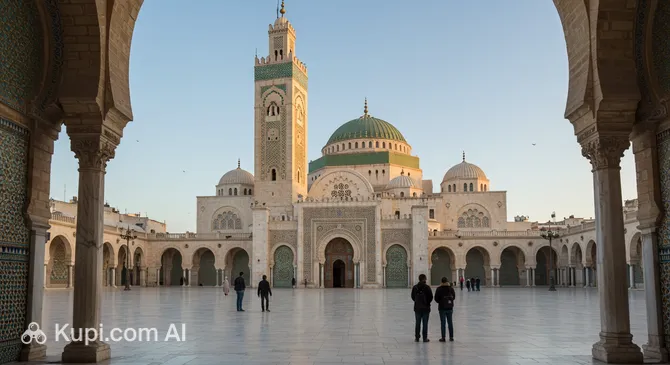
Great Mosque of Algiers. Illustration.
Source: Kupi.com AI

Traveler photos:

The mosque's architecture is characterized by extremely clear and simple forms, which is a hallmark of the Almoravid dynasty's reign. Despite the passing centuries and various renovations, the mosque has retained many of its original features, making it a valuable example of North African Islamic architecture that attracts lovers of ancient design.

Structurally, the mosque is a rectangular building featuring eleven transverse qibla aisles and a small but elegant courtyard. The interior is striking for its austere perspective of horseshoe arches with slight pointing, reminiscent of the famous Koutoubia Mosque in Marrakech. A unique structural feature is that the aisles are connected transversely by two rows of multi-lobed arches. This engineering solution not only provides the entire system with the necessary rigidity but also visually enriches the interior perspective, creating a sense of depth and grandeur.

Contacts

The Great Mosque of Algiers is located in the heart of the historical part of Algiers, making it easily accessible for travelers. You can reach this significant landmark by public transport heading to the old city or by taxi. As it is an active religious and historical site, please contact official tourist offices in Algiers or check details on-site for the most up-to-date information on visiting hours and potential restrictions.

How to contactContact
AddressMuhammadiyah Al-Harash, Algeria
Phone number+213 33 33 33 33
Websiteeldjamaa.dz

What to Do

Visitors to the Great Mosque of Algiers can immerse themselves in the study of its unique Almoravid architecture. A key moment will be exploring the mosque's interiors, where you can closely examine the characteristic arches and experience the austere atmosphere reflecting the strict dogmas of the early Almoravids. This will allow for a deeper understanding of the historical and religious context of the era.

Special attention should be paid to the prominent architectural elements. The minaret, added to the northeastern corner of the mosque in 1322 (or 1324, according to other data) and named after Sultan Ali ibn Yusuf, is a notable detail worth examining. Another interesting architectural feature to observe is the gallery on the mosque's outer wall, created in 1840, which provides insight into later architectural changes and additions to the building's historical appearance.

Getting There

The Great Mosque of Algiers is situated in the northeastern part of the city of Algiers, in the heart of the famous historical Casbah district, near the picturesque harbor. Due to its location in the old city, the mosque is easy to find, especially if you are already exploring the narrow streets and authentic atmosphere of the Casbah. Following the reconstruction of adjacent streets, the mosque now sits between Rue d'Angkor and Boulevard Ernesto Guevara, making navigation even easier.

You can reach the Casbah, where the Great Mosque is located, by public transport. Algiers has a network of bus routes, some of which pass near the old city or have stops within walking distance of the Casbah. It is also worth considering the tram or metro if their lines run near the historical center. You will likely have to walk a bit from the nearest public transport stops to the mosque, which allows you to further enjoy the local flavor of this ancient district.

For a more comfortable and faster journey, especially if you are in a remote part of Algiers or traveling with luggage, a taxi is a convenient option. A taxi ride from the city's central districts to the entrance of the Casbah nearest to the Great Mosque usually doesn't take much time, though this depends on the traffic situation. You can give the driver the Casbah district, its proximity to the port, or the intersection of Rue d'Angkor and Boulevard Ernesto Guevara as landmarks.

Nearest city: Algiers

History & Facts

The history of the Great Mosque of Algiers dates back to the 11th century. Its construction took place between 1096 and 1097, during the reign of Sultan Ali ibn Yusuf of the powerful Almoravid dynasty. This makes the mosque not just an ancient structure, but one of only three surviving examples of Almoravid architecture today, along with the mosques in Nedroma and Tlemcen. A characteristic feature of such buildings was the arcades supported by massive pillars and topped with timber-framed tiled roofs, giving them a special sense of monumentality and austerity.

An interesting detail is that the mosque's minaret appeared much later than the main building. Its construction dates back to 1322 (according to some sources, 1324). Notably, the minaret was named after the same Sultan Ali ibn Yusuf who laid the foundation of the mosque itself, emphasizing continuity and respect for the founders. This later element blended seamlessly into the overall ensemble, becoming an integral and recognizable part of it.

Over the centuries, the Great Mosque of Algiers has undergone changes reflecting various historical eras. One significant addition occurred in 1840, when an elegant gallery was created on the building's exterior wall. This innovation not only changed the mosque's appearance but also became an important addition to its architectural profile, demonstrating how historical monuments can adapt and be enriched over time while preserving their original essence and grandeur.

Time Needed

When planning a visit to the Great Mosque of Algiers, expect to spend about 1-2 hours exploring it. This time is usually sufficient to get acquainted with the main architectural features, including the famous interiors with horseshoe arches, see the minaret and the later gallery, and feel the historical atmosphere of this significant religious building.

If you have a deep interest in Islamic architecture and history, or simply want to slowly enjoy every corner of the mosque while taking photos and soaking in the atmosphere, your visit may last up to 3 hours. On the other hand, if your time is limited, you can get a general impression of the scale and beauty of the Great Mosque of Algiers in even 45-60 minutes, though it will be a rather brief tour.

Working Hours

Exact information regarding the opening hours of the Great Mosque of Algiers may vary, especially since it is an active religious institution. Generally, mosques are open to visitors throughout the day, except during prayer times when entry for tourists may be restricted. For the most current information on visiting hours, potential rules for tourists, and whether advanced booking or tickets are required, it is highly recommended to check the mosque's official website, if available, or confirm details at tourist information centers in Algiers upon arrival.

Typically, the Great Mosque of Algiers is open to visitors year-round. However, it is always a good idea to check the current schedule before your visit, as it may change due to religious holidays or special events. Clarifying information in advance is especially important if you plan to visit the mosque at a specific time or as part of a group.

Open 24 hours

Nearby

A visit to the Great Mosque of Algiers will certainly be a highlight of your journey, but you shouldn't stop there. Exploring the surrounding area will allow you to dive deeper into the atmosphere of Algiers and discover other interesting corners of this multifaceted city. Each additional nearby attraction will add new colors to your impressions.

Near the Great Mosque, you will find a variety of sites—from picturesque embankments and parks to museums and other iconic locations. This is a wonderful opportunity to expand your itinerary and make your trip to Algiers even more fulfilling and memorable. Below is a list of some attractions located relatively nearby.

NameDistance
Sablettes Seaside Promenade2.3 km
Piano Piano5.9 km
Hamma Botanical Garden6.1 km
Museum of Fine Arts of Algiers6.3 km
Martyrs' Memorial6.5 km
Al-Rahma Mosque8.6 km
Emir Abdelkader Square8.7 km

Have you reached the end of the page?

So the route has been studied inside and out