Support

Archaeological Museum Adán Quiroga

About

The Adán Quiroga Archaeological Museum is the heart of the cultural heritage of Catamarca Province in Argentina. Housed in a majestic Neo-Colonial building constructed in 1943, the museum is part of the Esquiú Cultural Center and holds one of the most significant collections of antiquities in the region.
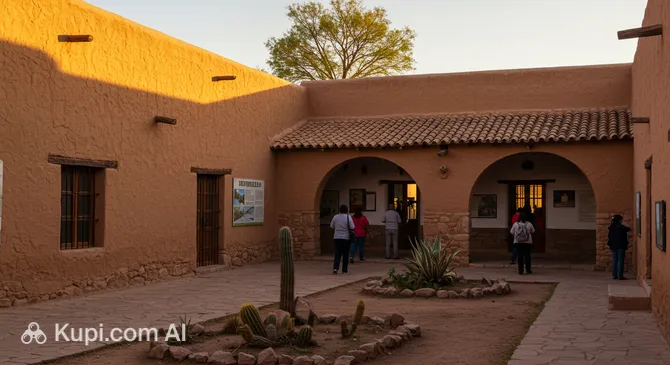
Adán Quiroga Archaeological Museum
Adán Quiroga Archaeological Museum. Иллюстрация. Источник: Kupi.com AI

It houses approximately 7,000 unique artifacts, covering an impressive span of nearly 12,000 years of history. The exhibition includes rare ceramics, ritual urns, and everyday items from legendary pre-Columbian cultures such as the Aguada, Condorhuasi, and Ciénaga. The museum is known not only for its treasures but also for its ethical approach to display: since 2012, human remains have not been exhibited out of respect for the traditions of indigenous peoples.

This is a must-visit destination for those who want to understand the origins of South American civilizations and see art that was created long before the arrival of Europeans. The museum harmoniously combines an atmosphere of academic research with accessibility for the average tourist, offering a true journey through time.

Contacts

To check current information about special exhibitions or educational programs, you can use the museum's official communication channels.

How to contactContact
AddressSarmiento 450, K4700 San Fernando del Valle de Catamarca, Catamarca, Argentina
Phone+54 383 403-4840
Websiteweb.facebook.com

What to Do

The main reason to visit the museum in Catamarca is the chance to see masterpieces of ancient art with your own eyes. Be sure to pay attention to the collection of ceramics from the Aguada and Condorhuasi cultures. These items are striking for their aesthetics and complex symbolism, and are considered some of the most artistically sophisticated archaeological finds in the world. While examining the intricate patterns on burial urns and household objects, you can try to unravel the mysteries of the ancient Andean people's worldview.

In addition to exploring the display cases, visitors can appreciate the architecture of the complex itself. The building, with its characteristic galleries and courtyards, is a historical monument in its own right. Since the museum is part of the Esquiú Cultural Center, it frequently hosts temporary exhibitions, conferences, and educational events that are open to the public.

For those who prefer modern technology, information panels and educational programs are available to help you dive deeper into the historical context. The quiet atmosphere of the halls encourages a thoughtful study of every detail, turning a standard tour into a fascinating exploration of the region's past.

Getting There

Finding this cultural center is easy, as it is located in the heart of Catamarca. The museum is at Sarmiento 450, in the so-called "Franciscan quarter," just two hundred meters from the city's main square. If you are already walking through the center, you can reach it in just a few minutes.

For those coming from more distant areas or the airport, the most convenient way is to take a taxi. A ride from the bus station will take about 10–15 minutes. Local buses also frequently run through the central part of the city, with stops located very close to the museum complex.

The area around the museum is very lively and safe for walking during the day and evening. If you are traveling in a rental car, keep in mind that parking in the center can be limited, so it is better to leave your vehicle at one of the paid parking lots nearby.

Ближайший город: Catamarca

History & Facts

The museum's history began in 1943 thanks to the initiative of a Franciscan monk, Fra Salvador Narváez. Concerned that the province's priceless antiquities were being taken in mass into private collections outside Argentina, he began collecting artifacts to preserve the local heritage. His efforts were supported by the country's president, Ramón S. Castillo, and in 1941, construction began on the building in an elegant Neo-Colonial style.

The museum's collection was built over decades through professional excavations in departments such as Belén, Santa María, and Tinogasta, as well as generous donations from private individuals. The museum received its current name in honor of Adán Quiroga, a prominent lawyer, poet, and archaeologist who made a colossal contribution to the study and popularization of Catamarca's culture.

For a long time, the complex was managed by the Franciscan order, but in 1975, under a special agreement, management was transferred to the municipality of San Fernando del Valle de Catamarca. Today, it is not just a repository of antiquities, but one of the city's oldest and most active scientific centers, where research and educational projects continue.

Time Needed

To see all the exhibits without rushing and appreciate the scale of the collection, an average visitor will need between 1.5 and 2 hours. This is enough time to walk through all the halls, carefully examine the details of the ancient ceramics, and read the informational stands.

If you have a deep interest in archaeology or Neo-Colonial architecture, plan for a slightly longer visit—up to half a day. The museum features cozy spaces and a library where you can stay to study the history of the region's indigenous peoples in more detail.

Working Hours

The museum maintains a convenient "open doors" schedule and is open every day, even on holidays. Please note the mid-day break, which is typical for this region.

  • Monday – Friday: 8:00 AM – 1:00 PM and 4:00 PM – 9:00 PM
  • Saturday: 10:00 AM – 8:00 PM
  • Sunday: 10:00 AM – 8:00 PM
DayWorking hours
Понедельник8:00 – 13:00, 4:00 – 21:00
Вторник8:00 – 13:00, 4:00 – 21:00
Среда8:00 – 13:00, 4:00 – 21:00
Четверг8:00 – 13:00, 4:00 – 21:00
Пятница8:00 – 13:00, 4:00 – 21:00
Суббота10:00 – 20:00
Воскресенье10:00 – 20:00

Nearby

A walk around the museum's neighborhood will allow you to immerse yourself even deeper in the city's atmosphere and discover its modern life and landmarks. The institution's central location makes it an ideal starting point for exploring the architectural and cultural sites of the region.

NameDistance
Kaplan0.2 km
Café Cacán0.2 km
Cathedral of Our Lady of the Valley0.3 km
Cathedral Basilica of Our Lady of the Valley0.3 km
25th of May Square0.3 km
MALIKA Arabic Cuisine0.5 km
Virgen del Valle Square0.7 km

Reached the end of the page?

That means the route is fully explored