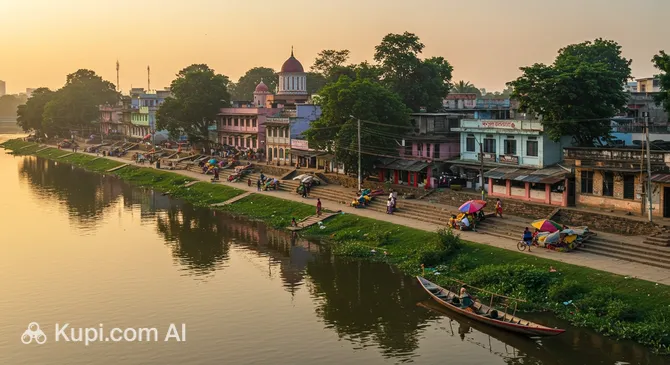
Brahmanbaria is a vibrant administrative center in the eastern part of Bangladesh, belonging to the Chittagong Division. Situated on the picturesque plains of the Meghna and Titas river basins, the city is often called the cultural capital of the region. Its atmosphere is steeped in tradition and the everyday bustle of a growing district center, where modern industrial facilities sit alongside endless agricultural lands.
Brahmanbaria. Illustration.
Source: Kupi.com AI
With a population of around 268,000, the city holds an important place in the hierarchy of Bangladeshi cities, being the second largest in the eastern region. Brahmanbaria traces its official municipal history back to 1869, having evolved over time from a modest settlement into a strategically important transport and energy hub for the country.
For travelers, the city is primarily interesting for its musical heritage—it is the birthplace of the legendary Ustad Allauddin Khan, the founder of one of the most influential schools of Indian classical music. A visit to this place offers a unique opportunity to see the authentic life of the country, unhidden behind tourist facades, to explore local markets, and to experience the hospitality of eastern Bangladesh.
Weather Overview
The climate of Brahmanbaria is classified as tropical monsoon, which means a clear division into a hot, humid season and a mild, dry winter. For travelers, this is an important factor when planning a trip, as the weather in Brahmanbaria significantly affects road conditions and the comfort of moving around the city.
The hottest months are April and May, when temperatures can rise to +33...+35°C. From June to October, the city is under the influence of monsoons: during this time, heavy rainfall occurs, and air humidity reaches its maximum. Expect a hot summer with frequent downpours and cool, sunny winters, when the average temperature is a comfortable +18...+20°C. January is considered the driest and most pleasant month to visit, with minimal risk of the floods that sometimes occur at the height of the rainy season.
Average monthly temperature
Average monthly precipitation
Interesting Facts
The Country's Energy Heart: Brahmanbaria is home to the Titas Gas Field, the largest in Bangladesh, and the powerful Ashuganj power complex, which provides a significant portion of the nation's electricity needs.
Musical Cradle: The city is considered the birthplace of Ustad Allauddin Khan, a prominent master of the sarod and founder of the Maihar gharana, which had a colossal influence on all of Indian classical music.
City of Brahmans: The city's name literally translates to "Home of Brahmans," indicating its historical significance as a settlement center for the highest caste.
Long-standing Status: The Brahmanbaria municipality was officially founded back in 1868–1869, making it one of the oldest local government bodies in the country.
Global Connections: The district ranks second in Bangladesh for the number of migrant workers employed abroad, which leaves a unique mark on the local economy and lifestyle.
How to Get There
Brahmanbaria is an important transport hub, conveniently located between the capital and the eastern regions of the country. Due to its proximity to major highways, getting here from the largest cities in Bangladesh is quite easy. To plan your route and clarify details, we recommend checking the information on how to get to the city by various means of transport.
The city does not have its own airport, so air travelers usually arrive at Dhaka's international airport, located about 120 kilometers away. From there, Brahmanbaria can be reached by taxi or intercity bus, with the journey taking between 3 to 5 hours depending on traffic conditions.
Rail service is perhaps the most comfortable way to travel. Trains from Dhaka, Sylhet, and Chittagong pass through the Brahmanbaria station. An express train ride from the capital takes about 2–4 hours, allowing you to avoid traffic jams on narrow highways, especially during the monsoon season.
Station
Passenger traffic
Distance
Agartala railway station
10
28 km
Shaistaganj Junction railway station
5
47 km
Airport railway station
6
73 km
Kamalapur railway station
11
76 km
Sylhet Railway Station
5
125 km
Main Attractions
Although Brahmanbaria is not a classic tourist destination, it offers the observant traveler a chance to dive into the atmosphere of authentic Bangladeshi life and history. The main historical landmark in the vicinity is the Sarail area, located 10 kilometers to the north. It once served as the temporary capital of the legendary ruler Isa Khan, and today you can still feel the breath of the past among ancient buildings and rural landscapes.
The industrial power of the region is embodied in the Titas Gas Field. This is the largest gas field in the country, which, together with the Ashuganj power station, makes the city a vital energy hub. The view of industrial structures against the backdrop of river floodplains creates a unique contrast characteristic of the country's modern landscape.
The cultural heart of the city is centered around places associated with the name Ustad Allauddin Khan. The legacy of the great musician is revered by locals, and the city often hosts classical music festivals. Additionally, it is worth visiting the central municipal square and the colorful local markets, which are the center of social life and the best place to observe the daily rhythm of the citizens.
Local Cuisine
The culinary landscape of Brahmanbaria is an ode to traditional Bengali cuisine, where rice, freshwater fish, and aromatic spices play the leading roles. Be sure to try dishes made from local fish, such as ilish or puti, caught in the waters of the Titas and Meghna rivers. It is usually prepared as a rich curry with the addition of mustard oil and chili.
The city is famous for its sweets, which are made from high-quality milk thanks to developed agriculture. Try the local mishti doi (sweet yogurt) or various cheese-based dessert variations. Street food also deserves attention: in the markets, you can find halis and fresh flatbreads that pair perfectly with hot lentil dal.
The food culture here is simple and soulful: the main establishments are cozy family-run eateries and bustling bazaar snack bars. Lunch or dinner in such a place is not just a meal, but an immersion into the rhythm of city life. Finish your meal with a cup of traditional cha (tea), which is prepared here very strong and sweet, sometimes with the addition of ginger or cardamom.
Travel Tips
A trip to Brahmanbaria will be a true immersion into authentic Bangladesh. These practical tips will help you make your journey as comfortable and safe as possible.
Clothing and Dress Code: Choose clothing made of light, natural fabrics, as the region is often hot and humid. The city is quite conservative, so it is recommended to cover your shoulders and knees, especially when visiting mosques or rural areas.
Getting Around the City: The best way to move around is cycle rickshaws for short distances and auto-rickshaws (CNG) for longer ones. Be sure to negotiate and agree on the price before the trip starts.
Finances and Payment: The main currency is the Bangladeshi Taka. There are few ATMs in the city that accept international cards, so always carry a sufficient supply of cash. Cards are rarely accepted.
Health: Drink only bottled water and avoid ice in drinks. During the monsoon season (June–October), be sure to use repellents to protect yourself from insects.
Communication: The main language is Bengali. Only a few hotel staff or government officials speak English. It is useful to learn a few phrases in the local language; this always wins the sympathy of the townspeople.
Local Etiquette: Greet people with your right hand. Bangladeshis are very hospitable but value politeness and restraint in behavior.
What to Avoid: Do not photograph people without their permission and try to avoid discussing political topics. Also, avoid walking in unlit outskirts of the city late at night.
Best Time to Visit: Plan your trip for the period from November to February. During this time, the weather is mild and dry, ideal for walking.
May your introduction to the cultural capital of the eastern region be filled with bright discoveries and pleasant encounters. Have a wonderful journey!
Entertainment & Nightlife
Entertainment in Brahmanbaria is predominantly quiet and traditional. As the city is a conservative regional center, you won't find noisy nightclubs or bars here. Instead, evening life revolves around the central markets and numerous tea stalls, where locals gather to socialize over a cup of strong tea.
The city's main cultural assets are its musical and folklore festivals. Thanks to its rich heritage of classical music, concerts and creative evenings featuring traditional Bangladeshi instruments and chants are regularly held. This is an excellent chance to experience the region's high culture in its natural environment.
For those looking for more modern entertainment formats, such as cinemas or large entertainment centers, the best option is a trip to neighboring Comilla or the capital, Dhaka. Within Brahmanbaria itself, daytime leisure is best spent walking along the banks of the Titas River or exploring the variety of local bazaars, which become particularly atmospheric toward the evening.
Parks & Museums
The park infrastructure of Brahmanbaria reflects the agricultural character of the region. Instead of classic urban gardens, natural landscapes and riverbanks dominate here. Locals often choose the embankments of the Titas and Meghna rivers for evening strolls and outdoor relaxation. These places are particularly picturesque at sunset, when the sun slowly dips below the horizon over the water's surface.
Despite the lack of major state museums, the city's cultural heritage is carefully preserved in the memory of its great residents. Visiting places associated with the life and work of Ustad Allauddin Khan replaces a trip to a classic gallery for tourists. For those interested in architectural history, it will be fascinating to explore the old buildings in the Sarail area, which are open-air museums in their own right.
While greenery in the city center itself may seem insufficient, it is worth heading outside the residential areas to see the vast agricultural fields. These plains, which change color depending on the season—from bright green to golden—represent the region's main natural attraction, allowing you to feel the space and grandeur of the Bengali land.
Getting Around
The public transport system in Brahmanbaria is typical for medium-sized Bangladeshi cities and is characterized by its compactness. The primary means of travel through the narrow city streets are cycle rickshaws. This is an eco-friendly and inexpensive way to reach any point in the center, allowing you to fully experience the local flavor and rhythm of life.
For longer trips or quick movement between districts, residents use CNG (compressed natural gas auto-rickshaws). They are more maneuverable in heavy traffic and protect passengers from dust and rain. Small buses and minibuses also run, connecting the city with neighboring villages and the regional center, Comilla.
It is worth considering that traffic jams often occur on main roads during peak hours, and movement can slow down significantly during monsoon rains. There are usually no fixed fares for rickshaws, so the price of the trip should be agreed upon in advance. If you plan to travel by train, it is better to purchase tickets for express trains at the station ahead of time, as rail transport is extremely popular.
Accommodation
The hotel sector in Brahmanbaria is primarily oriented toward business travelers and transit passengers. Mid-range and budget hotels predominate, offering necessary amenities without excesses. Finding luxury accommodation in the city is difficult, but 2-3 star guesthouses and hotels are quite capable of providing a comfortable night's stay.
Most accommodation options are concentrated in the central part of the municipality, within walking distance of the railway station and major bus terminals. This is convenient for those planning to use the city as a base for exploring nearby attractions or for a short stop on the way to Sylhet or Chittagong.
When planning your trip, keep in mind that demand for housing increases during holidays or major festivals. It is recommended to book rooms in advance, especially if you prefer hotels with air conditioning, which are in high demand during the hot season. Prices for accommodation remain very affordable, making the city accessible for budget tourists.
Nearby Cities
Brahmanbaria serves as an excellent starting point for exploring the surroundings of eastern Bangladesh and even the border areas of neighboring India. The region is rich in historical sites and natural beauty that can be seen in a single day.
Just 26 kilometers to the east is the city of Agartala, the capital of the Indian state of Tripura. This destination is interesting for its unique cultural mix and the opportunity to cross an international border (provided you have the appropriate visa). 40 kilometers to the west lies Narsingdi, known for its textile traditions and archaeological finds, and very nearby, just 12 kilometers away, is the town of Shahbazpur, ideal for a short introductory trip.
For those ready to travel a bit further, the path opens up to Comilla with its ancient Buddhist monasteries or the tea plantations of Habiganj. Exploring neighboring cities will allow you to see the full diversity of life in this region—from historical ruins to endless green fields.
Shopping & Souvenirs
Shopping in Brahmanbaria is primarily about visiting colorful local bazaars where you can find everything from fresh farm products to handmade crafts. The city doesn't have huge shopping malls with global brands, but that is precisely its charm for a tourist seeking authenticity. The main shopping points are concentrated in the center of the municipality, where narrow streets are filled with shops selling textiles and household items.
Special attention should be paid to local textiles and handmade fabrics. Bangladesh is famous for its cotton, and here you can purchase high-quality traditional clothing—saris or lungis—at very attractive prices. The city is also known as a trade hub for rice and various spices, the aroma of which fills the air at the markets.
As souvenirs from Brahmanbaria, people often bring back famous Bengali sweets, which stay fresh for a long time, and woven items made of jute or bamboo. Shops usually operate from morning until late evening; however, remember that Friday is a day off when many stalls may be closed. Most outlets only accept cash (local Taka), so it is wise to ensure you have small change ready.