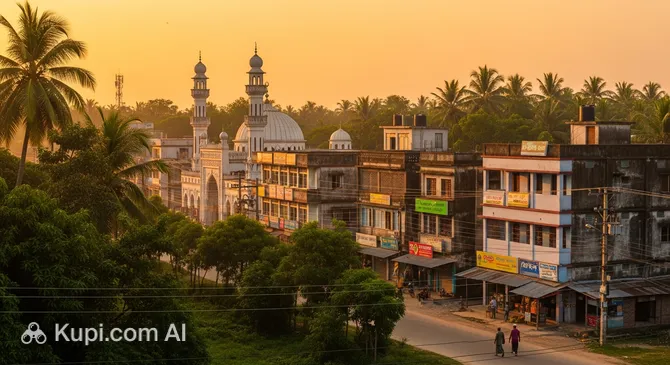
Welcome to Chauddagram—a distinctive corner of Bangladesh located in the Chittagong Division. This upazila, part of the Comilla District, is a harmonious blend of endless farmlands and bustling commercial hubs. Life here moves at a steady pace typical of the country's rural regions, where traditions and the daily labor of farmers create a uniquely peaceful atmosphere.
Geographically, Chauddagram stretches across the flat plains of the delta, crisscrossed by rivers such as the Dakatia and the Little Feni. With a population of approximately 443,648, this area is an important agricultural center where fertile soils yield bountiful rice harvests. While not a typical tourist metropolis, the town attracts travelers with its sincerity and the opportunity to see the authentic, non-tourist side of Bangladesh.
Chauddagram. Illustration.
Source: Kupi.com AI
Delving into the historical past of the region, one can discover fascinating archaeological traces, such as ancient palaces and temples hidden among the greenery. One of the area's striking features is its majestic lakes, or dighis, which have served as centers of community life for centuries. Visiting Chauddagram is a chance to escape the urban bustle and enjoy the tranquility surrounded by vast fields and hospitable locals.
Weather Overview
Chauddagram is located in a tropical savanna climate zone, characterized by pronounced seasonality and high humidity. The most pleasant time to visit is from November to February, when a mild and dry winter sets in. In January, the average temperature is a comfortable 18.9°C, and rainfall is minimal, which is ideal for long walks and exploring local attractions.
With the onset of March, the weather in the town begins to change: the temperature rises rapidly, peaking in April and May when the thermometer can show 34–35°C. The summer months bring the monsoon season. From June to August, Chauddagram experiences heavy rains, and humidity increases significantly. Nature flourishes during this time, but one should be prepared for seasonal flooding on the Dakatia and Feni rivers.
When planning your trip, be sure to check the current city climate to choose the right wardrobe. The combination of heat and high humidity in the summer months requires light clothing made of natural fabrics, while for winter evenings, a light jacket or sweater may be needed. Rainfall is unevenly distributed: while rain is rare in winter, during the peak of the monsoon, the number of wet days per month can reach 27–28.
Average monthly temperature
Average monthly precipitation
Interesting Facts
The town's name has Persian-Bengali origins: "Chauddagram" literally translates to "fourteen villages," indicating the ancient administrative division of this territory.
The literacy rate in Chauddagram is approximately 79.29%, which is notably higher than the national average in Bangladesh, highlighting the local residents' strong emphasis on education.
One of the region's serious environmental concerns is the high arsenic content in the groundwater, which requires locals and tourists to be extremely cautious when using water from tube wells.
The district's economy is closely linked to the global market: Chauddagram is a significant supplier of ready-made garments, which are exported to many countries worldwide.
Chauddagram is a place where different cultures coexist; despite the overwhelming Muslim majority, important Hindu shrines and communal traditions are preserved here.
How to Get There
Chauddagram's accessibility is due to its strategic location in the Comilla District, on the route between the country's largest cities. The town is an important transit point, and the most convenient way to reach it is by bus. Regular services depart from Dhaka or Comilla; the journey from Comilla takes about 1–2 hours, though potential delays due to heavy traffic on rural roads should be taken into account. Travelers can find detailed route information to help plan their trip.
The town does not have its own airport. The nearest major air hub is Hazrat Shahjalal International Airport in Dhaka, which receives flights from all over the world. Another option is flying to Chittagong. From these cities, Chauddagram is easily accessible by intercity buses or hired cars, allowing you to enjoy views of the Bengali countryside along the way.
For those who prefer the romance of the rails, Chauddagram offers access to railway connections. The local station links the district with the country's key hubs, allowing for comfortable travel to major administrative centers. Trains in Bangladesh are not just transport but an opportunity to see the country's daily life from a carriage window.
Station
Passenger traffic
Distance
Agartala railway station
10
63 km
Chattogram University railway station
4
97 km
Kamalapur railway station
11
106 km
Airport railway station
6
115 km
Shaistaganj Junction railway station
5
117 km
Main Attractions
While Chauddagram is not a major destination for mass tourism, a keen traveler will find many interesting locations here. One of the main attractions is the Senbahadur Palace in Chandiskara. This 18th-century structure offers a glimpse into the architectural heritage of the past, even as time has left its mark upon it. Another significant historical site is Bardan Raja Mura—an ancient stepped pyramid that intrigues archaeology enthusiasts with its mysteries.
The natural charm of the district is best revealed along its shores. Lakes Jagannath Dighi and Suamar Dighi are more than just bodies of water; they are picturesque recreation spots surrounded by legends. They are popular with locals and are perfect for peaceful sunset strolls when the mirrored surface of the water reflects the vibrant colors of the sky. For those interested in religious culture, the ancient Kali Mandir is a must-visit, serving as an important spiritual center for the district's Hindu community.
Wandering along rural paths, you will encounter many colorful markets and educational centers that form the backbone of modern life in Chauddagram. The landscapes, consisting of neat rice paddies and shady groves like Amandanga Shalban, provide an ideal backdrop for ethnographic tourism. This is a place for those seeking authenticity and wishing to see life in the Bengali heartland in all its diversity.
Local Cuisine
A gastronomic journey to Chauddagram is an introduction to classic Bengali cuisine, where rice and fish play the leading roles. Thanks to the abundance of local rivers like the Dakatia, the fish is always fresh and forms the basis of many dishes. Be sure to try fish curry with aromatic spices and traditional dal (thick lentil soup). In local eateries, biryani—a hearty rice and meat dish prepared for special occasions—is also popular.
The food culture in the town is centered around street stalls and small market restaurants in the municipality. There are no fine-dining establishments here, but the food is always simple, honest, and very delicious. A local's breakfast often consists of roti or paratha flatbreads with vegetable curry. Tea ("cha") holds a special place in the town's life—it is drunk everywhere, often with plenty of sugar and milk, making it an excellent accompaniment to a leisurely conversation.
Among drinks, you should also try fresh juices, which are especially good during the hot season. Although food tourism in Chauddagram is not developed as a separate niche, visiting local markets will provide plenty of impressions, from piles of fresh vegetables to exotic fruits. Remember that in rural areas, it is customary to eat with your right hand, and locals will always appreciate your interest in their culinary traditions.
Travel Tips
A trip to Chauddagram will offer you unforgettable impressions of the authentic Bengali heartland if you prepare in advance for the specifics of the local way of life. These practical tips will help you feel confident and safe during your journey.
Clothing and Dress Code: Choose light clothing made from natural fabrics (cotton, linen), as the climate here is hot and humid. Keep in mind that Chauddagram is a conservative district with a Muslim majority, so clothing should be modest (shoulders and knees covered) to show respect for local traditions.
Transport: The best way to travel short distances is by rickshaw. For travel between towns, use buses or trains. Be prepared for traffic jams on main roads, especially during peak hours.
Finances: The local currency is the Bangladeshi taka. In Chauddagram, almost everywhere accepts only cash. ATMs can be found in the municipal center, but it is better to have a reserve of cash with you. International cards rarely work.
Health: The most important rule is to never drink tap or well water due to the risk of arsenic content. Use only bottled water. Bring insect repellent and a basic first-aid kit.
Communication: The primary language is Bengali. English is not widely spoken, so learn a few simple phrases for greeting and gratitude. Locals are very friendly and will try to help you even through gestures.
Etiquette: Always use your right hand for eating, passing objects, or shaking hands. Ask for permission before taking photos of local residents, especially women.
What to Avoid: Avoid walking alone at night in sparsely populated areas. Also, it is best not to discuss political or sensitive religious topics to avoid misunderstandings.
Seasonal Advice: If your trip falls during the monsoon season (June–August), be prepared for heavy downpours and potential road flooding—always have a raincoat with you.
May your introduction to Chauddagram be filled with warm encounters and bright discoveries. Following these simple rules will help you become a welcome guest in this hospitable land!
Entertainment & Nightlife
Nightlife in Chauddagram is virtually non-existent in the traditional Western sense. You won't find noisy clubs, bars, or discos here, as the local lifestyle is centered on family values and early rising. Residents prefer to spend their evenings at home or with friends, and most activity after sunset is concentrated around local markets, where tea stalls (cha-stalls) serve as community hubs.
For those looking for modern entertainment, cinemas, or large shopping malls, the best option is to head to neighboring Comilla or Chittagong. Nevertheless, Chauddagram offers its own kind of "evening leisure"—strolling by the shores of Jagannath Dighi or participating in vibrant religious festivals that periodically transform the town's streets with lights and music. These events offer a unique opportunity to witness the region's cultural richness from the inside.
Daytime entertainment in the town is contemplative in nature. You can arrange a picnic in nature, take photos of rural landscapes, or explore local markets in search of unique handmade goods. Safety in the town is high; however, the streets become very quiet at night, so it is better to arrange a rickshaw driver in advance or use taxi services through hotel contacts for transportation.
Parks & Museums
In Chauddagram, you won't find classic museums with exhibition halls; however, archaeological sites play the role of living museums here. The ruins of Senbahadur Palace and the ancient Bardan Raja Mura pyramid serve as silent witnesses to the region's rich past. Visiting these sites allows you to immerse yourself in history without traditional museum barriers, directly touching ancient masonry and architectural forms from past centuries.
The town's park culture is mainly represented by natural areas. Lakes Jagannath Dighi and Kashipur Dighi serve as the primary public spaces where residents relax in the shade of trees by the water. These are ideal spots for those seeking solitude and wishing to enjoy the silence away from the noise of the central streets. The fertile plains around the town also create the feeling of a vast green garden, where every turn of the road reveals a new picturesque view.
The Amandanga Shalban forest area deserves special attention. This place is perfect for light walks and outdoor picnics. Despite the lack of developed park infrastructure, the region's natural greenery—its fields, canals, and groves—provides excellent opportunities for ecotourism. For the residents of Chauddagram, nature itself is the main park, accessible to everyone at any time of day.
Getting Around
The public transport system in Chauddagram is typical for rural Bangladesh and is fully adapted to the needs of local residents. The main means of getting around the town and between the unions are rickshaws and auto-rickshaws (CNGs). These are the most accessible and maneuverable modes of transport, easily navigating narrow streets. It is always wise to agree on the fare in advance, as meters are a rarity here.
Buses are used for longer distances. They connect Chauddagram with Comilla, Feni, and other neighboring upazilas. Bus services are quite frequent, but be prepared for the fact that vehicles are often overcrowded, especially during peak hours. During the monsoon season, some roads may be difficult to traverse due to flooding, which can significantly increase travel time.
The railway is another important element of the transport system. The station in Chauddagram allows for relatively quick and comfortable travel to key cities, bypassing highway traffic jams. It is better to purchase train tickets in advance at the station. For those who prefer more independence, renting a car with a driver is possible, which would be the safest and most convenient option for tourists unaccustomed to the specifics of local traffic.
Accommodation
Accommodation options in Chauddagram are quite limited, as the town is not a mainstream tourist destination. It mainly offers modest guesthouses and apartments geared toward locals or professionals visiting for the textile and agricultural industries. Most of these options are concentrated in the municipal center, near major markets and administrative buildings.
For travelers accustomed to a higher level of comfort and a wider range of services, it is recommended to consider hotels in neighboring Comilla. There, you can find mid-range hotels with air conditioning and restaurants. If you decide to stay in Chauddagram to better experience the local atmosphere, it is best to choose accommodation in the central part of the municipality for better transport accessibility and proximity to dining spots.
When planning your trip, especially during national holidays or religious festivals, it is advisable to book accommodation in advance through local operators or by phone. The price range here is very affordable, and payment is usually made in cash. Don't forget to check for mosquito nets and bottled water in the room, as these are essential for a comfortable stay in rural areas.
Nearby Cities
Chauddagram is an excellent starting point for exploring the eastern part of Bangladesh and the border territories. Just 28 kilometers away is Comilla—a major cultural and educational center known for its archaeological sites from the era of ancient Buddhist kingdoms. A trip there allows you to swap rural tranquility for the lively atmosphere of a modern Bengali city with its museums and parks.
Another interesting destination is the city of Feni, located 25 kilometers to the south. It attracts travelers with its large-scale markets and serves as an important transport hub for the region. Also noteworthy is Belonia, situated right on the border, which gives the place a unique frontier character. These towns are easily reachable by bus or rickshaw within a single day.
Don't miss the opportunity to visit smaller settlements such as Parshuram or Fulgazi, which are very close by. Exploring the surroundings of Chauddagram will reveal a variety of landscapes, from dense forests to fertile plains, and allow for a deeper understanding of the lifestyle in this part of the country. Each such trip is a small adventure full of new encounters and discoveries.
Shopping & Souvenirs
Shopping in Chauddagram is primarily about visiting local markets (bazars), which are the heart of the district's economic life. In the municipal center and larger villages, you will find bustling trade rows selling everything from fresh produce and spices to household items. There are no huge shopping malls with glass storefronts, but there is the unique atmosphere of an Eastern bazaar, where it is customary to haggle and chat with vendors.
The region is famous for textile production, so you can find high-quality and inexpensive ready-made garments in the markets. This is a great opportunity to purchase locally-made clothing at very attractive prices. Additionally, Chauddagram is known for its agricultural goods: fresh rice of various varieties and seasonal fruits and vegetables are always of excellent quality here and are the pride of local farmers.
As souvenirs from the town, you can bring back folk crafts found at rural fairs or local spices that have retained their original aroma. Most stalls operate from early morning until late evening, and payment is accepted exclusively in cash in the local currency (taka). Be sure to check out the food markets—it is the best way to feel the flavor and rhythm of real life in Chauddagram.