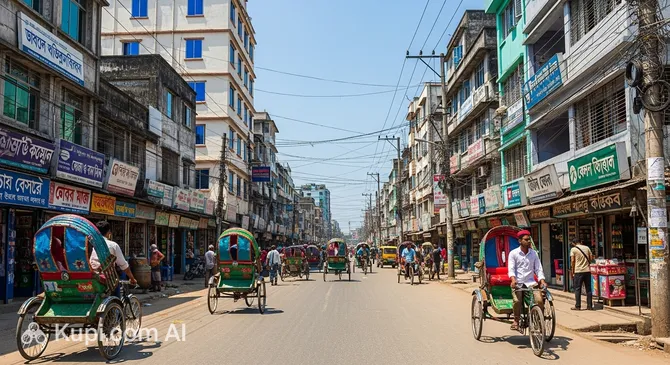
Located in southeastern Bangladesh, the city of Feni is a dynamic administrative and commercial center that serves as an important link within the Chittagong Division. This is a place where you can feel the authentic rhythm of the Bengali provinces, free from crowds of foreign tourists and filled with the atmosphere of everyday life. The city is nestled on the banks of the river of the same name, which for centuries has shaped the lifestyle and economy of the region.
Feni. Illustration.
Source: Kupi.com AI
In the city's history, a key moment was its establishment as an administrative hub in the second half of the 19th century during the British colonial period. Today, the population of Feni is approximately 265,000, and the city itself is actively developing, transforming from an agricultural center into a modern industrial and trade hub. Despite the dense construction typical of this part of the country, the city retains a unique charm thanks to its markets and spiritual centers.
The main landmarks for travelers here are the majestic Feni Central Jame Mosque and the lively river embankments. Although Feni is not positioned as a popular resort, it attracts those seeking authenticity who want to see Bangladesh from the inside, away from standard tourist routes. A visit here is an invitation to experience the hospitality of the locals and explore an important economic hub of the region.
Weather Overview
The city of Feni is located in a tropical monsoon climate zone, characterized by high humidity and a clear division of seasons. When planning your trip, keep in mind that the weather here largely determines the rhythm of life: hot summers are followed by heavy rains, while winter is pleasantly mild and dry. The average annual temperature in the region fluctuates between 25–30°C, but during peak summer months, the thermometer can rise to 35°C.
Expect a truly hot period from March to May, when humidity begins to rise, preparing the city for the arrival of the monsoons. The rainy season lasts from June to October: during this time, Feni experiences heavy downpours that can cause short-term flooding due to its proximity to the river. The most comfortable time for a visit is considered the period from November to February—during these months, the weather is dry, and the average temperature is around 20°C, which is ideal for walking.
To get up-to-date data on the city's climate and forecasts for the coming days, we recommend checking with meteorological services before leaving. In winter, nighttime temperatures can drop to 13–15°C, so a light jacket or sweater will not be out of place, while in summer, the main protection will be sunscreen and an umbrella.
Average monthly temperature
Average monthly precipitation
Interesting Facts
The city was named after the Feni River, on whose banks it has grown and developed over centuries.
The Feni municipality in its modern form was officially established in 1958, when the administrative center was moved due to severe river erosion threatening old buildings.
The Feni Central Jame Mosque is one of the most recognizable and revered shrines in the entire district, serving as the main landmark for residents.
Despite its small urban footprint, the population density here is one of the highest in the region, making Feni an exceptionally busy commercial hub.
The settlement received the status of a separate administrative unit (subdivision) back in 1876, originally as part of the historical Noakhali district.
How to Get There
The city of Feni occupies a strategic position on the transport map of Bangladesh, situated on the main route between the capital and a major port hub. The primary ways to reach the city are by bus and rail, which connect it to key regions of the country. The journey from Dhaka (about 200 km) by bus can take 5 to 7 hours depending on traffic density, while the train trip is usually more predictable, lasting 4 to 6 hours.
Feni does not have its own airport. Travelers preferring air travel should fly into the nearest international airport located in Chittagong. From there, you can reach the center of Feni by taxi or regular bus in about 2 to 4 hours. When planning your trip, be sure to check the latest information on ways to get there to choose the most comfortable option.
For those choosing the railway, Feni Railway Station is an important stop for many express trains. This is one of the most budget-friendly and colorful ways to travel around the country. From the station, you can easily reach any part of the city by rickshaw or taxi. Within the city, minibuses and CNG (auto-rickshaws) are also popular for navigating the main streets.
Station
Passenger traffic
Distance
Chattogram University railway station
4
73 km
Agartala railway station
10
87 km
Kamalapur railway station
11
127 km
Airport railway station
6
137 km
Shaistaganj Junction railway station
5
140 km
Main Attractions
Feni is a city that reveals itself not through famous monuments, but through its authentic atmosphere and everyday life. The main spiritual and architectural symbol of the city is the Feni Central Jame Mosque. This is not just a religious building but also a vital community center where locals gather. The majestic mosque dominates the city skyline, attracting attention with its architecture and sense of peace in the heart of the bustling city.
The geographical backbone of the region is the Feni River. A walk along its banks allows you to see the city from a different perspective: the life of boatmen and fishermen is in full swing here, and the river scenery offers cool relief on hot days. While there are virtually no organized water excursions for tourists, it is always possible to arrange a small boat trip with locals—giving you a chance to take unique photos and feel the rhythm of the river.
For those who want to experience the local flavor, head to the central squares and markets of Feni. There are no pretentious landmarks here, but it is within the labyrinth of market stalls and open spaces that you can see the real life of Bangladesh. Interacting with craftsmen and trading in fabrics and spices creates a unique kaleidoscope of impressions that is often more memorable than classic museums.
Local Cuisine
A gastronomic journey to Feni is an immersion into the rich traditions of Bengali cuisine, where rice and fresh fish play the leading roles. Since the city is by the river, you must try dishes made from local freshwater fish, especially the famous hilsa (ilish). It is often prepared as a fragrant curry with mustard and spices, giving the dish a unique, pungent flavor.
Special places on the local menu are occupied by bhorta—savory mashes made from vegetables (most often eggplant or potato) with onions, chili, and mustard oil—as well as dal, a thick lentil soup. For meat lovers, there are always hearty beef or chicken dishes cooked in thick sauces with plenty of spices. For dessert, be sure to order mishti doi—a traditional sweet yogurt that is the hallmark of sweets in this region.
Dining culture in Feni centers around small family restaurants and street stalls in the market area. It is customary to eat freshly prepared food here, and the atmosphere in the establishments is simple and relaxed. The most popular drink is cha—strong milk tea with plenty of sugar, enjoyed at any time of day. Coconut water or freshly squeezed mango juice are also great for cooling off in the heat.
Travel Tips
Visiting Feni is a great way to see the real Bangladesh, and a few practical tips will help make your trip comfortable and safe.
Clothing and Dress Code: Choose light clothing made from natural fabrics, as the climate here is humid and hot. Out of respect for local traditions, a modest clothing style is recommended: covered shoulders and knees, especially when visiting mosques.
Transport: The most convenient way to move around the city is by rickshaws and CNGs. Always agree on the price before starting the trip. For intercity travel, it is better to book train tickets in advance.
Finance: In Feni, you will definitely need cash in the local currency (Taka). Cards are accepted very rarely, and ATMs may not support international payment systems, so carry a supply of bills in different denominations.
Health: Drink only bottled water and avoid ice in drinks. It is recommended to carry a basic first-aid kit and have vaccinations for hepatitis and typhoid in advance.
Communication: The primary language is Bengali. Few people speak English (mostly young people and bank employees), so learn a couple of polite phrases in the local language.
Etiquette: Bangladeshis are very hospitable. It is customary to greet with the right hand, and the same hand should be used to pass money or food.
What to Avoid: It is better not to plan a trip for the peak of the monsoon season (July-August), as flooding is possible. Also, avoid walking alone in poorly lit suburban areas late at night.
Connectivity: You can buy a local SIM card at any large mobile shop in the center; you will need your passport for this. Wi-Fi in hotels can be unstable.
Following these simple rules will allow you to enjoy the hospitality of Feni and have only positive impressions of your journey.
Entertainment & Nightlife
Entertainment in Feni reflects the conservative traditions of provincial Bangladesh, so do not expect to find night clubs or noisy bars here. Instead, the city offers quiet and authentic evening leisure. The primary meeting places after sunset are the numerous teahouses and street food stalls, where people engage in leisurely conversations about life and business over a cup of strong tea. The atmosphere in these places is very friendly, and foreign guests often become the center of polite attention.
Daytime entertainment in the city focuses on walking through the central districts and along the riverbanks. For more diverse leisure activities, such as visiting cinemas or large amusement parks, locals and visitors usually head to neighboring Chittagong, located about 120 kilometers away. Nevertheless, local cultural holidays and festivals, such as Purab, are periodically held in Feni itself, allowing for a deeper immersion into local folklore.
Evening walks in the city center are considered relatively safe; however, keep in mind that activity on the streets drops sharply after 9:00 PM. If you need to return to your hotel late at night, it is better to arrange a ride with a rickshaw driver in advance or use a taxi. Overall, a stay in Feni is an opportunity to take a break from the bustle of megacities and enjoy the quiet of a Bengali evening by the river or in the cozy company of locals.
Parks & Museums
In Feni, you won't find classic museums with huge halls, as the city's heritage is expressed more in living traditions and the architecture of its mosques. However, for those seeking solitude and greenery, the main natural recreational area is the Feni River itself. Its banks serve as a natural park where citizens come to enjoy the cool air and open horizons that are hard to find amidst the dense urban development.
Small squares and landscaped areas are located mainly in the center, near administrative buildings and the Central Jame Mosque. These locations, though small in size, are important islands of tranquility in the dynamic rhythm of the commercial city. Here, you can watch how local residents spend their leisure hours, which in itself is an interesting ethnographic observation for a tourist.
For those who miss large-scale park complexes, it is recommended to travel outside the city limits into the rural areas of the district. The outskirts of Feni are rich in agricultural landscapes that turn into endless emerald fields during the monsoon season. A walk through such places is a substitute for a visit to a botanical garden and allows you to see the region's true flora in its natural form.
Getting Around
Public transport in Feni is perfectly adapted for moving around the compact city center, which covers just over 7 square kilometers. The most popular and accessible means of transport are rickshaws. These brightly decorated carriages are a true symbol of the city, allowing for a leisurely ride to your destination while enjoying the surrounding views. For faster trips, locals use CNG auto-rickshaws (three-wheeled gas-powered motor taxis), which easily navigate the active city traffic.
Minibuses and buses run between districts, connecting the center with the outskirts and neighboring settlements. It is worth considering that during peak hours, public transport can be very crowded, and congestion often occurs on narrow streets. Nevertheless, the average travel time within the city rarely exceeds 20–30 minutes. Walking through the center is quite possible, but you should be careful due to the lack of clear separation between sidewalks and the roadway.
Fares are paid in cash directly to the driver or conductor. Rickshaw and taxi prices are only approximately fixed, so it is better to agree on the cost of the trip in advance. There are no metro or trams in the city, but the regional railway connection is excellent: from Feni station, you can easily travel toward Dhaka or Chittagong, making the city a convenient transport hub for travelers.
Accommodation
Hotel infrastructure in Feni is primarily oriented toward business travelers and those passing through the city. You won't find luxury five-star resorts here, but the city offers a decent selection of mid-range hotels and budget guesthouses. Most accommodation options are concentrated in the central part of the city, in close proximity to the railway station and main bus stops, which is very convenient for logistics.
A typical hotel in Feni is a functional building with a basic set of services: clean rooms, air conditioning, and often its own small restaurant. For those planning to stay in the city for a longer period, renting apartments is a popular option, often offering better terms for expats and business tourists.
When choosing accommodation, it is recommended to pay attention to modern amenities and cleanliness reviews. Since the choice of high-quality hotels is limited, it is better to book rooms in advance, especially if your trip coincides with public holidays or important regional events. Local online services or direct contact with hotels upon arrival are most commonly used for finding and reserving accommodation.
Nearby Cities
Thanks to its location at the intersection of important routes, Feni is an excellent starting point for exploring surrounding settlements and larger metropolises. The surrounding region is rich in both natural landscapes and small towns, each with its own personality and characteristic features.
Among the most interesting destinations for day trips are the town of Chhagalnaiya, located just 13 kilometers away, and Daganbhuiyan, which can be reached in half an hour. These places allow you to see the traditional rural lifestyle of Bangladesh and visit colorful local markets. Also noteworthy are Fulgazi, known for its picturesque nature, and Sonagazi, which attracts lovers of quiet walks.
For those seeking scale and a port atmosphere, the main destination will be Chittagong, located 120 kilometers away. Exploring the surroundings of Feni will help you get a complete picture of this region of Bangladesh, discovering many authentic corners hidden from the eyes of regular tourists.
Shopping & Souvenirs
Shopping in Feni is primarily a colorful adventure in local markets, which are the heart of the city's economy. There are no giant shopping malls with global brands here, but authentic bazaars are plentiful. The main place for shopping is the Feni Central Market, located near the river and the station. This is the perfect place to buy the high-quality fabrics the region is famous for, as well as ready-made traditional clothing.
For tourists, shops with spices and traditional Bengali sweets are of particular interest. If you are looking for souvenirs, pay attention to local handicrafts made from bamboo and jute, as well as fragrant local tea. Prices in the city are quite affordable, but remember that in the markets, bargaining is not only appropriate but expected—it is part of the local communication culture.
Shops and stalls usually open early in the morning and work until late evening, with a small break during the hottest time of day. Payment is almost everywhere made in cash in the local currency (Taka), so it's worth taking care of changing money in advance. You can find a few ATMs in the central districts, but you should not yet rely solely on bank cards in Feni.