Support

Citadel of Namur

About

The Citadel of Namur (Citadelle de Namur) is one of the most majestic and well-preserved fortresses in Europe, located in the city of Namur, the capital of Wallonia in Belgium. It is not just a historical monument but an entire complex of powerful fortifications perched on a rocky hill at the confluence of the Meuse and Sambre rivers. The citadel's strategic position has shaped the history of the city and the entire region for centuries.

The fortress is a real labyrinth of bastions, walls, and multi-level fortifications. Of particular interest to visitors are its extensive underground passages—a vast network of galleries that Napoleon once called "the termite mound of Europe." Today, part of these tunnels is open for tours, allowing you to dive into the citadel's military past.
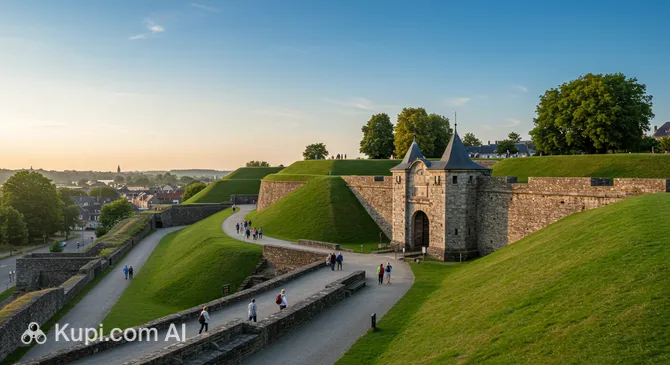
Citadel of Namur. Illustration.
Source: Kupi.com AI

Traveller photos:

Besides its rich history, the Citadel of Namur attracts tourists with stunning panoramic views. From its heights, a breathtaking picture of the city and the picturesque Meuse River valley unfolds. It is an ideal place for leisurely walks, learning about history, and enjoying magnificent landscapes, making it a must-see on any traveler's itinerary in Belgium.

Contacts

To plan your visit to the Citadel of Namur, confirm the current tour schedule, ticket prices, and event information, we recommend checking official sources. For the most accurate and up-to-date details, we advise visiting the Namur city tourism portal or looking up the citadel's official website just before your trip.

How to contactContact
AddressRte Merveilleuse 64, 5000 Namur, Belgium
Phone+32 81 24 73 70
Websitecitadelle.namur.be

What to Do

Visiting the Citadel of Namur is more than just looking at old walls; it’s a true dive into history. One of the main highlights is exploring the extensive network of underground galleries and tunnels, some of which are open for guided tours that reveal the secrets of the fortress's military past. The complex also features a museum dedicated to the citadel's history and military affairs, complemented by temporary exhibitions and interactive installations.

The citadel is not only an open-air museum but also a wonderful place to relax. Specially equipped observation decks offer breathtaking panoramic views of the city of Namur and its picturesque surroundings. For those who enjoy active recreation, there are walking routes throughout the grounds, opportunities to rent a bicycle, or take a ride on the tourist train that runs between the fortress's key points. In the summer months, cozy cafes and souvenir shops are open for visitors, where you can grab a bite to eat and buy a memento of your trip to Belgium.

Getting There

There are several ways to reach the Citadel of Namur. The most scenic is the cable car ride, which departs from a square in the center of Namur. For those who enjoy walking, there are several routes: from the main railway station, the walk to the fortress takes about 20–30 minutes, with signs along the way. You can also take a city bus that drops you off closer to the entrance.

If you are traveling by car, use the Route Merveilleuse leading up, and there are several free parking areas on-site, such as near the Terra Nova visitor center. Additionally, a tourist train runs through the citadel, allowing you to comfortably explore its extensive fortifications and enjoy panoramic views. This is an excellent option for those who want to cover a large area without much effort.

For tourists arriving from other cities in Belgium, such as Brussels, the most convenient way to reach Namur is by train or bus. The country's transport network is excellently developed, making it easy to plan a day trip. Upon arrival in the city, you can walk to the foot of the citadel or use local transport to begin your ascent to this historic monument.

Nearest city: Namur

History & Facts

The history of the Citadel of Namur dates back to ancient times. The first fortifications on this strategically important hill appeared as early as the 3rd–4th centuries, when the Romans built defensive structures to protect against Germanic tribes. Centuries later, in the 10th century, the first castle of the Counts of Namur was built on this site, becoming the predecessor of the future complex. By the 13th century, a full-fledged stone fortress stood here, marking the beginning of centuries of reconstruction and improvement that turned it into one of the greatest in Europe.

The period from the 14th to the 17th century was a time of the most active construction and strengthening of the citadel. In the 14th–15th centuries, double walls were built around the central keep and a deep moat was dug, significantly increasing the fortress's defense capabilities. In the 16th century, by order of Emperor Charles V, new bastions were added, and in the 17th century, the area of the fortifications doubled thanks to the work of military engineers such as Sébastien Vauban. These massive works made the Citadel of Namur one of the most protected and impregnable outposts of its time, a key point on the map of European military history.

Even in later times, the fortress continued to play an important role and evolve. An interesting fact: in the 19th century, part of the outdated fortifications was dismantled by order of Napoleon Bonaparte himself, who felt the fortress was no longer needed for his expanding empire. Throughout its history, the citadel has been besieged and changed hands many times, forcing its rulers to constantly modernize and expand the fortifications. This continuous transformation and eventful history make the Citadel of Namur not just a landmark of the city of Namur, but a living chronicle of military architecture and the history of Belgium.

Time Needed

When planning a visit to the Citadel in the city of Namur, you should set aside enough time for its exploration. To fully experience this grand complex, it is recommended to allow 2 to 4 hours. This is enough time to walk leisurely along the main routes, visit the museum, go up to the observation decks, and take part in a tour of the underground tunnels.

Your stay can be easily adapted to your pace. If you are short on time, you can spend about an hour and a half to two hours walking through the upper fortifications and viewpoints, which offer the best views of the city and the confluence of the rivers. For a deeper immersion into history, add a tour of the underground casemates—this alone takes about an hour and will leave a lasting impression.

Ultimately, the Citadel of Namur is a place where time flies by. Given its scale and variety of activities—from historical exhibitions to simple walks in the fresh air—it's best not to rush your visit. To see the most interesting parts, especially the underground tour which runs on a schedule, we recommend checking the latest information on the official website in advance.

Working Hours

The Citadel of Namur is open to visitors year-round, but opening hours may vary depending on the season and scheduled events. Generally, during the peak tourist season (roughly from April to September), the complex is open daily from 10:00 to 18:00. In the autumn-winter period, hours may be reduced, and there may be closing days. Therefore, to avoid any unpleasant surprises, it is highly recommended to check the current schedule on the official Citadel of Namur website just before your visit.

While you can often walk around the main grounds of the fortress without an appointment, to visit its most interesting parts—such as the tours of the famous underground galleries or themed tours—it is recommended to book tickets in advance. This is especially true during the height of the tourist season when group sizes may be limited. Booking is usually available on the attraction's official website, allowing you to plan your visit and guarantee a spot on your chosen tour.

10:00 – 18:30

Nearby

A visit to the Citadel of Namur is just the beginning of a fascinating journey through one of Belgium's most scenic cities. To fully experience its atmosphere, it's worth spending time in the areas surrounding the fortress. A stroll through the nearby streets and parks will reveal new facets of Namur, allowing you to see not only its military past but also its modern, cozy life.

There are many interesting places in the immediate vicinity of the citadel—from museums and historical monuments to charming restaurants and parks. Exploring these sites will enrich your experience and make your trip more fulfilling. Below is a list of attractions located within walking distance.

NameDistance
Terra Nova Visitor Center0.1 km
Félicien Rops Museum0.4 km
Museum of Decorative Arts of Namur0.4 km
Jambes Bridge0.4 km
Botanical0.5 km
The House of Desserts0.6 km
Barnabeer0.6 km

Reached the bottom of the page?

Looks like you know this route inside out