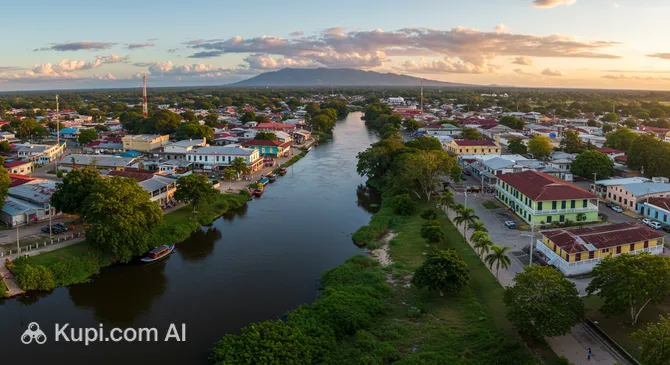
Despite its reputation as an industrial and agricultural center, Orange Walk knows how to charm its guests with green oases and a deep respect for the past. The cultural landscape of the city and its surroundings is a harmonious intertwining of colonial history, Mayan heritage, and the picturesque nature of Northern Belize. There are no huge world-class museum complexes here, but there are cozy and informative places that will help you better understand the soul of this region.
The heart of the city's social life is Central Park. It is not just a green area, but the main point of attraction for locals and tourists. The park is a well-kept square with shady trees, benches, and paved paths where you can hide from the midday heat. This is where the real rhythm of the city is felt: in the evenings, families go for walks, young people socialize, and street vendors offer fresh snacks. City events and concerts are often held in the center of the park, creating a festive atmosphere.
For those seeking connection with nature, the banks of the New River are a real find. Although it is not a formal park in the classic sense, the riverfront zone serves as a natural place for relaxation. A walk along the river allows you to enjoy the silence and observe local fauna right within the city limits. The green thickets by the water provide a pleasant coolness, and the views of the slowly flowing river are calming and set a contemplative mood.
The main keeper of the region's history is the Banquitas House of Culture. This museum and cultural center is a must-visit for anyone who wants to learn more about the formation of Orange Walk. The museum's exhibit covers several key eras: from the ancient Mayan civilization to the colonial period of logwood harvesting and the modern era of sugarcane. Of particular interest is the open-air amphitheater and the museum garden, where exhibitions by local artists and craftsmen are often held, showcasing the living culture of modern Belize.
Another important cultural and historical point is the Museum at the Lamanai Archaeological Complex. Although it is located outside the city itself, it is inextricably linked to the cultural space of Orange Walk. This small but informative museum contains unique artifacts found during excavations: ceramics, flint tools, and jewelry. Visiting the museum before exploring the ruins themselves provides necessary context and allows for a deeper appreciation of the ancient city's greatness.
Among the architectural monuments, La Inmaculada Church holds a special place. This building, located in the city center, is a witness to Spanish colonial influence. The strict but elegant architecture of the church stands out against the city's skyline, and inside, an atmosphere of peace prevails. For tourists, it is an opportunity to touch the city's spiritual history and see how religious traditions have intertwined with the local way of life.
The remains of Fort Mundy and Fort Cairns serve as historical echoes of the past. Although little remains of the fortifications themselves today, these sites are important for understanding the city's history, especially the events of the 19th century. Memorial plaques and locations help one imagine what the city looked like during the times of border formation and struggles for territory.
Insider tip: After visiting the Banquitas House of Culture, don't rush to leave. Go down to the river right behind the museum building—there is a small, hidden waterfront there. This is perhaps the best place in the city to quietly watch the sunset, observing the sun sink behind the jungle, reflecting in the waters of the New River.