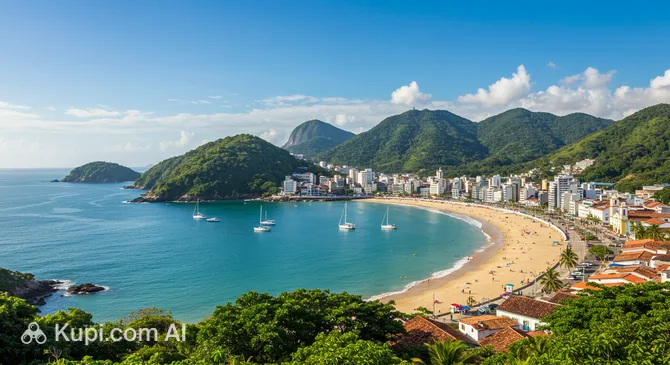
São Sebastião is a charming coastal town situated on the picturesque northern coast of the state of São Paulo in Brazil. The city is nestled between the majestic Atlantic Ocean and emerald hills, creating a unique landscape: endless beaches on one side and dense tropical forests and mountain scenery on the other. With a population of 90,328 people, the town maintains a cozy atmosphere while offering a well-developed tourism infrastructure.
São Sebastião. Illustration.
Source: Kupi.com AI
São Sebastião is rightfully considered one of the most attractive resorts in the state of São Paulo. Everyone will find something to their liking here: from a peaceful getaway in secluded corners to active pastimes on lively beaches with numerous cafes, bars, and a vibrant nightlife. The city also serves as an excellent starting point for exploring the northern coast and the neighboring picturesque island of Ilhabela.
The main treasure of São Sebastião is its magnificent beaches — there are more than forty of them, catering to every taste. Surfing enthusiasts will appreciate the beaches with high waves, while those seeking solitude will find quiet coves with crystal-clear water. Furthermore, the city attracts tourists with picturesque waterfalls, fascinating hiking trails through tropical greenery, and its historical center with colonial architecture and ancient churches that create a unique atmosphere.
If you dream of an unforgettable vacation filled with incredible nature, authentic Brazilian culture, and vibrant gastronomic experiences, São Sebastião is exactly the place where you can forget the city bustle and feel part of a true tropical paradise. Come and discover this amazing corner of Brazil!
The weather in São Sebastião features a warm climate throughout the year. The summer months, roughly from December to March, are characterized as the hottest and most humid: average air temperatures hover around 25°C (with maximums reaching 27°C), and the number of rainy days is quite high, with precipitation around 7-10 mm per month. Winter, occurring from June to August, brings cooler and drier weather. During this time, the average temperature is about 20°C (with minimums potentially dropping to 17°C), and precipitation occurs much less frequently, totaling only 2-4 mm per month.
Thus, in São Sebastião, you can expect a warm, humid summer with frequent but often brief rains, and a milder, drier winter. To learn more about the climatic features and get a detailed forecast, you can visit the weather in São Sebastião page.
Average monthly temperature
Average monthly precipitation
Interesting Facts
Beyond its well-known beaches and natural beauty, São Sebastião, one of the oldest cities on the coast of the state of São Paulo, holds many fascinating stories and less obvious details. Here are a few interesting facts that will allow you to get to know this charming Brazilian city more deeply:
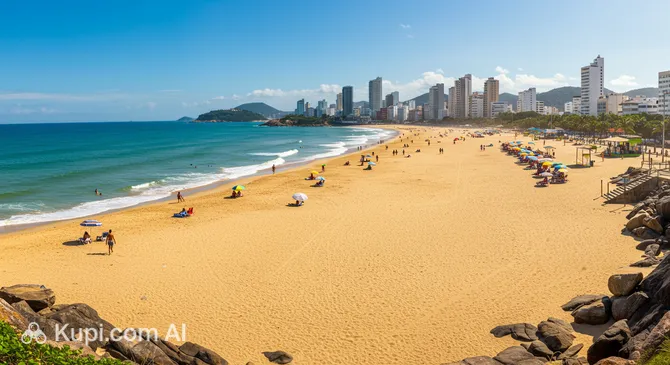
Workers' Beach – Praia Grande. Illustration.
Source: Kupi.com AI
Traveler photos:
Historical Heritage: São Sebastião was founded back in the 16th century, making it one of the oldest settlements in the region. Its historical center still preserves the atmosphere of colonial Brazil with narrow cobblestone streets, ancient churches, and buildings with characteristic facades, immersing visitors in the past.
Capital of Surfing and Idyllic Beaches: The city is rightfully proud of its beaches. Praia de Maresias is known nationwide as a surfing hub, hosting major competitions and training future champions. Other coastal gems, such as Praia de Juquehy and Camburi, attract visitors with their white sand and crystal-clear water.
Treasures in the Jungle: In the surroundings of São Sebastião, amid the lush greenery of the Atlantic Forest, many picturesque waterfalls are hidden. Fascinating trails lead to natural wonders such as Cachoeiras do Ribeirão de Itu and Cachoeira da Pedra Lisa, making them ideal spots for ecotourism and adventure lovers.
Vibrant Maritime Traditions: The city carefully preserves its maritime traditions, which are especially evident during the annual festivities in honor of Saint Sebastian, the city's patron saint. During festival days, the streets come alive with music, folk dances, and the aromas of traditional local treats, creating a unique festive atmosphere.
How to Get There
There are various ways to reach the picturesque coast of São Sebastião, but most often tourists choose to fly to one of the major cities in the state of São Paulo and then continue by bus or rental car. You can find more details about routes and schedules on the how to get to São Sebastião page.
There is no airport in the city of São Sebastião itself, so the main hub for travelers is São Paulo/Guarulhos International Airport (IATA: GRU). It is located in the city of São Paulo, approximately 117 km from São Sebastião. This is the country's largest airport, receiving flights from all over the world. The journey from here to the coast by taxi or transfer will take about 3 hours and 15 minutes, depending on traffic.
Another popular option is Congonhas Airport (IATA: CGH), also located in the city of São Paulo, about 129 km away. It primarily serves domestic flights. The journey from this air hub to the resort will take approximately 3 hours and 30 minutes. For those looking for the closest option, consider São José dos Campos Airport (IATA: SJK) in the city of the same name. It is located just 79 km from São Sebastião, and the trip from there will take about 2 hours and 20 minutes, though the number of flights there is significantly smaller.
For convenience, here is a summary of the main airports:
Passenger rail service in this region of Brazil is virtually non-existent, so getting to São Sebastião by train is not possible. There are no nearby railway stations, or they are used exclusively for freight. Tourists are advised to rely on the extensive intercity bus network or car transport.
A car trip is the most scenic way to get to the city. The main routes run along the Rodovia dos Tamoios and the picturesque Rio-Santos coastal highway (BR-101), which offers magnificent views of the Atlantic Ocean and forested hills.
Main Attractions
São Sebastião, a charming town on the coast of Brazil, offers its visitors several beautiful places to relax and enjoy nature. Among them are several beaches that are particularly popular with both tourists and locals.
One of these iconic locations is Trabalhadores Beach – Praia Grande. This vast beach attracts visitors with its wide sandy strip and well-developed infrastructure. It is perfect for family vacations, water sports, or simply a relaxed day under the Brazilian sun. The name "Praia Grande" translates to "Big Beach," and it truly lives up to its name by offering plenty of space for everyone.
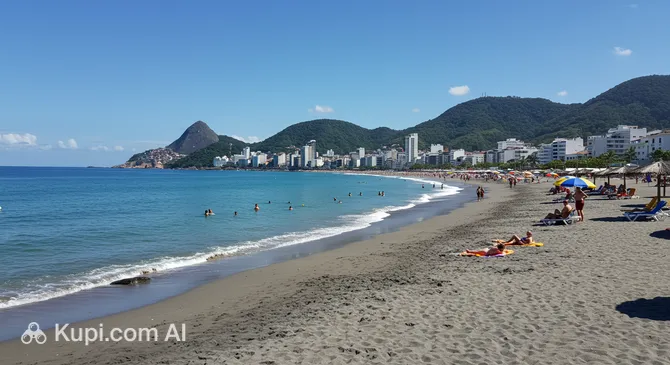
Another gem of São Sebastião is Praia Preta do Centro. This beach is famous for its unusual dark, almost black sand, which is reflected in its name ("Black Beach of the Center"). It offers a more secluded and tranquil atmosphere compared to the livelier beaches. The picturesque scenery and unique color of the sand make it a wonderful spot for walks and photo sessions.
Praia Preta do Centro. Illustration.
Source: Kupi.com AI
Traveler photos:
Local Cuisine
The gastronomy of São Sebastião is a true culinary journey through the traditions of the Brazilian coast, where the freshest seafood takes center stage. The local cuisine is famous for fish and seafood dishes, such as fried sea bass, squid, shrimp, and crabs, which are masterfully prepared here with aromatic local spices and served with succulent vegetables and exotic sauces.
Among the dishes that you must try in São Sebastião, two culinary masterpieces stand out. The first is moqueca, an aromatic and rich fish stew made with coconut milk, palm oil, and various spices. This dish is a true hallmark of the region. The second is camarão na moranga, which consists of shrimp baked inside a whole pumpkin; it is not only incredibly tasty but also very impressive when served. Of course, one cannot overlook simpler but equally delicious dishes made from fresh grilled seafood.
The dining culture in São Sebastião is very casual and diverse. Locals and tourists alike enjoy visiting local markets, where you can find an abundance of exotic fruits, fresh vegetables, spices, and homemade cheeses. On the city streets, many stalls offer popular snacks, most notably pastel — crispy fried pastries with a wide variety of fillings (from meat to cheese and sweet options) — and the famous refreshing treat açaí na tigela — a thick paste made from açaí berries, served with granola and fruit, which is perfect for a hot day. Naturally, the city has many restaurants and cafes where you can enjoy both traditional dishes and modern culinary delights.
As for drinks, refreshing options based on numerous tropical fruits prevail in São Sebastião — these include all kinds of juices, smoothies, and cocktails. A sugarcane drink known as "caldo de cana" is also very popular. Those with a sweet tooth will also appreciate desserts made with coconut and local fruits. Regarding alcoholic beverages, you should try the local homemade liqueurs, often infused with exotic fruits, and, of course, the caipirinha — Brazil's national cocktail.
The gastronomic scene in São Sebastião truly comes alive during various food festivals. During these periods, visitors have a unique opportunity not only to try rare dishes made from freshly caught fish and seafood but also to attend culinary masterclasses, diving deeper into the secrets and traditions of local cuisine. It is a true celebration of taste that attracts gourmets and lovers of authentic Brazilian culinary traditions to São Sebastião.
Travel Tips
Planning a trip to sunny São Sebastião? To ensure your journey through this charming corner of Brazil goes smoothly and leaves only the most pleasant impressions, we have prepared some practical tips for you.
Wardrobe for the Tropics: São Sebastião will greet you with a warm and humid climate, especially if you visit during the summer months. Pack light clothing made from breathable fabrics (cotton, linen), shorts, T-shirts, sundresses, and, of course, several swimsuits. A hat, sunglasses, and high-SPF sunscreen are essential. Comfortable closed shoes are useful for city walks and hiking nature trails, while sandals or flip-flops are perfect for the beach. A light sweater or windbreaker might be needed for evening walks or in case of rain. Keep in mind that when visiting churches and other religious sites, you should choose more modest clothing that covers your shoulders and knees. Electrical outlets in Brazil are predominantly type N, so you might need an adapter.
Transport Nuances: Within São Sebastião itself and between the nearest beaches, you can get around on local buses — this is the most budget-friendly option. Taxis and popular ride-hailing apps are also available and offer greater comfort. If you plan to actively explore the many beaches and picturesque surroundings of the São Paulo region, renting a car might be a good idea, providing maximum freedom of movement. Note that roads can be congested during peak season.
Financial Matters: The national currency is the Brazilian Real (BRL). You can exchange currency at banks or exchange bureaus (casas de câmbio). Credit and debit cards (Visa, Mastercard) are widely accepted in most hotels, restaurants, and shops. ATMs (caixas eletrônicos) are also common. In restaurants, a 10% service charge (taxa de serviço) is often already included in the bill — in this case, additional tipping is not mandatory but always appreciated for exceptionally good service. A daily budget can vary, but aim for 50-100 USD per person excluding accommodation for a comfortable stay.
Health and Safety: Pharmacies (farmácias) are easy to find, and many operate 24/7 or have an on-call schedule. It is recommended to get travel medical insurance before your trip. São Sebastião is considered a relatively safe tourist destination; however, standard precautions should be followed: do not leave valuables unattended on the beach, avoid walking in deserted places after dark, and do not display expensive jewelry or large amounts of cash.
Communication and Language: The official language is Portuguese. In tourist areas, hotels, and some restaurants, staff may speak English, but knowing a few basic Portuguese phrases (e.g., "Olá" – hello, "Obrigado/Obrigada" – thank you (m/f), "Por favor" – please, "Quanto custa?" – how much is it?) will significantly ease communication and be warmly received by locals. A local SIM card (chip) for mobile internet can be purchased at mobile phone stores. Wi-Fi is available in most hotels, cafes, and restaurants.
Local Etiquette: Brazilians are known for their friendliness, hospitality, and informal communication style. Greetings usually include a smile, eye contact, and a verbal "Oi!" (Hi!) or "Tudo bem?" (Is everything good?). Handshakes are appropriate when being introduced. Punctuality is not always a strong point, so slight delays for informal meetings are often considered normal. Overall, a positive attitude and openness are valued.
What to Avoid: Try not to discuss sensitive topics such as politics or social inequality unless you know your interlocutor well. Also, avoid excessive displays of wealth to prevent attracting unwanted attention. On beaches, while the atmosphere is relaxed, topless sunbathing is not a common practice and may be viewed ambiguously outside of the very few specifically designated areas (which likely do not exist in São Sebastião).
Beach Kaleidoscope:São Sebastião is primarily about its magnificent beaches, each with its own character: from lively Maresias, popular with surfers, to the calmer and more family-oriented Juquehy or Camburi. Be sure to set aside time to explore several of them to find your perfect spot. Also, look into boat trips to the islands — it's a great way to see the coast from a different perspective.
We hope these tips help you better prepare for your trip and fully enjoy every moment of your vacation in beautiful São Sebastião. We wish you an unforgettable experience on the sunny coast of Brazil!
Entertainment & Nightlife
Known for its magnificent beaches and natural beauty, São Sebastião offers guests a variety of options for evening and night leisure after the sun goes down. While the city doesn't claim the scale of nightlife found in major metropolises, it boasts a cozy and relaxed atmosphere, perfect for those seeking a pleasant end to a day by the sea in Brazil.
Most evening activity is concentrated along the waterfront, especially around Rua da Praia (Beach Street) in the historical center and other central parts of the town. Numerous bars, restaurants, and cafes are located here. While specific names of popular clubs are not provided, typical nightlife in São Sebastião includes beach kiosks (barracas), many of which stay open late, offering drinks and music right on the sand, as well as small local bars often featuring live music — ranging from traditional Brazilian rhythms like samba or MPB (Música Popular Brasileira) to modern hits. It is in these establishments that you can fully experience the local flavor and try the famous caipirinha. Information on large, regular night markets in São Sebastião is limited, but in busy tourist zones, especially during the high season, you can find street vendors selling souvenirs or local snacks in the evening.
The atmosphere in most São Sebastião establishments is casual. The dress code is generally relaxed and suits a resort style — shorts and T-shirts are perfectly acceptable even in the evening. Nightlife here usually starts a bit later by some standards: bars come to life closer to 10:00–11:00 PM, and if there are dance floors in town, they fill up after midnight. Most places stay open until 2:00–3:00 AM, and some until the last customer, especially during the peak tourist season.
Prices in the bars and establishments of São Sebastião are generally considered moderate, especially compared to major tourist hubs in Brazil. Public transport at night is irregular, so it is recommended to use taxis or popular ride-sharing apps to get around after dark. It is advisable to use official taxis or trusted services. Regarding safety, central and tourist areas like Rua da Praia are considered relatively safe for night walks. Nevertheless, you should always follow standard precautions: keep an eye on your personal belongings and avoid poorly lit or deserted streets.
During the day, São Sebastião offers many options for active and cultural recreation. Guests can enjoy magnificent beaches such as Trabalhadores Beach – Praia Grande or explore picturesque natural spots like Praia Preta do Centro. The town also offers great opportunities for water sports like surfing and diving. Although São Sebastião is not famous for a large number of major museums or theaters, you can find interesting local art galleries and attend cultural events or festivals that are periodically held in the city.
Workers' Beach – Praia Grande. Illustration.
Source: Kupi.com AI
Traveler photos:
Praia Preta do Centro. Illustration.
Source: Kupi.com AI
Traveler photos:
Parks & Museums
São Sebastião invites its guests to enjoy not only its magnificent beaches but also to get acquainted with its cultural heritage. While the town is better known for its natural beauty, there are interesting spots here that reflect its history and atmosphere.
The main green and recreational areas of São Sebastião are undoubtedly its beaches. Among them, Trabalhadores Beach – Praia Grande stands out, attracting visitors with its length and well-developed infrastructure, ideal for family vacations and water sports. Another notable spot is Praia Preta do Centro, known for its dark sand and more secluded atmosphere, making it attractive for those seeking peace and beautiful landscapes.
As for museums and galleries, São Sebastião, being a resort town, may not possess the same variety of large museum complexes as major metropolises. However, this doesn't mean there are no opportunities for cultural enrichment. We recommend paying attention to small local exhibitions that may be held in cultural centers or even historical buildings. Often, it is these displays that allow for a deeper understanding of the local flavor and traditions.
The town's historical heritage can be felt while strolling through its old streets. Look for colonial architecture, surviving churches, and buildings that tell the story of this coastal settlement's past. The Matriz Church (Igreja Matriz de São Sebastião), located in the center, is often the starting point for learning about the town's history.
For an authentic experience, we suggest veering off the beaten path. Visit local markets where you can find fresh produce and handmade items. Don't miss the opportunity to try local cuisine in small family-run restaurants, especially those specializing in seafood — this is the true taste of São Sebastião.
Getting Around
Planning a trip to São Sebastião and wondering about the best way to get around the city? Public transport here consists mainly of buses, which are an affordable and quite convenient way to explore various neighborhoods.
The backbone of the transport system in São Sebastião is the city buses. The route network usually covers key areas of the town, connecting the center with residential quarters, beaches, and main points of interest. Buses run according to a schedule that may vary depending on the day of the week and time of day. During peak hours, the intervals between buses are generally shorter.
The fare payment system in São Sebastião is likely quite simple. Most often, you can pay the fare in cash directly to the driver when boarding the bus. It is recommended to have small change for convenience. In some Brazilian cities, there are rechargeable transport cards (like "bilhete único" or similar), which may offer small savings or greater convenience for frequent trips. It is worth checking upon arrival or at a tourist information center if such a system exists in São Sebastião and where you can purchase and top up such a card. Fares are usually low, making buses an attractive option for the budget traveler.
Tourists should keep a few practical points in mind. Information on routes and bus schedules can usually be found at stops (though it's not always detailed or up-to-date), and sometimes on the websites of local transport companies or in mobile apps, if available. Buses typically operate from early morning until late evening, but the frequency of trips may decrease in the evening hours and on weekends. Tickets generally do not need to be validated, as payment occurs upon entry.
Besides buses, other ways of getting around are available in São Sebastião. Taxis are a common option, especially for night trips or when traveling with luggage. You can hail a car on the street, find one at designated stands, or order by phone. It's also worth checking for popular ride-hailing mobile apps (such as Uber or 99), which are widely used in many Brazilian cities. For those who enjoy active recreation and short trips, bicycle rentals might be interesting, especially if the city infrastructure and terrain allow for it.
Given its size, there are likely no unique or historical types of transport such as subways or trams in São Sebastião. However, a well-developed bus network and the availability of alternative options like taxis allow tourists to explore the town and its surroundings quite comfortably.
Accommodation
When planning a trip to São Sebastião, you will find a wide range of accommodation options to suit different tastes and budgets. The city offers everything from cozy and often more affordable pousadas (traditional Brazilian guesthouses) and hostels to comfortable mid-range hotels and apartments or holiday homes, which are especially convenient for families or large groups.
When choosing a place to stay, many tourists prefer areas in close proximity to famous beaches, such as Trabalhadores Beach – Praia Grande, or the central part of the city (Centro), which provides easy access to major points of interest, restaurants, and shops. Places near other picturesque beaches, such as Praia Preta do Centro, are also popular, offering a peaceful retreat.
Although the provided list of attractions does not include specific hotels, São Sebastião has many hotels for every taste — from small family-run establishments to larger complexes with a variety of services. The choice is truly extensive, and you will be able to find something that meets your expectations for comfort and service.
The price range for accommodation in São Sebastião varies: you can find budget options as well as mid-range and high-end hotels and apartments. Booking your stay is convenient through popular international online platforms, directly on hotel websites, or by using the services of local travel agencies.
To ensure the best selection and the most favorable prices, especially if your trip falls during the peak tourist season (usually the summer months, as well as periods of national holidays and carnivals), it is highly recommended to book your accommodation in advance. This will help you avoid unnecessary hassle and enjoy your vacation to the fullest.
Nearby Cities
For those who want to explore the surroundings, São Sebastião serves as an excellent starting point for day trips to several interesting nearby locations:
These nearby destinations offer various opportunities for short trips, allowing you to get better acquainted with the culture, nature, and urban landscapes of the region around São Sebastião. Each trip will enrich your understanding of Brazil and provide new experiences.
Shopping & Souvenirs
São Sebastião, as a charming coastal town in Brazil, offers its guests pleasant and quite relaxed shopping, primarily focused on beachwear, local products, and souvenirs. You are unlikely to find giant malls with the latest collections from global brands here, but you can enjoy searching for authentic items, high-quality beach clothes, and unique works by local artisans. The town's laid-back atmosphere is reflected in its retail outlets, making the shopping process part of the resort mood.
The main shopping areas in São Sebastião are concentrated in the central part of the city (Centro) and along the busy waterfronts, especially in the immediate vicinity of popular beaches. Strolling along the main streets, you will find many small shops, cozy boutiques, and souvenir stalls. The assortment here is diverse: from bright swimsuits, sarongs (cangas), and sunglasses to original handmade jewelry and home decor items that carry the warmth of the Brazilian sun.
In São Sebastião, you won't find large shopping centers in the conventional sense like in major cities. Shopping here is more local and intimate. Nevertheless, in the city center, you may come across several small shopping galleries or complexes that bring various stores under one roof. If your goal is large-scale shopping with a wide selection of famous brands, it might be worth considering a trip to larger cities in the state of São Paulo.
While there may not be one large central market in São Sebastião, city life is often enlivened by handicraft fairs (feiras de artesanato). These fairs are particularly common during the high tourist season or on weekends. They are a wonderful opportunity to purchase unique handmade goods, original souvenirs, and try local delicacies directly from the producers. It is also worth checking out the small local food markets, where you can always find the freshest fruits, vegetables, and seafood — a great chance to experience the authentic flavors of the region.
From São Sebastião, it is worth bringing back souvenirs that reflect Brazilian flair and beach culture. Beachwear and accessories are popular, such as colorful sarongs (known as "cangas"), high-quality swimsuits, straw hats, and spacious beach bags. Pay attention to handmade crafts: local ceramics, woodwork, and original jewelry made from natural materials can become unique reminders of your trip. Of course, you can't go without a traditional Brazilian hammock — a symbol of relaxed leisure. Aromatic Brazilian coffee or a bottle of local cachaça make excellent gastronomic souvenirs. Souvenir shops also offer items with images of local beauties, perhaps inspired by such picturesque places as Trabalhadores Beach – Praia Grande.
Workers' Beach – Praia Grande. Illustration.
Source: Kupi.com AI
Traveler photos:
Most shops in São Sebastião operate from Monday to Saturday, generally from 9:00 or 10:00 AM to 6:00 or 7:00 PM. Some small private shops may close for a lunch break (siesta), especially during the less busy tourist season. On Sundays, many retail outlets may be closed, except for those located in the most popular tourist zones and along the waterfronts. Cash in Brazilian Reals (BRL) is accepted everywhere. Bank cards, especially Visa and MasterCard, are also widely used in most shops, cafes, and restaurants. There are enough ATMs (caixas eletrônicos) in the city where you can withdraw cash.
The Tax Free system for tourists in Brazil is not as widespread or automated as in some European countries, especially regarding everyday goods and souvenirs. Generally, this option does not apply to most purchases made by tourists in São Sebastião. If you plan to make very large and expensive purchases in specialized stores, it makes sense to check the possibility of a tax refund directly with the seller, but overall, for regular shopping, tourists should not actively count on this.