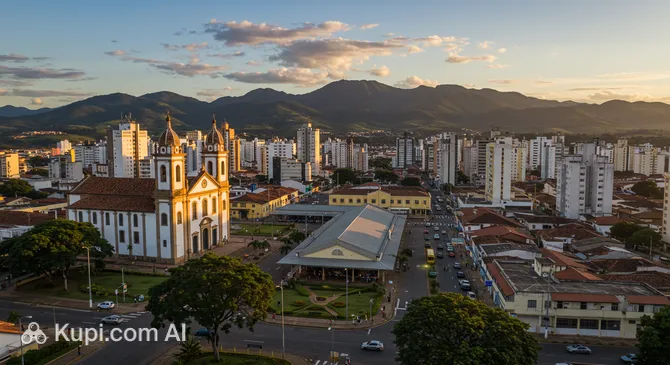
Suzano is a dynamically developing city in Brazil, located in the state of São Paulo. As part of the extensive metropolitan area, it harmoniously combines the features of an industrial center and a cozy residential suburb. The city attracts visitors with its practicality and a special atmosphere of hard work that has shaped its identity over the decades.
Geographically, Suzano is situated in the Mogi das Cruzes microregion at an altitude of over 700 meters above sea level. Its history is inextricably linked to the development of railways and the powerful industrial surge of the mid-20th century. Today, it is home to about 285,000 people, and the city itself is known worldwide as one of the largest centers of the pulp and paper industry, thanks to the global company Suzano Papel e Celulose.
Suzano. Illustration.
Source: Kupi.com AI
Despite its predominantly industrial character, the city offers interesting spots for tourists, such as central squares with graffiti and modern shopping complexes. It is an ideal destination for those who want to see the "real" working Brazil, hidden from the eyes of typical resort-goers. We invite you to discover Suzano—a functional and welcoming hub of Greater São Paulo.
Weather Overview
The climate in Suzano is classified as subtropical, which is typical for the highland areas of the state of São Paulo. Travelers should be prepared for warm and humid summers, as well as rather cool and dry winters. Expect warm summers with occasional tropical downpours and sunny but crisp winter days.
In the summer months, from December to March, the average temperature ranges between 20–30°C. This is the period with the highest rainfall: heavy but short-lived rains often occur, especially in the afternoon. In winter, from June to August, temperatures can drop to 10–12°C at night, rising to a comfortable 20°C during the day. Before your trip, we recommend checking the current city's climate to choose your wardrobe correctly.
It is also worth considering the features of the local terrain and the city's industrial status. Due to dense construction and operating factories, a light haze can accumulate over the city on windless days, and air humidity remains high throughout the year. Nevertheless, the abundance of greenery in the surrounding areas helps maintain a pleasant atmosphere for walks.
Average monthly temperature
Average monthly precipitation
Interesting Facts
Suzano is home to one of the five largest pulp producers in the world—Suzano Papel e Celulose, which grew from a small local factory.
The city was officially founded in the 1940s, and its development was a direct result of the expansion of the railway network in the state of São Paulo.
Despite its industrial status, the population density here is quite high—more than 1,300 people per square kilometer, which is typical for the densely built-up Greater São Paulo metropolitan area.
The important Line 11 (Coral) railway passes through the city, connecting the industrial outskirts with the historic center of the São Paulo megacity.
How to Get There
Suzano boasts excellent accessibility thanks to its location within one of the world's largest metropolitan areas. The city is closely linked to the region's main transport hubs, making traveling to Suzano fairly simple and straightforward for tourists.
The nearest major air hub is Guarulhos International Airport (GRU), located approximately 50-60 kilometers away. A trip by car or taxi will take between one and one and a half hours; however, during peak hours, heavy traffic can increase travel time to three hours. You can also reach the city from São Paulo by intercity buses operated by EMSA or via the commuter train system.
The railway connection is the most reliable way to get around. Suzano station is served by Line 11 (Coral) of the CPTM system. Trains depart from major São Paulo stations such as Luz or Brás. The travel time from the city center is about 40-60 minutes, allowing you to avoid congestion on highways like Rodovia Índio Tibiriçá.
Station
Passenger traffic
Distance
Corinthians-Itaquera
8
17 km
Ribeirao Pires
5
22 km
Tatuapé
6
27 km
Tamanduateí
5
29 km
Brás
7
31 km
Main Attractions
Although Suzano is not a typical tourist destination, it has places that reflect the daily life and spirit of the region. A central meeting point for residents is Praça São Pedro, a cozy square where you can feel the local rhythm and relax in the shade of trees. It is an excellent starting point for a stroll through the city center.
For fans of modern urban art, the streets featuring vibrant graffiti are of particular interest, as they liven up the city's industrial landscapes. These murals often reflect social themes and cultural characteristics of the state of São Paulo. Walking through these neighborhoods allows you to view the city as an open-air art gallery.
An important infrastructure site is Suzano Shopping. It is more than just a place to shop; it is a full-fledged entertainment hub with cinemas and relaxation areas where locals love to spend time. For tourists, it is a convenient spot to get acquainted with modern Brazilian consumer culture and grab a bite to eat at one of the many cafes.
The city's industrial zones, home to giant pulp mills, form the unique "skyline" of Suzano. Although tours of the facilities themselves are rare, the scale of these production complexes is impressive and provides a clear idea of the city's economic importance to all of Brazil.
Local Cuisine
The gastronomic scene in Suzano is a vibrant reflection of the culinary traditions of the state of São Paulo and Brazil as a whole. The local diet is based on hearty and aromatic dishes, with feijoada—a thick stew of black beans and various types of meat—reigning supreme. By tradition, it is most often served on Wednesdays and Saturdays.
For a quick snack, locals choose street food at municipal fairs and luncherias. Be sure to try pão de queijo (tender cheese bread), pastel (crispy fried pies with various fillings), and coxinha (savory drop-shaped chicken croquettes). For dessert, brigadeiro chocolate truffles or a refreshing açaí berry smoothie are perfect choices.
The influence of migration is also noticeable in the city: you can find excellent pizzerias and Japanese restaurants offering high-quality sushi and sashimi. Most establishments are concentrated in Suzano Shopping and on the main streets of the central district. As for drinks, no day is complete without a cup of strong coffee or a refreshing caipirinha—the national cocktail made with cachaça, lime, and sugar.
Travel Tips
Planning a visit to Suzano? These practical tips will help make your trip comfortable, safe, and truly interesting.
Clothing and Essentials: Bring light clothing made of natural fabrics for the summer period (December–March), but don't forget sturdy umbrellas or raincoats. For the winter months (June–August), pack layers as evenings can be cool. Comfortable shoes for walking are a must.
Transport: Use CPTM trains to connect with São Paulo, but avoid rush hours. Within the city, Uber is the most convenient option—it's inexpensive and saves you from searching for bus stops.
Finances: The local currency is the Brazilian Real. Cards are accepted almost everywhere, even in small cafes, but it's worth having some cash for markets. Tipping culture is moderate: a 10% service charge is usually already included in the bill at restaurants.
Health and Safety: Suzano is a relatively quiet suburb, but exercise caution: do not wear expensive jewelry openly. Vaccination against yellow fever is recommended, and use insect repellent.
Communication: The main language is Portuguese. English is not widely spoken, so learn basic phrases or use offline translators. A SIM card is easy to buy at the shopping mall.
Local Etiquette: Brazilians are very friendly and sociable. Greetings are often accompanied by a light hug or a handshake.
What to Avoid: Do not visit remote outskirts (favelas) alone, especially after dark. Do not display large sums of money in public places.
Extra Tip: If you are visiting for business, plan your meetings considering metropolitan traffic jams—allow an extra hour for travel to São Paulo.
Following these simple rules will allow you to enjoy the hospitality of the state of São Paulo and discover Suzano from its best side. Have a great trip!
Entertainment & Nightlife
Nightlife in Suzano is quiet and primarily family-oriented, as the city serves as a "bedroom" suburb. Main evening entertainment is centered around central bars and small karaoke clubs where locals gather after the workday. The atmosphere is friendly and relaxed, with no strict dress code.
For those looking for wild parties and large-scale nightclubs, experienced travelers recommend heading to the neighboring metropolis of São Paulo, which is about an hour away. There, in districts like Vila Madalena or Moema, life buzzes until dawn. In Suzano itself, Suzano Shopping remains a popular spot for evening leisure, offering modern movie theaters and food courts.
Safety at night requires standard precautions: it is best to avoid walking in poorly lit outskirts and to use official taxis or ride-hailing apps. Daytime entertainment includes visiting local parks, participating in street festivals, and watching local football matches, which always evoke strong emotions from fans.
Parks & Museums
Despite the high building density, Suzano offers residents and guests several green islands for relaxation. The main spot for outdoor walks is Parque Municipal Max Feffer. This municipal park features well-maintained paths for running and walking, sports courts, and picnic areas, making it a popular place for family leisure on weekends.
In the city itself, you can also find small squares, such as the one near the railway station, which serve as transit rest areas. However, keep in mind that due to its industrial nature, the level of greenery in Suzano is lower than in resort areas. For a deeper immersion in nature, locals often travel to neighboring municipalities like Itapevi, where park zones are more extensive.
The city's cultural and museum scene is still in the development stage. The main focus in Suzano is on industrial heritage and modern infrastructure, so for classical museums and art galleries, travelers usually head to São Paulo. Nevertheless, the city's uniqueness is manifested in its architecture and the design of public spaces, which tell the story of the region's industrial legacy.
Getting Around
The transport system in Suzano is designed for the daily commute of thousands of people to the São Paulo metropolis. The key element here is the CPTM commuter trains (Line 11 - Coral). This is the fastest and most reliable way to connect with the state center; however, tourists should remember that during peak hours (from 7 to 9 AM and from 5 to 7 PM), trains can be very crowded, so it is better to plan trips for off-peak times.
An extensive network of buses serves the city and the entire metropolitan area, operated by companies like EMTU and EMSA. Fares are usually paid with transport cards or in cash to the driver/conductor. It is worth noting that due to traffic jams on main highways, such as Avenida Paulo Franco, buses may experience delays, so it is better to allow extra time for short-distance travel.
As a convenient alternative to public transport, taxi services and Uber are popular in Suzano. A car can be called to almost any point in the city, and the cost of the trip is quite affordable. Cycling infrastructure is poorly developed due to the terrain and heavy traffic, so for moving around the city, tourists are recommended to use a combination of trains and taxis.
Accommodation
Accommodation options in Suzano are primarily geared toward business travelers and specialists visiting industrial sites. In the city center, you can find several 2-3 star hotels offering basic comfort and breakfast. Prices for accommodation here are usually lower than in central São Paulo, starting at approximately 150 Brazilian Reais per night.
For tourists planning a longer stay, a popular option is renting apartments through services like Airbnb. This allows you to get a better feel for local life and save on food costs. The most convenient areas to search for housing are in close proximity to Suzano Shopping or the train station, providing easy access to shops and transport.
If you are looking for luxury boutique hotels or premium chain hotels, it is worth considering options in São Paulo itself or neighboring Mogi das Cruzes. In any case, it is recommended to book your accommodation in advance, especially if your trip coincides with major holidays or industrial exhibitions in the region.
Nearby Cities
Suzano serves as an excellent starting point for exploring the surroundings of Greater São Paulo, offering convenient access to neighboring cities with different characters. Just 13 kilometers away is Mogi das Cruzes—a larger neighbor known for its picturesque parks and developed tourist infrastructure. It is a wonderful place for those who want to swap the industrial landscape for green zones and cultural sites.
For short introductory trips, cities like Ferraz de Vasconcelos and Itaquaquecetuba, located within 10 kilometers, are suitable. If you have a free day, you can head to Mauá, which takes very little time by train or car. For high-end leisure and world-class entertainment, São Paulo is always available, just 30-40 kilometers away.
Exploring neighboring municipalities will allow you to see the full diversity of this region—from industrial giants to quiet green suburbs. Good rail and bus connections make such day trips easy and untiring.
Shopping & Souvenirs
Shopping in Suzano is primarily about practicality and accessibility. The city's main retail magnet is Suzano Shopping, where popular Brazilian and international brands of clothing, shoes, and accessories are gathered under one roof. It also houses a large food court and a supermarket, making it a convenient one-stop shopping destination.
Those who prefer a more authentic experience should visit the municipal fairs and markets in the central part of the city. There you can buy fresh tropical fruits, local sweets, and inexpensive clothing. There are few specific local crafts in Suzano, but as souvenirs from Brazil, tourists often bring back excellent coffee beans, the famous Havaianas flip-flops, or traditional cachaça.
Shops in the city center are typically open from 9:00 AM to 6:00 PM on weekdays and until noon on Saturdays, while shopping centers are open until 10:00 PM daily. Bank cards from major payment systems are widely accepted, but it's better to carry some cash in Reais for purchases at small markets. If you need a major wardrobe update or exclusive goods, you can always travel to the giant malls of São Paulo, such as Shopping Eldorado.