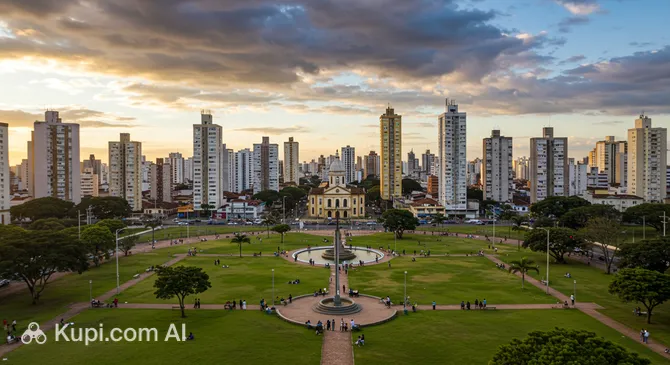
Santo André is a dynamic industrial and residential hub located in the heart of the state of São Paulo, in sunny Brazil. The city is a key part of the famous ABC Paulista region and belongs to the vast Greater São Paulo metropolitan area. Despite its industrial character, Santo André possesses a special urban atmosphere where modern business life intertwines with cozy residential neighborhoods.
Geographically, the city stretches nearly 50 kilometers across a picturesque plateau. With a population of about 721,000, it is a bustling "beehive" where life never stops for a moment. In the history of Santo André, the industrial boom of the late 19th century and the development of railways played a vital role, transforming a small settlement into one of the region's most important economic hubs.
Santo Andre. Illustration.
Source: Kupi.com AI
For travelers, the city is primarily interesting for its contrasts. Here, you can visit a high-tech science center or head to the historic village of Paranapiacaba, which preserves the spirit of Victorian England. Santo André is an excellent choice for those who want to see the real, industrious, and energetic Brazil hidden behind the glossy tourist facades of the megacities.
Weather Overview
The city of Santo André is characterized by a humid subtropical climate, typical of the highland areas of São Paulo state. If you are planning a visit, it's worth noting that the city's climate features distinct rainfall seasonality. Summers here are hot and humid, while winters bring a pleasant chill and drier air.
In the summer months, especially in January and February, average daytime temperatures are around 26–27°C, though heavy tropical rain showers are frequent. The winter period (June–August) is the driest time of year with mild temperatures: around 22°C during the day, while at night the mercury can drop to 12–13°C. Expect warm summers with occasional rain and comfortable, moderately cool winters.
An interesting feature of Santo André, particularly the Paranapiacaba district, is the frequent fog that locals call "neblina." Due to its proximity to the Serra do Mar mountain range, warm air from the ocean meets the cool air of the plateau, creating a mysterious haze. When packing, don't forget a light jacket for evening walks, even if the sun was shining brightly during the day.
Average monthly temperature
Average monthly precipitation
Interesting Facts
Santo André hides many surprising details that reveal it from an unexpected side. Here are a few facts to help you get to know this city better:
Ancient roots: The modern settlement of Santo André da Borda do Campo was founded as early as 1553 by the Portuguese conquistador João Ramalho, making it one of the oldest inhabited places on the Brazilian plateau.
British heritage: The Paranapiacaba district is a unique open-air museum. It was entirely designed by a British railway company in the 1860s and still retains its Victorian-style features.
Cradle of talent: Since 2006, the city has been home to the Federal University of ABC (UFABC), which quickly earned a reputation as one of the country's leading research centers.
Railway fame: The city developed as a key transport hub; it was the São Paulo Railway that linked the coffee plantations of the interior to the seaport of Santos.
How to Get There
Santo André is conveniently located just 15–20 kilometers from the center of São Paulo, making it easily accessible for travelers. The main link is the CPTM suburban train system, along with an extensive network of bus routes. You can always find more information on how to get to Santo André using local transport apps.
For those arriving from further away, the nearest air gateway is Guarulhos International Airport (GRU). This is the region's largest aviation hub, located about 50–70 kilometers away. You can reach the city from there by transfer, taxi, or bus, which will take one to two hours depending on traffic.
Railway connection plays a key role in the city's life. The Prefeito Saladino station and the central Santo André station provide quick links to other parts of the metropolitan area. Travel time by CPTM train from the center of São Paulo is between 40 to 90 minutes. Traveling by car via the ring road is also convenient, but one should account for the famous rush-hour traffic jams.
Station
Passenger traffic
Distance
Ribeirao Pires
5
9 km
Tamanduateí
5
14 km
Corinthians-Itaquera
8
16 km
Tatuapé
6
18 km
Brás
7
20 km
Main Attractions
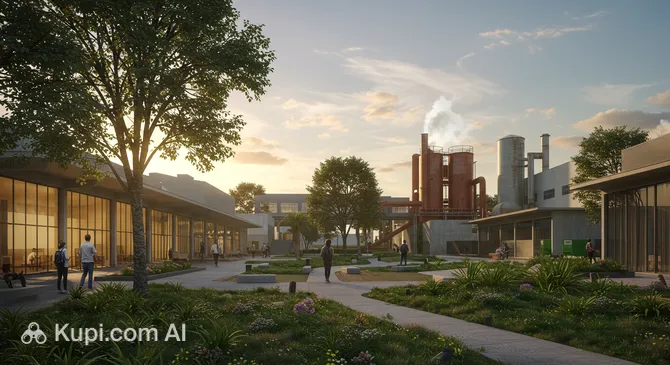
Although Santo André is primarily known as an industrial hub, it has places that can surprise even a seasoned tourist. One of the highlights on the city map is the Sabina Knowledge Park. This is an interactive educational center that will be interesting for both children and adults: here you can learn about the laws of physics, see a Tyrannosaurus Rex skeleton, and even visit a modern planetarium.
Sabina Knowledge Park. Illustration.
Source: Kupi.com AI
Traveler photos:
Fans of history and unusual architecture should definitely head to the Paranapiacaba district. This small village, built by British railway workers in the 19th century, looks like a piece of old England in the middle of the Brazilian tropics. Misty streets, Victorian houses, and an ancient clock tower create a completely unique, mystical atmosphere that especially attracts photographers and hikers.
For those interested in the region's spiritual culture, the Santuário Nacional de Umbanda is an important site. This cultural and religious complex dedicated to the Afro-Brazilian Umbanda tradition allows for a deeper understanding of the multifaceted and complex faith of the locals. Also in the city center, worth noting is the Carmo Cathedral, which is an architectural landmark and the spiritual heart of the Catholic community in Santo André.
Local Cuisine
The culinary scene in Santo André is a quintessence of the flavors of São Paulo state. Here you will find classic Brazilian dishes prepared with a special love for meat and tradition. The main favorite remains feijoada — a hearty black bean stew with various types of meat, usually served with rice, cassava flour (farofa), and orange slices.
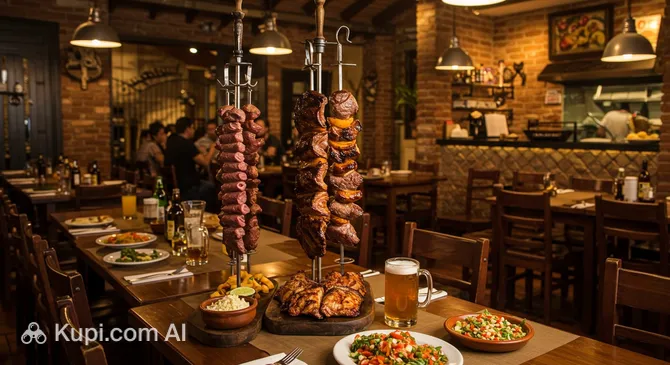
Steakhouses hold a special place in the food culture. Churrascaria do Rosa is an excellent place to get acquainted with the Brazilian grill, churrasco. Waiters will bring various cuts of beef, pork, and poultry directly on skewers until you signal you are full. If you prefer a more intimate atmosphere, stop by Adega do Jabá, where you can try traditional snacks and drinks.
Rosa's Churrascaria. Illustration.
Source: Kupi.com AI
Traveler photos:
Don't forget to try the famous cheese breads, pão de queijo, and wash them down with a cup of strong Brazilian coffee — it is made excellently in Santo André. For cold drinks, be sure to order fresh exotic fruit juice or a classic caipirinha. Locals often have lunch in the food courts of large shopping centers, where you can find high-quality home-style food served as a buffet (comida por quilo), which is very convenient for tourists.
Travel Tips
A trip to Santo André can be a great experience of immersion into real Brazilian life, provided you know a few important nuances.
Clothing and belongings: The region is characterized by changeable weather. Bring clothes that can be layered, and be sure to include a light raincoat, as summer showers can be sudden. For walks in the hilly Paranapiacaba, you will need comfortable shoes with good grip.
Transport: To avoid wasting time in traffic jams, plan your trips to São Paulo on CPTM trains outside peak hours (7:00 to 9:00 and 17:00 to 19:00). For moving around the city in the evening, it's best to use Uber.
Finances: The official currency is the Brazilian Real (BRL). Cards are accepted almost everywhere, even in street stalls, but a small supply of cash is useful for paying for transport or purchases at small markets.
Health and safety: Santo André is relatively safe, but follow standard precautions: do not display expensive gadgets and jewelry on the street. In the evening, stick to well-lit central areas and shopping malls.
Communication: The main language is Portuguese. Not everyone understands English, so download an offline translator or learn basic phrases: «Obrigado» (thank you), «Por favor» (please).
Local etiquette: Brazilians are very friendly and open. Greetings are often accompanied by a handshake or a light embrace. Be polite and smile — it opens many doors.
What to avoid: Do not enter unfamiliar outlying areas (favelas) without being accompanied by locals. Also, do not criticize local football — it is a sacred topic for every Brazilian.
Specific advice: Visit the historic village of Paranapiacaba on the weekend — this is when more museums and cafes are open, and the atmosphere becomes truly festive.
Following these simple rules, you can enjoy the hospitality of Santo André and make your trip as comfortable and interesting as possible!
Entertainment & Nightlife
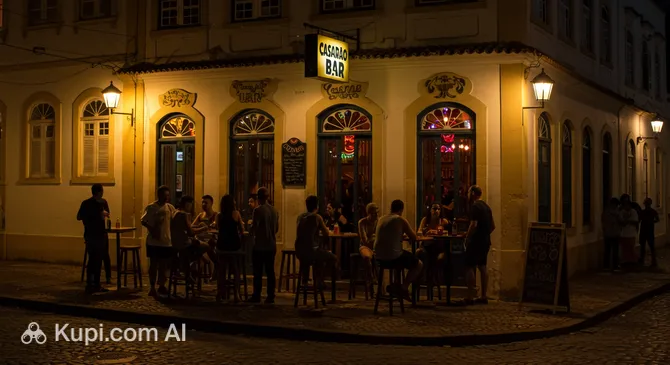
Nightlife in Santo André has a local and cozy character. Unlike the neighboring metropolis, traditional Brazilian bars — botecos — prevail here, where locals gather after work to discuss news over a glass of cold beer. A popular evening destination is the Bar Casarão, offering a classic atmosphere and traditional snacks.
Casarão Bar. Illustration.
Source: Kupi.com AI
Traveler photos:
For lovers of live performances and fun crowds, the city has a well-developed karaoke culture. SaraMandala Karaoke Bar and Dinda Karaoke Bar are excellent places to show off your talents and meet locals in a relaxed atmosphere. The dress code in most establishments is casual, and the atmosphere is as friendly and democratic as possible.
If you crave large dance floors and world-class DJs, the center of São Paulo can be reached in just 30–60 minutes. Nevertheless, Santo André offers a decent selection of cinemas in large shopping centers and regular sports events, which are an important part of the residents' leisure time. For safe travel at night, we recommend using taxi apps like Uber or 99, which work quickly and reliably here.
Parks & Museums
The parks and cultural spaces of Santo André offer residents and guests a necessary break from the industrial rhythm. One of the most visited spots is the Sabina Knowledge Park, which combines the functions of a museum and a science education center. Here you can see not only interactive exhibits but also visit a huge aquarium and a planetarium with modern equipment.
Sabina Knowledge Park. Illustration.
Source: Kupi.com AI
Traveler photos:
For nature lovers and those seeking peaceful relaxation, local parks such as Antônio Flaker Park (Ipiranguinha) or Celani Park operate in the city. While there are no massive forests, these green zones are great for morning jogs or picnics. Residents also frequently visit themed venues like Aqua Pesca Aquarium, where you can see various species of aquatic life within the city limits.
An important cultural attraction is the village of Paranapiacaba, which is essentially a giant open-air museum. Here you can visit the Museu Tecnológico Ferroviário Funicular and learn how the complex system of lifting trains up mountain slopes functioned. The architecture of the village itself and the preserved equipment from the late 19th century immerse visitors in the era of great engineering achievements.
Getting Around
The public transport system in Santo André is oriented towards the daily needs of hundreds of thousands of people working in the metropolitan area. The backbone of the connection is the CPTM suburban trains (Line 10 – Turquoise), which quickly and reliably link the city with the center of São Paulo and other municipalities in the ABC region. Trains run from early morning until midnight; however, be prepared for significant crowding in the carriages during morning and evening rush hours.
Within the city itself, a network of municipal buses is well-developed. For paying fares in metropolitan transport, the unified Bilhete Único transport card or the TOP card is used, which can be purchased and topped up at stations or specialized kiosks. Cash is increasingly rarely accepted on buses, so tourists are advised to arrange a travel card in advance.
As a convenient alternative to buses, taxi services and popular apps like Uber and 99 are available. They work consistently and help avoid complexities with public transport routes. For short trips within neighborhoods or to shopping centers, this is often the most comfortable and safest option. Cycling infrastructure in the city is moderately developed, so for active travel, it is better to rely on motorized transport.
Accommodation
The hotel sector in Santo André is primarily oriented toward business travelers and those visiting the ABC region for work. Modern mid-range hotels and long-term rental apartments predominate here. One of the reliable accommodation options is the Bristol Santo André Hotel, which offers a standard set of services and a convenient location relative to business districts.
For tourists planning to move actively around the region, it is best to choose accommodation in central areas or near CPTM train stations. This will significantly save time on traveling to São Paulo or the historic village of Paranapiacaba. Accommodation prices here are generally lower than in the very center of São Paulo, making the city an attractive option for a budget stay.
When searching for accommodation, we recommend looking at apartments in new residential complexes, which often offer access to a pool and gym. Since Santo André is not a mass tourist destination, booking a room is usually possible shortly before the trip; however, during periods of major industrial exhibitions in the ABC region, hotel rooms can sell out quickly.
Nearby Cities
Santo André serves as an excellent starting point for exploring the surroundings of the ABC region and the entire state of São Paulo. Thanks to the developed transport network, you can reach neighboring cities in minutes, each having its unique character and industrial heritage.
Just a few kilometers away is the city of Mauá, known for its large shopping complexes and industrial landscapes. Another important destination for a trip is São Bernardo do Campo, where the country's largest automobile factories and picturesque parks are concentrated. If you want to change the urban landscape for a calmer atmosphere, head to Ribeirão Pires — a small, cozy town surrounded by greenery.
Don't miss the opportunity to visit the state capital itself — the metropolis of São Paulo. Only a short train ride separates you from world-class museums, the famous Paulista Avenue, and an endless variety of cultural events. Exploring neighboring cities will allow you to see the full picture of life in Brazil's most populous region.
Shopping & Souvenirs
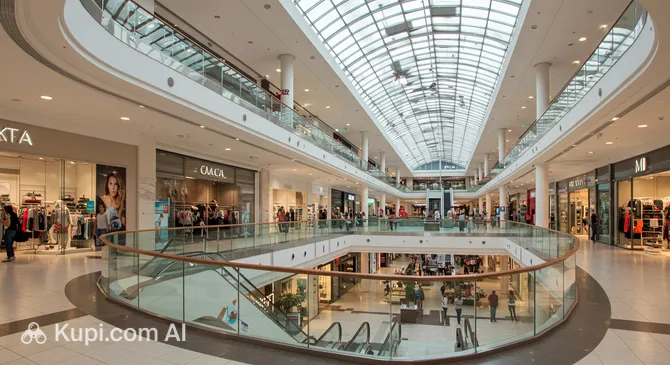
Shopping in Santo André is mainly concentrated in large shopping centers, which for locals are not just places for shopping but also centers for leisure. One of the most modern and convenient is Atrium Shopping Santo André. Here, under one roof, are gathered shops of famous Brazilian and international brands, as well as excellent food courts and cinemas.
Atrium Shopping Santo André. Illustration.
Source: Kupi.com AI
Traveler photos:
Another important point for shopping enthusiasts is Grand Plaza Shopping, one of the largest malls in the region. In such centers, shopping takes place in a comfortable and safe environment, which is particularly important for tourists. If you need to quickly find something necessary while on the border of cities, you can check out Mauá Plaza Shopping, located in immediate proximity.
As souvenirs from Santo André, it is worth bringing back high-quality Brazilian coffee, leather goods, or traditional beach accessories. Markets in the city are mostly oriented toward the daily needs of residents, offering fresh fruit and produce; however, at holiday fairs in the Paranapiacaba district, you can find unique handmade items and local delicacies. Most shops are open from 10:00 to 22:00 and accept international bank cards.