Located in the heart of the state of São Paulo, São Bernardo do Campo is a dynamic metropolis that harmoniously combines industrial power with a deep historical heritage. As part of the famous "ABC" region, this city in Brazil, with a population of over 800,000, is a vital economic hub for the country. Despite its business-oriented character, the city maintains a cozy atmosphere, thanks to its location on the Atlantic Plateau within the Serra do Mar mountain range.
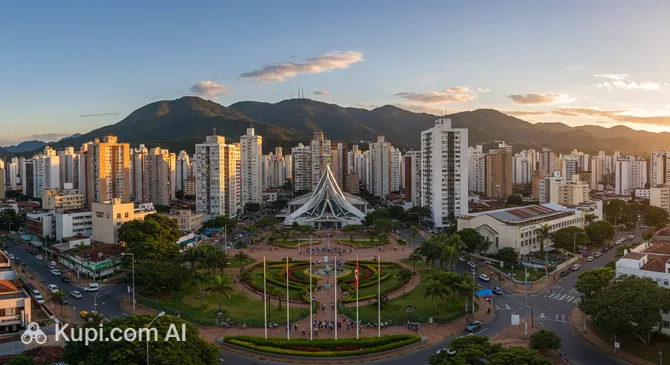
The city's geographical position at over 700 meters above sea level gives it a unique microclimate. Sao Bernardo do Campo. Illustration.
Source: Kupi.com AI
Although São Bernardo do Campo is primarily known as the headquarters for major automotive concerns, its rich history dates back to the mid-16th century. Founded by the Portuguese explorer João Ramalho, it became one of the first outposts of European civilization in the interior of the continent.
For the curious traveler, the city reveals itself through its well-maintained parks, such as Estoril, and modern cultural spaces. Here, you can feel the pulse of the real industrial Brazil, which doesn't strive to look like a tourist postcard but lives its own busy and productive life. Visiting this metropolis is a great chance to see the modern face of the state of São Paulo beyond its capital.
Weather Overview
The climate in São Bernardo do Campo is largely determined by its altitude and proximity to the Serra do Mar mountain range. The city is characterized by a humid subtropical climate, typically featuring warm, rainy summers and mild, drier winters. Precipitation is frequent here, especially in the summer months when moist air masses from the ocean collide with the mountain slopes.
During the summer period (December to March), the average temperature fluctuates between +22°C and +27°C, though intense tropical downpours often occur, especially in the afternoon. In winter (June–August), the thermometer can drop to +12°C... +15°C at night and rise to a comfortable +22°C during the day. To better plan your visit, we recommend checking the current weather in the city before your trip.
Thanks to the abundance of greenery and the altitude, the air here is often fresher than in lowland areas, but high humidity can create a feeling of stuffiness in the summer months. Tourists should always carry an umbrella or a light raincoat, as weather on the Atlantic Plateau can change quite rapidly.
Average monthly temperature
Average monthly precipitation
Interesting Facts
One of the oldest in the region: Despite its modern industrial look, São Bernardo do Campo was founded as early as 1553 by the Portuguese João Ramalho, making it one of the oldest settlements in all of Brazil.
The heart of the automotive industry: The city is unofficially known as the "Brazilian Detroit," as it is home to the major plants of giants such as Volkswagen, Ford, and Mercedes-Benz.
A high-altitude record holder: The municipality is located at a significant altitude, and its highest point—Bonilha Peak—reaches nearly 987 meters above sea level.
Furniture capital: In addition to cars, the city is famous for its furniture production, a tradition established by European immigrants in the early 20th century.
Impressive scale: In terms of population, the city ranks 21st in the entire country, ahead of many Brazilian state capitals.
How to Get There
The transport accessibility of São Bernardo do Campo is due to its strategic position within the Greater São Paulo metropolitan area. The city does not have its own commercial airport, but its proximity to the country's largest aviation hubs makes the journey here quick and convenient. You can find more details about various travel options on the special page describing how to get to this industrial center.
Travelers usually arrive at one of the two main airports in the region. Guarulhos International Airport (GRU) is located about 40–50 kilometers away and handles flights from all over the world. An alternative is Congonhas Airport (CGH), located within the city of São Paulo, just 20–30 kilometers from São Bernardo. From both terminals, it is most convenient to take a taxi, a transfer, or use apps like Uber and 99, which takes from 40 minutes to an hour and a half depending on traffic.
Rail service in the "ABC" region is integrated into the general CPTM commuter train network. The nearest significant stations are in the neighboring cities of Santo André and São Caetano do Sul. From central São Paulo (for example, from Luz Station), you can take a train to Santo André and then transfer to a municipal bus or taxi to cover the remaining few kilometers to São Bernardo do Campo.
Station
Passenger traffic
Distance
Tamanduateí
5
12 km
Ribeirao Pires
5
14 km
Santo Amaro
8
18 km
Tatuapé
6
18 km
Brás
7
19 km
Main Attractions
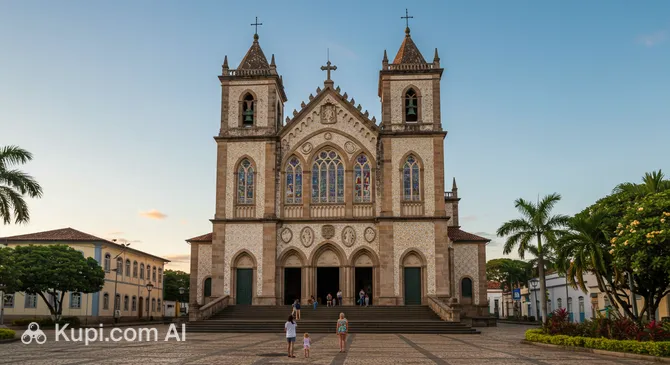
Despite its reputation as an industrial giant, São Bernardo do Campo hides several notable locations worth visiting. The spiritual heart of the city is considered to be the Church of Our Lady of Good Voyage (Igreja Matriz Nossa Senhora da Boa Viagem). This majestic building recalls the days when the city was an important stop on caravan routes, and its architecture and interior decoration serve as an important cultural landmark for locals.
Church of Our Lady of Good Voyage. Illustration.
Source: Kupi.com AI
Traveler photos:
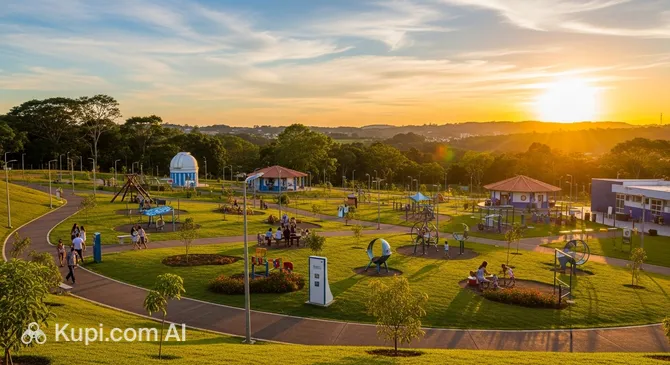
For those seeking harmony with nature and educational leisure, Escola Park is an excellent destination. This space combines elements of a botanical garden and a learning center, where you can stroll among exotic plants and learn more about the region's ecosystem. The park is perfect for a quiet break from the city noise and the bustle of the highways.
Parque Escola. Illustration.
Source: Kupi.com AI
Traveler photos:
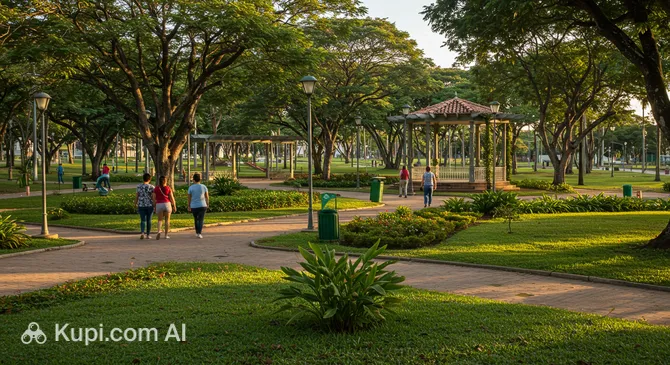
Fans of active recreation and outdoor walks should definitely check out Città di Marostica Park. Named after its Italian twin city, it offers excellent facilities for sports, including one of the best skate parks in the region. The atmosphere here is always lively, especially on weekends when families and young people gather for joint activities.
Città di Marostica Park. Illustration.
Source: Kupi.com AI
Traveler photos:
Local Cuisine
The gastronomic scene in São Bernardo do Campo is a classic reflection of São Paulo state traditions. Here, you will find hearty and high-quality Brazilian cuisine based on rice, black beans, and superbly prepared meat. The city is particularly famous for its "botecos"—traditional snack bars where locals gather for a glass of cold beer and a portion of coxinha (fried dough with chicken filling).
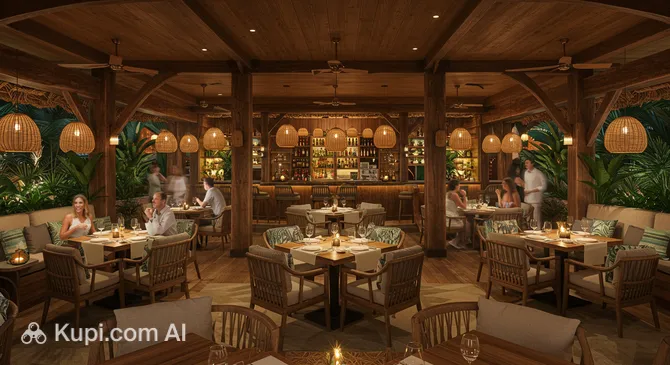
If you are looking for a place for a celebratory dinner or love seafood, you should visit the Coco Bambu restaurant. This establishment is known for its generous portions and exquisite shrimp and fish dishes. For those who prefer a more modern concept within shopping centers, Coco Bambu Conceito São Bernardo do Campo is a great fit, combining high culinary standards with dynamic service.
Coco Bambu Restaurant. Illustration.
Source: Kupi.com AI
Traveler photos:
Be sure to try feijoada—a thick bean stew with various types of meat, traditionally served on Wednesdays and Saturdays. Among drinks, besides strong Brazilian coffee, refreshing natural juices from tropical fruits such as passion fruit, cashew, or acerola are popular. Despite not being a culinary capital, the city offers honest and delicious food that will satisfy any traveler.
Travel Tips
A trip to São Bernardo do Campo will be as comfortable as possible if you consider the specific characteristics of this business and industrial center in advance.
Clothing and Essentials: Due to the changeable weather on the plateau, it's better to dress in layers. Be sure to bring a light jacket or windbreaker even in summer, as evenings can be cool. Comfortable shoes are your best ally when visiting parks and shopping centers.
Transportation: The most convenient way for a tourist to get around is using the Uber or 99 apps. They work reliably and are relatively inexpensive. If you decide to take the bus, try to avoid the 7:00–9:00 AM and 5:00–7:00 PM intervals due to massive traffic jams.
Finances: The official currency is the Brazilian Real (BRL). Cards are accepted almost everywhere, even in small kiosks, but it's still worth having a small supply of cash for minor expenses. Tips in restaurants are usually already included in the bill (10–13%).
Health and Safety: Follow standard precautions: do not display expensive electronics or jewelry on the street. At night, it's better to move from door to door by taxi, avoiding walks in unfamiliar or deserted areas.
Communication: The main language is Portuguese. English is understood in major hotels and some chain restaurants, but for communicating in shops or transport, it's useful to learn a few basic phrases or have an offline translator handy.
Local Etiquette: Brazilians are very friendly and open. Greetings are often accompanied by a firm handshake, and in informal settings, a friendly hug. Be polite and smiling; it's the best key to communication.
What to Avoid: Avoid discussing sensitive social topics or criticizing local customs in public places. It is also not recommended to walk through peripheral neighborhoods (favelas) without the accompaniment of someone who knows the area.
Useful Tip: Remember that the city is at a high altitude, so the sun is more active than it seems. Use sunscreen even on cloudy days.
Have a great trip to São Bernardo do Campo! May this city reveal its best sides to you and surprise you with its hospitality.
Entertainment & Nightlife
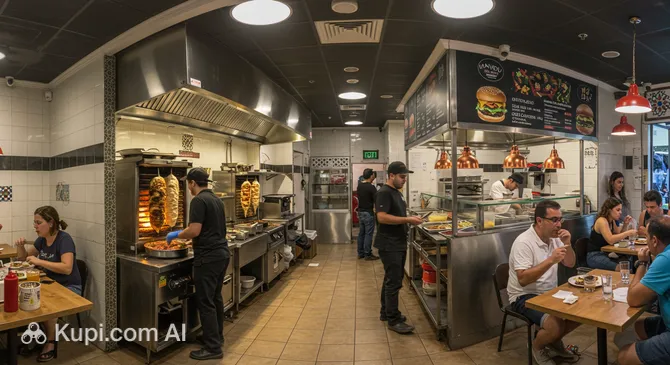
The nightlife in São Bernardo do Campo is more relaxed and local compared to the neighboring, bustling São Paulo, but you can still find interesting ways to spend an evening. Most activity is concentrated around popular gastronomic establishments and small bars where locals like to unwind after a workday. One such notable spot is the Mando Esfihas e Burgers bar, offering a casual setting and a great selection of snacks.
Mandu Esfihas & Burgers. Illustration.
Source: Kupi.com AI
Traveler photos:
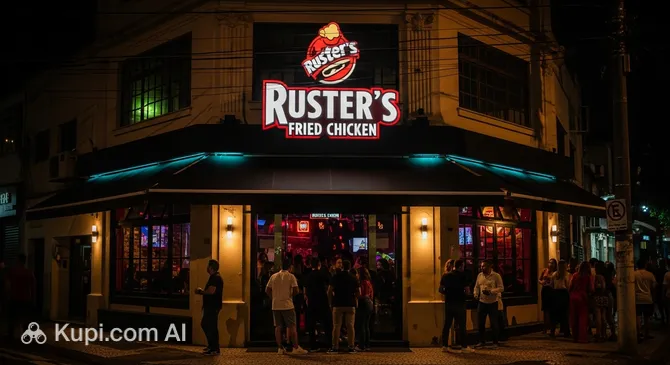
For those who prefer active entertainment even indoors, the city features Trampoline Village (Vila Trampolim). This space is popular with both children and adults looking for a fun time and an adrenaline rush. If you get hungry after your evening walks, you can drop by Ruster's Frango Frito, which serves popular fast-food style dishes characteristic of the local youth scene.
Ruster's Fried Chicken. Illustration.
Source: Kupi.com AI
Traveler photos:
Overall, entertainment in the city is geared toward comfortable relaxation. There aren't many massive nightclubs here, but there is an abundance of cozy venues with live music in styles like MPB (Brazilian Popular Music) or Sertanejo. For large-scale parties and world-class theatrical premieres, locals usually head to the center of the state capital, which is no more than an hour away by taxi.
Parks & Museums
The green zones of São Bernardo do Campo play a vital role in city life, offering a respite from its industrial rhythm. One of the most popular spots is Raphael Lazzuri Park, where locals enjoy spending time jogging or having family picnics. Another gem is Estoril Park, located on the shores of the Billings Reservoir, where you can not only walk in the shade of trees but also engage in water sports.
For those interested in local culture and education, Escola Park is worth a visit. This place combines an ecological trail with a learning space, allowing visitors to get acquainted with the flora of the Serra do Mar region. Also great for walks is Città di Marostica Park, known for its sports infrastructure and modern landscape design.
Parque Escola. Illustration.
Source: Kupi.com AI
Traveler photos:
As for museums, the city has small but interesting galleries and cultural centers reflecting the history of the automotive industry and the region's labor heritage. However, for large-scale art exhibitions and world masterpieces, tourists are recommended to head to São Paulo, home to famous institutions such as MASP (São Paulo Museum of Art). Nevertheless, the parks of São Bernardo itself offer a unique opportunity to see the "green lungs" of the country's industrial heart.
Getting Around
The public transport system in São Bernardo do Campo is based on an extensive network of bus routes. Municipal buses connect residential neighborhoods with industrial zones and the central area, while intercity routes provide reliable service to other cities in the Greater São Paulo metropolitan area. Be aware that during peak hours, transport can be overcrowded, and travel times increase due to heavy road traffic.
To pay for fares on municipal buses, the Cartão Legal transport card is most commonly used, but cash payment to the conductor or driver is also possible. Tourists are advised to plan their trips in advance using mobile apps (such as Google Maps or Moovit), as numbering and routes can seem complex to a newcomer. There is no metro in the city itself, but it is available in neighboring São Paulo, reachable by bus or commuter train from the station in nearby Santo André.
As a convenient alternative to public transport, taxis and popular ride-hailing services like Uber and 99 are available. This is the most comfortable and safest way to get around, especially in the evening. If you plan to travel extensively between the cities of the "ABC" region, renting a car will give you the necessary freedom, but be prepared for complex navigation and heavy traffic on the main highways.
Accommodation
The hotel infrastructure in São Bernardo do Campo is primarily geared toward business travelers and specialists visiting the region's industrial enterprises. Most hotels are functional, mid-range business options belonging to well-known international chains. They offer a standard set of services: stable Wi-Fi, conference rooms, and breakfast included in the price.
The main accommodation options are concentrated along the major highways and in the central part of the city, which is convenient for quick access to corporate offices and shopping malls. If your goal is tourism and sightseeing in São Paulo itself, it might be more practical to stay in the state capital. However, for those seeking a quieter environment or visiting the "ABC" zone for business, the local hotel stock provides a decent level of comfort.
During peak periods of industry exhibitions and business forums, it is recommended to book accommodation in advance, as the demand for high-quality business hotels increases sharply. In addition to hotels, the short-term apartment rental segment is popular in the city, which can be a more cost-effective option for longer stays in the region.
Nearby Cities
Thanks to its location in a densely populated state, São Bernardo do Campo is an excellent starting point for exploring neighboring cities and natural beauties. The surrounding region offers both industrial landscapes and opportunities to escape to the ocean or the mountains.
Just a few kilometers away is Santo André, a city with a developed culture and interesting parks, as well as São Caetano do Sul, known for its high standard of living and cozy shopping streets. If you crave peace and quiet, you can head to Diadema or the small Aurora. For those missing the sea, a trip to the coast in Santos or Guarujá takes just over an hour, providing access to beautiful Atlantic beaches.
Don't miss the chance to visit other nearby centers, such as Mauá, which complete the picture of life in this important industrial belt of Brazil. Each of these destinations is easily reachable as a day trip, making your stay in the region rich and diverse.
Shopping & Souvenirs
Shopping in São Bernardo do Campo is focused on practicality and convenience, offering city guests a wide selection of modern retail spaces. You won't find colorful oriental bazaars here, but you will find superbly equipped malls featuring both Brazilian and international brands. It's the perfect place for those looking to update their wardrobe or purchase quality electronics.
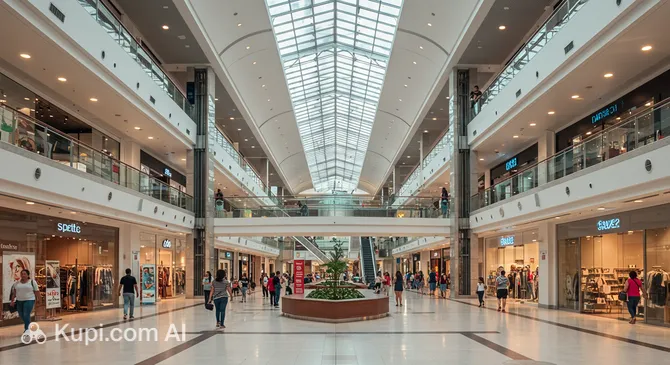
One of the key shopping destinations is Grand Plaza Shopping (ABC), which has served as a major attraction for residents of the entire region for many years. It houses numerous stores, a food court, and a cinema. Equally popular is São Bernardo Plaza Shopping—a modern space with spacious halls and an excellent selection of home goods and fashionable clothing.
São Bernardo Plaza Shopping. Illustration.
Source: Kupi.com AI
Traveler photos:
Shops are usually open from 10:00 AM to 10:00 PM, and international credit cards are widely accepted. If you're looking for souvenirs, look for leather goods or Brazilian coffee, which can be bought in specialized supermarket departments or coffee shops inside the malls. Although the city is not a center for handicrafts, the quality of industrial goods here is always top-notch.