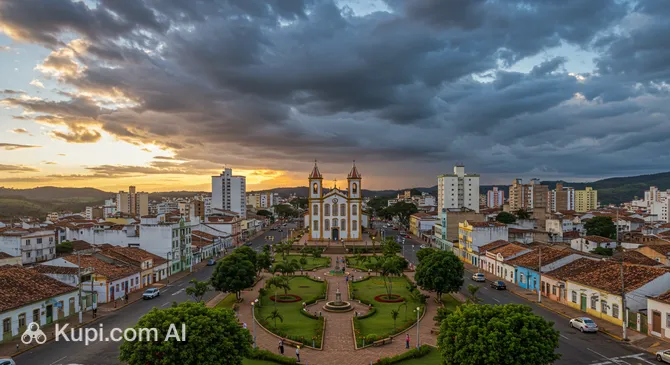
Located in the state of São Paulo, Taboão da Serra is a dynamic and densely populated municipality that forms part of the vast metropolitan area of Brazil's largest city. It is a place with a unique rhythm of life, where residential areas and industrial zones are closely intertwined. While the city is not a typical tourist destination, it attracts visitors with its authentic atmosphere of everyday Brazilian hustle and bustle and serves as a vital link in the region's infrastructure.
Taboao da Serra. Illustration.
Source: Kupi.com AI
Founded in 1959, the municipality covers a small area of just over 20 square kilometers, yet it is home to nearly 300,000 people. You can learn more about its development and city history by exploring its journey from a small settlement to one of São Paulo's most densely populated suburbs. Today, it is primarily a "commuter town," providing housing for thousands of people who work in the state capital.
Despite the lack of major historical monuments, the city wins visitors over with its accessibility and well-developed infrastructure. Here, you can experience the real life of Brazil's middle class, visit modern shopping centers, and feel the energy of a constantly developing economy. A visit to Taboão da Serra is an interesting experience for those who want to go beyond the usual tourist routes and see the inner workings of a Brazilian metropolis.
Weather Overview
The climate in Taboão da Serra is classified as subtropical, typical of the entire highland region of São Paulo state. There is a clear division into two seasons: a warm, humid summer and a relatively dry, cool winter. Average temperatures in the summer months (December to March) range from 19°C to 27°C, with frequent heavy tropical showers, especially in the afternoon.
The winter period (June to August) is characterized by milder temperatures—averaging from 12°C to 22°C. Mostly clear weather sets in during this time, although it can be quite chilly at night. It is worth noting that due to the terrain and dense urban development, smog can accumulate over the region on windless days, which is important for people sensitive to air quality. The current weather in Taboão da Serra is always available online for more precise trip planning.
Overall, the weather in the city is favorable for visiting at any time of year; however, the transition months—April, May, September, and October—are considered the most comfortable. During these periods, the heat is not as intense, and the amount of rainfall significantly decreases, making it ideal for moving around the metropolitan area and getting to know the local rhythm of life.
Average monthly temperature
Average monthly precipitation
Interesting Facts
The city was officially founded on February 19, 1959, and every year on this day, residents celebrate the municipality's anniversary with large-scale festive events.
Taboão da Serra has one of the highest population densities in the region—approximately 11,007 people per square kilometer, making it extremely compact and lively.
The city's name comes from the "taboa" plant (cattail), which used to grow in abundance in the marshy areas of the region, and the word "serra," indicating the hilly terrain.
The municipality covers an area of only 20.478 square kilometers, making it one of the smallest territories yet one of the most significant cities in the São Paulo metropolitan area.
The city is located on the strategically important Régis Bittencourt highway (BR-116), which connects the southeast and south of Brazil, ensuring a constant flow of traffic and goods.
How to Get There
The transport accessibility of Taboão da Serra is due to its close integration into the São Paulo transportation system. The main road artery is the federal Régis Bittencourt highway (BR-116), which passes directly through the city. You can get here from the center of the metropolis by car or public transport; however, keep in mind that due to high building density and traffic, travel time can range from 40 to 90 minutes. It is best to check information about various options and the city's transport accessibility in advance.
The city does not have its own airport. Most travelers arrive via Guarulhos International Airport (GRU), located approximately 50–60 kilometers away. A taxi ride from the airport can take about two hours depending on traffic. You can also use Congonhas Airport (CGH), which is much closer and serves mainly domestic flights.
Railway service is provided by Line 9 (Emerald) of the CPTM network, with stations located in the immediate vicinity of the city borders. This is a convenient way to reach the business districts of São Paulo while avoiding road congestion. Regular municipal and intercity buses run between the train stations and residential neighborhoods.
Station
Passenger traffic
Distance
Santo Amaro
8
7 km
Estação Hebraica-Rebouças
5
10 km
Lapa (Line 7) (CPTM)
6
14 km
Água Branca (CPTM)
6
15 km
Piqueri train station
6
15 km
Main Attractions
Since Taboão da Serra is primarily a residential and industrial suburb, there aren't many classic tourist attractions. The city's main public space is Central Square (Praça Central de Taboão da Serra). This is the heart of the municipality, where major city festivals, fairs, and cultural events take place. It’s where residents meet to socialize, and on weekends, the square is filled with the atmosphere of local hospitality.
For those seeking modern entertainment, the major shopping centers are the primary points of interest. A significant portion of leisure life is concentrated in these complexes, featuring everything from modern cinemas to gaming zones and food courts with diverse cuisines. These are excellent places to escape the city heat and observe the daily rhythm of local families.
The city's architecture consists mainly of residential developments and functional buildings; however, a walk through the central streets allows you to see the dynamic development of a modern Brazilian suburb. While tourists seeking historical heritage might find the city modest, its value lies in the opportunity to see real, unvarnished life of São Paulo state residents in its natural form.
Local Cuisine
Gastronomy in Taboão da Serra is a clear reflection of the culinary traditions of São Paulo state. While you won't find unique delicacies exclusive to this city, you can fully enjoy Brazilian classics. You must try feijoada—a hearty stew of black beans with various types of meat, traditionally served with rice, collard greens, and orange slices.
The local food culture is inseparable from "padarias"—traditional Brazilian bakeries. Here, residents buy fresh cheese bread (pão de queijo) and drink a cup of strong, aromatic coffee for breakfast or a snack. Churrascaria establishments, which offer a variety of grilled meats, are also incredibly popular.
In the evening, street stalls and small diners serving pastel—deep-fried pastry envelopes with a wide range of fillings—are very popular. Among drinks, the absolute favorite remains the caipirinha, made with cachaça, lime, and sugar, as well as refreshing tropical fruit juices. The main concentration of restaurants and food courts is located around Central Square and major shopping centers, where you can find food for every taste and budget.
Travel Tips
When planning a visit to Taboão da Serra, keep in mind that it is primarily a residential area, requiring a practical approach and adherence to basic safety measures. These tips will help make your stay here comfortable and safe.
Clothing and Seasonality: The region has a subtropical climate, so bring light clothing made of natural fabrics, but don't forget a windbreaker for cool evenings and an umbrella—rains here can be frequent and sudden. Comfortable shoes are a must for long walks.
Transport: The most convenient way to get around is using the Uber or 99 apps. If using buses, purchase a transport card in advance and keep in mind that rush hour traffic can significantly increase travel time.
Finances: The official currency is the Brazilian Real (BRL). Cards are accepted almost everywhere, including street stalls, but it's always useful to have some cash for small purchases. It's best to use ATMs inside shopping centers.
Safety: Follow general rules: do not display expensive gadgets or jewelry, and avoid walking in deserted peripheral areas after dark. The city center and shopping zones are quite safe during the day.
Connectivity: You can buy a local SIM card in shopping centers (operators Vivo, Claro, or TIM). Wi-Fi is available in most cafes and malls, but it's better to have mobile data for navigation.
Local Etiquette: Brazilians are very friendly and open. Greetings are often accompanied by a light hug or a handshake. Knowing a few phrases in Portuguese (e.g., "Obrigado" — thank you) will significantly simplify communication.
What to Avoid: Do not take photos of people or private property in poor areas (favelas) without permission. Also, refrain from discussing political topics or criticizing the local way of life.
Health: Drink only bottled water and use sunscreen even in cloudy weather, as the sun is very active at these latitudes.
Be open to new experiences, and this energetic Brazilian suburb will reveal its most hospitable side. Enjoy your trip!
Entertainment & Nightlife
Nightlife in Taboão da Serra is local in character and concentrated mainly around small bars and snack bars scattered throughout the central part of the city and near major shopping centers. There is a relaxed atmosphere here, where locals gather after work for a glass of beer or a caipirinha. There are virtually no large nightclubs or major concert venues within the municipality itself.
For those looking for truly vibrant nightlife, the best option is a trip to neighboring São Paulo, which is only about 20–30 kilometers away. Locals often head to districts like Vila Madalena or Moema, famous for their bars, live music clubs, and bohemian atmosphere. You can get there by taxi or ride-sharing apps, which is the safest option at night.
During the day, entertainment in the city is mostly related to visiting cinemas in shopping centers or walking in the few green areas. The atmosphere of venues in Taboão da Serra is simple and friendly, with no strict dress code, and prices are significantly lower than in the prestigious districts of central São Paulo. This makes leisure time here feel truly "homey" and accessible.
Parks & Museums
Green spaces in Taboão da Serra are limited due to extremely high building density, yet they play an important role in the lives of citizens. One of the most famous places for relaxation is Parque das Hortênsias (Hydrangea Park). It is a small space with walking paths and playgrounds that serves as an oasis of quiet amidst the city noise. Despite its modesty, the park is popular with locals for morning jogs and walks with children.
The museum scene within the municipality itself is virtually non-existent, as the city developed as an industrial and residential hub. The main cultural heritage is concentrated in open spaces, such as Central Square, where outdoor exhibitions of local artists and photographers are periodically held. Here you can feel the local flavor and learn more about the modern life of the community.
For those seeking a deep dive into art and history, we recommend taking advantage of the city's proximity to São Paulo. In just half an hour, you can reach world-class museums located in neighboring districts of the metropolis. Nevertheless, the modest squares and functional green zones of Taboão da Serra allow tourists to see how nature integrates into the rugged industrial landscape of the Brazilian "serra."
Getting Around
The transport system of Taboão da Serra is fully integrated into the São Paulo metropolitan network. The main form of public transport is buses. Municipal routes connect different districts of the city, while intercity buses (EMTU) allow you to reach the nearest metro stations and railway hubs. It is worth remembering that during rush hours, transport is heavily overloaded, and traffic jams are common on the roads.
An important part of travel is the CPTM railway (Line 9 — Emerald), with stations located on the border of the city. For fare payment, it is most convenient to use the Bilhete Único transport card, which is valid on both buses and São Paulo trains/metro. You can top up the card at kiosks, stations, or via mobile apps.
Alternatives to public transport are the Uber and 99 apps, which are very popular and relatively inexpensive in Brazil. This is the most comfortable and safest way to get around, especially in the evening or when traveling with luggage. Bicycle infrastructure in the city is poorly developed, so cycling can be difficult due to heavy traffic and hilly terrain.
Accommodation
The residential sector of Taboão da Serra is primarily oriented toward permanent residents, so the market for classic hotels is modestly developed. Most short-term accommodation options are apartments and guest houses, which can be found on popular rental services. These options are often chosen by business travelers or those planning a long-term stay in the region.
The most convenient area to stay is the city center, for example, near Rua Carlos Leite dos Santos. Here you can find modern residential complexes with advanced security systems and self-check-in options. Proximity to major retail outlets and transport hubs makes this area optimal for those who value mobility.
Accommodation prices in Taboão da Serra are significantly lower than in central São Paulo, making the city attractive for budget travelers. We recommend booking accommodation in advance, especially if your trip coincides with major holidays or business exhibitions in the state capital. For a more classic tourist stay, you can also consider hotels in neighboring districts of São Paulo, which are a 15–20 minute drive away.
Nearby Cities
Taboão da Serra is an excellent starting point for exploring the surroundings of the metropolis, offering travelers access to various cultural and historical centers of the state. Thanks to well-developed bus and rail links, city guests can easily plan day trips to neighboring municipalities.
Just a few kilometers away is Santo Amaro, which was once a separate city and is now an important historical and commercial district of São Paulo. It is also worth visiting Osasco, a large industrial and cultural center with many parks and shopping areas. For lovers of a quieter atmosphere, Carapicuíba is suitable, where you can see interesting examples of colonial architecture.
The region around Taboão da Serra is rich in contrasts: from the bustling shopping quarters of Lapa to the picturesque spots in Itapecerica da Serra. Exploring these destinations will allow you to gain a deeper understanding of the scale and diversity of Brazilian life beyond the typical tourist postcards.
Shopping & Souvenirs
Shopping in Taboão da Serra is focused on practicality and everyday needs, offering city guests a wide choice of goods at affordable prices. The main shopping hub is the area around Central Square, where many clothing, footwear, and household goods stores are concentrated. Here you can find both Brazilian chain brands and small local shops.
The primary magnets for shoppers are the large, modern shopping malls. These feature not only popular stores but also extensive entertainment zones. These are the best places to buy quality Brazilian cosmetics, cotton clothing, or leather goods. The malls are also convenient for currency exchange and using banking services in a secure environment.
As souvenirs from Taboão da Serra, it is worth bringing back traditional Brazilian coffee or cachaça, which are sold in local supermarkets. Also, look out for handicraft items often displayed at weekend fairs in the main squares. Stores usually operate from 9:00 AM to 6:00 PM (until 10:00 PM in shopping centers), and international bank cards are accepted almost everywhere.