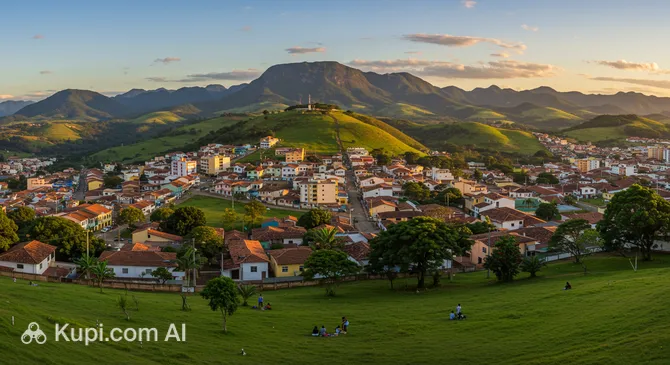
Located in the state of São Paulo, Cotia offers a harmonious blend of industrial dynamism and natural tranquility. Part of the vast São Paulo metropolitan area in Brazil, the city is spread across picturesque hills, reflected in its name: in the indigenous Tupi language, it means "many hills." With a population of around 230,000, Cotia does not strive to be a bustling tourist hub, offering instead the authentic atmosphere of a developing suburb.
Cotia's geographical position makes it an important link between the state capital and the interior regions. The city is characterized by its hilly terrain and abundant greenery, providing a pleasant contrast to the skyscrapers of the neighboring megalopolis. Here, modern residential developments sit alongside industrial zones and agricultural lands that preserve the region's traditions.
Cotia. Illustration.
Source: Kupi.com AI
For the traveler, Cotia can be an interesting discovery thanks to its unique sites, such as the majestic Zu Lai Buddhist Temple or the Animália Park theme park. The city is closely tied to the history of its development, having evolved from a colonial settlement and agrarian center into an important industrial hub.
A visit to Cotia is an excellent opportunity to see real life in a Brazilian suburb, enjoy the silence of Buddhist gardens, and learn about the heritage of Japanese immigrants who contributed significantly to the prosperity of these lands.
Weather Overview
Cotia is located in a tropical climate zone, characterized by warmth and high humidity throughout the year. Real cold weather is almost non-existent here, though the proximity to the ocean and the hilly terrain create their own specific features. You can check the forecasts in more detail by studying the city's climate on the dedicated page.
Typical weather in Cotia consists of a hot and rainy summer (from December to March) with daytime temperatures around +26°C...+27°C. Winter (June-August) is drier and cooler, when the thermometer can drop to +12°C at night, but usually warms up to a comfortable +22°C during the day. The highest amount of rainfall occurs in January, so if you are planning a trip at the beginning of the year, be sure to bring an umbrella or a raincoat.
Average monthly temperature
Average monthly precipitation
Interesting Facts
The city's name originates from the indigenous Tupi language and translates as "many hills," which perfectly describes the local landscape.
Cotia was founded back in 1580 and, during the colonial era, served as an important transit point for the Bandeirantes — expeditions that explored the interior territories of Brazil.
In 1927, the Agricultural Cooperative of Cotia was founded, becoming one of the largest in the country thanks to the efforts of Japanese immigrants who turned the region into the "vegetable garden" for the entire state of São Paulo.
The city officially received "Cidade" (city) status on December 19, 1906, although its history as an independent municipality began half a century earlier.
Modern Cotia is an important industrial cluster: since the 1970s, hundreds of enterprises have located here, transforming an agrarian settlement into a powerful economic satellite of the megalopolis.
How to Get There
Thanks to its location in the western part of the São Paulo metropolitan area, Cotia enjoys good accessibility, although a trip here requires accounting for the city's traffic. The main transport arteries are the federal highway BR-116 (Rodovia Régis Bittencourt) and the local Raposo Tavares road. You can learn more about the region's logistics on the page detailing how to get to Cotia.
For air travelers, the nearest major hub is Congonhas Airport (CGH), located within São Paulo, about 50–60 km from Cotia. A trip by taxi or rental car will take about an hour and a half to two hours. You can also use Guarulhos International Airport (GRU), though the journey from there will be longer due to traffic. There is currently no direct rail link to the center of Cotia, so private transport or transfers remain the most convenient options.
Public transport is represented by an extensive network of buses connecting Cotia with various districts of São Paulo and neighboring cities. An intercity bus trip can take from 1.5 to 2.5 hours. Tourists are advised to avoid peak hours (7 am to 10 am and 5 pm to 8 pm), when road congestion is at its highest, significantly increasing travel time.
Station
Passenger traffic
Distance
Santo Amaro
8
22 km
Estação Hebraica-Rebouças
5
24 km
Vila Clarice train station
6
24 km
Pirituba train station
6
24 km
Piqueri train station
6
24 km
Main Attractions
Although Cotia is primarily a residential and industrial center, it hides several true gems worth visiting. One of the most famous attractions is the Templo Zu Lai — the largest Buddhist temple in Latin America. This place impresses with its magnificent architecture, well-maintained gardens, and atmosphere of absolute tranquility, making it a popular weekend destination.
For family vacations, Animália Park is ideal. This modern complex combines an amusement park and a zoo, with comfortable conditions for both animals and visitors. Agro-tourism enthusiasts should stop by the Mini Fazenda Pet Zoo, where children and adults can interact with farm animals and learn more about rural life in Brazil.
The architectural and spiritual landscape of the city is complemented by the Basilica Nossa Senhora do Rosario de Fatima. This basilica attracts believers and admirers of beautiful religious buildings with its solemnity. Most visitors to Cotia combine sightseeing with visits to modern shopping centers, which serve as hubs of the city's social life.
Local Cuisine
The gastronomy of Cotia is a vibrant reflection of the region's cultural diversity. The local menu is based on traditional Brazilian dishes: the famous feijoada (a stew of beans and various types of meat), rice and beans, and pastels — crispy fried pastries with various fillings, which are best tried at local markets.
A unique feature of the local cuisine is the strong Japanese influence. Thanks to the historical contribution of Japanese immigrants to the city's agriculture, high-quality sushi bars and Japanese restaurants can be found at every turn. Fresh fruits and vegetables grown on local farms make the dishes in Cotia's family-run establishments particularly delicious.
Regarding drinks, be sure to try strong Brazilian coffee, refreshing açaí juice, or traditional cachaça in local bars. Most residents prefer to have lunch in "lanchonetes" (snack bars) that serve hearty portions at affordable prices. For a more refined dinner, head to the restaurants in the Granja Viana area, where both international and signature Brazilian cuisine are presented.
Travel Tips
A trip to Cotia will allow you to see the real Brazil away from the well-trodden tourist paths. To make your visit comfortable and safe, we have prepared some practical tips.
Clothing and Essentials: Choose light clothing made of natural fabrics, as it is warm in the region year-round. Don't forget comfortable shoes for walking in the hilly terrain and sunscreen. When visiting the Zu Lai Temple, it is recommended to wear clothing that covers your shoulders and knees.
Transport: To move around the city, it is best to use Uber or a licensed taxi. It is faster and safer than public buses, which are often overcrowded.
Finances: The local currency is the Brazilian Real. Cards are accepted almost everywhere, but a small amount of cash will be useful for purchases at markets. International cards work, but it is better to notify your bank about the trip in advance.
Health and Safety: Cotia is a relatively quiet suburb, but follow standard precautions: do not display expensive gadgets and avoid walking alone in unfamiliar areas after dark.
Communication: The main language is Portuguese. English is understood only in large hotels and shopping centers, so it is useful to learn a few basic phrases or have an offline translator handy.
Local Etiquette: Brazilians are very friendly and open. Greetings are often accompanied by a handshake or a light hug. Be polite and smiling.
What to Avoid: You should not criticize local infrastructure or compare the standard of living with major cities — the residents of Cotia are proud of their city and its development.
Extra Tip: Plan your trips to or from São Paulo outside of peak hours, otherwise you risk spending several hours in traffic jams.
May your acquaintance with this cozy corner of the state of São Paulo bring only positive emotions and vivid impressions!
Entertainment & Nightlife
Entertainment in Cotia is predominantly calm and family-oriented. The main centers of attraction for residents and visitors during the day are large shopping and entertainment complexes, such as Shopping Granja Vianna. Here, you can find modern cinemas, children's play areas, and food courts that become especially lively on weekends.
The city's nightlife is not as grand as in neighboring São Paulo, but the Granja Viana district offers a decent selection of cozy bars and restaurants. You can spend the evening in a "bar de cerveja" (beer bar), enjoying live music like pagode or sertanejo. The atmosphere in local establishments is friendly and relaxed, with a crowd consisting mostly of locals and employees from nearby offices.
For those looking for wild parties and large nightclubs, the best solution is to head to the center of São Paulo, a trip that takes between 45 and 90 minutes. In Cotia itself, karaoke and small dance floors are popular. For safety reasons, it is recommended to always use official taxi apps for nighttime travel and choose establishments with good reviews in central areas.
Parks & Museums
The natural areas and cultural sites of Cotia are closely intertwined with its hilly landscape. The city's main "green" and cultural attraction is rightfully considered the grounds of the Buddhist Templo Zu Lai. It is not just a place of worship but a vast park with ponds, bridges, and sculptures where you can spend several hours enjoying the silence and aesthetics of an Oriental garden.
For outdoor activities, residents often choose Animália Park. Although it is a commercial site, it serves as an important recreational zone where fragments of natural Atlantic Forest vegetation have been preserved to create a comfortable environment. Within the city limits, there are also small municipal parks and squares that serve as recreation spots for families with children.
As for classic museums, travelers are better off heading to neighboring São Paulo, as Cotia is more focused on preserving living heritage through its traditions and architecture. Nevertheless, visiting local basilicas and temples allows you to touch the region's history just as well as in museum halls. The city's hilly terrain is itself a natural feature, offering picturesque views of the surroundings from the heights.
Getting Around
The transport system in Cotia is adapted to the needs of suburban residents who commute daily to the megalopolis. The main form of public transport is buses. Municipal routes connect different districts within the city, while intercity lines (EMTU) provide links to São Paulo and the nearest metro stations, such as Butantã or São Paulo-Morumbi.
Bus fares are fixed, and payment can be made in cash to the driver/conductor or using the Bilhete Único transport card, which is valid throughout the metropolitan area. Despite the extensive network, buses are often overcrowded during peak hours, and travel time depends heavily on traffic on the Raposo Tavares highway.
For tourists, the most comfortable way to get around remains taxis or apps like Uber, which operate reliably here. Since the metro does not reach Cotia itself, renting a car is an excellent solution if you plan to visit remote attractions such as the Zu Lai Temple or Animália Park. Cycling infrastructure in the city is poorly developed due to the challenging hilly terrain and high congestion on main roads.
Accommodation
The hotel sector in Cotia is primarily geared towards business travelers and those seeking a quiet getaway in the suburbs. Most hotels are concentrated along the Raposo Tavares highway and in the prestigious Granja Viana district. Here, you can find both modern business hotels with conference rooms and cozy apartments for short-term rent.
For budget-conscious tourists, there are affordable hostels and small guesthouses where prices are significantly lower than in central São Paulo. If you plan to visit the city specifically to see attractions like the Zu Lai Temple, it's worth considering staying in Cotia itself to avoid daily commutes through heavy traffic.
During peak periods, such as large exhibitions in São Paulo or religious holidays, it is better to book accommodation in advance through international services. The overall price range varies from very affordable options to mid-range hotels with swimming pools and relaxation areas. For maximum comfort and a wider selection of luxury accommodation, some travelers prefer to stay in São Paulo itself and visit Cotia for the day.
Nearby Cities
Cotia serves as an excellent starting point for exploring the state of São Paulo, offering convenient access to interesting neighboring cities. Just 12 km away is Barueri, known for its Alphaville business district, which features excellent shopping centers, restaurants, and modern park areas.
For those who want to see the life of typical regional suburbs, a trip to Itapevi will be interesting. This is a developing city closely linked to Cotia economically. If you miss the hustle and bustle of a large city, the center of great São Paulo, with all its museums, theaters, and historical monuments, is only an hour's drive away.
Traveling around the surroundings will help you better understand the scale and diversity of this region. Nature lovers can head a bit further towards the coast (the cities of Santos or Guarujá) or to the Serra da Cantareira mountain ranges to swap the industrial landscape for the ocean breeze or the cool of the forests.
Shopping & Souvenirs
Shopping in Cotia is mainly concentrated in modern shopping centers, which serve as the main attraction points for residents of the entire western region of São Paulo. The largest and most popular is Shopping Granja Vianna, featuring both famous Brazilian and international brands. Here you can buy clothes, high-quality leather shoes, and cosmetics.
For those looking for a more atmospheric shopping format, Open Mall The Square is an excellent choice. This is an open-air shopping space where stores alternate with cozy cafes and relaxation zones. At local markets and in small shops, you should look for farm products and sweets brought from the rural areas of Cotia.
Common souvenirs from this region include Brazilian coffee, ceramics, or locally produced cachaça. Most shops are open from 10:00 AM to 10:00 PM, and card payments (including international systems) are accepted almost everywhere. If your goal is a large-scale purchase of traditional souvenirs, it is better to set aside a day for a trip to the famous markets in the center of São Paulo.