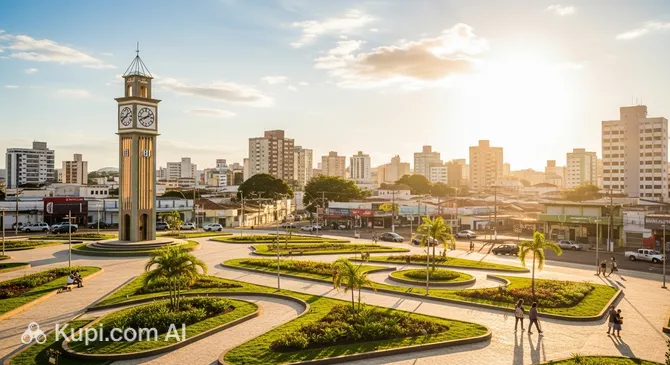
Itapevi is a dynamically developing city in the state of São Paulo, located just 35 kilometers west of the capital of Brazil. The city's name originates from the Tupi-Guarani language and translates poetically as "river of flat stones," referring to the characteristics of the local landscape. Today, it is an important industrial and residential hub within the vast Greater São Paulo metropolitan area.
Itapevi. Illustration.
Source: Kupi.com AI
Delving into the city's history, one can learn that it grew from a small village established during the construction of the Sorocabana Railway in the 19th century. Itapevi only gained independent municipality status in 1959. Since then, its population has grown significantly and now exceeds 220,000 people, creating the atmosphere of a bustling urban center where everyday life is closely intertwined with industrial development.
For travelers, Itapevi is primarily interesting as an example of a modern Brazilian suburb. While there isn't an abundance of historical monuments, the city attracts visitors with its utilitarian aesthetic, developed infrastructure of shopping centers, and proximity to the state's natural areas. A visit to Itapevi is a great opportunity to see the "real" Brazil, hidden behind the glossy tourist facades of the megacities.
Weather Overview
Itapevi is dominated by a subtropical climate typical of the São Paulo state highlands. The weather here is characterized by a warm and humid atmosphere throughout most of the year. Summer, lasting from December to February, brings daytime temperatures of +27°C...+30°C, often accompanied by refreshing tropical showers in the late afternoon.
The winter months (June–August) are characterized by cooler and drier conditions. During this period, the thermometer averages around +17°C...+18°C, but at night the temperature can drop to +10°C...+12°C, requiring light outerwear. If you are planning a trip, a detailed forecast and data on Itapevi's climate will help you pack correctly.
Precipitation in the region is unevenly distributed: the peak rainfall occurs between January and March, when heavy thunderstorms are possible. At the same time, the winter season enjoys many sunny days. It is worth noting that due to the terrain and dense urban development, air stagnation can be felt during peak hours and the dry season, so it is better to choose morning or pre-sunset hours for walks.
Average monthly temperature
Average monthly precipitation
Interesting Facts
The name Itapevi comes from Tupi words: ita (stone), pe (flat), and by (river), which literally means "river of flat stones."
The city officially became independent from neighboring Cotia on February 18, 1959, following a public plebiscite.
In the late 19th century, the region's development depended largely on coal mining and logging, which attracted numerous Italian immigrants to these lands.
The railway station in Itapevi opened as early as 1875 and was originally called "Cotia," becoming the historical core around which the modern city grew.
Itapevi has a very high population density—about 2,800 people per square kilometer, which is typical for the dynamic suburbs of São Paulo.
How to Get There
Due to its location in close proximity to South America's largest metropolis, Itapevi enjoys good transport accessibility. The main link to the outside world is the Rodovia Bunjiro Nakao highway and other regional routes. A car journey from central São Paulo typically takes between 45 and 90 minutes, though heavy traffic during peak hours should be considered. More information on how to get to Itapevi can be found on specialized transport portals.
The nearest major international aviation hubs are in São Paulo. Guarulhos Airport (GRU) and Congonhas Airport (CGH) handle flights from all over the world and other regions of Brazil. From there, you can reach Itapevi via transfer, taxi, or a combination of public transport options.
Rail travel plays a key role in the city's life. The CPTM commuter train line connects Itapevi station with the São Paulo railway network. This is a convenient and inexpensive way to travel, though trains can be very crowded during morning and evening rush hours. Intercity buses also run regularly to the city, for example, from the Tietê terminal in São Paulo.
Station
Passenger traffic
Distance
Vila Clarice train station
6
22 km
Pirituba train station
6
23 km
Jaraguá train station
6
23 km
Perus train station
6
23 km
Piqueri train station
6
23 km
Main Attractions
Itapevi is primarily an industrial and residential area, so there are few classic tourist attractions. However, the city offers several interesting locations for those who want to get a feel for the local rhythm of life. The central point of attraction is Ita Shopping Centro—a modern shopping complex where much of the city's entertainment infrastructure is concentrated, including cinemas and shops.
Among religious and architectural sites, the Church of Saint Jude Thaddeus (Paróquia São Judas Tadeu) stands out. This site is highly respected by local residents and serves as the spiritual heart of the district. It is also worth visiting February 18th Square (Praça 18 De Fevereiro), named after the day the municipality was founded. It is a pleasant public space where city events and holidays are frequently held.
For fans of active recreation, the city features Skatepark Itapevi. This modern skate park has become a popular gathering spot for youth and is one of the liveliest points on the city map. Although Itapevi does not claim to be a tourist mecca, these locations allow visitors to experience the welcoming and energetic atmosphere of a Brazilian suburb.
Local Cuisine
The gastronomy of Itapevi is a vibrant reflection of the culinary traditions of São Paulo state. The local diet is based on hearty and aromatic dishes, among which the queen of the table is feijoada—a thick stew of black beans and various types of meat. You should also definitely try coxinha—deep-fried, teardrop-shaped pastries with a delicate chicken filling, sold in almost every local snack bar.
The food culture in the city is closely linked to the rhythm of the workday. Locals often lunch at self-service restaurants (by weight), which offer a huge selection of vegetables, meats, and traditional rice and beans. In the evening, churrascarias are popular, serving excellent grilled meat prepared in the best Brazilian traditions. For dessert or a quick snack, the famous pão de queijo—airy cheese buns made from cassava flour—are perfect.
Regarding drinks, Itapevi, like all of Brazil, is famous for its excellent coffee. Popular refreshing drinks include freshly squeezed tropical fruit juices and guarana berry soda. In the evenings, caipirinha—a cocktail based on cachaça, lime, and sugar—is frequently ordered in local bars. Most popular establishments are concentrated around the Ita Shopping Centro area and along the city's main streets.
Travel Tips
Welcome to Itapevi! To make your trip to this dynamic Brazilian suburb comfortable and safe, we have prepared some practical tips from experienced travelers.
Clothing and Essentials: A subtropical climate prevails in the region, so choose light clothing made from natural fabrics. However, always carry a light jacket or sweater, as evenings can be cool and air conditioning on trains and in malls is often on full blast. Don't forget comfortable shoes for walking on hilly terrain.
Transport: For trips to São Paulo, use CPTM trains—it's faster than sitting in highway traffic. Within the city, Uber is the most convenient way to get around; it is inexpensive and safe.
Finances: The official currency is the Brazilian Real. Cards are accepted almost everywhere, even at small kiosks, but a small supply of cash for markets is useful. ATMs (Bradesco, Itaú) are easy to find in shopping centers.
Health and Safety: Itapevi is a typical suburb where general precautions should be observed. Do not display expensive gadgets or jewelry in the street, especially in the evening. Drink only bottled water.
Communication: The primary language is Portuguese. English is not understood everywhere, so download an offline translator. A few basic phrases (e.g., "Obrigado" — thank you) will help you win over the locals.
Local Etiquette: Brazilians are very friendly and open. Greetings are often accompanied by a handshake or a light hug. Be prepared for the fact that the concept of time here is quite flexible—minor lateness is considered the norm.
What to Avoid: Do not visit unfamiliar outlying areas (favelas) without being accompanied by locals. It is also not recommended to walk alone on deserted streets after sunset.
Additional Tip: Visit Ita Shopping Centro on a weekday to avoid the crowds that gather here on weekends. It's a great place for a quiet lunch and some shopping.
May your visit to Itapevi bring only positive emotions and interesting new discoveries in the heart of São Paulo state!
Entertainment & Nightlife
Nightlife in Itapevi is fairly quiet, as the city is oriented toward family living and commuting to the metropolis. The primary center for evening leisure is the Ita Shopping Centro, which features cinemas and numerous food courts. This is the most popular spot for locals to meet during evenings and weekends.
For those seeking loud parties and nightclubs, the best option is to head to neighboring cities like Cotia or to the center of São Paulo itself. Thanks to its proximity to the state capital, residents of Itapevi have access to world-class entertainment just an hour's drive away. Within the city itself, small local bars and eateries predominate, where you can grab a cold beer and listen to live music in the pagode or sertanejo styles.
Daytime entertainment in the city is mostly related to sports and walking. Itapevi Skate Park is a hub for active youth, while the central squares serve as zones for leisurely relaxation. To ensure safety during evening walks, it is recommended to stick to well-lit central streets and use reliable taxi services like Uber to reach your destination quickly.
Parks & Museums
Although Itapevi is a young and primarily industrial city, it has several locations for outdoor relaxation. The main spot for active leisure is Skatepark Itapevi. This is a modern facility with high-quality surfacing that attracts not only skaters but also those looking for a place to walk. A vibrant urban environment with small cafes and seating areas often forms around such sites.
An important point on the city map is February 18th Square (Praça 18 De Fevereiro). This central public space serves as the venue for city festivals and fairs. While there are few large forested parks within the city limits, such squares provide a necessary minimum of greenery within the dense urban landscape and are popular meeting places for residents.
There are currently no specific museums in Itapevi; however, libraries and municipal spaces often serve as cultural centers, hosting exhibitions by local artists and historical displays dedicated to the development of the railway. To visit major art galleries or world-class historical museums, residents and guests usually head to neighboring São Paulo, which is easily accessible by train.
Getting Around
The transport system of Itapevi is closely integrated into the overall network of the São Paulo metropolitan area. The main mode of transport for long-distance travel is the CPTM commuter railway (Line 8 – Diamond). Trains connect the city with São Paulo's metro stations, making trips to the heart of the metropolis relatively fast and budget-friendly. Itapevi station is located in the very heart of the city and serves as its primary transport hub.
An extensive network of municipal and intercity buses operates within the city. Buses connect residential neighborhoods with the center and neighboring municipalities such as Cotia and Barueri. Fares for trains and most buses are paid using the Bilhete Único unified transport card, which can be topped up at special terminals or via mobile apps. This significantly simplifies travel and allows for savings on transfers.
For more comfortable and faster trips, taxi services and ride-hailing apps like Uber and 99 are actively used in Itapevi. They are particularly popular in the evenings or for trips to areas far from railway stations. Bicycle rental is poorly developed in the city due to the hilly terrain and heavy traffic, so walking in the center and using cars or trains remains the most reliable way to get around.
Accommodation
In Itapevi itself, the hotel infrastructure is mainly geared toward business travelers and specialists visiting local industrial enterprises. There are virtually no luxury five-star hotels here, but the city offers decent mid-range options and budget guesthouses that provide the necessary comfort for a short-term stay.
Many visitors to the city prefer to book apartments through services like Airbnb. This allows you to find cozy accommodation in modern residential complexes, often located near Ita Shopping Centro or major transport interchanges. This type of accommodation is particularly convenient for those planning to stay in the region for a longer period or looking for a home-like atmosphere.
If you are looking for a wider selection of international-standard hotels or resort complexes, it is worth considering options in the neighboring city of Barueri or in São Paulo itself. When planning your trip, it is recommended to book accommodation in advance, especially if your visit coincides with major industrial exhibitions or Brazilian national holidays.
Nearby Cities
Itapevi is an excellent starting point for exploring the western part of São Paulo state, offering easy access to neighboring cities with their unique character. Just a few minutes' drive away is the city of Cotia, which is famous for its cultural heritage and interesting natural parks. This is the oldest settlement in the region, from which Itapevi itself once separated.
Another attractive destination for a day trip is Barueri, known for its modern Alphaville business district. Here, travelers will find high-end shopping centers, fine restaurants, and parks. It is also worth visiting Jandira and Carapicuíba, which are directly adjacent to Itapevi and provide a better understanding of the structure and life of this massive industrial region.
Exploring the surroundings of Itapevi allows you to see the many facets of Brazilian life: from quiet residential neighborhoods to dynamic business centers. Good transport links, including commuter trains and buses, make such trips easy and effortless.
Shopping & Souvenirs
Shopping in Itapevi is practical in nature and focused on the everyday needs of residents, yet tourists will still find much of interest. The city's main shopping destination is undoubtedly Ita Shopping Centro. This mall brings together popular Brazilian clothing, footwear, and cosmetic brands, as well as large supermarkets. It is a convenient place to buy everything you need in one location, while also enjoying the food court and cinema.
For those who prefer the atmosphere of street trading, open-air markets regularly operate in Itapevi. Here, you can buy fresh tropical fruits, local sweets, and traditional Brazilian pastries. Street shops in the city center offer a wide selection of goods at affordable prices—from textiles to household items. While Itapevi is not a high-fashion hub, it is excellent for purchasing quality leather goods and basic local-made apparel.
As souvenirs from Itapevi, it is worth bringing back traditional Brazilian coffee, cotton products, or local delicacies like guava paste (goiabada). Most shops are open from Monday to Saturday, while large shopping centers are also open on Sundays. International bank cards are accepted almost everywhere, but for purchases at small markets, it is better to have some cash in Brazilian Reais.