Support

Gulf of Georgia Cannery National Historic Site

About

The Gulf of Georgia Cannery National Historic Site is an impressive museum complex located in the colorful fishing village of Steveston, near the city of Vancouver. Built in 1894 on massive wooden stilts directly over the waters of the Fraser River, this cannery was once an industrial giant. Today, it serves as a living reminder of the bustling era of the fishing industry, of which Canada is rightfully proud.
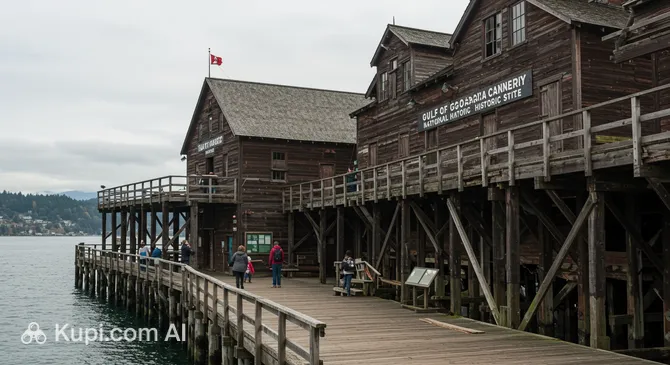
Gulf of Georgia Cannery National Historic Site. Source: Kupi.com AI

The building, nicknamed the "Monster Cannery" during its heyday for its colossal scale of production, is a unique example of late 19th-century industrial architecture. Inside, visitors will find authentic machinery, vast workshops, and interactive displays that tell the story of the hard work of fishermen and cannery staff. The location adds a special atmosphere: at high tide, you can clearly hear the lapping of the waves of the Georgia Strait beneath the museum's floorboards.

Today, this site is protected by Parks Canada and is one of the few surviving testaments to an era when salmon fishing was the backbone of the West Coast economy. The museum attracts guests not only with its history but also with its cultural diversity, as people from many different backgrounds worked side-by-side here, creating the unique identity of this region.

Contacts

For information about special events, group tours, or educational programs, you can use the museum's official contact details.

Address 12138 Fourth Ave, Richmond, BC V7E 3J1, Canada
Phone +1 604-664-9009
Website gulfofgeorgiacannery.org
Google Maps View on map

What to Do

At the Gulf of Georgia Cannery, visitors can expect a true immersion into the industrial past. You can walk along the original production lines, which feature massive early 20th-century machinery, including the famous 1906 automatic fish butchering machine. Interactive exhibits and historical films help you visualize how millions of cans of salmon were prepared for shipment around the world.

Special attention should be paid to the themed exhibitions. For instance, the "Cannery REcollections" exhibit offers a look at history through the personal belongings of workers, while multimedia projects tell of the unbreakable bond between Indigenous peoples and the region's water resources. If you are traveling with children, be sure to stop by on Friday afternoons for Story Time—engaging tales about the ocean and its inhabitants.

In addition to exploring the indoor halls, be sure to step out onto the outdoor decks to enjoy panoramic views of the Fraser River and Steveston's modern fishing fleet. The atmosphere of the vintage pier, the smell of the sea, and the authentic wooden interiors make this an ideal spot for history buffs and photography enthusiasts. Don't forget to check the events calendar: the site often hosts festivals dedicated to sustainable fishing and West Coast culture.

Getting There

The Gulf of Georgia Cannery National Historic Site is located in the picturesque Steveston neighborhood of Richmond. If you are driving from downtown Vancouver, the trip will take about 30–40 minutes (a distance of approximately 20–30 km). Take Highway 99 south, then turn onto Steveston Hwy and follow it to Fourth Ave. Free parking for visitors is available next to the complex.

For those who prefer public transportation, the most convenient option is to take the Canada Line SkyTrain to the Richmond-Brighouse terminus. From there, buses #402 or #405 run regularly and will take you directly to Steveston Village in 15–20 minutes. From the bus stop, it is a pleasant 5–10 minute walk to the cannery, allowing you to soak in the fishing village atmosphere.

During the summer months, many tourists opt for taxis or cycling routes along the waterfront. Steveston is very pedestrian-friendly, so once you arrive, you can easily combine your visit to the cannery with a stroll along the local piers, the promenade, and a visit to cozy seafood restaurants.

History & Facts

The history of this site began in 1894, when the Gulf of Georgia factory was built in Steveston during the height of the fishing boom. Until 1902, it held the status of the largest cannery in British Columbia. The facility earned its formidable nickname, the "Monster Cannery," in 1897 when an incredible 2.5 million cans of salmon were packed in a single season. In those days, canned fish was the region's primary export, and the cannery employed hundreds of people from diverse backgrounds, including Indigenous peoples, Chinese, Japanese, and Europeans.

The complex's architecture evolved alongside technological progress. It began as a simple L-shaped building with a manual production line, but by 1906, mechanical machinery began to be introduced. Over the decades, the plant survived a 1932 hurricane that destroyed an entire wing, as well as major renovations in the 1940s when new boilers were installed and a dedicated ice house was built for fish storage. In the post-war years, the facility adapted to herring processing, continuing to play a key role in Canada's economy.

By the late 1970s, the equipment had become obsolete, and industrial production ceased. The buildings were used briefly as warehouses until the local community began an active campaign to preserve this unique monument. In 1979, the government purchased the site, and in 1984, it was placed under the management of Parks Canada. The museum opened its doors to the general public in 1994, exactly one hundred years after the construction of the first workshop.

Time Needed

To leisurely explore all the exhibits, watch the introductory film, and take part in one of the guided tours, you typically need about 2–3 hours. This is plenty of time to get acquainted with the technological process of canning and experience the historic atmosphere of the "Monster Cannery."

If you plan to visit temporary themed exhibitions or if your visit coincides with special events like Story Time or World Oceans Day celebrations, it is worth setting aside half a day for a walk through the museum and the surrounding Steveston area. This will allow you to enjoy the views of the Fraser River and browse the local shops without rushing.

Working Hours

The Gulf of Georgia Cannery National Historic Site is open daily, making it easy to include in your travel itinerary any day of the week.

Museum operating hours:

  • Monday – Sunday: 10:00 AM – 5:00 PM

The museum welcomes guests year-round; however, before visiting on holidays, it is recommended to check the official website for any potential changes to the schedule or the timing of special tours.

Nearby

A visit to the historic cannery in Steveston can easily be turned into a full-day adventure, as the surrounding Richmond and Vancouver areas offer many interesting locations. Exploring nearby attractions will allow you to dive deeper into the region's atmosphere and find entertainment for every taste.

Below are some interesting places located relatively close to the national historic site:

Attraction Distance (km)
Mino Kids World 6.5
Extreme Air Park 9
Granville Island Water Park 16.5
The Fox's Den (Spray Park) 20.2
Playland Amusement Park 20.5
Confederation Park Water Park 22.3
Hume Park Spray Park 24.6
Blue Mountain Spray Park 27.2
Hawthorne Park Spray Park 27.4
FUNBOX - Vancouver 33.2

Reached the end of the page?

That means the route is fully explored