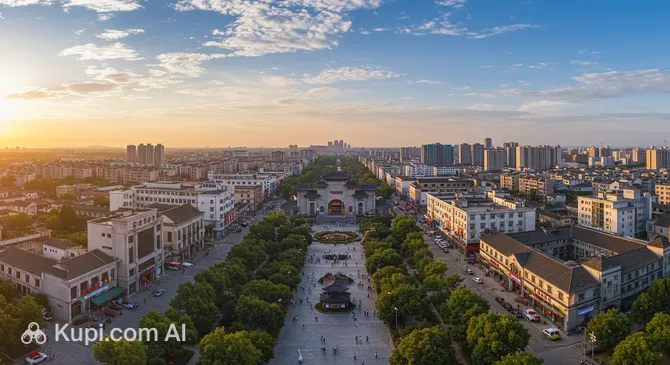
Jiaozhou is a dynamically developing port city in Shandong Province, located on the picturesque coast of Jiaozhou Bay in northeastern China. As an important administrative and industrial center within the sub-provincial city of Qingdao, it harmoniously combines maritime charm with rapid urbanization. The city's population is approximately 900,500 people, making it a significant hub of the regional economy.
Jiaozhou. Illustration.
Source: Kupi.com AI
The city attracts travelers with its coastal atmosphere and proximity to the major tourist centers of the Shandong Peninsula. Jiaozhou has a rich history, inseparably linked to the development of maritime trade in the Yellow Sea. Today, it is a place where you can feel the rhythm of modern industrial China without losing touch with the natural beauty of the bay.
Visiting Jiaozhou is a great opportunity to see a "different" China, where industrial scale meets the peaceful life of seaside districts. The city serves as a convenient starting point for exploring the Shandong Peninsula, offering guests authentic experiences and regional hospitality.
Weather Overview
Jiaozhou is located in a temperate monsoon climate zone, characterized by a distinct change of seasons. Washed by the waters of the Yellow Sea, the city features moderately cold winters and fairly humid, warm summers. When planning your trip, it is worth considering the city's climate to choose the right wardrobe for comfortable walks along the coast.
A typical summer in the region brings temperatures in the range of +25–30°C, with July being the rainiest month, averaging about 232 mm of precipitation. Winters are dry and cool: in January, the average temperature is around 0°C, with night frosts possible down to -4.5°C. The optimal time to visit is considered to be spring and autumn, when mild weather sets in, ideal for sightseeing.
Average monthly temperature
Average monthly precipitation
Interesting Facts
Jiaozhou has historically been one of the most important ports in the bay that gave the city its name, playing a key role in Shandong's maritime routes.
The city ranks 398th in population in China, representing a typical example of a fast-growing medium-sized urban center.
Jiaozhou is located in the Northern Hemisphere on the 36th parallel, which ensures distinct seasonal changes and a comfortable temperate climate.
The city is officially part of the Qingdao metropolitan area, allowing it to integrate into the region's global economic and transport processes.
The population growth dynamics here are impressive: according to various data over the years, the number of residents has increased from a few hundred thousand to nearly a million people.
How to Get There
Jiaozhou boasts excellent transport connectivity with the region's largest metropolises, making it accessible for travelers. The main transport hub nearby is Qingdao, through which most routes pass. Tourists can find detailed information about routes and transfer options in advance to plan their trip as comfortably as possible.
The most convenient way to reach the city from Beijing or Shanghai is by taking high-speed trains to Qingdao Station. The journey takes between 4 and 6 hours. After arriving at the station, the center of Jiaozhou can be reached by taxi or regular bus in just 30–60 minutes. Direct rail links also connect the city with other important centers in Shandong Province, such as Weifang and Yantai.
Station
Passenger traffic
Distance
Qingdao railway station
11
33 km
Weifang railway station
4
97 km
Rizhao Railway Station
3
106 km
Dongying South Railway Station
3
180 km
Yantai Railway Station
4
186 km
For those who prefer air travel, the nearest major hub is Qingdao International Airport. While there are no direct international flights specifically to Jiaozhou, the developed ground transport network allows for a quick journey from the terminal to any point in the city. One might also consider maritime connections via the port, though this option is more frequently used for trade than for passenger transport.
Main Attractions
The main attractions of Jiaozhou are closely linked to its unique geographical location. The primary place for walking and contemplating marine scenery is Jiaozhou Bay. This picturesque bay offers tourists excellent opportunities for ship watching and enjoying the fresh sea breeze, creating an atmosphere of tranquility away from the hustle and bustle of the metropolis.
Thanks to its proximity to Qingdao, visitors can easily reach historical districts with preserved European charm and beautiful sandy beaches. In Jiaozhou itself, the focus is on the natural landscapes of the Shandong Peninsula and the impressive port infrastructure, which looks especially striking in the rays of the setting sun.
For those who appreciate natural beauty, the region offers an introduction to the landscapes of the Yellow Sea. Although the city is oriented toward industry and logistics, its coastal areas are gradually being transformed into modern spaces for relaxation, attracting fans of ecological tourism and industrial aesthetics.
Local Cuisine
The gastronomic scene of Jiaozhou is steeped in the traditions of the famous Shandong cuisine (Lu), which is considered one of the eight great culinary schools of China. The main focus here is on the freshest seafood: oysters, shrimp, and a variety of fish caught in the waters of the Yellow Sea. Be sure to try the fried seafood with garlic and the hearty seaweed soups.
In addition to marine delicacies, the region is famous for its meat dishes and special types of noodles. Locals take pride in their ability to perfectly balance salty and fresh flavors, using a minimal amount of spices to preserve the natural aroma of the ingredients. Street food at the city's markets is an adventure in itself, where you can find authentic snacks rarely seen outside of Shandong Province.
To accompany a meal, people often choose the famous Tsingtao beer, which is produced in neighboring Qingdao and is a world-renowned brand. Local green tea, with its refreshing taste, is also popular. Major restaurants are concentrated in the port part of the city, where you can not only enjoy a delicious meal but also watch the life of the pier.
Travel Tips
A trip to Jiaozhou will be a pleasant and comfortable experience if you consider a few practical nuances characteristic of this region in advance.
Clothing and Essentials: Choose clothing according to the season, keeping the proximity to the sea in mind. In summer, light clothes and sunscreen will be useful, while in winter, windproof jackets are needed as it can be quite chilly near the water. Comfortable shoes are a must-have for walking around the port area.
Transport: To move around the city, it is most convenient to use taxis or buses. If you plan a trip to neighboring cities, choose high-speed trains departing from Qingdao.
Finances: The main currency is the Chinese Yuan (CNY). It is recommended to install the Alipay or WeChat Pay apps, as international cards are not accepted everywhere. It is worth having cash for small purchases at markets.
Health and Safety: The city is considered very safe. Pharmacies are easy to find in central areas, but medicine names may only be in Chinese, so it is better to carry a basic first-aid kit.
Communication: The main language is Mandarin (Putonghua), and the local Shandong dialect is also common. Few people know English, so download an offline translator in advance.
Local Etiquette: Chinese people value politeness and restraint. Greet people with a slight nod. Tipping is not common in restaurants and may be perceived awkwardly.
What to Avoid: Try not to engage in debates on sensitive topics and respect the rules of conduct within port facilities, as these are strictly controlled zones.
Additional Tip: Be sure to visit the local fish markets early in the morning—it is the best way to feel the true spirit of a port city.
Following these simple rules will help you focus on the beauty of the region and get the most out of your visit.
Entertainment & Nightlife
Entertainment in Jiaozhou focuses on relaxed leisure and enjoying the coastal aesthetics. Most activities are concentrated around the bay area, where locals and tourists prefer to take long walks, admiring the marine panoramas and the scale of the port facilities. Evenings are best spent tasting seafood at local establishments located near the water.
The city's nightlife is not characterized by the high intensity and noise of major megacities, making it ideal for lovers of a peaceful atmosphere. For those seeking bright lights, modern clubs, and large-scale festivals, a trip to neighboring Qingdao—just a 30–40 minute drive away—is an excellent option. Most of the region's diverse bars and concert venues are concentrated there.
Daytime entertainment includes visiting local parks and walking areas. Safety in the city is high, allowing for walks even late at night. For moving between entertainment venues, it is most convenient to use taxis, which can be easily hailed via mobile apps.
Parks & Museums
The park areas of Jiaozhou are mainly concentrated along the coastline, offering residents and guests spacious areas for walking with views of the bay. These green corners are ideal places to take a break from the industrial landscape and enjoy the sea air. During the blossoming period, the natural areas on the outskirts of the city become particularly attractive, reminding visitors of the landscape richness of the entire peninsula.
Culture enthusiasts should look for sites related to the region's development history and its maritime heritage. Although industrial facilities predominate in the city itself, popular tourist locations such as the Peach Blossom Tourism Spot are located nearby, towards Qingdao. This place is famous for its picturesque views, especially in spring when the peach trees bloom.
The museum component of the region most often touches upon themes of seafaring and the economic development of the port. Visiting such exhibitions will help you better understand how a small coastal point turned into a major modern center. It is also recommended to look out for local cultural centers, which periodically host exhibitions by traditional craft masters of Shandong Province.
Getting Around
The public transport system in Jiaozhou is represented by an extensive network of bus routes that connect residential areas, industrial zones, and the port. Buses are the most budget-friendly and reliable way to get around the city, running from early morning until late evening. For the convenience of tourists, information is duplicated in electronic applications at many stops.
Taxis are a popular and relatively inexpensive alternative to public transport. You can catch a car right on the street or call one through mobile services like Didi. This is particularly convenient for trips to neighboring Qingdao or the airport when speed and comfort are important. The fare is calculated by the meter and depends on the time of day and distance.
In recent years, the city has been actively developing infrastructure for micro-mobility: electric scooters and bicycles are in high demand for short trips. Bus fares are most often paid using transport cards or QR codes in payment systems, which significantly simplifies the process for those used to digital services.
Accommodation
The choice of accommodation in Jiaozhou allows for suitable options for both business travelers and regular tourists. The main concentration of hotels is found in the central district and near the port areas. Here, you can find everything from budget-friendly hostels and guesthouses to mid-range hotels offering a decent level of service at moderate prices.
If you are looking for more luxurious accommodation options or five-star resorts with sea views, you might consider staying in neighboring Qingdao, especially in the Shinan district. Thanks to excellent transport links, you can easily combine a holiday in a more developed tourist center with business or excursions in Jiaozhou itself.
When planning your trip, it is recommended to book accommodation in advance, especially during national holidays and the summer season when the flow of tourists to Shandong Province increases significantly. For booking, it is best to use popular Chinese and international services that provide up-to-date information on availability and prices.
Nearby Cities
Due to its favorable location on the Shandong Peninsula, Jiaozhou serves as an excellent starting point for exploring neighboring cultural and economic centers. Within a radius of several dozen kilometers are cities, each with its own unique character and set of attractions.
Just 38 kilometers away is the famous city of Qingdao—a true pearl of the coast, known for its German architecture, magnificent beaches, and famous brewery. Another interesting destination is a trip to Gaomi, located just 28 kilometers away, which attracts travelers with its rural charm and cultural heritage.
Exploring the surroundings of Jiaozhou will allow you to fully experience the diversity of Shandong Province. Whether it's modern metropolises or quiet industrial centers like Pingdu, every trip will enrich your understanding of life in this part of China.
Shopping & Souvenirs
Shopping in Jiaozhou is primarily an opportunity to purchase fresh gifts from the sea and unique local products. Markets located in the city's port district offer an overwhelming assortment of seafood. Here, you can buy both ready-to-eat products and dried delicacies, which make excellent gifts for gourmets.
If you are interested in traditional souvenirs, look for the folk crafts of Shandong Province, including embroidery and ceramics. The city is also a good place to buy high-quality Chinese tea. The shopping streets of Jiaozhou offer a standard selection of clothing and electronics stores catering to the daily needs of residents.
For large-scale shopping and brand boutiques, travelers usually head to the shopping centers of neighboring Qingdao. In Jiaozhou itself, shops operate on standard schedules, and payment is most often made through popular mobile apps, though cash Yuan is accepted at major outlets. The Tax-Free system is rare here, so do not count on tax refunds.