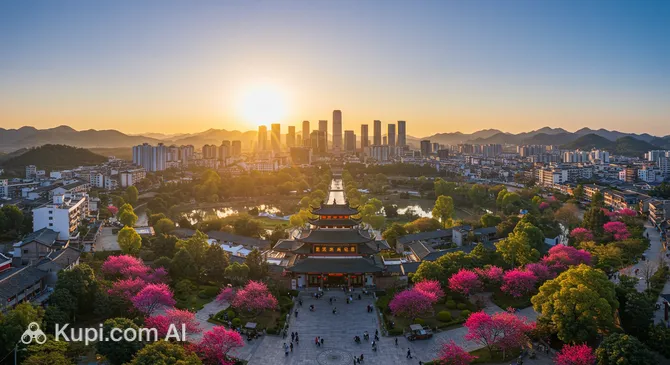
Pingdu is a dynamically developing county-level city within the sub-provincial city of Qingdao, located in the heart of scenic Shandong Province. This corner of China harmoniously combines a deep historical heritage with the status of a modern industrial center. With a population of about 1.38 million people, the city maintains a cozy atmosphere, surrounded by green landscapes and agricultural land.
Pingdu. Illustration.
Source: Kupi.com AI
Pingdu has a truly impressive past, with roots reaching back to the Han Empire. It is worth diving into the city's rich historical heritage to learn about its role as the cultural and political center of the ancient Qi Kingdom. It was here that the Donglai civilization originated, and today the city carefully preserves the memory of centuries through its museums and restored Ming-era temples.
One of Pingdu's most surprising modern features is its status as the world capital of false eyelashes—producing more than 70% of the entire world's output in this industry. However, tourists are more attracted to the peaceful tea plantations, temples, and authentic parks. We invite you to discover this hospitable city, where ancient legends meet the rhythm of modern life.
Weather Overview
Pingdu features a temperate climate with four distinct seasons, typical for the Qingdao region. Summers here are usually humid and quite hot: temperatures peak in July and August, when the thermometer often rises to +30°C, while tropical rains bring freshness. Winter is characterized by cool and windy weather, with night frosts in January, when average temperatures drop to -0.5°C.
Spring and autumn are considered the most favorable times to visit. The spring months offer gradual warming, perfect for walking through awakening tea plantations and participating in seasonal work. If you are planning a trip, be sure to study the detailed city's climate to choose the right wardrobe. Autumn in the region is dry and sunny, creating excellent conditions for outdoor sightseeing.
Average monthly temperature
Average monthly precipitation
Interesting Facts
Pingdu is a city of surprising contrasts, where ancient trees stand alongside giant beauty industry productions. Here are some facts that will surprise you:
World beauty industry leader: Pingdu holds the status of the world's largest production center for false eyelashes. Local factories account for about 70% of the global and 80% of the Chinese market.
Living witness to history: A giant ginkgo tree grows in the local museum, dating back to the Han and Tang dynasties. It is so massive that it takes at least three adults to span its trunk.
Astronomical heritage: Historically, the city is known as the verification site for the 24 solar periods of the traditional Chinese calendar, highlighting its importance to ancient science.
Architectural traveler: The ancient Panre Temple, built in the elegant Hui style during the Ming era, was carefully moved here from Xiamen, preserving its unique carvings.
How to Get There
The most convenient way to reach Pingdu is through the neighboring metropolis of Qingdao, which serves as the region's main transportation gateway. The city has excellent connections to major hubs in Shandong Province, making travel here comfortable by both public transport and rental car. You can find detailed route information on the how to get to Pingdu page.
The main air hub for tourists is Qingdao Liuting International Airport (TAO), located approximately 70 kilometers away. A trip from the terminal to the center of Pingdu by taxi or shuttle bus usually takes 1 to 1.5 hours. Travelers can also use the network of expressways connecting the county to neighboring cities like Weifang.
For those who prefer ground transport, the Pingdu railway station operates in the city, receiving regional trains. Regular bus service from Qingdao and other nearby settlements ensures a steady flow of passengers. The city's road network is well-developed, making it easy to navigate during independent trips.
Station
Passenger traffic
Distance
Weifang railway station
4
78 km
Qingdao railway station
11
86 km
Dongying South Railway Station
3
141 km
Yantai Railway Station
4
152 km
Rizhao Railway Station
3
158 km
Main Attractions
One of the city's most impressive cultural gems is Panre Temple. This ancient Ming-era structure amazes with its Hui-style architecture, featuring exquisite carved beams and painted rafters. Experienced travelers recommend arriving by 6:00 AM to catch the morning service when the building is shrouded in mystical dawn mist.
Nature and tradition lovers should definitely visit Lu Yu Square and the adjacent vast ecological tea plantations. Here, you can not only admire the winding green rows of shrubs but also participate in workshops on picking and roasting tea leaves, immersing yourself in the subtleties of a Chinese tea ceremony in the open air.
For active recreation, the local canyon with cascading waterfalls is ideal. A walk along the trails following the streams and a climb to the majestic Lu statue takes about an hour, rewarding tourists with panoramic views of the surroundings. This place is especially popular on hot summer days thanks to the cool forest tracts and the freshness of the falling water.
Local Cuisine
The gastronomic identity of Pingdu is inextricably linked to the rich traditions of Shandong cuisine and the fertility of the local land. The main emphasis here is on the freshness of ingredients: the city is famous for its sweet strawberries, juicy grapes, and pomegranates, which are often served as desserts or used in light snacks. A special place on the menu is held by dishes infused with tea grown on local plantations, giving the food a unique aroma.
In restaurants located in the central part of the city, you can try seafood specialties inspired by Qingdao cuisine. Be sure to try the stewed vegetables with local spices—a simple but incredibly delicious embodiment of regional culinary art. The eating culture here involves unhurried lunches, where attention is paid to the balance of flavors and the quality of products.
For a deeper immersion into the local atmosphere, visit the cozy establishments near the North International Trade Center or take part in a tea ceremony right on the plantations in spring. Here, guests are offered not only the drink but also traditional tea treats prepared according to the ancient recipes of Shandong residents.
Travel Tips
To ensure your trip to Pingdu is as comfortable as possible and leaves only pleasant impressions, we have prepared some practical tips.
Clothing and gear: Choose your wardrobe according to the season: light clothing and sun protection are necessary in summer, while a thick jacket is needed in winter for protection against the wind. Comfortable sports shoes are a must for walks in canyons and tea plantations.
Transport: The most convenient way to move around the city is by taxi or city bus. If you plan to explore the surroundings, renting a car is a good solution, especially since many hotels provide free parking.
Finances: Chinese Yuan (CNY) is the currency in use. Although major shopping centers accept cards, it's better to have cash or set up payment systems (Alipay, WeChat Pay) for visiting markets and small temples.
Health and safety: Pingdu is a safe city, but it's always worth carrying a basic first-aid kit. Pharmacies are easy to find in central areas, and if necessary, medical care can be obtained at municipal hospitals.
Communication: The main language is Chinese. English is not widely spoken, so download an offline translator in advance and save the addresses of hotels and attractions in Chinese characters.
Local etiquette: When visiting temples, behave with restraint, maintain silence, and follow dress code rules, aiming to cover your shoulders and knees.
What to avoid: Try not to plan important activities during the intense midday heat in summer, and avoid disturbing local residents during morning temple services.
Pro tip: Visit the tea plantations on weekdays early in the morning—this will allow you to enjoy the views without the crowds and catch the beautiful mist.
Enjoy your stay in this wonderful corner of China!
Entertainment & Nightlife
Leisure in Pingdu is primarily focused on quiet, restorative relaxation. You won't find noisy mega-clubs here, but you can enjoy the peaceful atmosphere of evening strolls. Xianhe Park is considered the main place to end the day for locals and tourists alike, where lights come on at dusk, creating an ideal setting for a promenade.
For fans of unusual experiences, the night sky over the tea plantations will be a real discovery. The distance from the bright lights of big cities allows for stunning night sky photography. Those seeking gastronomic entertainment usually head to the North International Trade Center, where the city's best restaurants, open late into the evening, are concentrated.
If you're looking for a more dynamic nightlife with bars and karaoke, check out the venues in the central part of the county. Overall, Pingdu is a place where the evening is best spent in long conversation at a teahouse or tasting local delicacies. For safe walks and more active amusement parks, you can always head to neighboring Qingdao, which is just an hour's drive away.
Parks & Museums
The cultural heart of the city is undoubtedly the Pingdu Museum, located on Hongqi Street. Spanning nearly two thousand square meters, it features large-scale exhibitions dedicated to the ancient Donglai civilization, the culture of stone carving, and the history of the 24 solar periods. Of particular value are the Laozi Temple hall and the courtyard, home to the legendary ginkgo tree that has become a symbol of generational continuity.
For leisurely outdoor relaxation, Xianhe Park is ideal. It is conveniently located within walking distance of major hotels and is a favorite spot for city residents. The park area is famous for its scenic ponds and well-kept alleys, which are beautiful at any time of year, but especially during the spring blossom.
Equally interesting is the Jicui Pavilion, notable for its majestic jade columns. The museum complex also includes a unique gallery of steles where you can see ancient calligraphic inscriptions. Visiting these places allows you not just to see historical artifacts, but to feel the Taoist philosophy that has permeated these lands for centuries.
Getting Around
The transportation system in Pingdu is simple and efficient, providing links between the central districts and the county's numerous towns. Bus routes form the backbone of urban transport, covering all key attractions and shopping areas. Fares are low, and payment is most often made via mobile apps or in cash upon boarding.
Taxis are the most comfortable way to get around, especially for trips to remote tea plantations or the canyon. You can hail a car on the street or use online booking services popular in China. For those who prefer an active lifestyle, bicycle rental points are available in Pingdu, providing a great way to see the parks and central streets at your own pace.
If you plan trips to neighboring cities, Pingdu railway station offers regular regional services. Intercity buses also connect the county with Qingdao and Weifang, departing from the bus station throughout the day. For tourists in their own or rented cars, the city is convenient due to good roads and available parking spaces at most hotels and tourist sites.
Accommodation
The hotel sector in Pingdu offers a modern level of comfort that can surprise even experienced travelers. One interesting feature of local hotels is the implementation of high technology: you can often find 24-hour robot service, providing delivery of necessary items directly to your room. For guests who value a personal touch, many establishments offer professional butler services.
The most convenient area to stay is the zone around Hongqi Street and Xianhe Park. Staying here puts you within walking distance of the main museums and shopping centers. If your primary goal is ecotourism, consider accommodation closer to the tea plantations, which offer magnificent views of the rural landscapes and a quiet atmosphere.
The price range in Pingdu is quite wide, from budget guesthouses to high-class business hotels. During peak seasons, especially during the spring tea harvest or holidays, it is recommended to book accommodation in advance through international or local online platforms. A great advantage for auto-tourists is the availability of free parking provided by almost all major hotels in the city.
Nearby Cities
Pingdu serves as an excellent starting point for exploring the eastern part of Shandong Province, allowing for exciting day trips to neighboring cities. Proximity to major transport arteries makes traveling around the region easy and rewarding.
First, you should pay attention to the neighboring city of Gaomi, which is only 48 kilometers away. It is known for its deep cultural traditions and folk crafts. Also of interest is Laixi, located just over 50 kilometers away, where you can find scenic lakes and extensive park areas, ideal for outdoor relaxation.
For those who want to trade the quiet atmosphere of the county for the rhythm of a large metropolis, a trip to Qingdao is a must. The journey takes about an hour and a half, leading you to the Yellow Sea coast, where famous beaches, German colonial architecture, and legendary breweries await. We highly recommend not limiting yourself to one city and exploring the richness of this region.
Shopping & Souvenirs
Shopping in Pingdu is primarily an opportunity to purchase unique local products and goods. The city's main shopping hub is the North International Trade Center, where shops of famous brands, supermarkets, and cozy restaurants are gathered under one roof. Here, tourists can find everything they need, from daily items to electronics.
If you're looking for something truly authentic, head to the local markets or specialized shops at the tea plantations. Local tea is rightfully considered the most popular souvenir from Pingdu, possessing a delicate taste and aroma. It's also worth looking for farm products: dried strawberries, grapes, and pomegranates, which are grown here in large quantities.
Don't forget about the city's unique status as the "eyelash capital"—in local stores, you can find an incredible selection of these beauty products at very attractive prices. Most retail outlets operate from morning until late evening, and payment is accepted via both mobile payments and cash. A walk through the shopping rows of Pingdu will allow you not only to make pleasant purchases but also to better feel the rhythm of life in this city.