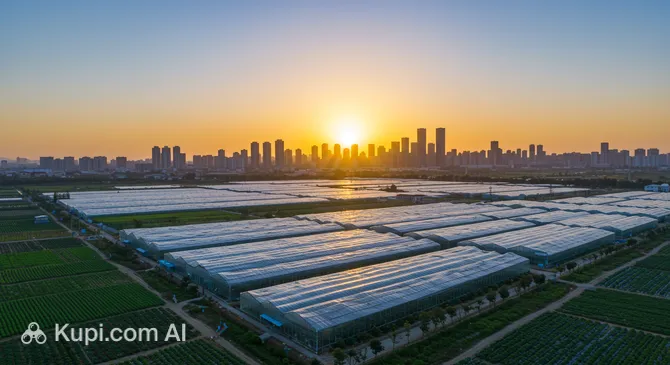
Shouguang is a remarkable destination that rightfully bears the title of the "Vegetable Capital" of China. Located on the fertile plains of Shandong Province, this city harmoniously combines a rural charm with cutting-edge agricultural technology. Here, near the shores of Laizhou Bay, the lion's share of the country's vegetable produce is born, transforming an ordinary county-level city into a global center for innovative farming.
Shouguang. Illustration.
Source: Kupi.com AI
The city's geographic position at the mouth of the Xiaoqing River has shaped its development for millennia. With a population of over a million people, Shouguang offers tourists an atmosphere of tranquility and steady progress. The history of the region is rooted in the Neolithic era, and the city received official county status as early as 148 BC during the Han Dynasty, making a walk through its lands a brush with ancient heritage.
Travelers are drawn here not only by the vast greenhouse complexes that resemble sets from science fiction films but also by unique natural sites such as Jingshan mountain. Visiting Shouguang is a rare opportunity to see firsthand how Confucian traditions and ancient irrigation systems coexist with modern "smart" greenhouses. We invite you to discover this "green" corner of the Middle Kingdom, where respect for the land is elevated to a cult status.
Weather Overview
Shouguang is characterized by a humid continental monsoon climate, typical of Shandong Province. This means a clear change of seasons: expect a warm and humid summer, as well as a cool and dry winter. The average annual temperature in the region stays around 12–13°C, creating ideal conditions for year-round vegetable farming, for which the city is so famous.
The hottest months are July and August, when the thermometer can rise to +32°C. During this same period, the most rainfall occurs, contributing to the fertility of the plains. In winter, especially in January, the temperature can drop to -5°C, and the air becomes dry and clear. To better plan your visit, we recommend studying the city's climate in advance.
The most comfortable times to visit Shouguang are spring and autumn. During these periods, the weather is mild and sunny, and rain is rare. Spring is especially notable for the start of the agricultural season and large-scale exhibitions, while autumn delights with moderate warmth and a rich harvest, making walks through local greenhouse complexes and natural parks as pleasant as possible.
Average monthly temperature
Average monthly precipitation
Interesting Facts
Shouguang is often called the "Vegetable Universe," placing it alongside global agricultural leaders like Almeria in Spain and California in the USA.
The city's name translates from Chinese as "Longevity and Light," reflecting the region's favorable ecology and sunny climate.
This county is home to Jingshan mountain—a unique site considered the smallest mountain in China; in fact, only a tiny peak is visible above the surface.
Local farming methods were described as early as the 6th century in the famous treatise by Jia Sixie, confirming the city's status as the cradle of Chinese agronomy.
Shouguang is home to China's first revolutionary "smart" greenhouse model, which is fully managed by automation and artificial intelligence.
How to Get There
Shouguang, located in the heart of Shandong Province, enjoys good transport accessibility despite its rural status. The city is located just 50 kilometers from the major transport hub of Weifang, through which most routes pass. Travelers can easily plan their journey using Shouguang as part of a larger itinerary through eastern China. More detailed information about routes can be found in the section on how to get to Shouguang.
The nearest major international aviation hub is Qingdao Jiaodong International Airport. From there, you can reach Shouguang by shuttle bus or taxi after first traveling to Weifang. Domestic flights are also served by Weifang’s own airport, which significantly simplifies logistics for those flying from Beijing or Shanghai.
Rail travel is the most popular and fastest way to get around. High-speed trains from Beijing reach Weifang station in about 4 hours, and from Qingdao in just one hour. Upon arrival at Weifang station, you can transfer to regular intercity buses or take a taxi to reach the center of Shouguang in 30-60 minutes. The roads in the region are modern and high-speed, making the trip comfortable.
Station
Passenger traffic
Distance
Weifang railway station
4
32 km
Dongying South Railway Station
3
60 km
Qingdao railway station
11
162 km
Jinan railway station
8
163 km
Rizhao Railway Station
3
174 km
Main Attractions
The main pride and most recognizable attraction of Shouguang are its greenhouse complexes. These colossal structures, which locals call "vegetable universes," cover thousands of hectares. Special tours are organized for tourists, where you can see innovative methods of growing plants without soil and learn about the agrotechnologies of the future that are turning an ordinary county into a global agricultural hub.
For lovers of natural oddities, a visit to Jingshan mountain is a must. It is officially recognized as the smallest mountain in China. Rising above the plain by only a few dozen centimeters, it looks more like an ordinary rock, but geologically it is a full-fledged peak with roots going deep underground. It is a perfect spot for fun photos and a light stroll through the surrounding fields.
For those seeking solitude and peace, the shores of Laizhou Bay and the mouth of the Xiaoqing River offer picturesque ecosystems. Here, you can observe the traditional salt industry, which has thrived in the region since the days of ancient dynasties, or go fishing with local residents. The landscapes of Shouguang's coastal plains are particularly beautiful at sunset, when light reflects in the waters of numerous canals and irrigation systems.
Local Cuisine
Shouguang's culinary identity is inextricably linked to its status as the country's primary vegetable garden. Local cuisine is based on the freshest vegetables: cucumbers, tomatoes, various types of peppers, and eggplants that hit the table straight from the greenhouses. Dishes are characterized by lightness and an emphasis on preserving the natural flavor of the ingredients. Vegetables are often stewed or served in refined salads with the addition of seafood from the nearby Laizhou Bay.
As part of Shandong Province, Shouguang inherits the traditions of the famous "Lu" cuisine. It is worth trying the local Ludao—a fragrant onion pancake—as well as various pickles prepared according to ancient recipes. The historically developed salt industry has given the region mastery in preservation, so pickled vegetables are considered a real delicacy here, perfectly complementing main courses of rice and meat.
The city's gastronomic scene features cozy farm cafes and restaurants specializing in organic food. Locals prefer to dine at "farm-to-table" establishments, which serve homemade rice wine and strong green tea. A meal in Shouguang is not just food consumption, but a tribute to the fertility of the land and the labor of the farmers, creating a unique sense of authenticity and health.
Travel Tips
Preparing for a trip to Shouguang requires considering its unique agricultural character. We have gathered some useful tips to help make your journey as comfortable and memorable as possible.
Clothing and Essentials: Choose comfortable, closed-toed shoes for walking through fields and the Jingshan trails. In summer, light clothes made of natural fabrics and sunglasses will come in handy; in spring and autumn, bring a windbreaker.
Transport: For getting around the city and its surroundings, it is most convenient to use taxis via the Didi app. This will eliminate translation difficulties when explaining your route.
Finances: Digital payments (Alipay/WeChat) are preferred in Shouguang, but in rural areas and at small markets, it's worth having a supply of cash yuan. ATMs are available in the center, but international cards do not work everywhere.
Health and Safety: The city is very safe. Pharmacies are easy to find in the center, but it is better to bring specific medications with you. Always drink only bottled water.
Communication: English is a rarity here. Be sure to download an offline translator and keep a hotel card with the address in Chinese.
Local Etiquette: Shouguang residents are very friendly but conservative. Greet people with a slight nod and try not to make noise in public places.
What to Avoid: It is strictly forbidden to enter private greenhouses and touch plants without the owners' permission. This could violate the complex quarantine regime of the facilities.
Time for a Visit: The best time for a trip is April or May, when the famous vegetable expo takes place and the weather is most favorable for excursions.
May your introduction to China's "vegetable heart" be filled with bright discoveries and warm interactions with the local people!
Entertainment & Nightlife
Entertainment in Shouguang is primarily contemplative and educational, centered around agrotourism. The main event of the year is the International Vegetable Sci-tech Expo, held annually and attracting thousands of guests. During this time, the city transforms into a massive festive venue with incredible sculptures made of vegetables, tastings, and cultural performances showcasing the richness of the local harvest.
The nightlife in the city is quite quiet and measured, which is typical for agricultural centers. Most activity after sunset is concentrated in the restaurants of the central district, where locals gather for long dinners. For evening relaxation, walks along the landscaped river embankments or visits to local markets, which remain lively until late in the evening, are best.
For active lifestyle enthusiasts, Shouguang offers excellent conditions for cycling across the flat plains. An extensive network of roads between greenhouses and farmland allows for safe exploration of the surroundings. Fishing at the mouth of the Xiaoqing River is also popular, offering a quiet day in nature, away from the city bustle, enjoying the silence and fresh country air.
Parks & Museums
The main open-air "museums" of Shouguang are its thematic greenhouse parks. These venues demonstrate more than just plants; they showcase the entire evolution of farming: from the simplest irrigation canals of the Tang Dynasty to futuristic vertical farms. A walk through such complexes replaces a trip to a history museum, allowing you to visually see how technology has changed the life of an entire region over centuries.
The natural park around Jingshan mountain offers guests hiking trails with panoramic views of endless agricultural lands. Despite its modest size, the mountain is surrounded by a well-kept area that is a favorite vacation spot for locals. This is a great place for quiet reflection and getting to know the natural landscape of the Shandong plains.
In the coastal zone, near Laizhou Bay, there are rural recreation parks that are particularly attractive for birdwatching and ecotourism enthusiasts. In these areas, you can observe seasonal bird migrations and enjoy the wildlife of the river mouths. Although there are no giant art galleries in the city itself, the very atmosphere of Shouguang with its "living exhibits" in greenhouses creates a unique cultural landscape dedicated to creative human labor.
Getting Around
Shouguang's transport system reflects its character as an important agricultural center. The basis of public transport is bus routes that connect the city center with numerous greenhouse farms and neighboring settlements. Buses run regularly at intervals of 20–30 minutes, allowing tourists to move relatively easily between key points of interest, such as markets and parks.
For more comfortable and faster trips, especially to remote farms or natural sites, it is recommended to use taxis or the popular Didi app. Ride prices are quite affordable, and drivers generally know the locations of all significant greenhouse complexes well. This is the most convenient way to get around for those who do not want to depend on public transport schedules.
Given Shouguang's flat terrain, bicycles and electric scooters are an excellent alternative to motorized transport. Two-wheeler rentals are well-developed in the city, making them perfect for a leisurely exploration of the endless fields and greenhouses. Flat roads and a slow pace of life make cycling in Shouguang not only a convenient way to get around but also a pleasant type of outdoor recreation.
Accommodation
Accommodation options in Shouguang are primarily geared toward business travelers and agrotourists. Most hotels are concentrated in the central part of the city. Here you can find both middle-class Chinese hotel chains and budget-friendly options. The service level in Shouguang's city hotels usually meets business travel standards—clean, functional, and with an emphasis on local hospitality.
A unique feature of the region is the agro-hotels and guesthouses located in the immediate vicinity of the greenhouse complexes. Staying in such places allows you to fully immerse yourself in the atmosphere of the "Vegetable Capital" and enjoy views of the endless fields right from your room window. This is an excellent choice for those who want to wake up to the sounds of rural life and have breakfast with produce harvested literally a few meters from the table.
For tourists who prefer more luxurious conditions, it is recommended to consider staying in nearby Weifang, where the choice of five-star hotels is significantly wider. You should book accommodation in Shouguang in advance via popular services like Trip.com, especially during the International Vegetable Expo (April-May). Prices range from 200 to 500 yuan per night depending on the level of comfort.
Nearby Cities
Shouguang serves as an excellent starting point for exploring the surroundings of Shandong Province, where ancient history meets the modern rhythm of life. In just half an hour, you can reach the city of Qingzhou, which is among the ancient capitals of China. It is famous for its old town, magnificent Buddhist statues in the local museum, and picturesque mountains, making it an ideal place to immerse yourself in the country's cultural heritage.
Just 37 kilometers away is Weifang—the administrative center and the world capital of kites. This is a larger and more bustling city with spacious parks and numerous shopping centers. A trip there will allow you to swap rural landscapes for urban ones, visit the unique Kite Museum, and enjoy a variety of Shandong cuisine restaurants.
For those willing to spend a bit more time on the road, we recommend heading to the coastal city of Dongying, located in the Yellow River Delta. Exploring neighboring cities will significantly enrich your journey, allowing you to see different facets of life in East China—from quiet agricultural counties to noisy metropolises and historical centers.
Shopping & Souvenirs
Shopping in Shouguang is primarily the unique experience of visiting the country's largest vegetable markets. You won't find high-fashion boutiques here, but you can immerse yourself in an atmosphere of abundance of the freshest produce and seeds. The central market squares and the specialized exhibition complex are the main trading points where you can see rare varieties of vegetables being prepared for export worldwide.
As original souvenirs from the "Vegetable Capital," tourists often bring back famous local pickles and marinades in gift packaging, as well as dried vegetable sets. Miniature greenhouse models and souvenirs related to Jingshan mountain are in high demand. For those interested in gardening, Shouguang offers a huge selection of seeds and specific equipment that is hard to find in other regions.
Medium-sized shopping centers are concentrated near the main city streets, offering a standard range of everyday goods. Shops usually operate from 9:00 AM to 9:00 PM. Large retail outlets accept cards and mobile payments via WeChat or Alipay, but at markets and small shops in rural areas, it is still advisable to have some cash yuan with you.