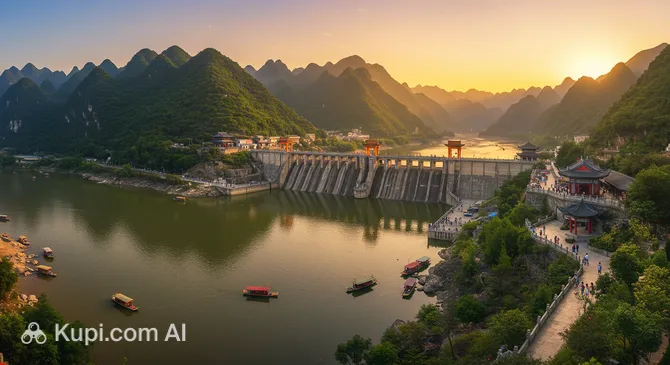
Located in the heart of Henan Province, on the picturesque banks of the great Yellow River, the city of Sanmenxia is a fascinating blend of ancient heritage and China's modern engineering achievements. Often referred to as the cradle of Chinese civilization, today this city of over 2.2 million people attracts travelers with its peaceful atmosphere and unique natural landscapes.
Sanmenxia. Illustration.
Source: Kupi.com AI
Sanmenxia's geographic location at the confluence of the Yellow and Shiji rivers has defined its historical significance. The city's rich heritage dates back to deep antiquity, spanning the Shang and Zhou dynasties, making it a must-visit for archaeology and history buffs. The surrounding terrain is impressively diverse, ranging from rugged canyons to the vast, mirror-like waters of reservoirs.
The main magnet for tourists here is the famous Sanmenxia Dam—a grand hydroelectric structure that has become a symbol of the river's conquest. The city is actively developing eco-tourism, offering guests nature retreats, walks along the embankments, and an introduction to the traditional culture of central China. A visit to Sanmenxia is an opportunity to see the real, non-touristy China, which has preserved its grandeur and tranquility.
Weather Overview
The climate in Sanmenxia is distinctly continental, with a clear change of seasons. To make your trip as comfortable as possible, it's worth checking the weather in the city in advance. Summers here are usually warm and humid: in July and August, the average air temperature is around +25...+30°C, with frequent heavy rains.
Winters in the region are cool and dry, with average temperatures in January hovering around freezing and dropping to -5°C at night. Snowfall is rare. Spring and autumn are considered the most favorable periods for tourism due to moderate temperatures (+15...+20°C), although April is often the windiest month of the year.
Overall, expect a warm summer with occasional thunderstorms and dry, bracing winters. For walks along the river at any time of year, it's worth bringing a light jacket, as it can be cooler by the water than in the residential quarters.
Average monthly temperature
Average monthly precipitation
Interesting Facts
Sanmenxia is located at the first major dam built on the Yellow River, which still plays a key role in the region's power supply.
The city lies in the heart of the "cradle of Chinese civilization"—Henan Province, where the concentration of archaeological sites is among the highest in the world.
Thanks to the enormous reservoir, a unique microclimate has formed in the city, promoting the development of eco-tourism and attracting migratory birds during the winter.
The city's name literally translates as "Three Gate Gorge," referring to the historical terrain before the dam was constructed.
Sanmenxia is an important mining center for minerals including gold and bauxite, making it a significant industrial hub in central China.
How to Get There
The transport accessibility of Sanmenxia makes it a convenient stop on a route through central China. The city is connected to neighboring provinces by a network of modern expressways, and its developed railway infrastructure allows for quick travel to the country's largest metropolises. If you are planning a trip, it's worth exploring all the options for how to get there in advance.
While the city itself has a small airport serving domestic flights, most travelers prefer to use major air hubs in nearby cities like Xi'an or Luoyang. From there, you can comfortably reach Sanmenxia by high-speed train or intercity bus, with travel times ranging from 1 to 3 hours depending on the chosen route.
The railway is the most popular and efficient way to travel. High-speed trains connect Sanmenxia Railway Station with hubs such as Zhengzhou (just 1–2 hours away) and Beijing. Trains run regularly, providing reliable connections to China's eastern and western regions.
Station
Passenger traffic
Distance
Yuncheng North railway station
4
42 km
Luoyang Longmen railway station
7
116 km
Linfen West railway station
4
149 km
Shangluo North Railway Station
2
153 km
Xi'an North railway station
10
213 km
Main Attractions
The city's main pride and most recognizable landmark is the Sanmenxia Dam on the Yellow River. This massive structure not only performs an important hydroelectric function but also serves as a magnificent observation deck. Tourists can take guided tours of the complex, which offer breathtaking panoramic views of the powerful currents of the "Mother River" and the vast reservoir, affectionately called the "Pearl of Henan" by locals.
For fans of active recreation and natural beauty, a trip to the Mohan Canyons is a must. This place is striking with its sheer cliffs and winding hiking trails. A walk through the canyons allows you to fully enjoy the region's pristine nature and take impressive photos against the backdrop of rugged mountain landscapes. Regular cruises are also organized along the river, offering a view of the banks from a fresh perspective.
The region's historical legacy is represented by numerous archaeological zones and ancient temples in the city's outskirts. Exploring these sites allows you to touch the eras of the Shang and Zhou dynasties, when the foundations of Chinese statehood were laid. Here, you can see the remains of ancient settlements and religious buildings that emphasize Sanmenxia's status as one of the most important cultural centers of ancient China.
Local Cuisine
The culinary traditions of Sanmenxia are closely linked to the gastronomy of Henan Province, where wheat flour dishes form the basis of the diet. You must try the local bifun noodles and various types of dumplings. Special attention should be given to shaoma—fried flatbreads prepared here with various fillings—and tender stewed duck, with recipes passed down through generations.
Due to its proximity to the Yellow River, fresh river fish is always on the menu at local restaurants. It is often steamed with ginger or baked in a spicy sauce. Fans of bold flavors will enjoy the traditional spicy beef soup with vegetables, which is perfect for warming up on cool days. Street food at the city's markets offers a great opportunity to try authentic snacks in a relaxed atmosphere.
Among beverages, classic Chinese green tea and local rice wine remain favorites. The city's gastronomic scene features both traditional establishments with lazy Susans and modern cafes. The best restaurants are often located near the tourist areas by the dam, offering guests not only delicious food but also pleasant views of the water.
Travel Tips
Planning a trip to Sanmenxia will be easier if you consider a few practical tips from experienced travelers. This city is hospitable, but knowing the local specifics will make your stay much more comfortable.
Timing and Clothing: The ideal time to visit is April, May, or autumn (September–October). Summer can be muggy, and strong winds often blow in spring. Be sure to bring comfortable shoes for walking in the canyons and a windbreaker.
Getting Around Town: Use the Didi app to call a taxi. It's safer and more convenient since the price is fixed and the destination can be specified on the map.
Finances: Mobile payments dominate in China. Link your card to Alipay before your trip. Cash is only useful in small shops, and international cards are mostly accepted at large hotels.
Communication: English is not widely spoken in the city. Download an offline translator and save the names of attractions and your hotel address in Chinese characters (hanzi) beforehand.
Navigation: Google Maps may not work correctly. Use Baidu Maps or Apple Maps for accurate routes and business locations.
Health: Drink only bottled water. Pharmacies are common, but it's better to bring specific medications with you.
Local Etiquette: Maintain cleanliness and follow environmental rules, especially near the reservoir. Behave respectfully when visiting temples; while there is usually no strict dress code, it's best to avoid overly revealing clothing.
What to Avoid: Do not attempt to photograph objects marked with "No Photography" signs (especially in the industrial zones of the dam)—this could lead to issues with security.
May your journey to this wonderful region on the banks of the Yellow River bring only bright impressions and pleasant discoveries!
Entertainment & Nightlife
Entertainment in Sanmenxia is primarily geared towards quiet family vacations and nature contemplation. During the day, most activity is concentrated in the coastal areas, where boat tours on the reservoir, picnics in landscaped parks, and outdoor walks are popular. During festivals, which often take place at the dam in spring and autumn, you can see traditional performances and festive shows.
The city's nightlife is characterized by its relaxed pace and lack of noisy clubs. Local residents and guests prefer to spend their evenings in numerous karaoke bars (KTV) and cozy restaurants in the city center, where they can enjoy a long dinner and conversation. Cultural performances featuring folk dances and music are sometimes held in tourist areas, offering a taste of Henan province's local color.
For those looking for daytime cultural activities, theaters and exhibition halls are open throughout the city. Nighttime safety is high, and the illuminated embankments are perfect for long walks. To get back to your hotel late in the evening, it is most convenient to use taxis or ride-hailing apps, which operate around the clock.
Parks & Museums
The vast riverside parks stretching along the reservoir are considered the city's primary leisure spots. Well-maintained alleys, sunrise yoga zones, and cozy picnic areas make them popular with both locals and tourists. A walk along the embankment is the best way to feel the majesty of the Yellow River and appreciate the scale of the city's hydroelectric structures.
For those who want to dive deeper into the region's history, the Sanmenxia Museum opens its doors. Its exhibits tell the detailed story of the construction of the famous dam, the ecology of the "Yellow River," and the significance of this hydraulic hub for the entire country. The museum also showcases unique archaeological finds discovered during excavations in Henan Province, allowing visitors to trace the development of civilization in this area over millennia.
The city's green zones are constantly expanding, turning Sanmenxia into a veritable garden on the riverbank. Besides the central parks, the small squares with traditional Chinese pavilions deserve attention, where you can see elderly people practicing Tai Chi in the mornings. These islands of tranquility provide a wonderful contrast to the industrial power of the dam and the modern residential quarters.
Getting Around
The public transport system in Sanmenxia is represented by an extensive network of bus routes connecting the city center with the railway station, the dam, and residential areas. Buses run regularly, and fares remain very low, making them a convenient option for budget travelers. Although there is no metro in the city, its compact layout allows for quick travel between main points of interest.
For maximum comfort, tourists most often use taxis or ride-sharing services (the most popular being Didi). A trip from the station to a central hotel usually takes no more than 10–20 minutes. Taxis can be hailed on the street or called via an app, which is especially convenient if you don't speak Chinese—simply drop a pin on the map.
In park zones and along the embankments, bicycle and electric scooter rentals are popular. This is an excellent way to explore the coastal area at your own pace while enjoying views of the reservoir. Rentals are usually handled via QR codes on the vehicles themselves. Travelers are advised to always have a city map on their smartphone (such as Baidu Maps) to easily navigate public transport routes.
Accommodation
A wide range of accommodation options is available for guests of Sanmenxia, from modern chain hotels to cozy guesthouses. The most popular establishments are located along the shoreline of the reservoir, as they offer guests magnificent views of the Yellow River and the dam. Mid-range and business-class hotels (3–5 stars) often feature swimming pools, fitness centers, and restaurants serving authentic cuisine.
If you prefer to be at the center of city life, consider hotels in the Central Business District. The main infrastructure is concentrated here: shopping centers, transport hubs, and banks. For budget travelers, small hotels and rental apartments are available in tourist zones, allowing for significant savings on accommodation without sacrificing comfort.
During peak tourist seasons, especially during national holidays and spring festivals, it is recommended to book accommodation in advance. Popular international services and local booking platforms offer up-to-date prices and reviews from real visitors. The overall price range in the city remains quite affordable compared to China's coastal megacities.
Nearby Cities
The city of Sanmenxia serves as an excellent starting point for exploring central China, offering easy access to the historical and cultural centers of neighboring provinces. In just a few hours by high-speed train, you can reach Luoyang, famous for its Longmen Buddhist Grottoes and ancient pagodas, or travel to the majestic Xi'an to see the Terracotta Army.
In the immediate vicinity, there are other interesting cities. For example, Yuncheng attracts tourists with its unique salt lake, often compared to the Dead Sea, while the city of Lingbao is known for its mountain landscapes and historical ties to Laozi. You might also consider a trip to Xiezhou, home to one of the largest temples dedicated to Guan Yu.
Exploring the surrounding areas allows for a deeper understanding of the diversity of Chinese culture and lets you see how the landscape changes from river valleys to the arid plains of Shaanxi. Regardless of the chosen direction, trips from Sanmenxia promise to be rich and informative.
Shopping & Souvenirs
Shopping in Sanmenxia combines the convenience of modern shopping centers with the flavor of traditional markets. In the central part of the city, there are large malls featuring both Chinese and international brands. Here, you can find quality clothing, electronics, and cosmetics. Payment in most stores is made via popular mobile apps like Alipay or WeChat Pay, though bank cards are accepted at many major outlets.
For unique souvenirs, head to the specialized shops near the dam and in the tourist zones. The most popular gifts from this region are detailed models of the dam, collectible Chinese tea, silk products, and traditional Henan crafts. Also, keep an eye out for local ceramics and calligraphy, which make excellent mementos of your trip.
Markets located near the river offer tourists a chance to immerse themselves in local life. Here, you can buy fresh fruit, spices, and local delicacies. While large shopping centers operate on a standard schedule until late evening, markets are best visited in the morning. The Tax Free system is not as widespread in the city as in Beijing or Shanghai, so it's worth checking for this option with the seller when making large purchases.