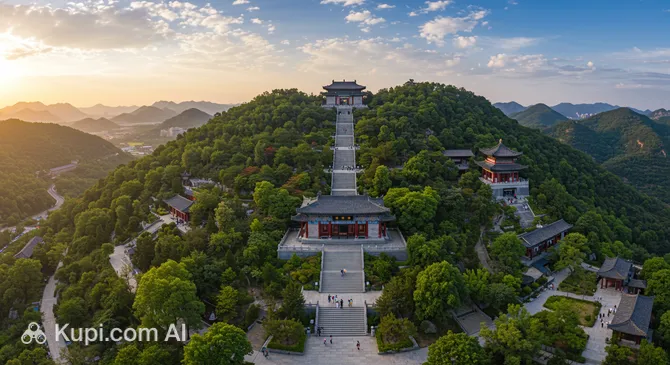
Located on the southern edge of the Loess Plateau in Shaanxi Province, Tongchuan is a fascinating blend of industrial power and ancient cultural heritage. Unlike the bustling metropolises of China, this city of approximately 834,000 people maintains the atmosphere of a labor center, where modern production sits alongside traditional agricultural lands famous for their apple orchards and walnut plantations.
Tongchuan. Illustration.
Source: Kupi.com AI
The city is widely known as one of the primary centers for ceramic and porcelain production. Tongchuan's rich heritage is inextricably linked to the legendary Yaozhou kilns, whose products were renowned throughout imperial China. Today, this destination attracts those who want to see the authentic, unpolished side of China, learn about the history of craftsmanship, and enjoy the rugged yet majestic landscapes of the mountain plateau.
Despite its industrial status, Tongchuan offers travelers unique historical monuments, such as the forest sculptures of Yaowang Mountain and the ruins of ancient palaces. It is a city for the thoughtful explorer who values authenticity and wishes to look into the very heart of the industrial and artisanal history of the Shaanxi region.
Weather Overview
Tongchuan's climate is characterized as moderate continental, significantly influenced by the city's location on the Loess Plateau. Travelers should expect a fairly stark change of seasons: summers are warm and humid, while winters are cold and predominantly dry. To better prepare for your trip, it is recommended to check the detailed climate of the city in advance.
In the winter months, especially in January, average temperatures hover around -0.6°C, with nighttime frosts reaching -5°C. There is little precipitation in winter, but the air can be dry. Summer brings warmth: in July and August, average figures are around +24...+25°C, although on certain days the thermometer can rise to +37°C. Most of the annual precipitation occurs during the summer period, often in the form of short but intense rains.
Spring and autumn are considered the most favorable times to visit, when the weather remains moderate. However, dusty winds are possible on the plateau in spring, which is a geographical feature of the region. The combination of the city's industrial character and its topography sometimes affects air clarity, so for long walks, it is best to choose clear days after rain.
Average monthly temperature
Average monthly precipitation
Interesting Facts
The city's name, Tongchuan, translates from Chinese as "Copper River," directly referencing the region's rich history of copper and other mineral mining.
The city is the birthplace of the famous Yaozhou ceramics, considered one of the six great schools of Chinese porcelain. This style is characterized by unique engraving and an exquisite "celadon" glaze.
Tongchuan is renowned as a major center for Traditional Chinese Medicine thanks to the legacy of Sun Simiao (the King of Medicine), who lived and worked in these parts during the 7th century.
The city is an important agricultural hub: local apples and walnuts are considered some of the best in Shaanxi Province and are actively exported.
Tongchuan is a city at the junction of two geographical zones: it is located on the border of the fertile Guanzhong Plain and the rugged Loess Plateau, creating unique landscape contrasts.
How to Get There
Tongchuan is conveniently located within Shaanxi Province's transport network, making it easily accessible for travelers. The city does not have its own civil airport, so most tourists arrive via nearby major transport hubs. To plan the optimal route, it is worth studying the transport options of the region in advance.
The nearest international air hub is Xi'an Xianyang International Airport (XIY). It handles flights from most major cities in the world and China. After arriving at the airport, you can reach Tongchuan by specialized intercity buses or by taxi. The journey by car usually takes about an hour and a half to two hours, though you should account for potential heavy traffic on the highway during peak hours.
Rail travel is the most popular and efficient way to visit. High-speed trains connect Tongchuan Station with the provincial capital. The journey from Xi'an takes between 1 and 2 hours, making the city an excellent option for a weekend trip. Additionally, a developed network of intercity buses allows travelers to reach the city from Beijing and other provinces, although such a trip will take considerably longer.
Station
Passenger traffic
Distance
Xi'an North railway station
10
58 km
Xi'an railway station
10
69 km
Shangluo North Railway Station
2
146 km
Qingyang railway station
3
149 km
Yuncheng North railway station
4
187 km
Main Attractions
One of the main gems of Tongchuan is considered to be the Yaozhou Kiln ruins. This is a landmark site for the history of world art, where exquisite ceramic products were created during the Tang and Song dynasties. Tourists can explore the archaeological excavations and see preserved kilns that for centuries provided porcelain not only to the domestic market but also to countries along the Silk Road.
For those seeking inspiration in nature and architecture, a visit to the Yaowang Mountain (Yaowang Shan) resort is a must. This site is dedicated to Sun Simiao, the "King of Medicine." Here, tucked away among dense forests, is a unique "forest of stone steles"—a collection of ancient sculptures and inscriptions under state protection. A walk along the mountain slopes allows visitors not only to touch history but also to enjoy panoramic views of the surroundings.
Fans of ancient architecture should head to the Yuhua Palace ruins. This was once a majestic summer residence for the Tang dynasty emperors and later a workplace for the famous monk Xuanzang. Although time has not been kind to the buildings, the scale of the complex and its historical significance continue to impress guests, serving as a reminder of the region's past greatness.
Another important spot on the city map is the Zhajin Revolutionary Base. This site will be of interest to those who want to better understand the country's modern history. Surrounded by the picturesque Danxia mountains, this memorial complex offers not only historical exhibits but also excellent opportunities for hiking and active outdoor recreation.
Local Cuisine
Tongchuan's cuisine is a true feast for fans of the hearty and aromatic food characteristic of Northern China. The local diet is based on wheat flour dishes, among which the legendary Biang-biang noodles stand out. These wide, hand-pulled noodles, generously seasoned with red pepper, garlic, and hot oil, are considered a must-try culinary item.
Meat dishes, particularly mutton and beef cooked in clay pots, hold a special place on the local menu. Due to the influence of traditional medicine, medicinal soups and snacks featuring local herbs, nuts, and seeds are popular in Tongchuan. Don't forget to try the local apples and dried fruits—the region is famous for its orchards, and these products are always fresh here.
The food culture in the city centers around small family restaurants and bustling street markets. Locals value authenticity, so the best taste experiences can often be found in the simplest establishments in the city center. Meals are often accompanied by local green tea or herbal infusions, and food is frequently served in the famous Yaozhou ceramic tableware, adding a special aesthetic charm to the meal.
Travel Tips
Preparing for a trip to Tongchuan requires attention to details that will make your stay in this industrial heart of Shaanxi comfortable and safe. These practical tips will help you navigate the local way of life.
Clothing and gear: Choose clothing according to the season—summers are hot, while winters are dry and cold. Be sure to bring comfortable shoes for walking on mountain terrain and carry a face mask in case of windy weather, as the Loess Plateau can be dusty.
Transport: Within the city, it is most convenient to get around by taxi using the Didi app. For trips to neighboring cities, use the high-speed trains from Tongchuan Station, but it is better to book tickets in advance via Trip.com.
Finance: Digital payments (WeChat Pay and Alipay) dominate in China. Ensure your apps are set up, but always carry some cash in Yuan for small shops. International cards are rarely accepted, mostly only in large hotels.
Health: Due to the developed industry, air quality can vary. It is recommended to check the AQI index before going for long walks. Drink only bottled or boiled water.
Communication: English is almost non-existent in the city. Download an offline translator and save the addresses of your hotel and attractions in Chinese characters to show to drivers.
Local etiquette: Be polite and reserved. When entering temples or visiting memorial complexes, maintain silence and do not take photos where prohibited by signs.
What to avoid: Do not plan important trips during peak hours due to heavy truck traffic. Try not to wander deep into industrial zones (mining areas) at night—there is simply no tourist infrastructure there.
Extra tip: Try local fruits directly at farmers' markets—apples from Tongchuan are considered some of the best in the country!
Tongchuan will reveal itself as a hospitable and authentic city if you show a little foresight and openness to local traditions. Have a pleasant trip!
Entertainment & Nightlife
Nightlife in Tongchuan is quiet and local, reflecting its status as an industrial city. You won't find massive world-class nightclubs here, but you can immerse yourself in the atmosphere of typical Chinese leisure. The center of attraction in the evenings are karaoke bars (KTV) and small street cafes where locals gather for dinner and socializing.
Most activity is concentrated in the central district, particularly around Hongqi Street. In the evening, night food markets open here, where you can try local delicacies served piping hot. If you are looking for more dynamic entertainment, such as bars with live music or dance floors, experienced travelers suggest taking a short trip to nearby Xi'an, where the entertainment industry is much more developed.
Daytime entertainment in the city is oriented toward outdoor recreation and cultural education. The walking area near the Yaowang Shan mountain resort is popular, and in the warmer months, thrill-seekers can try river rafting in the Danxia mountain area. For those who prefer a more relaxed pace, modern cinemas in shopping areas and central parks are available, becoming ideal places for leisurely strolls after a busy day.
Parks & Museums
The city's main cultural hub is the modern Tongchuan Museum. Opened in 2019, this architectural landmark is worth seeing in its own right. Its exhibits tell the detailed history of the region from ancient times to the present day, with a special emphasis on the art of Yaozhou ceramics. Here, you can see rare specimens of ancient porcelain and learn about the techniques used by masters thousands of years ago.
For fans of open-air history, the archaeological parks located at the sites of ancient kilns are essential visits. These areas allow you to see the excavations in their natural environment and understand the scale of past industrial production. These open-air museums offer a unique opportunity to literally touch ancient shards that are still found in the local soil.
Regarding natural areas, the Yaowang Mountain Park serves as the primary recreational site. It is not just a forest, but a harmonious blend of natural hills and historical architecture. The park is ideal for hiking and long walks in the fresh air. Although Tongchuan is an industrial center, municipal authorities are actively developing greenery in the city center, creating cozy squares that serve as leisure spots for residents during the spring and summer periods.
Getting Around
Tongchuan is a city with a compact and functional transportation system tailored to the needs of residents and industrial workers. Buses form the backbone of urban transport. The route network covers all key areas, including historical centers and industrial zones. Bus fares are minimal, and payment is most often made through mobile apps or in cash upon entry.
There is no metro system in the city, so the most convenient and fastest way for tourists to get around is by taxi. You can use the Didi app (the Chinese equivalent of Uber), which allows you to call a car to any point in the city and know the fare in advance. Taxis in Tongchuan are quite affordable and are the best choice for visiting remote attractions, such as Yaowang Mountain or the Yaozhou Kiln ruins.
For short trips around the city center, electric scooters and public bicycles, which can be rented via mobile services, are popular. When planning your travels, consider the specifics of an industrial city: during peak hours (morning and evening when factory shifts change), traffic jams can occur on main thoroughfares, and public transport may be overcrowded. The city's railway station connects Tongchuan to the regional network, providing fast access to Xi'an and other major hubs in the province.
Accommodation
Accommodation options in Tongchuan are mainly represented by mid-range and budget hotels catering to business travelers and domestic tourists. You are unlikely to find international luxury chains here, but local hotels offer a decent level of comfort at very attractive prices. A typical room in a 3-4 star hotel will cost significantly less than in neighboring Xi'an.
The most convenient area to stay is the city center, especially around Hongqi Street. Staying here puts you within walking distance of the main shopping areas, markets, and public transport stops. The Tongchuan Hotel is a popular choice, considered one of the oldest and most reliable accommodation options in the city, offering a basic set of services and a convenient location.
For those planning a long stay or preferring a more home-like atmosphere, apartments for rent are available in the newer residential districts. It is recommended to book accommodation in advance, especially if your trip coincides with Chinese public holidays. Keep in mind that staff in smaller local hotels may not speak English, so it is useful to have your booking confirmation in Chinese and a translation app installed.
Nearby Cities
Tongchuan serves as an excellent starting point for exploring the central part of Shaanxi Province, offering travelers access to unique historical monuments within a short journey. The city's surroundings are rich with small settlements steeped in ancient traditions and world-renowned major metropolises.
Just an hour's drive away is the majestic Xi'an—one of the four ancient capitals of China. A trip there allows you to see the Terracotta Army, walk along the ancient city wall, and immerse yourself in the atmosphere of the Muslim Quarter. You should also take note of the small town of Chenlu, known as a "living museum of ceramics" under the open sky; here, the walls of houses and even the roads are paved with fragments of ancient porcelain.
For those interested in the history of early empires, an interesting destination is Xianyang, the former capital of the Qin Dynasty. The city attracts visitors with its museums and archaeological parks. Fans of the natural landscapes of the Loess Plateau will enjoy trips toward Weinan, where you can see the rugged beauty of northern landscapes.
Exploring these destinations will help form a more complete picture of life in the region, where Tongchuan's industrial present is harmoniously complemented by the great historical past of its neighbors.
Shopping & Souvenirs
Shopping in Tongchuan is primarily a hunt for unique folk craft products. The main item worth bringing home is the legendary Yaozhou ceramics. In specialized shops and at workshops, you can purchase both exact replicas of museum pieces and modern tableware that will make an exquisite interior decoration. Look for items in the characteristic olive-green color—the hallmark of the local style.
Most of the city's commercial activity is concentrated along Hongqi Street. This is where department stores, clothing shops, and electronics retailers are located. While Tongchuan lacks the giant futuristic shopping malls typical of Shanghai, the local centers offer everything needed for daily life at moderate prices. It’s a great place to observe the lives of ordinary citizens and find quality goods from local brands.
For gastronomic souvenirs, it is best to head to the local markets. Tongchuan is famous for its agricultural products: dried apples, walnuts, and rare medicinal herbs used in traditional medicine. Markets open early in the morning, and it is customary to pay via WeChat or Alipay apps, though cash is also readily accepted in smaller stalls. Remember that shops in the center usually remain open until 9:00 or 10:00 PM.