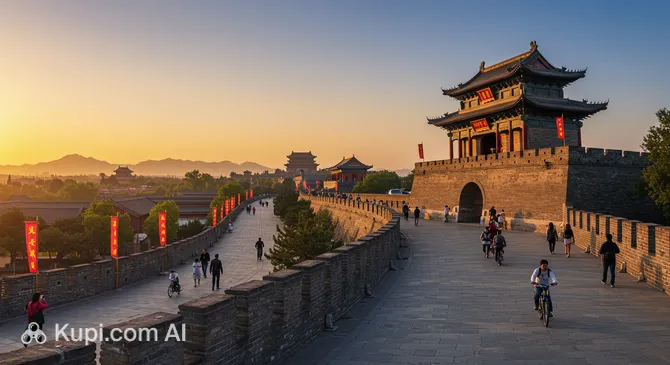
Located on the banks of the Wei River in Shaanxi Province, Xianyang is a unique blend of ancient grandeur and the modern rhythm of life. This city, situated just 30 kilometers from Xi'an, once served as the first capital of a unified China under the rule of Emperor Qin Shi Huang. Today, it is home to over 5 million people, and the city's atmosphere is steeped in the spirit of its imperial past, harmoniously adjacent to the developing infrastructure of a metropolis.
Xianyang. Illustration.
Source: Kupi.com AI
The city's geographical position has made it an important strategic hub for millennia. Exploring Xianyang's rich historical heritage, travelers can see the ruins of majestic palaces and imperial mausoleums that turn an ordinary walk into a real journey through time. The city attracts those looking for a quieter and more authentic alternative to bustling neighboring Xi'an, while maintaining access to all the region's main archaeological treasures.
Xianyang is not just a point on the map, but the cradle of Chinese civilization. It is worth visiting the famous Xianyang Museum and strolling along the scenic embankments to feel the scale of local history. We invite you to discover this amazing city, where every stone holds legends of the first emperors and the birth of a great power.
Weather Overview
The climate in Xianyang is moderate continental, which implies a clear change of all four seasons. Travelers should prepare for hot and humid summers, when the thermometer in July and August can rise to +31°C and above, as well as cold, dry winters with rare snowfalls and average temperatures in January around +1°C.
Precipitation is unevenly distributed: most of it falls in the summer months, peaking in July (about 141 mm). If you are planning a trip, the most favorable time would be spring or autumn—at this time, the weather in Xianyang delights with mild warmth and a lack of extreme humidity, which is ideal for long walks through archaeological zones.
Average temperatures in April and May are a comfortable +16...+21°C, while in September and October, the air warms up to +14...+21°C. The spring and autumn months are characterized by low precipitation and clear skies, creating ideal conditions for visiting imperial mausoleums and walking along the city's embankments.
Average monthly temperature
Average monthly precipitation
Interesting Facts
First Capital: Xianyang was officially the first capital of a unified China in the 3rd century BC. It was from here that Qin Shi Huang ruled his vast empire.
City of Pyramids: The outskirts of Xianyang are often called the "Valley of the Pyramids," as dozens of massive mounds—mausoleums of the Qin and Han dynasty emperors—are located here, outwardly resembling Egyptian pyramids.
Silk Road: The city was a crucial crossroads on the Great Silk Road, providing a link between ancient China and Western civilizations.
Archaeological Giant: The area of Xianyang's modern administrative district exceeds 10,000 km², which is comparable to the area of some small nations.
How to Get There
Xianyang is one of the most accessible cities in Northwest China thanks to its unique location. The city actually shares common transport infrastructure with Xi'an, making trips here as comfortable as possible. You can learn more about the logistics on the page detailing how to get to Xianyang by various means of transport.
The region's main aviation hub is Xi'an Xianyang International Airport (XIY). Despite the double name, the airport is geographically located precisely in Xianyang. It is a modern hub receiving flights from Beijing, Shanghai, and many international destinations. A trip from the terminal to the city center by taxi or express bus will take about 30–40 minutes.
Railway communication is the pride of the region. Xianyang Station and the modern Xianyang North high-speed train station connect the city with the country's largest cities. High-speed trains from Beijing arrive here in 4–5 hours, while the journey from Shanghai will take about 7 hours. In addition, frequent suburban trains run between Xianyang and Xi'an, with travel times of just 15–30 minutes.
Station
Passenger traffic
Distance
Xi'an North railway station
10
21 km
Xi'an railway station
10
24 km
Shangluo North Railway Station
2
125 km
Qingyang railway station
3
181 km
Ankang Railway Station
3
181 km
Main Attractions
The main treasures of Xianyang are inextricably linked to the Qin Dynasty era. One of the region's most impressive locations is the Mausoleum of the First Qin Emperor. This is where the legendary Terracotta Army is located—thousands of unique clay figures of warriors and horses intended to guard the ruler's peace in the afterlife. This grand complex, discovered in 1974, is still considered one of the most important archaeological discoveries of humanity.
No less significant is the Qianling Mausoleum, located on Mount Liangshan. This is the unique resting place of Emperor Gaozong and his wife, Empress Wu Zetian. Visitors are impressed by the "Sacred Way," decorated with massive stone statues of officials and mythical animals, as well as the picturesque views from the hilltops over the surrounding plains.
For those who want to dive deeper into the details of the ancient rulers' daily lives, the Xianyang Museum is a must-visit. Its halls display artifacts found during excavations of the Qin Palace, including exquisite ceramics, bronze wares, and ancient coins. The city and its surroundings are a true open-air museum where the history of the first Chinese dynasties comes to life in every architectural monument.
Local Cuisine
The gastronomic image of Xianyang is a vivid embodiment of Shaanxi provincial traditions, where hearty meat dishes and a variety of wheat noodles take center stage. The region's signature dish is Biangbiang noodles—wide, long ribbons of fresh dough served with hot oil, vinegar, garlic, and vegetables. The preparation process is a real show, as the chef hits the dough against the table with a characteristic "biang" sound while stretching it.
Another iconic dish definitely worth trying is meat in jianbianrou sauce, which has a deep, spicy flavor. Xianyang is also famous for its lamb soups with pieces of unleavened flatbread (paomo) and junbian fried flatbreads with various fillings. Local cuisine is characterized by moderate spiciness and an abundance of spices, making it incredibly aromatic.
Dining culture is everywhere in the city: from respectable restaurants in the center to bustling night markets with street food. Locals often eat in small family cafes where the products are always fresh and recipes are passed down through generations. It is customary to wash down the meal with traditional green tea or light rice wine, which they know how to prepare here using ancient techniques.
Travel Tips
Planning a trip to Xianyang will be much easier if you take advantage of practical tips that will help you save time and better understand the local way of life.
Clothing and items: The best time to visit is spring (April-May) and autumn (September-October). It can be very hot here in summer and freezing in winter, so bring seasonal clothing and definitely comfortable shoes, as you will have to walk a lot.
Transport: Use Baidu Maps or Amap for navigation, as familiar Western services may be unstable. To call a taxi, install Didi.
Finances: In China, cashless payment via WeChat Pay and Alipay is used almost everywhere. It is recommended to link an international card to one of these apps in advance. You should carry cash Yuan (CNY) with you in case of unforeseen situations.
Health and safety: Xianyang is a very safe city. Pharmacies are common, but medicine names are in Chinese, so it's better to carry a basic first-aid kit and a translation app.
Communication: English is not widely spoken. Download an offline translator in advance and save the hotel and attraction addresses in Chinese characters.
Local etiquette: Greet people with a slight nod. When visiting mausoleums and temples, behave calmly, respect the silence, and do not take photos where it is prohibited.
What to avoid: Do not buy "antiques" from street vendors near attractions—they are likely cheap fakes. Also, try to avoid traveling during "Golden Week" periods (early October), when the number of tourists increases tenfold.
Additional tip: Tickets for the Terracotta Army Museum should be purchased online in advance, as they may not be available on-site, especially on weekends.
By following these simple recommendations, you will be able to fully immerse yourself in the atmosphere of China's first capital and enjoy every moment of your journey.
Entertainment & Nightlife
Entertainment in Xianyang is primarily cultural and educational in nature. In the evening, the city is transformed thanks to large-scale light and music shows. Of particular note are the productions dedicated to the history of the Terracotta Army held in specialized theaters: the use of modern technology allows them to literally "bring to life" ancient warriors and tell the story of the unification of the Middle Kingdom in a captivating way.
The city's nightlife is calmer and more measured compared to coastal metropolises. Locals and tourists prefer evening walks along the Wei River embankment, which is illuminated by bright lanterns, creating a romantic atmosphere. Along the embankment, you can find cozy tea houses and karaoke bars, which are a popular way to spend leisure time in Shaanxi Province.
For outdoor enthusiasts, city parks with bicycle and catamaran rentals are available during the day. In summer, Xianyang often hosts themed festivals dedicated to Qin era culture, where you can see traditional dances and try your hand at ancient crafts. If you want a more vibrant nightlife with Western-style clubs and bars, high-speed transport will take you to the center of neighboring Xi'an in a matter of minutes.
Parks & Museums
Xianyang is a treasure trove for history buffs, and its museums are rightfully considered among the best in the country. Central to this is the Terracotta Army Museum, where thousands of full-size warrior statues are presented in massive pavilions. Each figure has unique facial features, and the detailing of armor and weapons amazes even seasoned travelers.
Another important site is the Xianyang Museum, located in a former Confucian temple building. It houses a rich collection of Qin Dynasty artifacts, including the famous collection of 3,000 terracotta figures of soldiers and cavalrymen from the Han Dynasty. Epigraphy lovers will be interested in the Beilin Museum ("Forest of Steles"), which houses ancient stone slabs with calligraphic inscriptions of immense historical value.
For outdoor relaxation, Qianling Park is ideal. This vast green area surrounds the imperial mausoleum and offers tourists walks through shaded alleys, viewing majestic stone sculptures, and relaxing by quiet lakes. The modern Hanyang Park will delight visitors with dynamic fountains and landscape design, making it an excellent place for a family picnic or a quiet evening after a busy day of sightseeing.
Getting Around
The transport system in Xianyang is integrated into the region's overall network, making travel around the city fast and inexpensive. Public transport is based on an extensive network of bus routes covering all districts and main attractions. Of particular importance is Metro Line 1, which connects central Xianyang with the international airport and Xi'an, allowing tourists to easily travel between neighboring cities without traffic jams.
For convenient fare payment, it is recommended to use mobile apps (such as Alipay) or purchase a transport card that can be topped up at ticket offices or machines. Bus fares are fixed and very low, while the metro fare depends on the distance. Buses usually run from early morning until 8:00–9:00 PM, while the metro operates until late evening.
As a convenient alternative, you can use taxis or car-hailing services via the Didi app. This is a comfortable and affordable way to reach remote mausoleums or parks. Bike-sharing is also popular in Xianyang: numerous bright yellow and blue bicycles can be found at every turn, and you just need to scan a QR code to rent them. For moving around the territories of large museum complexes, electric cart services are often offered.
Accommodation
The choice of accommodation in Xianyang allows tourists to find an option for every taste—from modern business hotels to cozy guesthouses. Those who value international-level comfort should look at the areas near Xi'an Xianyang Airport or central quarters where chain hotels such as Hilton or Sofitel are represented. Many of them offer breathtaking views of historical monuments and the Wei River.
For travelers focused on studying archaeological heritage, a convenient option would be to stay in hotels and guesthouses located directly at the main attractions, for example, near the Terracotta Army. This allows you to save travel time and enjoy the ancient atmosphere in the morning hours before the influx of large tourist groups.
Budget travelers have access to numerous hostels and apartments, which are especially popular among young people. Prices for accommodation here are often lower than in neighboring Xi'an, with a comparable level of service. During peak tourist seasons (spring and autumn), it is recommended to book accommodation in advance, as the city is very popular with domestic tourists. Most bookings are made through major international and local online platforms.
Nearby Cities
Thanks to its location in the heart of historical China, Xianyang serves as an ideal starting point for exploring the surrounding attractions. The region is crisscrossed by transport arteries that allow you to reach unique cultural and natural sites in a short time.
Just 30 kilometers away is the legendary Xi'an—a city that needs no introduction. A trip there will take less than an hour and allow you to see the famous City Walls, the Giant Wild Goose Pagoda, and the bustling Muslim Quarter. It is also worth paying attention to Tongchuan, known for its pottery traditions, and picturesque Weinan, from where the path to the sacred Mount Huashan—one of the most breathtaking hiking spots in the world—opens up.
Exploring nearby cities will give you a full picture of the diversity of Shaanxi Province. Each of these destinations is easily accessible by both high-speed trains and regular buses, making planning day trips simple and enjoyable.
Shopping & Souvenirs
Shopping in Xianyang is an exciting search for authentic souvenirs and an introduction to China's modern shopping trends. The main shopping opportunities are concentrated in large shopping centers located near metro stations and in the central part of the city. Here you can find both famous international brands and high-quality locally produced goods: from electronics to fashion clothing.
If you are looking for something unique, head to the markets near archaeological sites and mausoleums. The most popular souvenir here is replicas of terracotta warriors in various sizes—from miniature figurines to full-size statues. The city is also famous for jade products, exquisite silk, and famous tea varieties from Shaanxi Province. It is customary to bargain at traditional markets, which adds excitement to the shopping process.
Shops usually operate from 10:00 AM to 9:00 PM or 10:00 PM daily. The main method of payment in the city is through the WeChat Pay and Alipay apps; however, large shopping centers also accept bank cards. You should have cash for purchases at small markets or street stalls. Xianyang offers a great opportunity to bring home a piece of ancient Chinese culture in the form of skillful handmade items.