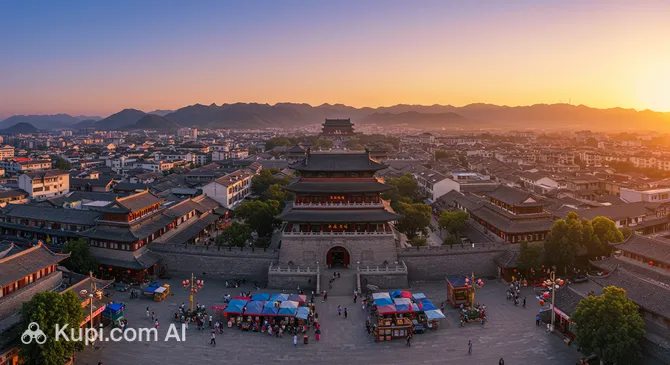
Jincheng is a fascinating city in Shanxi Province, located in northern China. Nestled at the foot of the majestic Taihang Mountains, it harmoniously blends the atmosphere of an industrial hub with the preservation of ancient traditions. With a population of approximately 2.28 million people, the city offers travelers a calm and authentic pace of life that is hard to find in massive megacities.
Jincheng's geographical position on a fertile plain makes it an important regional hub. The city is famous for its rich historical heritage, with roots reaching back to deep antiquity. Exploring its streets, you can experience the centuries-old history of the region's development, where unique architectural monuments from the Ming and Qing dynasties have been preserved.
Jincheng. Illustration.
Source: Kupi.com AI
Among Jincheng's key features is its significance as a cultural hub and "coal capital," as well as its proximity to picturesque natural routes. Tourists are drawn to the ancient temple complexes and the opportunity to see the real, non-touristic China. We invite you to visit this hospitable city to personally appreciate its unique character and the warmth of the local residents.
Weather Overview
Jincheng is characterized by a continental climate with clearly defined seasons. Winters here are quite harsh and dry, with average temperatures in January dropping to -5°C, and nighttime frosts can be even more severe. Summer, on the other hand, brings pleasant warmth: in July and August, the air usually warms up to +25–28°C, making this period an excellent time for walks, although these months also see the peak of rainfall.
The most comfortable seasons for visiting the city are considered to be spring and autumn. At this time, the weather is pleasantly mild, and the surrounding nature is transformed: the Taihang Mountains are covered in fresh greenery or crimson foliage. Rainfall during these periods is moderate, allowing you to study the city's climate in detail and enjoy sightseeing without unnecessary discomfort.
When planning your trip, expect warm summers with occasional thunderstorms and cold, dry winters. Spring months, especially April and May, are characterized by a gradual increase in temperature from +13°C to +19°C, creating ideal conditions for active tourism and hiking routes.
Average monthly temperature
Average monthly precipitation
Interesting Facts
Jincheng is officially called the "coal capital" of Shanxi Province due to its colossal reserves of this mineral and its long history of mining.
The city stands on land with an incredibly ancient history: archaeological finds confirm the existence of settlements from the Yangshao and Longshan Neolithic cultures.
The famous "Shanxi Red" wine is produced here, made from local grapes and regularly winning prizes at national Chinese competitions.
The annual Lantern Festival in Jincheng is considered one of the largest in the region, attracting thousands of spectators from neighboring provinces with its incredible light installations.
The Outuo architectural complex within the city is a rare example of preserved wooden structures from the Ming Dynasty, holding national treasure status.
How to Get There
Jincheng has a well-developed transport infrastructure, making it accessible for tourists from different parts of the country. You can choose the most suitable mode of travel for you, whether it be by air, rail, or comfortable bus. Details about routes and schedules can be found on the page describing how to get to Jincheng.
For those who value their time, flying is the most convenient option. The nearest airport is Jincheng Dayuan (LCX). It serves regular flights from major cities such as Beijing, Xi'an, and Taiyuan. For example, a flight from the capital takes only about an hour and a half, allowing you to quickly find yourself in the heart of Shanxi Province.
Rail travel is also very popular. Modern high-speed trains arrive at Jincheng Railway Station. The journey from Xi'an takes between 2 to 3 hours, and from Beijing, about 4–5 hours. Additionally, bus connections are well-developed: the journey from Taiyuan by bus takes about 3 hours.
If you prefer to travel by car, the city is connected to neighboring regions by the modern G55 and S80 expressways. This is a convenient option for those planning to visit several cities in Shanxi Province at their own pace.
Main Attractions
One of the city's most significant landmarks is the ancient Outuo Temple complex. Dating back to the 14th century, this site is a magnificent example of medieval architecture. Tourists come here to admire the exquisite wooden pagodas and unique frescoes, which have miraculously survived to this day and are recognized as national treasures.
For fans of outdoor activities and natural beauty, Jinchengshan Mountain is a must-visit. Its summit offers breathtaking panoramic views of the surroundings, while numerous hiking trails lead to secluded Buddhist temples hidden among the greenery. It is the perfect place for those seeking tranquility and fresh mountain air.
To immerse yourself in the atmosphere of old China, visit the historic town of Zaojing. Strolling through narrow Qing-era streets, you will see traditional siheyuan courtyard houses and cozy tea rooms where time seems to have stood still. Complete your exploration of the region in the Danhe River valley, where local vineyards offer excellent conditions for agrotourism and peaceful picnics in nature.
Local Cuisine
Jincheng's gastronomy is a vivid reflection of the culinary traditions of Shanxi Province, where flour-based products and rich flavors play the main role. Be sure to try the local jiaozi—dumplings with a juicy lamb filling, traditionally served with aromatic dark vinegar. Another iconic dish is huotuo, which is homemade noodles with beef in a thick broth, perfect for warming up in cool weather.
For meat lovers, shaoliao—tender fried lamb with spices—will be a real discovery. If you are looking for authentic spots, stop by the "Outuo Laoqing" restaurant, where they cook according to ancient recipes, or "Danhe Yuxiang," which is famous for dishes made from fresh fish caught in the local Danhe River.
Street food culture in Jincheng thrives in the local markets. Here you should try huimin sweet flatbreads and roasted chestnuts, which are especially popular in autumn. For drinks, be sure to taste the local wine made from Shanxi grapes or refreshing herbal teas. The city's gastro scene is a combination of simple, hearty dishes and the hospitable atmosphere of local eateries.
Travel Tips
Planning a trip to Jincheng will be much easier and more pleasant if you consider a few practical tips proven by experienced travelers.
Clothing and Season: The best time to visit is from April to October. Bring comfortable shoes for walking on mountain trails and a light jacket for cool evenings. Winters here are quite cold, so serious thermal wear will be required during that period.
Getting Around: Install the Didi app to call taxis—it is reliable and inexpensive. For navigation, it is best to use Baidu Maps, as international maps may not work correctly.
Finances: China has almost completely transitioned to cashless payments. Be sure to set up WeChat Pay or Alipay before your trip. Cash is accepted, but finding change can be difficult.
Connectivity: Buy a local SIM card at the airport or an official operator's office (e.g., China Unicom). Remember that a VPN may be required to access familiar messengers and social networks.
Health: Pharmacies are common, but medicine names are in Chinese. We recommend carrying a basic first-aid kit and having insurance. It is better to drink only bottled water.
Etiquette: When entering temples, it is customary to be quiet and remove headwear. Local residents are very friendly, but knowing a few phrases in Chinese (e.g., "Ni Hao" for hello) will be received with great warmth.
What to Avoid: Do not photograph military installations or government buildings without permission. Also, try to avoid entering into political discussions to maintain a neutral and positive atmosphere for your trip.
Gastronomic Tip: Try new dishes in small portions—local cuisine can be quite spicy or have a specific taste for unaccustomed tourists.
Following these simple rules will help you focus on the beauty of Jincheng and get the most out of your journey. We wish you an unforgettable and vibrant adventure!
Entertainment & Nightlife
Nightlife in Jincheng is more relaxed and laid-back compared to megacities, focusing mainly on family recreation and social gatherings. The main center of evening activity is the Danhe River waterfront. This area is home to many cozy cafes and karaoke bars where locals like to spend time after sunset, enjoying the cool breeze and bright lights.
For those who prefer cultural leisure, the Jincheng Theater offers regular opera performances and traditional Chinese shows. Special events in the city's life include lantern festivals, when the streets are transformed and filled with the light of thousands of lanterns. In the evenings, city parks are also popular, where you can see groups of people practicing collective dances to music.
If you are looking for active entertainment, there are modern bowling centers and even golf clubs in the city and its outskirts. For evening walks, Jincheng is considered a very safe city; taxis can be easily called via mobile apps at any time. Most establishments close around midnight, so it is better to plan active recreation for the early evening.
Parks & Museums
Jincheng offers its guests unique opportunities for cultural and natural recreation. A must-visit site is the Shanxi Coal Museum. This is not just an exhibition, but an interactive space where modern technology and detailed mine models tell the centuries-old story of "black gold" mining, which became the foundation for the entire region's development.
If you want to enjoy peace and greenery, head to Jinshan Park. This is a true oasis in the city center with picturesque lakes, elegant pavilions, and well-kept alleys. The park is popular both among morning yoga enthusiasts and those who simply want to take a quiet walk away from the city noise.
Another fascinating site is the Jincheng Wine Museum, where you can learn about the secrets of local winemaking and taste the best varieties of Shanxi wines. For history buffs and spiritual seekers, the Guandi Temple, located in a park area, is open to the public; here you can not only admire the architecture but also observe traditional rituals, immersing yourself in an atmosphere of calm and contemplation.
Getting Around
The public transport system in Jincheng is simple and efficient, allowing tourists to easily move between the main attractions. The basis of city transport consists of buses and trolleybuses, which cover all city districts and suburbs. Fares are extremely affordable, usually costing between 1 and 2 yuan, and tickets can be paid for in cash or via mobile apps.
While the metro in Jincheng is currently under construction with an expected launch by 2026, this does not create any inconvenience for travel. A popular and inexpensive alternative is taxis, which are most conveniently called via the Didi app. An average trip across the city will cost you only 10–20 yuan.
For short distances and walks around the center, residents and visitors often choose bike-sharing services (such as Mobike). Bikes can be found on almost every corner, and payment is made by simply scanning a QR code. The central and historical areas of the city also feature comfortable pedestrian zones, allowing you to enjoy the architecture at a leisurely pace.
Accommodation
The choice of accommodation in Jincheng allows you to find a suitable option for any budget. The city center is considered the most convenient area to stay, especially around Shiji (Century) Square. This area hosts major transport hubs, shops, and restaurants. The Outuo district is also popular and suits those who want to be closer to historical monuments.
For discerning travelers, the Jincheng International is an excellent choice—a four-star hotel with high levels of service and comfortable rooms. There are also many mid-range hotels and apartments in the city. If you are looking for a budget option, it is worth considering hostels, where prices start from approximately 200 yuan per night.
Those who want to save money and experience local flavor can consider accommodation in the Zaojing area. In any case, we recommend booking your accommodation in advance, especially if your trip coincides with major festivals or national holidays, when demand for the best options increases significantly.
Nearby Cities
Jincheng serves as an excellent starting point for exploring the surrounding Shanxi Province, offering travelers many interesting destinations just a couple of hours away. Neighboring cities and settlements allow for a deeper dive into the culture and life of northern China, revealing new facets of this amazing region.
Just 35 kilometers away is the city of Gaoping, known for its historical monuments and significant contribution to regional culture. It is also worth noting Jiaozuo, located 47 kilometers away, which attracts tourists with its natural parks and industrial heritage. For those ready for a longer trip, the provincial capital, Taiyuan, is just 2 hours away by train, housing the region's largest museums and temples.
Equally interesting are smaller settlements such as Shanhe or Dabutou, each of which preserves its unique traditions. Exploring the surroundings of Jincheng will provide unforgettable impressions and allow you to see provincial China in all its diversity.
Shopping & Souvenirs
Shopping in Jincheng offers a pleasant variety from modern shopping centers to colorful local markets. The main destination for large-scale shopping is Wanda Plaza. In this modern complex, you will find a wide range of clothing from international and Chinese brands, high-quality electronics, as well as numerous relaxation areas and food courts.
For authentic goods and souvenirs, head to the Outuo Market. This is the best place to purchase famous local wine, premium teas, and natural silk products. A walk through the market is an adventure in itself, allowing you to see the lives of city residents from the inside and bargain for unique handmade items.
Don't miss the chance to visit the city's night markets, where shopping is closely intertwined with gastronomic discoveries. Shops in Jincheng usually operate from 10:00 to 21:00 or 22:00. WeChat Pay and Alipay are used everywhere for payments, which is very convenient for tourists. Popular gifts to bring home include local tea and coal souvenirs, which are the hallmark of this industrial yet very creative region.