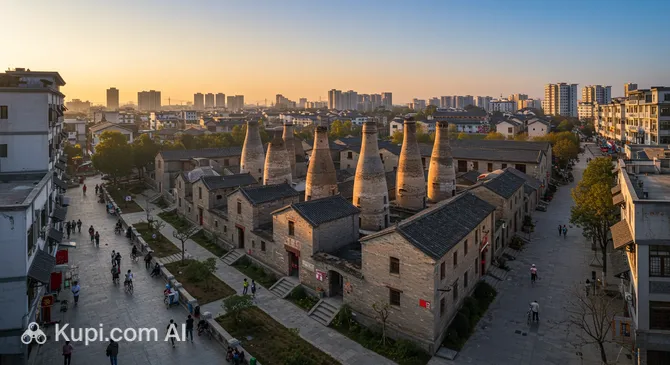
Yuzhou is a city with a remarkable destiny, where ancient legends and centuries-old traditions of craftsmanship come to life. Located in the heart of Henan Province, in the fertile basin of the Ying River, this modern industrial center carefully preserves its status as a cradle of Chinese civilization. According to legend, it was in these lands that the Great Emperor Yu quelled the devastating flood, and his son Qi founded the first capital of the legendary Xia Dynasty.
Yuzhou. Illustration.
Source: Kupi.com AI
Today, Yuzhou is home to over 1.1 million people. The city harmoniously combines the heritage of the past with the dynamism of the present. Travelers are drawn here not only by its rich history spanning thousands of years but also by its global fame as the production center of unique Jun porcelain, which for centuries was supplied exclusively to the imperial court of China.
In addition to immersing yourself in the art of pottery, here you can touch the origins of statehood by exploring archaeological zones and monuments that recall the times when the city served as the capital of the ancient Zheng and Han states. We invite you to visit Yuzhou—a place where every stone and every clay shard can tell a fascinating story about the birth of a great empire.
Weather Overview
The climate of Yuzhou is typical of central China: all four seasons are clearly defined. Summers are usually hot and humid, with peak temperatures in July and August, when the air can warm up to +31°C and above. Winters are dry and cool; in January, the average temperature hovers around +2°C, and night frosts are common.
The highest amount of precipitation falls in the summer months, especially in July (up to 181 mm), which should be taken into account when planning long walks. The most comfortable times for a visit are considered to be spring (April–May) and autumn (September–October), when the weather in the city is mild and pleasant, making it ideal for sightseeing.
When getting ready for your trip, remember that spring and autumn days can be deceptive: warm sunny hours are often replaced by cool evenings. In winter, despite the absence of heavy snowfall, humidity can increase the feeling of cold, so warm windproof clothing will not be superfluous.
Average monthly temperature
Average monthly precipitation
Interesting Facts
Yuzhou has changed several names throughout its long history: in ancient times, it was known as Yangdi, and it received its modern name only in 1575 during the Ming Dynasty to avoid using a character from the emperor's name.
The city officially became the capital of the Han State in 408 BC, confirming its strategic importance in the political life of Ancient China.
Local Jun ceramics, which became famous during the Song Dynasty, are one of the five "great porcelains" of China and are still valued by collectors worldwide for their "flambé glaze" effect.
In the 20th century, this traditional city of craftsmen turned into one of the largest coal mining centers in Henan Province, leading to the rapid industrialization of the region.
Legends link the founding of the first Chinese ruling dynasty, the Xia, specifically to this territory, making Yuzhou one of the oldest capitals in the world.
How to Get There
Yuzhou occupies a favorable position in the central part of Henan Province, ensuring excellent transport accessibility. A trip here usually begins through the region's major transport hubs. The easiest way to reach the city is to use the infrastructure of neighboring metropolises such as Zhengzhou, from which modern high-speed expressways and regular bus routes lead to Yuzhou.
If you are planning to fly, the nearest major air hub is Zhengzhou Xinzheng International Airport (CGO). From there, Yuzhou can be reached by taxi or intercity bus in about an hour and a half to two hours. More detailed information on routes and connections can be found in the section on how to get to Yuzhou.
Railway communication also plays an important role in the region's logistics. The nearest major stations provide links to key cities in central China. Regular trains run from the stations, and comfortable buses connect Yuzhou with neighboring prefectures, making the trip fast and tireless.
The main treasure of Yuzhou is rightfully considered its ceramic heritage. The heart of the city's cultural life is the modern Industrial Cultural Park, established on the grounds of a former state-owned porcelain factory. This unique space allows tourists to not only see masterpieces by past masters but also observe the modern process of creating the famous Jun ceramics. Strolling through the workshops, you will understand why this type of porcelain, with its unpredictable color transitions, was considered an imperial treasure.
The city's historical significance as the first capital of the Xia Dynasty attracts lovers of archaeology and antiquity. Monuments testifying to its status as an administrative center for various kingdoms over many centuries have been preserved in the surrounding areas and the center of Yuzhou itself. Exploring the old quarters, you can come across architectural elements from different eras—from Song Dynasty workshops to Ming Dynasty buildings—which create the unique character of this ancient city.
For those who want to dive deeper into the region's craft culture, the doors of numerous private workshops are open. There are about 200 companies in Yuzhou specializing in the production of Jun ceramics. Here, guests are invited to participate in masterclasses where, under the guidance of experienced masters, they can try their hand at pottery and take home a piece of history from this amazing land.
Local Cuisine
The gastronomic face of Yuzhou is steeped in the traditions of Henan Province. Local cuisine is famous for using fresh agricultural products grown in the fertile soils of the Ying River basin. Hearty dishes made from noodles and dough prevail here, as well as various meat specialties prepared with aromatic spices. The general character of the cuisine can be described as moderately spicy and very nutritious.
Be sure to try the traditional Henan noodles "Huimian"—a thick soup in a meat broth with wide hand-pulled noodles, which warms you up perfectly in the cold season. The region is also known for its tofu snacks and local types of flatbreads. As for drinks, besides traditional Chinese tea, it is worth paying attention to local beers and spirits popular in central China.
The dining culture in Yuzhou is democratic: during the day, most residents and tourists prefer cozy family eateries or modern cafes, and in the evening, they fill restaurants specializing in "hot pot." For the boldest gourmets, street food markets will be a real discovery, where you can try authentic local delicacies in a relaxed atmosphere.
Travel Tips
A trip to Yuzhou promises to be exciting, and to ensure your journey goes as smoothly as possible, we have prepared a few practical tips.
Clothing and Season: Choose your wardrobe according to the season—summers here are hot, and winters can be quite cool. Be sure to bring comfortable shoes for long walks through ceramic workshops and historical sites.
Getting Around Town: The best way to travel is by bus or taxi. We recommend installing the DiDi app (the Chinese equivalent of Uber) for convenient car booking.
Finances: The main currency is the yuan. International cards are not accepted everywhere, so be sure to carry cash or set up payment via Alipay/WeChat Pay.
Communication: English is not widely spoken. Download an offline translator in advance and save your hotel address in Chinese (characters).
Connectivity: A local SIM card can be purchased at China Mobile or China Unicom offices; you will need your passport for this. Wi-Fi is available in most hotels and major cafes.
Etiquette: When visiting workshops, always ask for permission before photographing the work process or fragile items. Politeness and respect for the craftsman's labor are highly valued here.
What to Avoid: Do not attempt to export antiques without special permits—China's customs regulations in this regard are very strict. Buy modern replicas of Jun ceramics in trusted stores.
Planning: Try to visit the Ceramic Cultural Park on weekdays to avoid crowds and have a quiet conversation with the masters.
May your introduction to ancient Yuzhou be filled with bright discoveries and pleasant impressions!
Entertainment & Nightlife
Entertainment in Yuzhou is inextricably linked to its cultural code. The main emphasis here is on educational leisure and immersion in tradition. During the day, the city is alive with pottery masterclasses at the Ceramic Cultural Park and exhibitions in galleries showcasing both classical and avant-garde works by local ceramic artists. It is an ideal place for those seeking inspiration in art and history.
As evening falls, life in Yuzhou takes on the rhythm characteristic of large Chinese cities. The centers of attraction become the lively streets with numerous restaurants and eateries where you can spend time with friends. While the city is not famous for noisy mega-clubs, there are plenty of modern bars and karaoke lounges (KTV), which are favorite spots for both young people and tourists.
Safety in the city is high, allowing for peaceful walks along the illuminated embankments of the Ying River and central squares even late at night. For getting around at night, it is best to use official taxis or popular mobile apps. If you are looking for an authentic atmosphere, check out the evening markets, where life is in full swing and the air is filled with the aromas of street food.
Parks & Museums
The Yuzhou Industrial Cultural Park is a green oasis and the main point of attraction for culture lovers in the city. Created on the site of an old porcelain manufactory, it is a harmonious blend of industrial heritage and modern landscape design. Walking along its alleys, you can see ceramic art objects and relax in the shade of trees while watching modern masters at work.
The museum scene in Yuzhou is centered around its status as the "Capital of Jun Porcelain." Local exhibition halls house amazing collections of pieces with unique glazes, whose colors range from sky blue to vibrant purple. Visiting these exhibits allows you to trace the evolution of ceramic art from the Song Dynasty to the present day and understand why these items were valued more than gold.
Equally interesting are the archaeological sites and parks dedicated to the ancient history of the Xia Dynasty. Although many sites are still being studied, walking through the city's historical zones allows you to literally feel the breath of time. For up-to-date information on temporary exhibitions and new park areas, we recommend checking with the local tourist center.
Getting Around
The public transport system in Yuzhou is focused on providing comfortable movement around this million-plus city. Its core consists of extensive bus routes that connect residential neighborhoods with industrial zones and the historical center. Buses run regularly, and the fare remains very affordable, making them a convenient choice for budget travelers.
For faster and more comfortable trips, residents and guests of the city actively use taxi services. In Yuzhou, both traditional services and mobile ride-hailing apps popular in China are available. This is a great way to reach remote ceramic workshops or railway stations, especially if you are traveling with luggage.
Bus fares are most often paid in cash (via a coin box) or using QR codes in payment systems. Bicycle rentals are also gaining popularity, allowing for leisurely rides along the river or through park areas. Before your trip, it is recommended to install a city map with GPS support on your smartphone, as navigation in provincial cities can be difficult without knowledge of Chinese characters.
Accommodation
For tourists in Yuzhou, a wide choice of accommodation options is available, catering to various preferences and budgets. As a modern industrial and cultural center, the city offers both classic hotels from major chains and small guest houses. The price range here is quite affordable compared to megacities, and the service quality in modern mid-range hotels remains at a decent level.
The city center and the area around the Ceramic Cultural Park are considered the most convenient neighborhoods to stay in. Staying here puts you within walking distance of the main attractions, best restaurants, and souvenir shops. Additionally, proximity to transport interchanges will simplify trips to the surrounding areas or industrial zones.
When planning your visit, especially during national holidays or ceramics festivals, it is recommended to book accommodation in advance through international or major Chinese platforms. During these days, popular hotels may be fully booked. If you are looking for a more authentic experience, look for apartments in new residential complexes, which often offer modern comfort at a pleasant price.
Nearby Cities
Yuzhou is an excellent starting point for those who want to explore the rich heritage of central China. Its convenient location in Henan Province allows for exciting trips to neighboring cities, each possessing its own unique flavor and history.
Just an hour's drive away is Zhengzhou—a dynamically developing metropolis and an important transport hub. It is worth visiting the Henan Museum here to see rare ancient artifacts. Another interesting destination is Pingdingshan, known for its industrial landscapes and natural parks. Also worth noting is Zhumadian, where unique monuments of traditional architecture are preserved.
We recommend setting aside time to visit these cities to fully experience the scale and diversity of Chinese culture. Convenient transport links allow you to return to Yuzhou on the same day, making your trip as fulfilling as possible.
Shopping & Souvenirs
Shopping in Yuzhou is primarily a hunt for works of art. The city is rightfully proud of its Jun ceramics, and it is the main commodity that collectors and tourists come here for. Items made from this unique porcelain, known for their "kiln transformation" effect, will be more than just a souvenir—they will be a true family heirloom reflecting the thousand-year traditions of China.
For shopping, head to the specialized quarters and shops at the Ceramic Cultural Park. Here you will find the widest selection: from small souvenir cups to monumental handmade vases. About 200 of the city's enterprises offer their products, so you will have the opportunity to compare the styles of different workshops and choose an item to your liking.
For everyday purchases and getting to know the local flavor, the central shopping streets and modern shopping malls are ideal. There you can find clothing, electronics, and cosmetics from Chinese brands. Shop hours are usually standard: from 9:00 to 21:00. Large retail outlets accept cards and mobile payments (Alipay, WeChat Pay), but in small ceramicists' shops, it is better to have cash with you.